| Author |
 Replies: 1,279 / Views: 81,700 Replies: 1,279 / Views: 81,700 |
|
|
|
Moderator
  United States
34567 Posts |
Pretty hefty silver for the 16th Century @era. Well done! This Groschen from the German Duchy of Julish-Kleve-Berg is 22 mm and 1.9 g. The obv inscriptions are MO NO DVC IUL CLI ET ONZ and 1583 while the rev inscription is IN DEO SPES MEA. 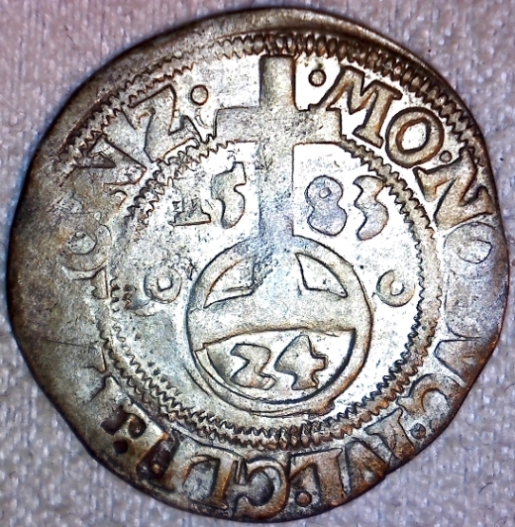 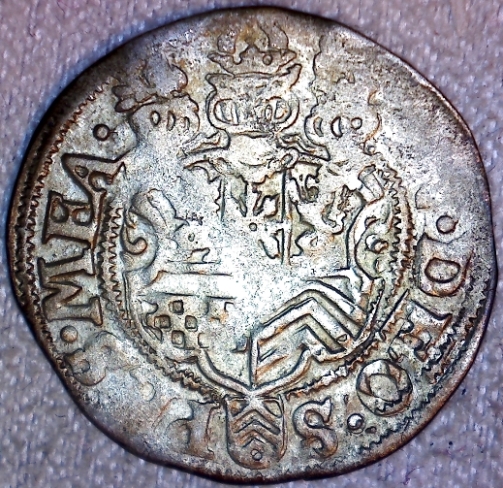 "If you climb a good tree, you get a push."
-----Ghanaian proverb
"The danger we all now face is distinguishing between what is authentic and what is performed."
-----King Adz
|
|
Moderator
United States
34567 Posts |
No activity for a couple days, so we will drop back to the decade of the 1570s starting this Saturday morning. Last call for your coins minted in the 1580s!
"If you climb a good tree, you get a push."
-----Ghanaian proverb
"The danger we all now face is distinguishing between what is authentic and what is performed."
-----King Adz
|
|
Pillar of the Community
 United States
8067 Posts |
 I agree we seem to be running on a 5 to 6 day cycle. Though I think we always want to have a full weekend in there for each decade. Nice variety for the 1580s! |
|
Pillar of the Community
United States
8067 Posts |
I;ll kick off the 1570s. 1576 Duchy of Courland & Semigalia 1 schilling Obv: Heraldic lion. DVCIS CVR ET SEMIGAL Rev: Crowned SA monogram inside triangular Kettler insignia. MONE NOVA ARGENTE Kop. 4007 The Duchy of Courland and Semigalia was formed in 1561 when the Livonian order, under its last Grand Master, Gotthard Kettler, was dissolved and its territory partitioned between Lithuania and Sweden. Courland and Semigalia was the southernmost slice, sharing its southern border with the northwest border of the Grand Duchy of Lithuania. The Kettler family would continue to supply dukes for the next two centuries. The SA monogram is that of Sigismund Augustus of Poland-Lithuania, who had died 4 years earlier.  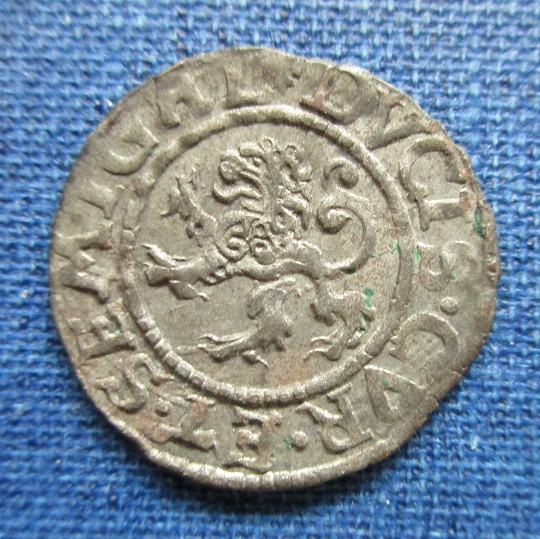 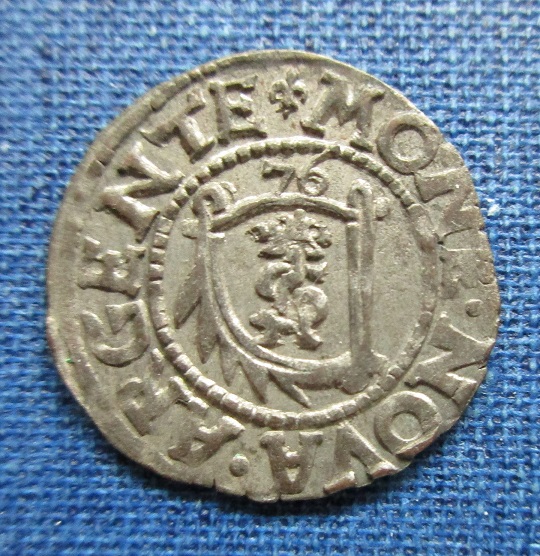 |
|
Pillar of the Community
Sweden
2124 Posts |
That is a lovely lion and a very nice coin, @tdziemia! I notice there is a small fleur-de-lys at the top of the legends - a mint mark? (That is a flower I like, I have plenty of them on my coins ... my contribution today being no exception  .) 1577, France, double tournois (2 deniers), Henry III, Paris (A). Copper, 3.1 g, 21 mm. Duplessy 1152, Sombart 4068, Roberts 3631. 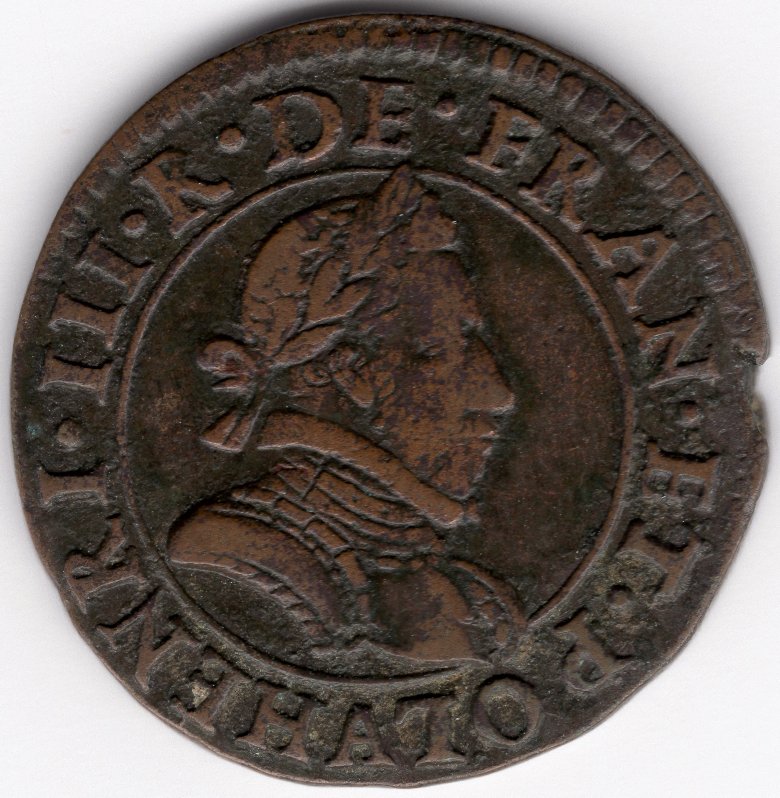 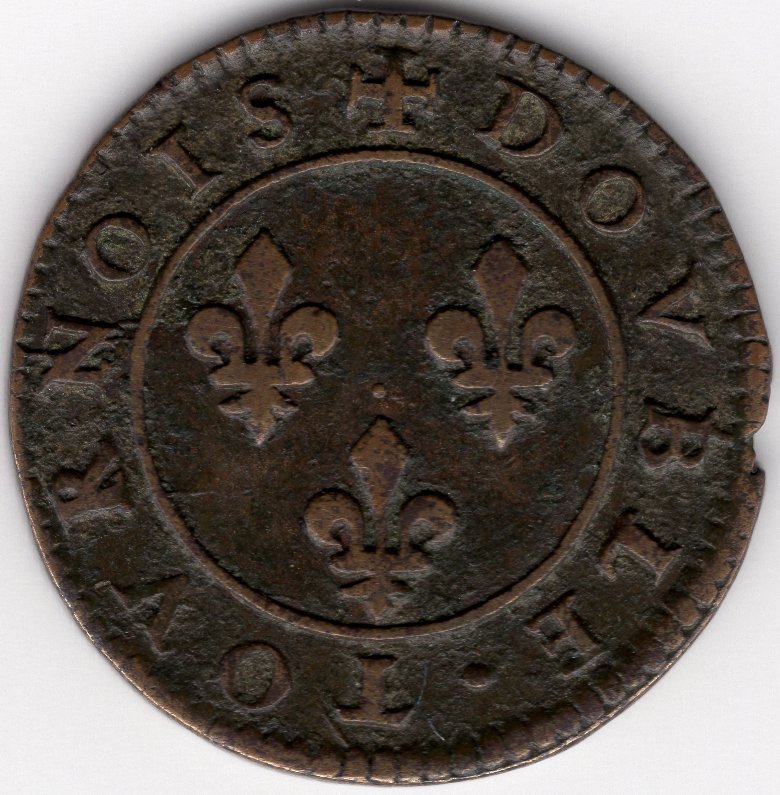 Obv: Henry III of France. Inscription: HENRI III Roi DE FRANce ET POLogne (Henry III King of France and Poland). Rev: Three fleurs-de-lys (by tradition, 2 d coins have three fleurs-de-lys, 1 d coins have two, and ½ d coins have one). Inscription: DOVBLE TOVRNOIS (Double [denier] tournois). This little coin is remarkable in two ways. Firstly, it is (together with a 1 denier coin) the first French coin minted in pure copper, finally replacing the lowest denomination billon coins with their ever decreasing silver content. Secondly, it is the first French coin with inscription entirely in French instead of Latin. The first copper coins were minted in 1577 and were without date (that was added in 1578). |
|
Pillar of the Community
United States
8067 Posts |
The fleur-de-lis is an interesting connection between the coins. I don't know it's origin on the Courland coin, but I know it was also used on the coins of the City of Riga (also formerly part of Livonia) when it was under Polish-rule, (coins dated 1582 - 1620. So maybe a symbol of Livonia?
|
|
Moderator
United States
34567 Posts |
This is a great start to the decade of the 1570s! I'm going to add another Swedish Half Öre. This one is dated 1570 and is attributed as Ahl 78. The obv inscription is IOHANN 3 D G REX SVEGI 70, while the rev inscription is MON NO?G VRB STOKHO. 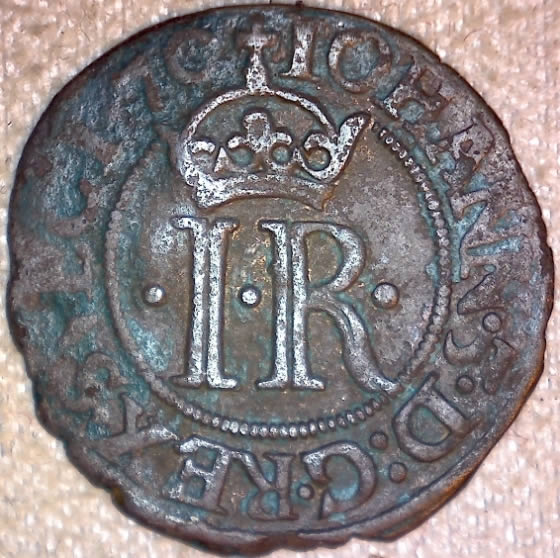 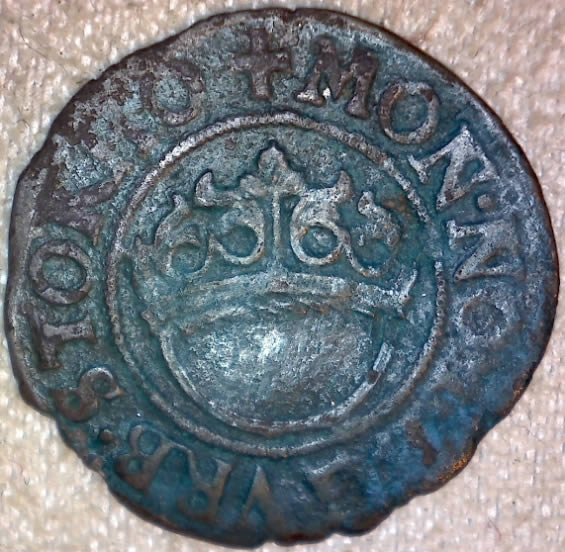 "If you climb a good tree, you get a push."
-----Ghanaian proverb
"The danger we all now face is distinguishing between what is authentic and what is performed."
-----King Adz
|
|
Pillar of the Community
Sweden
2124 Posts |
Excellent to see some Swedish coins here! My single Swedish 16th century coin is also a John III. Quote:
MON NO?G VRB STOKHO That would be MONeta NOva REGis VRBs STOKHOlm (King's New Money of the City of Stockholm). Sweden 1573, 2 öre, John III, Stockholm. Silver, 3.1 g, 24 mm. Ahlström 65b. 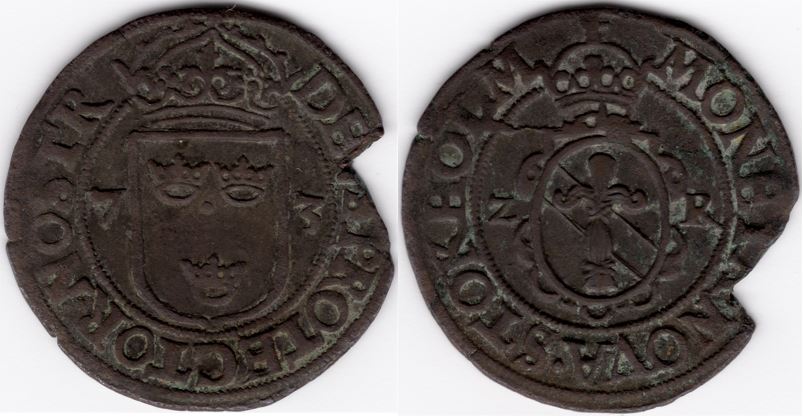 Obv: Lesser coat of arms of Sweden, Three Crowns. Inscription: DEVS PROTECTOR NOSTeR (God is our protector, the king's motto). Across: 7 3 (for the year). Rev: Royal coat of arms of the House of Vasa. Inscription: MONETA NOVA STOKHOLM (New money of Stockholm). Across: 2 R (for the denomination). |
|
Pillar of the Community
United States
8067 Posts |
To balance things with something from the south of Europe... Republic of Venice, undated 40 soldi (=2 lire) of the Doge Sebastian Venier (1577-78). Silver, 31mm, 8.5 g., Numista 201075 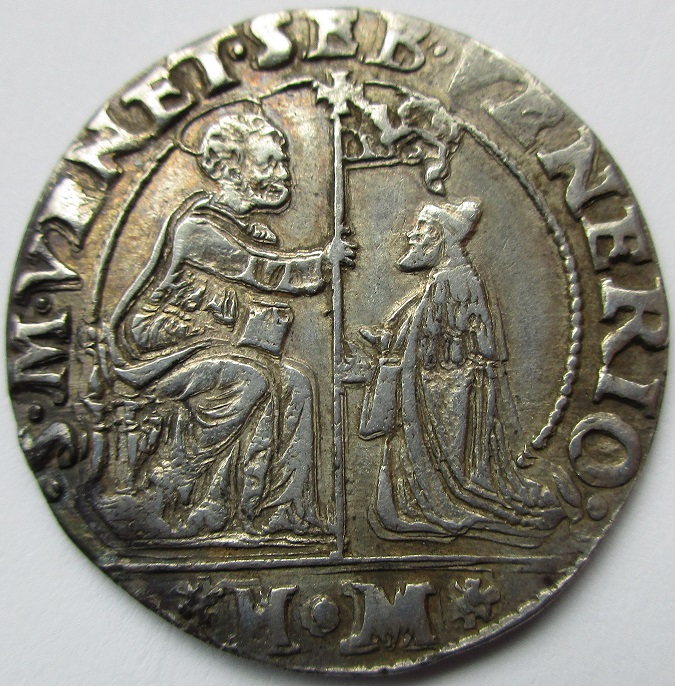 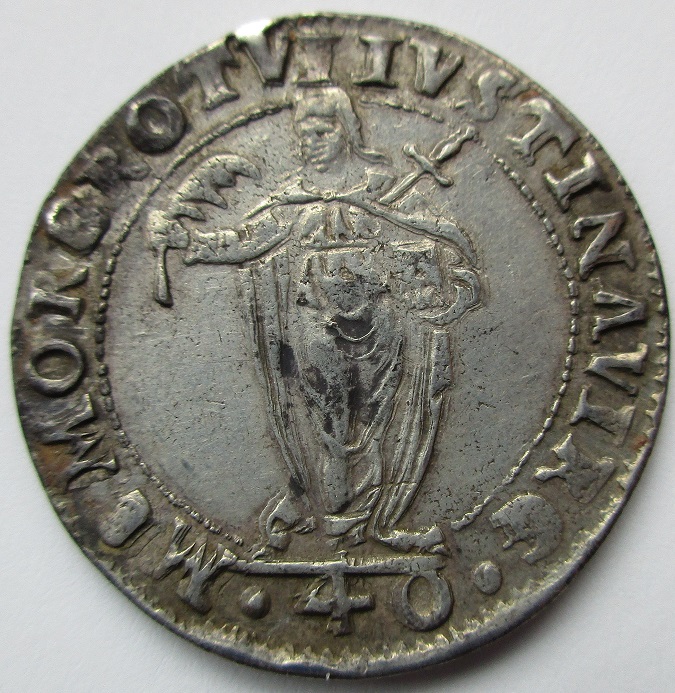 Obv: Saint Mark seated, handing staff to Doge. *H M* in exergue. S M VENET SEB VENERIO (Saint Mark of Venice, Sebastian Venier) Rev: Standing figure of Saint Justina pierced by sword, holding palm in right hand and book in left. 40 in exergue. MEMORERO TVI IVSTINA VIRG (In your memory, (Saint) Justina, virgin) Date of issue is 1577 based on the sigla of mint supervisor Gerolomo Morosini (HM) in exergue |
|
Pillar of the Community
United States
7067 Posts |
Spectacular showing of coins from this period. Well done, all.
Edited by Kamnaskires
08/08/2021 10:34 am
|
|
Moderator
United States
34567 Posts |
Thx for the help with the inscription @era!
"If you climb a good tree, you get a push."
-----Ghanaian proverb
"The danger we all now face is distinguishing between what is authentic and what is performed."
-----King Adz
|
|
Pillar of the Community
United Kingdom
725 Posts |
Elizabeth I is going to keep me in this for a couple of weeks before I run out at the other end of the 1500s. This is another tiny coin, designed to give people change of a farthing when farthings would've been too small to produce. Elizabeth I Three Farthings, 1575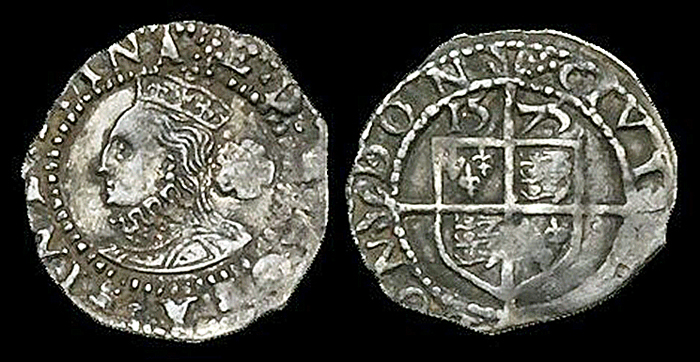 Tower. Silver, 13mm, 0.39g. 3rd Issue. Small bust, rose behind, mintmark eglantine both sides, E: D: G: ROSA: SINE: SPINA: (Elizabeth by the grace of God, a rose without a thorn). CIVI TAS LON DON (S 2571). Tower. Silver, 13mm, 0.39g. 3rd Issue. Small bust, rose behind, mintmark eglantine both sides, E: D: G: ROSA: SINE: SPINA: (Elizabeth by the grace of God, a rose without a thorn). CIVI TAS LON DON (S 2571).The three farthings, three halfpence, threepence and sixpence are marked with a rose behind the queen's head to distinguish them from the penny, halfgroat, groat and shilling (i.e. alternate denominations feature a rose). Presumably, they weren't marked with the values (as had been introduced by Edward VI) so they could be revalued if necessary, but in 1582 the denomination was added to the halfgroat (2 dots). |
|
Pillar of the Community
United States
561 Posts |
Aha! The only decade in this thread I have a coin for! Here's my 1576 Leeuwendaalder (2.5 Gulden) from the Dutch Republic 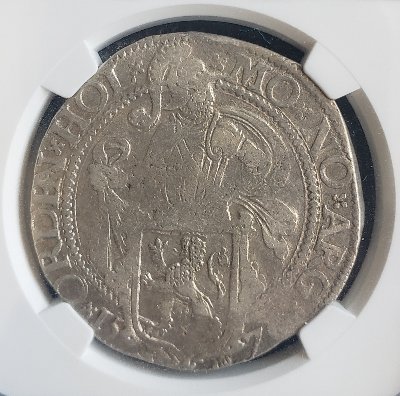 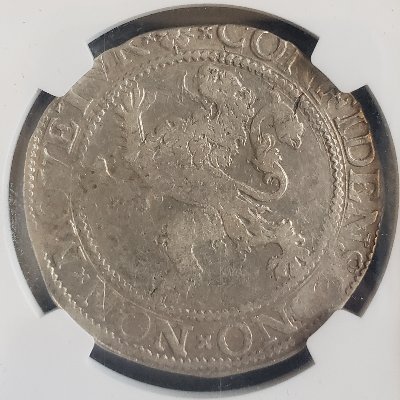 Obv: MO NO ARG ORDIN HOL (New silver coin by order of Holland) Rev: CONFIDENS DNO NON MOVETVR (Unwavering trust in the Lord) Edited by PNWType
08/09/2021 3:32 pm
|
|
Moderator
United States
197031 Posts |
Looking good! |
|
Pillar of the Community
Spain
2752 Posts |
Informative-Interesting-I'm learning a great deal thanks!  ......Paul |
| |
Replies: 1,279 / Views: 81,700 |





 First Page
 Previous Page


 Posted 08/05/2021 8:34 pm


