|
This page may contain links that result in small commissions to keep this free site up and running.

Welcome Guest! Registering and/or logging in will remove the anchor (bottom) ads and the security checks. It's Free!
To participate in the forum you must log in or register. | Author |
 Replies: 1,279 / Views: 81,681 Replies: 1,279 / Views: 81,681 |
|
|
|
Pillar of the Community
United Kingdom
725 Posts |
Great coins. Yes Akbar I had a nice long reign, which doesn't help date his coins. Fortunately for this coin, Mary I's reign kept to the 1550s. Unfortunately, her coins weren't well made. Philip and Mary Penny, 1554-1558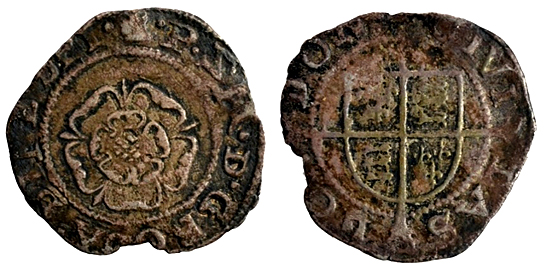 Tower. Silver, Base Issue, 15mm, 0.65g. Tudor rose, P Z M D G ROSA SINE SPI (Philip and Mary by the Grace of God a rose without thorns). Quartered shield of arms over cross fourchee, CIVI TAS LON DON (City of London). Mintmark: half-rose and castle (S 2510A). Tower. Silver, Base Issue, 15mm, 0.65g. Tudor rose, P Z M D G ROSA SINE SPI (Philip and Mary by the Grace of God a rose without thorns). Quartered shield of arms over cross fourchee, CIVI TAS LON DON (City of London). Mintmark: half-rose and castle (S 2510A). |
|
Pillar of the Community
 United States
8066 Posts |
Another from this reign... 1554 Philip & Mary schilling, S.2500 I wish it were more round and more evenly struck, but the portraits are decent for this issue 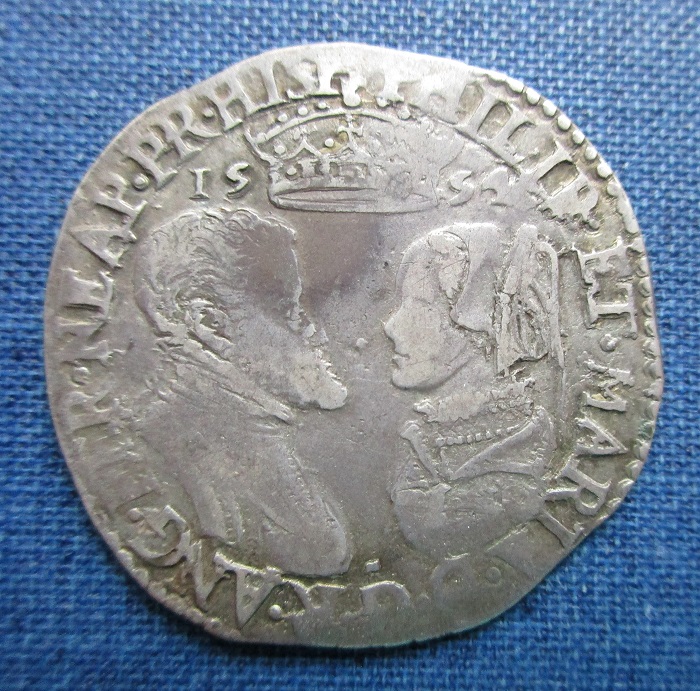 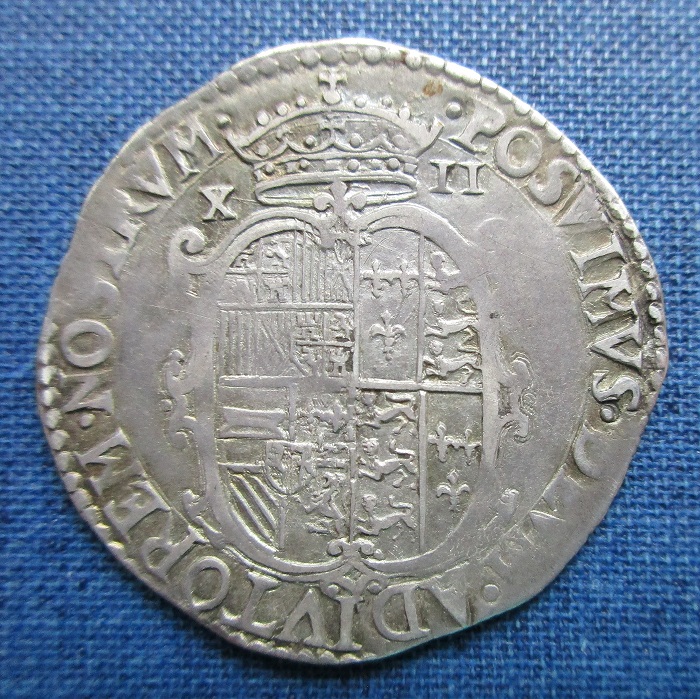 Edited by tdziemia
08/22/2021 07:28 am
|
|
Pillar of the Community
Sweden
2124 Posts |
France 1553, teston, Henry II, Paris (A). Duplessy 989, Sombart 4584, Roberts 3534. 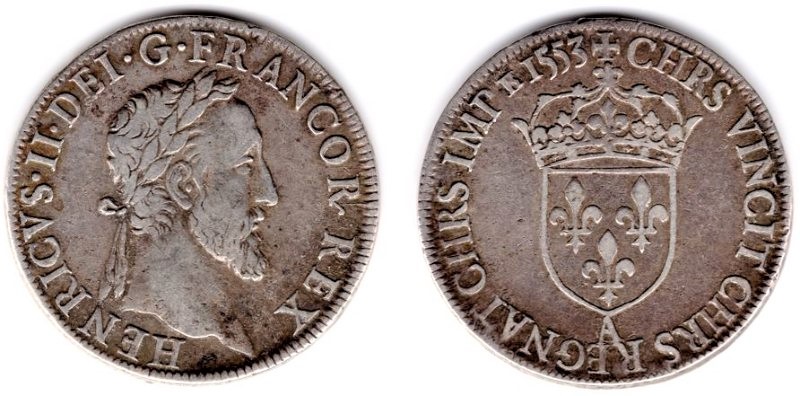 Obv inscription: HENRICVS II DEI Gratia FRANCORum REX (Henry II by Grace of God King of the Franks). Rev inscription: CHRistuS VINCIT CHRistuS REGNAT CHRistuS IMPerat (Christ conquers, Christ reigns, Christ commands). This phrase - with various spellings - was used on French high denomination coins (predominantly gold coins) from the 13th to the end of the 18th century. Before the date, 1553: EB in ligature, the mint mark of Paris mint master etienne Bergeron. Henry II ruled 1547-59. He died from injuries he suffered in a joust, only 40 years old. |
|
Moderator
  United States
34567 Posts |
We seem to have quieted down with posting from this decade so let's drop back to the 1540s starting tomorrow am. Last call for the 1550s!
"If you climb a good tree, you get a push."
-----Ghanaian proverb
"The danger we all now face is distinguishing between what is authentic and what is performed."
-----King Adz
|
|
Pillar of the Community
United States
8066 Posts |
A coin from the Duchy of Lorraine related to erafjel's Henry II: 1552 1/2 gros, also called a "sou de guerre," minted in the name of Nicolas, Count of Vaudemont, regent for Charles III of Lorraine. Nancy mint. Obv: Arms of Lorraine-Bar splits date 15 52. NIC VAV ADM LOT B (Nicolas of Vaudemont, administrator for Lorraine and Bar) Rev: Unsheathed sword pointing downward. MOneTA FACTA nAn (Coin made in Nancy) 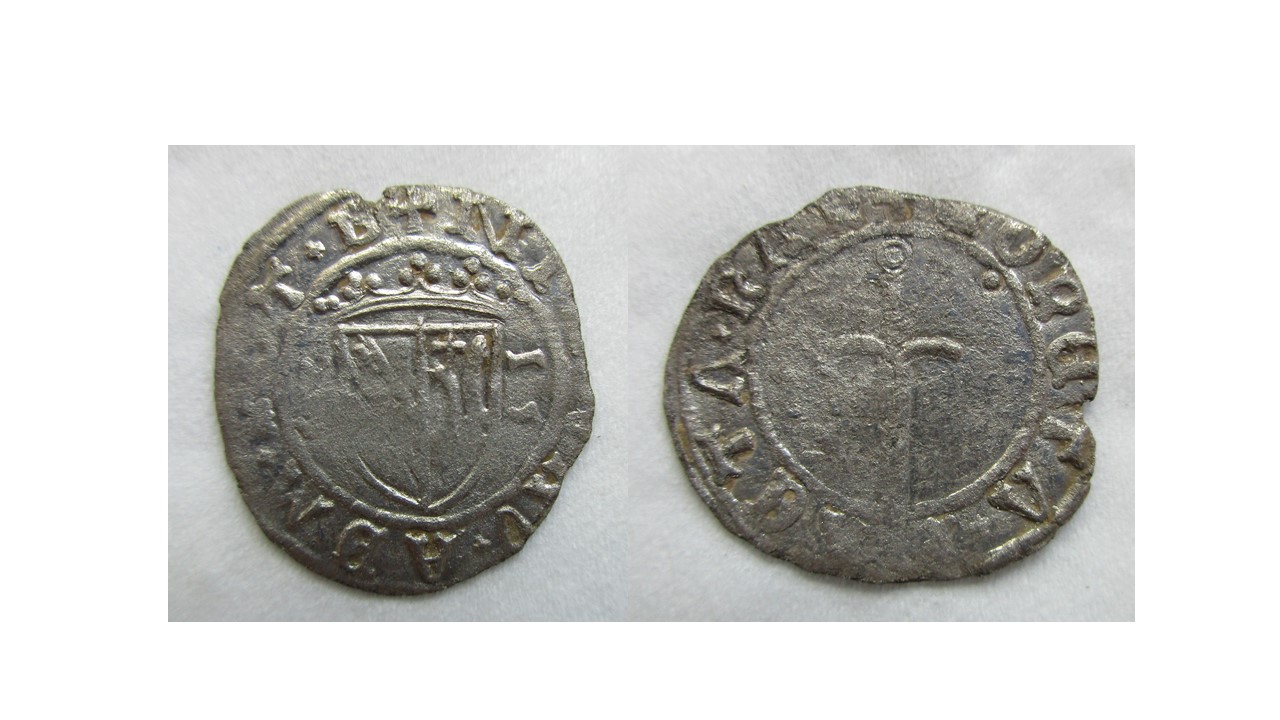 Charles III of Lorraine inherited the throne at the age of 2 in 1545. His mother, and uncle, Nicolas of Vaudemont served as regents until he reached the age of majority in 1555. In one of continental Europe's early conflicts triggered by the Counter-Reformation, Moritz of Saxony conspired with Henry II of France (erafjel's coin) to deliver authority over the bishoprics of Metz, Toul and Verdun (which bordered on the Duchy of Lorraine), to Henry, in return for Henry's support against the Holy Roman Emperor Charles V. Metz, Toul, Verdun and Lorraine were all fiefs of the Holy Roman Emperor. In spring of 1552, Henry occupied the three bishoprics, at the same time penetrating Nancy, the primary city of Lorraine, long enough to abduct the young Duke Charles, and bring him back to the court in Paris, where he was "educated." Charles would also meet Henri's daughter Claude, who he would later marry. Later the same year, Emperor Charles V arrived to lay siege to the city of Metz in an effort to reclaim it, but was unsuccessful. (These three cities were ultimately incorporated into France in the 1648 Treaty of Westphalia). The half groats were struck to pay the soldiers of Lorraine who joined Charles' army during the siege of Metz. |
|
Moderator
United States
34567 Posts |
I've got plenty from Hungary and Livonia from the 1540s, so here is something slightly different: a Groschen from the German State of Prussia. The obv inscription is IVSTVS EX FIDE VIVIT 1547 and the rev inscription is ALBER DG MAR BRAN DVX PRVS" I've got it attributed as Kopicki 3791 and it is a little less common than some of the other coins under Polish influence. 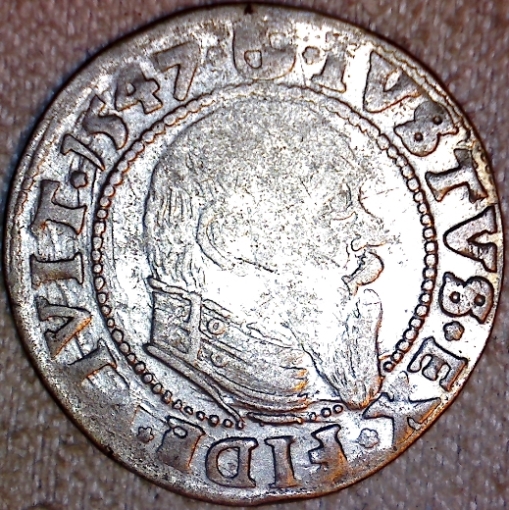 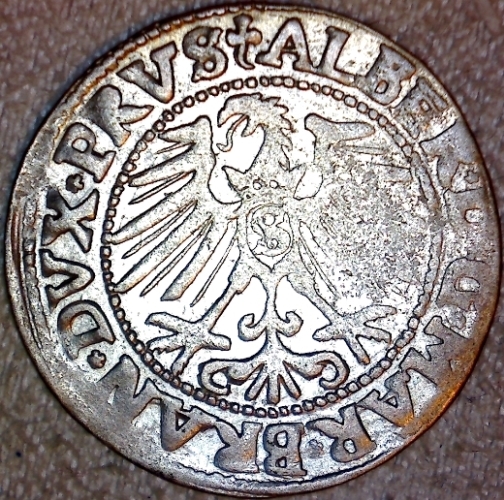 I'm excited to see what else gets posted for this decade! "If you climb a good tree, you get a push."
-----Ghanaian proverb
"The danger we all now face is distinguishing between what is authentic and what is performed."
-----King Adz
|
|
Pillar of the Community
United States
870 Posts |
***Not decade definative*** Ivan IV AR Denga 1543 - 1584, Moscow, 10mm, 0.33g, 180° Obv: Horseman right, brandishing sabre on galloping horse. Rev: KNYAZ/VELIKI/IVAN. 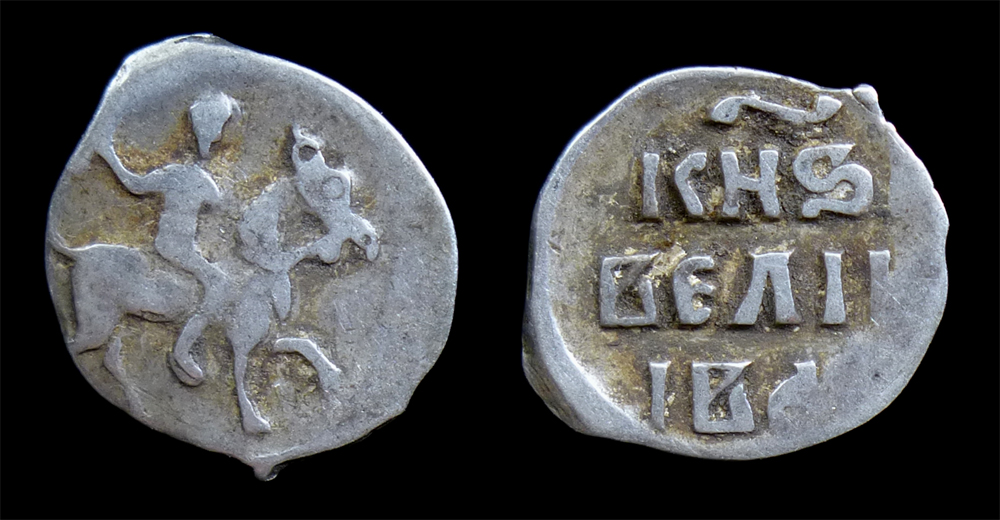 |
|
Pillar of the Community
United States
8066 Posts |
I was planning to avoid Poland-Lithuania, but have been looking for an opportunity to post this interesting pair of coins. 1546 Lithuanian halfgroat. Obv: Polish eagle. SIGIS AVG REX P MAG DVX L (Sigismund August, King of Poland and Grand DUke of Lithuania) Rev: Lithuanian knight. MONETA MAGNI DUCAT, LIT 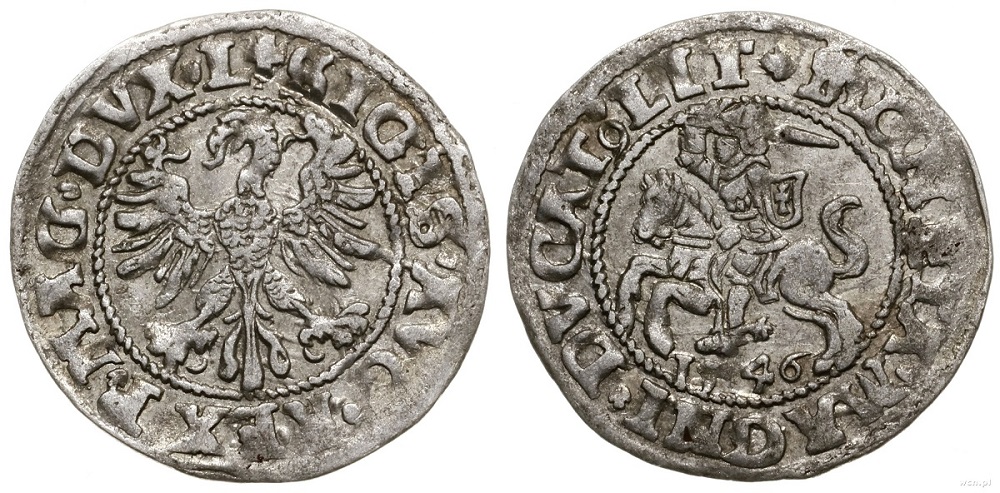 1546 Poland 1 grosz, Krakow mint Obv: Crown with legend in three lines. SIGISMVND / PRIM.REX / POLONIE (Sigismund I, King of Poland) Rev: Crowned Polish eagle. MONETA REGNI POLO 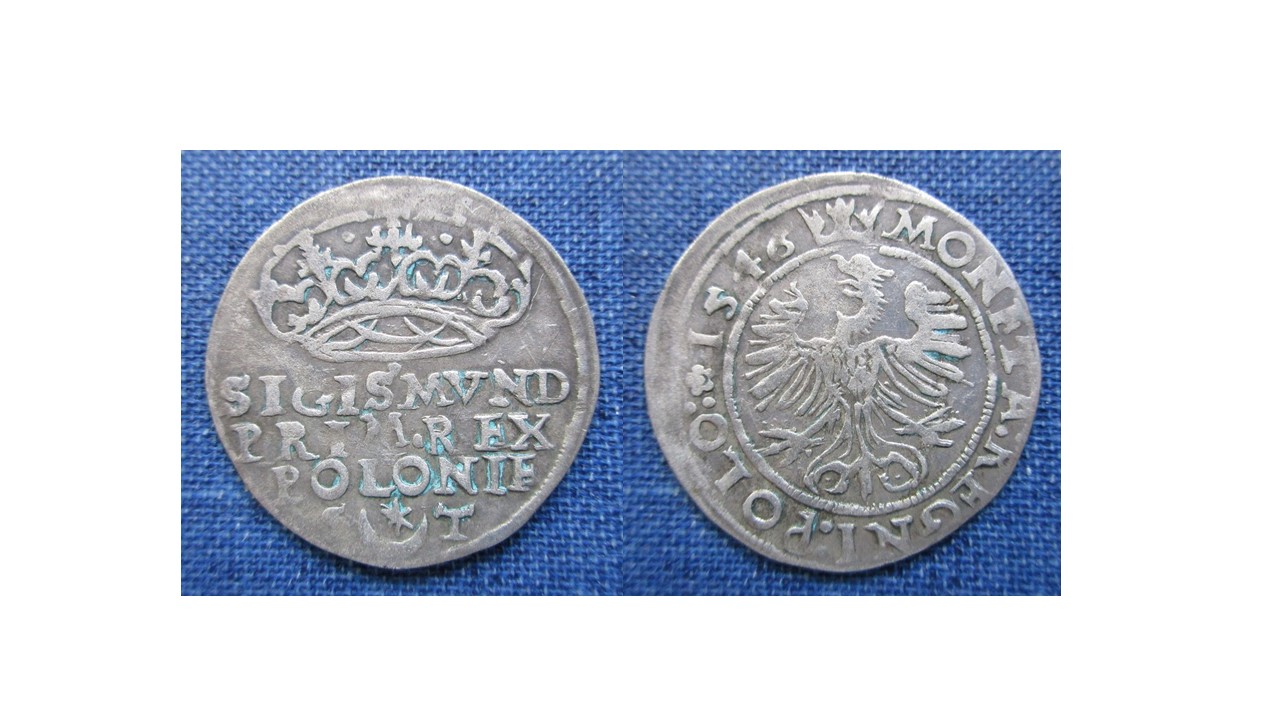 From 1386-1569 Poland and Lithuania were ruled in a "personal union" in which a single sovereign of the Jagiello dynasty usually served as both King of Poland and Grand Duke of Lithuania. However, Sigismund I (reigned 1506-1548) was sufficiently concerned about the succession of his son, Sigismund II August, that he began grooming his son from an early age, and officially co-reigned with him as king of Poland starting in 1530. In 1544 Sigismund II inherited the title Grand DUke of Lithuania from his father, though the elder SIgismund would not die until 1548. So in this pair of coins, we have issues of a co-reigning father-son from the same year. Finally, many collectors here have examples of either a Sigismund I Lithuanian halfgroat (1509-1520s), or a later Sigismund August halfgroat (1547-1560s). In 1545-46 there was a transitional style with a "fluffier" eagle than the later type, but a poorly proportioned knight and horse that makes it look like the knight is riding a pony. Edited by tdziemia
08/27/2021 08:59 am
|
|
Pillar of the Community
United Kingdom
725 Posts |
A denga of Ivan the Terrible is also the only coin I can offer for the 1540s... but since they were the same from the time he became Tsar of Russia in 1547 to his death, they aren't much help. Ivan IV Denga, 1547-1584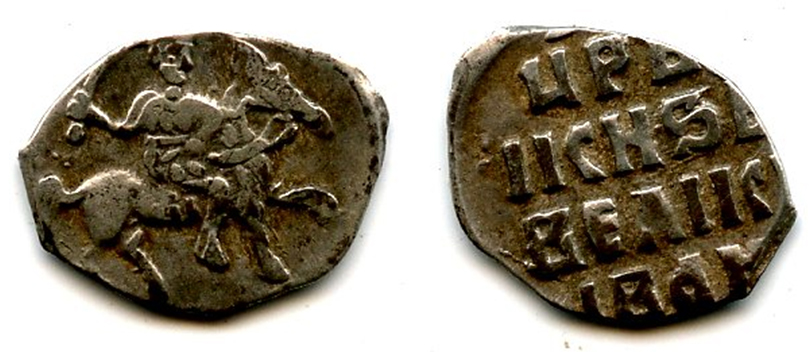 Moscow. Silver, 9x11.5mm, 0.28g. Horseman advancing right, holding a sabre. Inscription in four lines TSAR / I KNYAZ / VELIKIY / IVAN, Tsar and Grand Duke Ivan (Grishin 57). Moscow. Silver, 9x11.5mm, 0.28g. Horseman advancing right, holding a sabre. Inscription in four lines TSAR / I KNYAZ / VELIKIY / IVAN, Tsar and Grand Duke Ivan (Grishin 57).@MartiVltori yours might be an earlier denga from 1535-1547, since it just says 'Grand Prince Ivan' http://silver-copeck.ru/8000/5.html |
|
Pillar of the Community
United States
870 Posts |
Hmmm. My Ivan is pre Tsar. I wonder if that dates it to 1543-1547. These are not my specialty.
|
|
Moderator
United States
34567 Posts |
Quote:
These are not my specialty. Nor mine, but our won @j1m has a strong knowledge of these wire dengas and hopefully will weigh in on this thread. "If you climb a good tree, you get a push."
-----Ghanaian proverb
"The danger we all now face is distinguishing between what is authentic and what is performed."
-----King Adz
|
|
Pillar of the Community
Russian Federation
5186 Posts |
I believe that those single-title dengas are traditionally attributed to 1535-47. I have one of those too and that's the attribution I usually give.
I used to have a saved copy of the Kleshchinov-Grishin catalog but don't have it around at the moment, and I can't quite match this example to any of the obverses or reverses on the linked site, so can't currently give a better attribution, sorry.
EDIT: might post some other coins later. Was on vacation for the last few weeks and not really in a position to catch up...
Edited by january1may
08/28/2021 05:00 am
|
|
Pillar of the Community
United States
870 Posts |
|
|
Pillar of the Community
Sweden
2124 Posts |
Not definitely within a decade, but here is my 1540s contribution. Navarre/Bearn 1541-55, liard, Henry d'Albret, Morlaas mint (?). Billon, 1.02 g, 17 mm. Duplessy (Feodales) 1291, Roberts 5856. 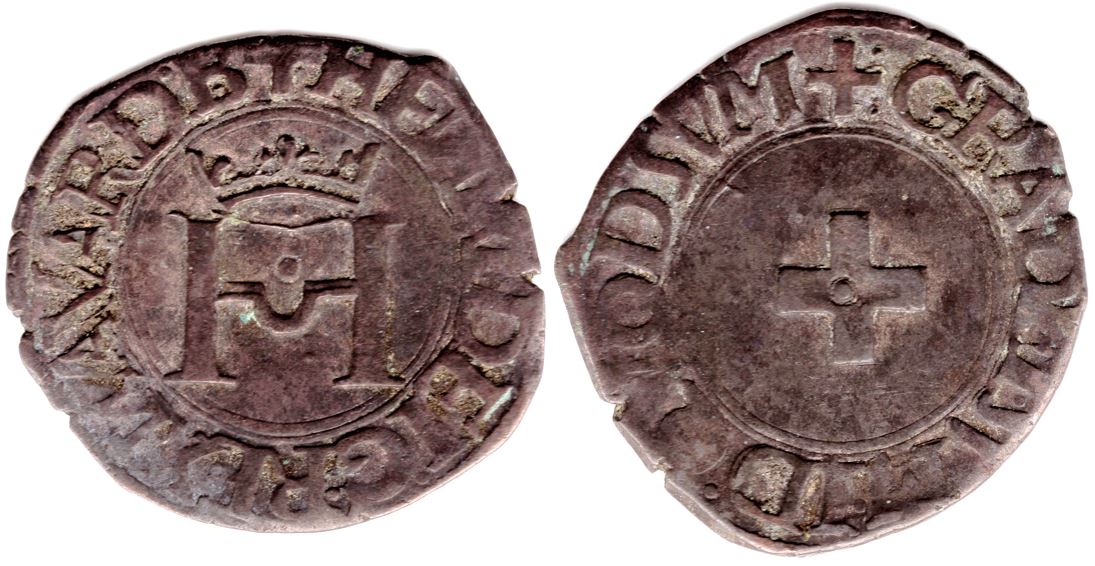 Obv: Crowned H, for Henry. Inscription: HENRIcus DEI Gratia REX NAVARrae Dominus Bearnie (Henry by Grace of God King of Navarre, Lord of Bearn). Variety with retrograde 'N's. Rev: Small cross. Inscription: GRAtia DEI SVM ID QVOD SVM (By the Grace of God, I am what I am). This is the motto of Bearn. Henry II of Navarre (who was also Lord Henry I of Bearn) ruled 1517-55. Mint records for the period have not been preserved, so dating is tentative. It is known that Navarrese coins were modeled after French counterparts (the monetary systems were harmonized), so when France changed the liard from having a cross pattee to a small cross with straight arms in 1541, so did Navarre. In addition, it has been argued that there was a development of the form of the 'S', with the 'S' on this coin belonging to an earlier type. It is conjectural, but if correct, this coin is more likely to belong to the 40s than the 50s. |
|
Moderator
United States
34567 Posts |
Quote:
In addition, it has been argued that there was a development of the form of the 'S', with the 'S' on this coin belonging to an earlier type. It is conjectural, but if correct, this coin is more likely to belong to the 40s than the 50s. That is fascinating to me @era. You don't happen to know the reference for that change in letterform do you? Thx. "If you climb a good tree, you get a push."
-----Ghanaian proverb
"The danger we all now face is distinguishing between what is authentic and what is performed."
-----King Adz
|
| |
Replies: 1,279 / Views: 81,681 |
To participate in the forum you must log in or register.
Disclaimer: While a tremendous amount of effort goes into ensuring the accuracy of the information contained in this site, Coin Community assumes no liability for errors. Copyright 2005 - 2026 Coin Community Family- all rights reserved worldwide. Use of any images or content on this website without prior written permission of Coin Community or the original lender is strictly prohibited.
Contact Us | Advertise Here | Privacy Policy / Terms of Use
|
| Coin Community Forum |
© 2005 - 2026 Coin Community Forums |
| It took 0.5 seconds to rattle this change. |
 |
|
| |
| |




 First Page
 Previous Page


 Posted 08/22/2021 07:26 am


