| Author |
 Replies: 12 / Views: 1,597 Replies: 12 / Views: 1,597 |
|
|
New Member
United States
15 Posts |
|
|
|
|
Moderator
 United States
34560 Posts |
@east, it is always helpful when you tell us what you are seeing with the coin in hand. Right now, all I am seeing are isolated tics and light scratches from circulation. As far as being wrong a bunch about what constitutes an error, I am hoping that you aren't feeling shamed by anyone here. We all (myself especially) make tons of mistakes and CCF is an opportunity to learn.
"If you climb a good tree, you get a push."
-----Ghanaian proverb
"The danger we all now face is distinguishing between what is authentic and what is performed."
-----King Adz
|
|
Moderator
United States
107554 Posts |
 The coin presented looks like a normal circulated cent. It took some hits and retained some scratches. As for being wrong a lot of times, I am wrong more times than not, but I keep trying, sometimes I get it right and that feels great. |
|
Bedrock of the Community
United States
94367 Posts |
This appears to be an ordinary lightly-circulated cent worth just face value. to the CCF! |
|
Bedrock of the Community
Canada
21910 Posts |
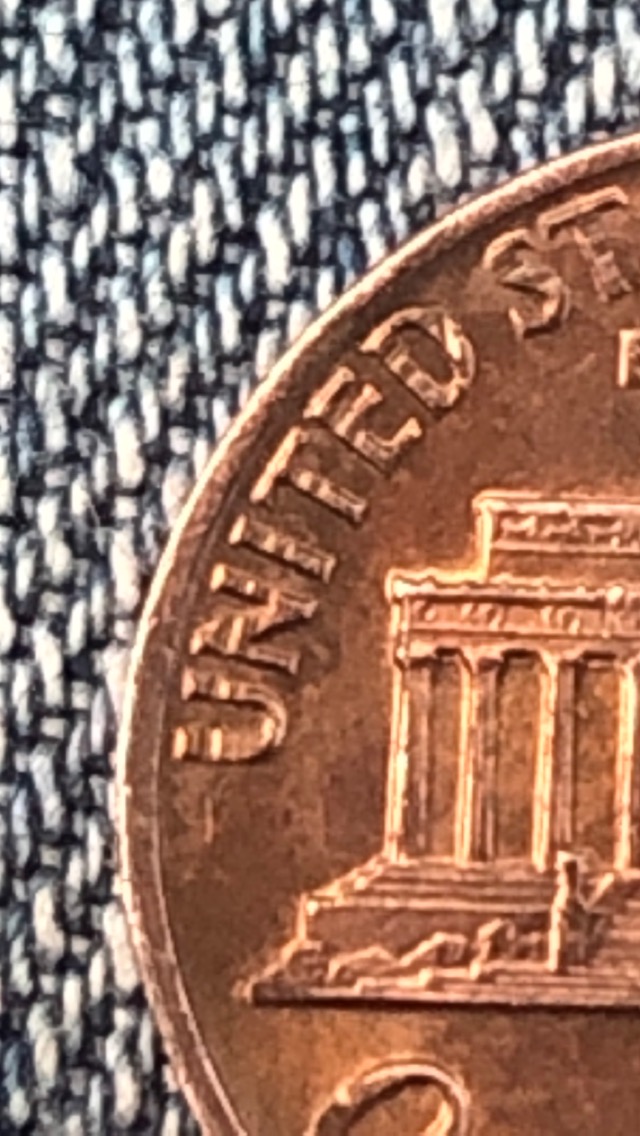
If you are referring to the dings in the letters, those are not errors but PMD. (Post Minting Damage) It is only an error if it happens during the actual striking of the coin so things like dings, scratches, discolouration, bent letters, flattened letters etc. are nearly always PMD. If you are going to be looking for errors, suggest you read up on what an actual error is. Sites like error-ref.com and wexlers are two good sites. It would also help if you studied on the minting process as to further understand what can or cannot happen during the striking of the coin. Plus you always have the people on this site who can help while you learn. |
|
Pillar of the Community
United States
1537 Posts |
Not to be the bad guy in the house, but you'll want to get accustomed to not handling almost uncirculated (AU) to brilliant uncirculated (BU) coins. Our fingers impart oils that, over time, can destroy that nice luster!
Edited by halfamind
07/21/2021 9:31 pm
|
|
New Member
 United States
15 Posts |
Thank you all! I am trying to learn, I have the blue and Red Book that should be here tomorrow, and I want to order one on errors. I was making sure it wasn't an error, because I've made that mistake but getting better, I'll stare at a coin for three days or three weeks, lol, thinking t's post mint damage or whatever, but wonder if I'm wrong. Oh, I'm sorry but I don't know how to reply to individual posts, but to answer one of the questions, no, no one has tried to shame me on here, and thank you for the concern! I've had that happen on other sites, buy everyone is helpful and honest, but no one has come off as arrogant. I've kind of studied for about 5 months, and it takes someone with keen eyesight, and someone who knows what they're looking for. I always ask just in case. If I see a penny that looks weird I'll usually look at it for a long time then finally ask, haha. I want to learn and I promise I'm really not that ignorant I'm just uneducated about the coins. There are so many and so many different varieties/errors/years, just a lot to take in. I got addicted to the Lincoln cents more than anything, I want to find something, even if it's not worth much! But I'm hooked on hunting. Pocket change, love it. Any suggestions on Errors to purchase? And other than the red and blue book, (I've asked before), what would help me the most, book wise? suggestions Edited by Easter23
07/21/2021 11:34 pm
|
|
New Member
United States
15 Posts |
Oh, and I know better than touch them, I gotta stop that. And I know not to clean them, I did it twice haha and apparently it's a no no, I destroyed a couple face value coins and read it was frowned upon by collectors and they can tell.
|
|
Bedrock of the Community
United States
10635 Posts |
Quote:
I destroyed a couple face value coins and read it was frowned upon by collectors and they can tell. Never never clean your coins, and yes, we can tell. More importantly, cleaning destroys any numismatic value they may have.  |
|
Bedrock of the Community
United States
62064 Posts |
Also having the right terms will help: 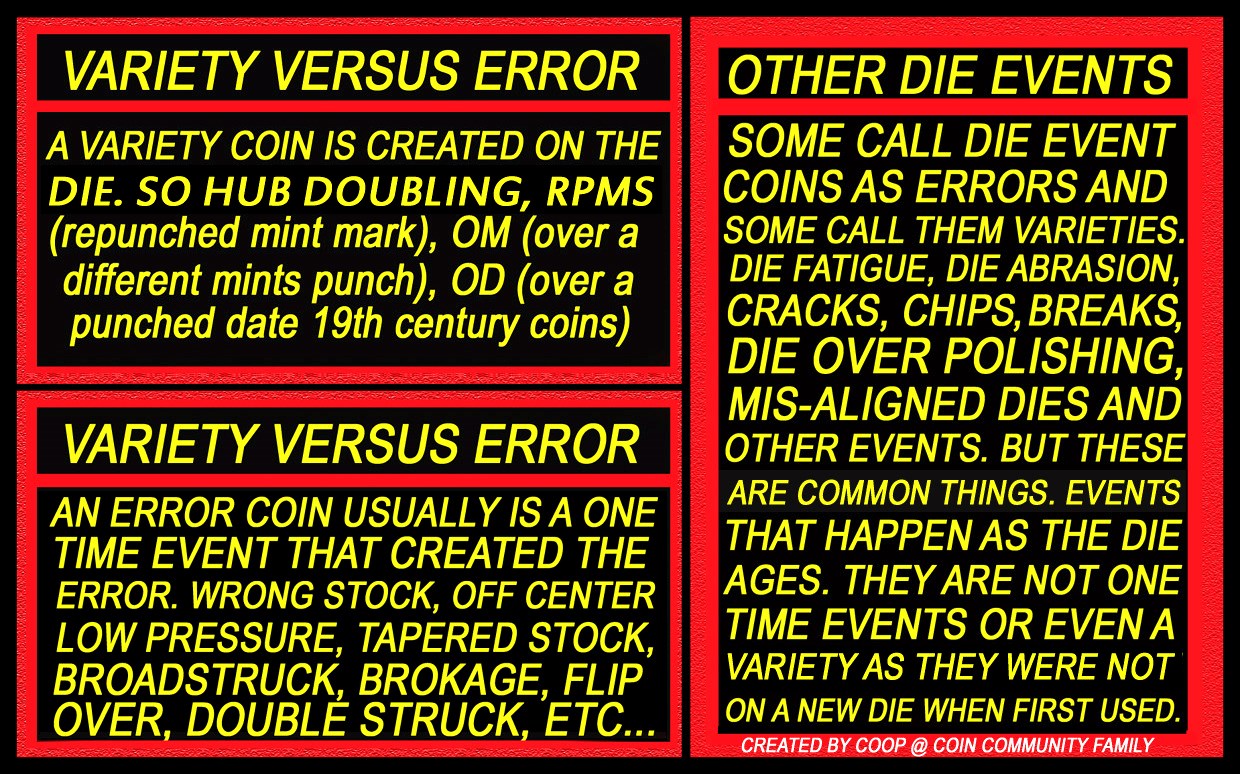 Coin damage is not an error. It is post strike. Even Machine Doubling is post strike. Varieties coin coins are made on the die. So the first coin till the last it is a die variety. Machine Doubling does not change the status, it just a machine doubled variety. But to a seasoned variety collector, they despise them. It is a distraction on the variety. The coin graders will grade a machine doubled coin, and do not have issues with it. But variety collectors will move on to a coin that is not a problem coin to them. Errors coin are a one of a kind coin. A more of a one time happening. Die events are issues with the die. Many different types of these. But to a serious variety collector, they look for the earlier die states and not distracted to die event coins. |
|
Moderator
United States
34560 Posts |
"If you climb a good tree, you get a push."
-----Ghanaian proverb
"The danger we all now face is distinguishing between what is authentic and what is performed."
-----King Adz
|
|
Pillar of the Community
United States
3237 Posts |
@Coop Mike Diamond has said in responses I've read here that he considers MD to be a minor form of error as it occurs before the coin leaves the striking chamber for the final time. I prefer this definition of errors to the one you gave, since obvious errors like double strikes and double denomination coins would not be errors under your definition.
|
|
Valued Member
United States
76 Posts |
Good pics though...and coin is super gleamy and bright for sure.
|
| |
Replies: 12 / Views: 1,597 |
|









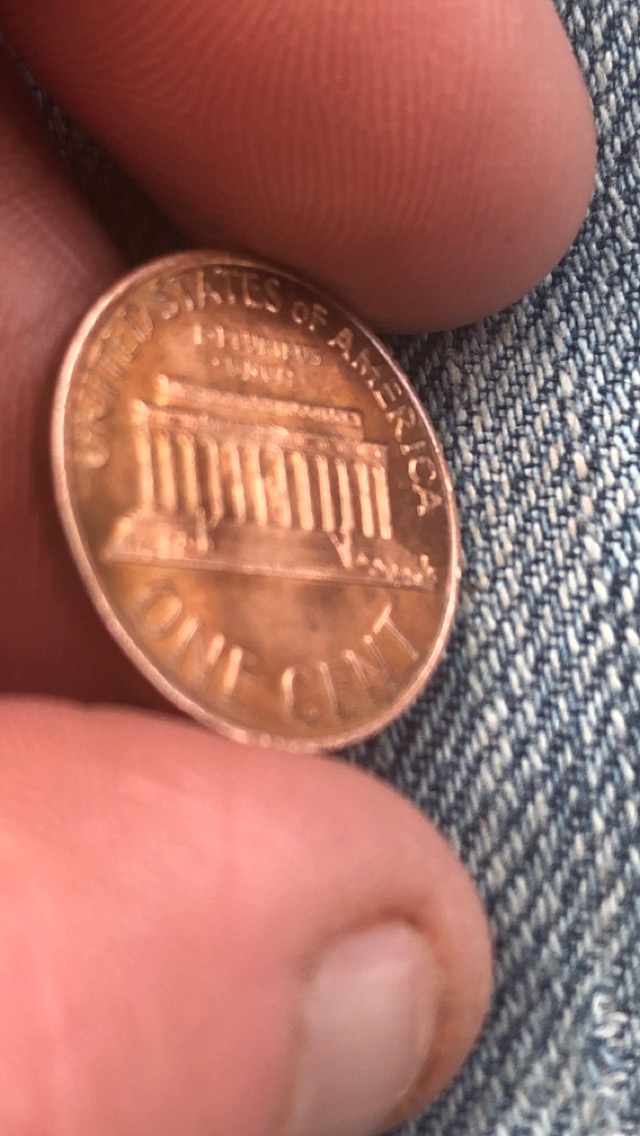
 and I am careful to give my opinions on what I think is an error because I've been wrong most times. Will someone elaborate on this penny, if you don't mind?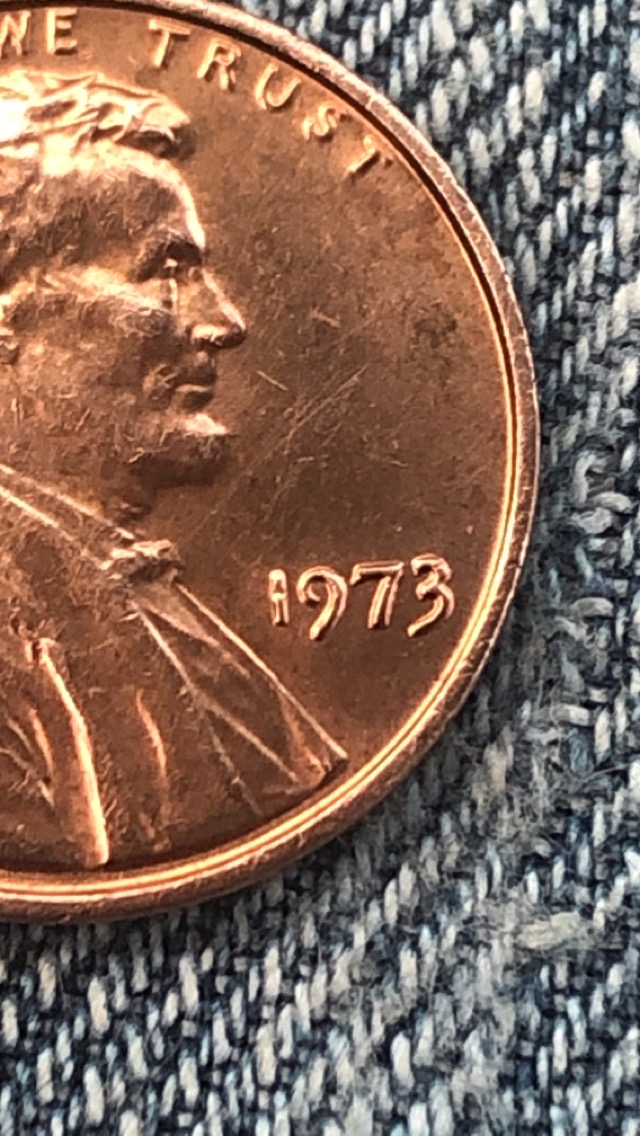
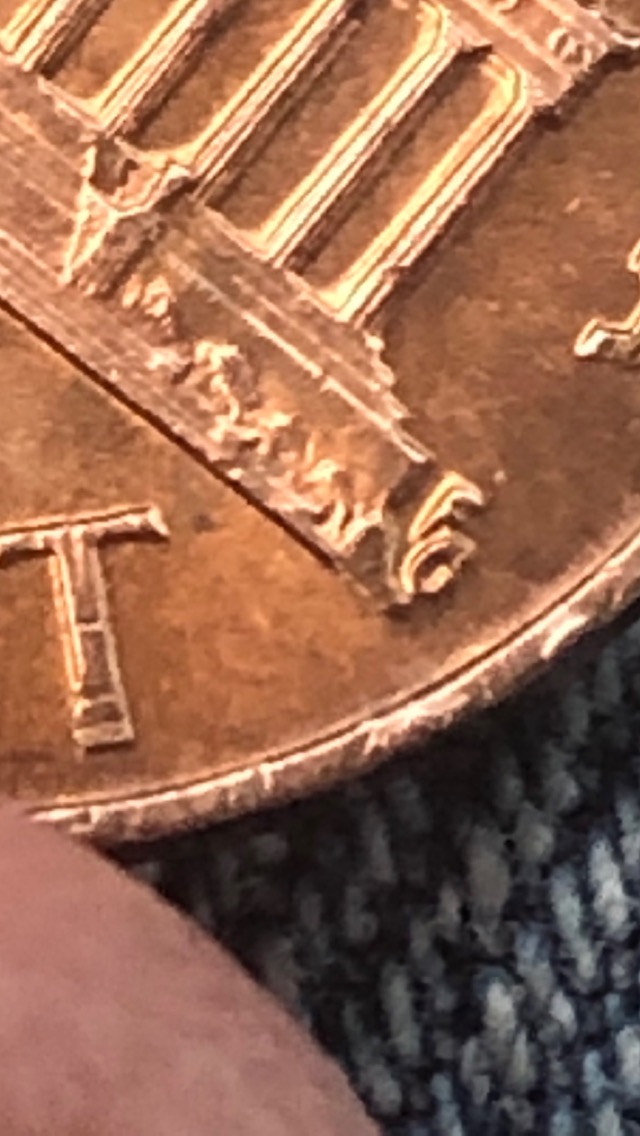


 Posted 07/21/2021 8:45 pm


 Uncirculated American Silver Eagles


