This time out, I thought I'd share an interesting twist in the development of the reverse design of the 1924 Huguenot-Walloon Tercentenary half dollar.
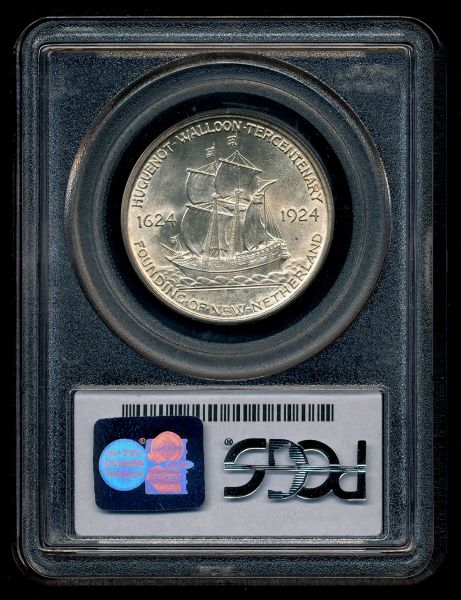
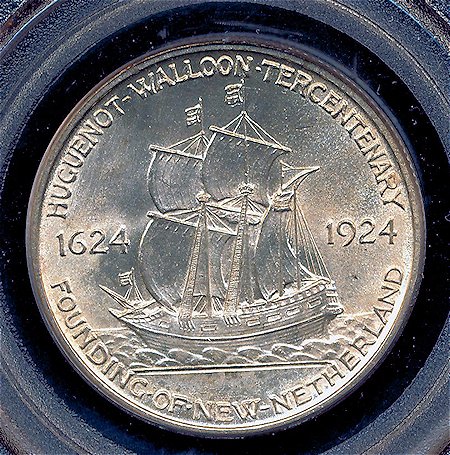
The coin, as struck by the US Mint, features the
Nieu Nederland (English:
New Netherland) on its reverse under full sail heading left on the coin - this orientation is often used to indicate a voyage that is heading west, in this case, from Europe to the New World.
While going through the
Tenth Report of the National Commission of Fine Arts (CFA) for 1921-1925, I came across a photograph of the coin's models that appear to have been near-final in most respects, with the orientation of the ship on the reverse being one significant aspect that would be changed before the coin's dies were created and the coins were struck. In the following illustration of the coin models, the ship is facing right, giving the impression it is heading east and on its way back to Europe. On the coin, of course, the ship is heading in the opposite direction.
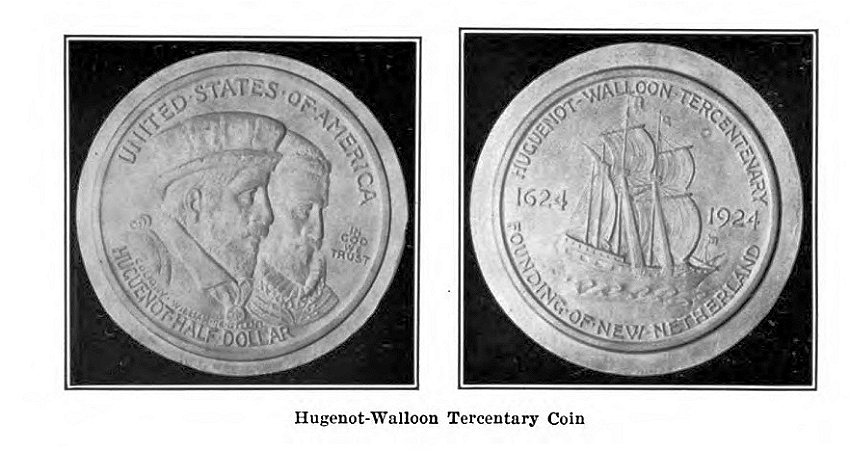
Though the physical appearance of the ship on the coin is similar to that depicted on the models, there are enough changes to make it clear it is not the same ship
(Remember, models at that time were created by hand not computer, a mouse click to create a mirror-image swap wasn't an option!). For example, the angle of the ship on the coin is such that it provides a view of the ship's stern; the stern is not seen on the models. A close examination of the masts and sails will also yield differences between the designs. The waves under the ship have a different shape/style and orientation on the coin vs. the model, and the size and shape of the "92" in "1924" also appears to have been updated on the coin.
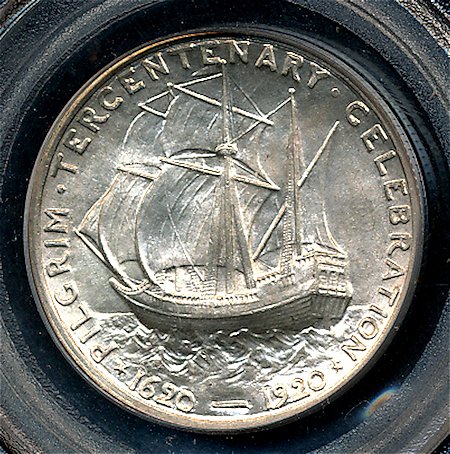
James Earle Fraser, the sculptor member of the CFA was very critical of George Morgan's models for the coin and is known to have worked with Morgan to revise and improve the models (including hands-on work). It seems highly possible that changing the ship's orientation was one of Fraser's recommendations as he was of the opinion, when describing Morgan's models, that "the ship is ill designed." The change ultimately seen on the struck coin brings it into close alignment with the
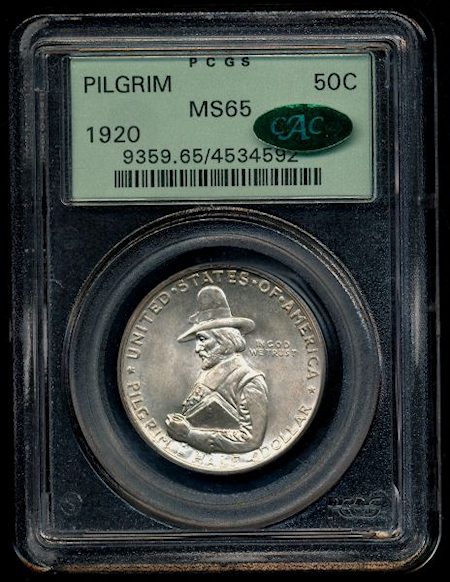
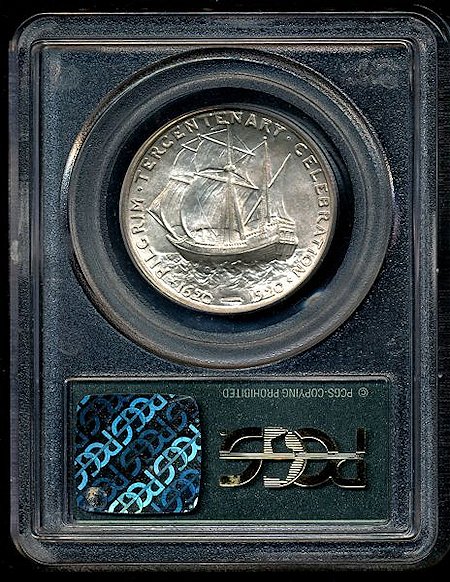
Mayflower design seen on the 1920-21 Pilgrim Tercentenary half dollar(s).
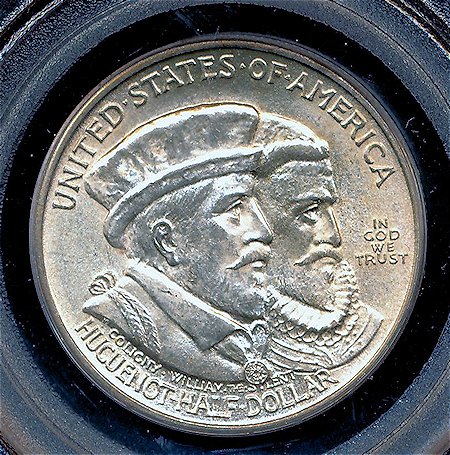
1924 Huguenot-Walloon Tercentenary Half Dollar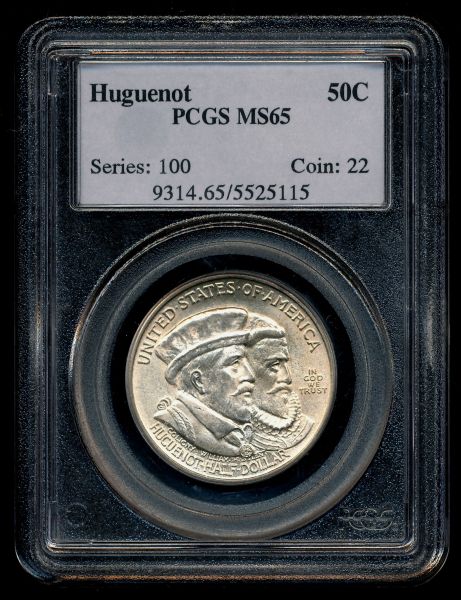
 1920 Pilgrim Tercentenary Half Dollar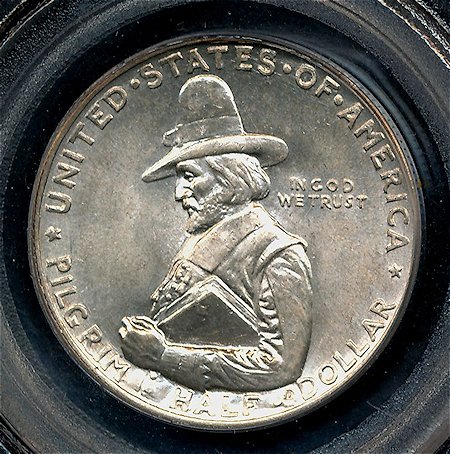
To learn about other aspect of the Huguenot-Walloon half dollar, check out:
-
1924 Huguenot-Walloon Tercentenary-
1924 Huguenot-Walloon Tercentenary - Revisited-
1924 Huguenot-Walloon Tercentenary - Coins with Hats Thread - Engravings of Admiral Gaspard de Coligny and William the Silent + Discussion of why they were selected for the coin
For more about commemorative coins and medals, see:
Read More: Commems Collection.






 Posted 07/28/2021 10:46 am





