| Author |
Replies: 36 / Views: 4,618 |
|
|
|
Pillar of the Community
United Kingdom
856 Posts |
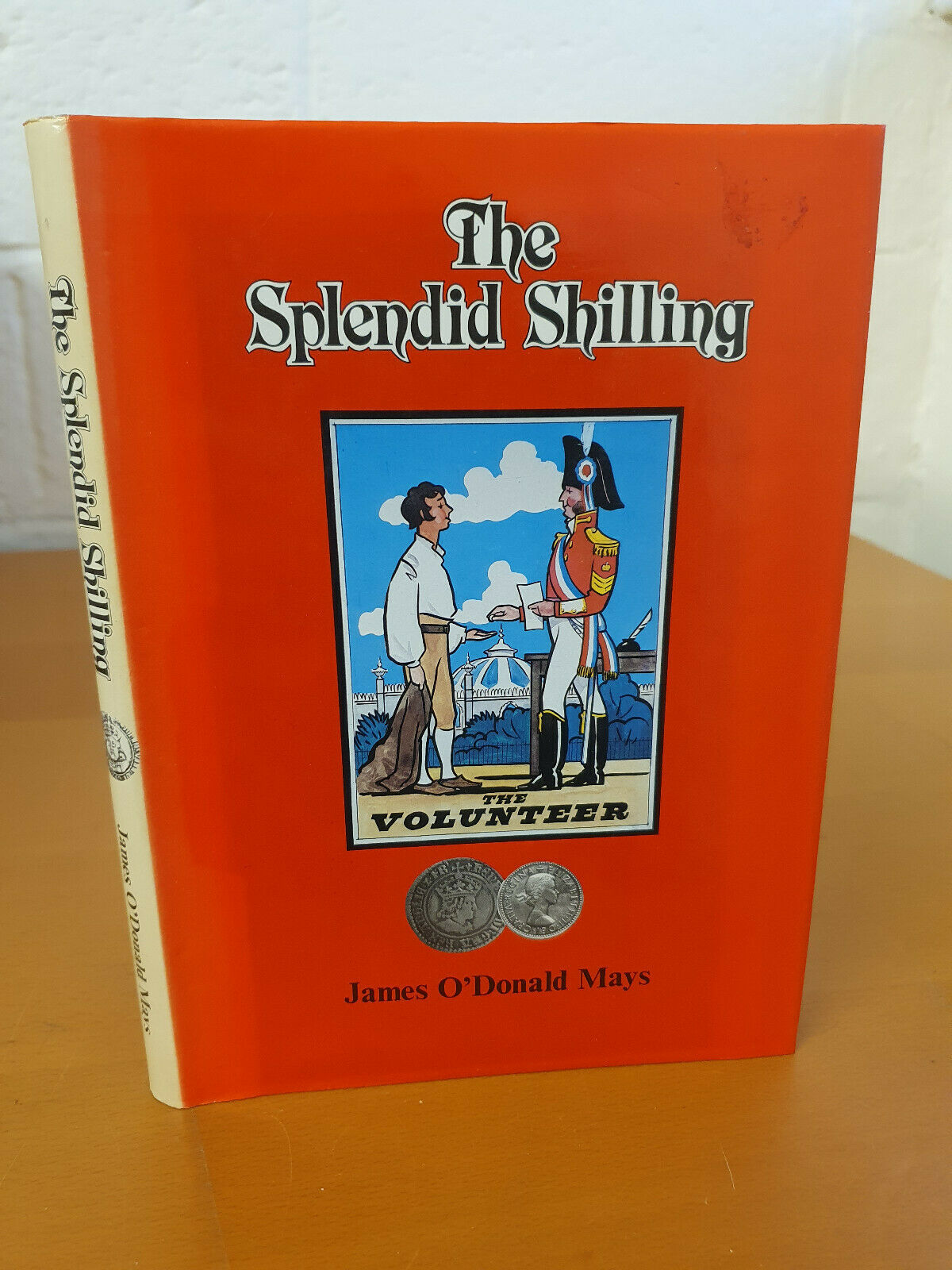
Shillings you say?!  This is what got me started collecting the things Princetane. There appears to be a copy on ebay.co.nz for $17 if you're interested (ships from UK, I have no connection to the listing) 
Edited by Tom Goodheart 03/26/2022 11:06 am
|
|
Pillar of the Community
United Kingdom
725 Posts |
Yes shillings are great. They're larger, more affordable portrait coins. I collect hoard coins, which is very compatible with collecting Stuart shillings. This one's unusual in that the hoard had nothing to do with the English Civil War. James I 2nd Issue Shilling, 1605-1606
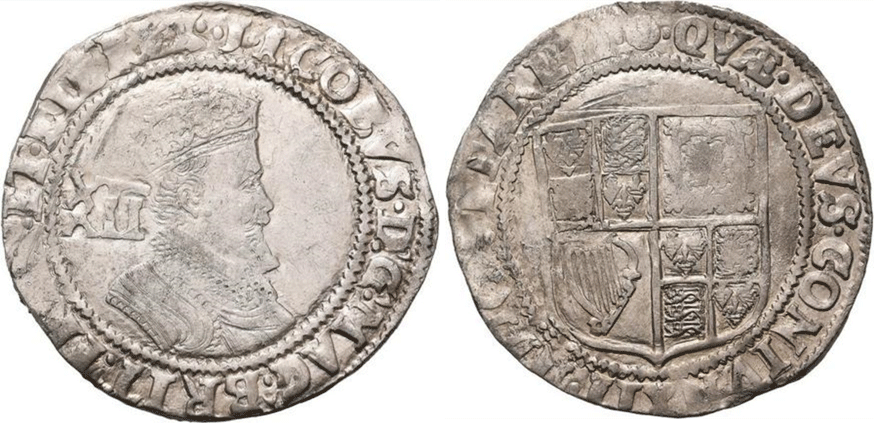
 Tower. Silver, 31mm, 5.8g. 4th bust, value to left; ·IACOBVS·D·G·MAG·BRIT·FRA·ET·HIB·REX·. Quartered arms, rose privy mark; QUAE·DEVS·CONIVNXIT·NEMO·SEPARET (S 2655). From the Kempen (North Brabant, Netherlands) Hoard, buried in 1616, probably by a Dutch trader. It cointained coins from Spain, England and the Netherlands.
Edited by JohnConduitt 03/26/2022 12:52 pm
|
|
Pillar of the Community
 4628 Posts |
I agree about affordability, some are expensive but when an average to Fine Halfcrown from the 1600s or 1700s costs at least $250 Fine and $125 Good, its expensive. Consider that to my shillings 1868 EF - $80 1836 VF - $30 1551/3 Fine/bent - $98 1596 VG - $125 1739 F - $100 1758 gFine darkened - $58 1745 Fine+ - $89 1932 - 1936 EF/AU - $20 - $29 EACH 1937 Proofs - $30 and 1/7 of $200 Thats a value of money for a old coin. Plus shillings (1504) have a much older pedigree than halfcrowns (1470 ¼ryal and 1526 gold, but no silver until 1551) and the Florin (1849!) Probably won't buy the book as ebay.co.nz does not exist, we don't have our own ebay, its ebay.com.au and based out of Ostralia which means scams and jumbo postage and papackaging costs. Also many ebay sellers specifically exclude New Zealand from places they ship too. It has to be on Trade Me or a private seller for me to buy it (My British coin books came from the British coin book producer!)
|
|
Pillar of the Community
United Kingdom
725 Posts |
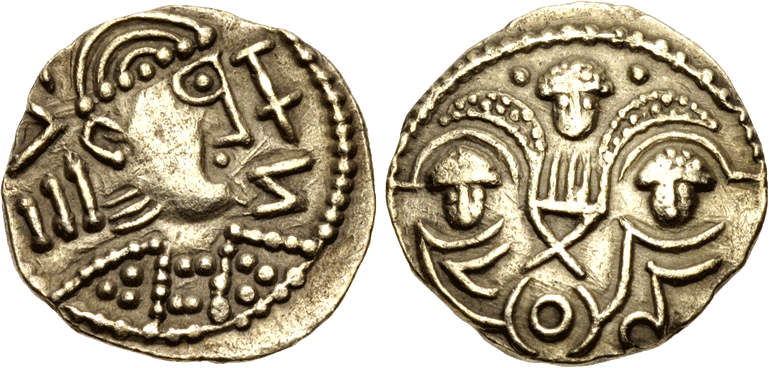
Those are good value shillings. I have shillings for all the Georges and they were all less than £100, but before that it gets harder. Quote: Plus shillings (1504) have a much older pedigree than halfcrowns (1470 ¼ryal and 1526 gold, but no silver until 1551) and the Florin (1849!) Some say the first English coins were gold shillings, which would make them very much older. Æthelberht I, King of Kent's law code of the early 600s referenced shillings as being worth 20 sceattas (pennies), probably in terms of weight in gold. Saxon Post-Crondall 'Two Emperors' Thrymsa/Shilling, 645-675
 Kent. Pale gold, 13mm, 1.2g. Diademed and draped bust right; pseudo legend around. The reverse copies the Roman Two Emperors with winged Victory type (SCBC 767).
|
|
Pillar of the Community
 4628 Posts |
wow! But you would not expect many of us to have something like that. That is like a rare museum piece.
7th century thyrmsas and sceattas are just awe inspiring, I know how they started as gold, but progressively got more silvery over time.
I read the shilling is based on the old Roman solidus made up of 20 or 12 denarii or something.
That coin was worth 20 silver pennies, so more than a standard shilling worth only 12 pence. 20 pennies would be a 1/8 mark or 1/12 of a pound, a quarter noble from 1351 and now of course 1/8 or 16.666 decimal pence.
|
|
Pillar of the Community
United Kingdom
725 Posts |
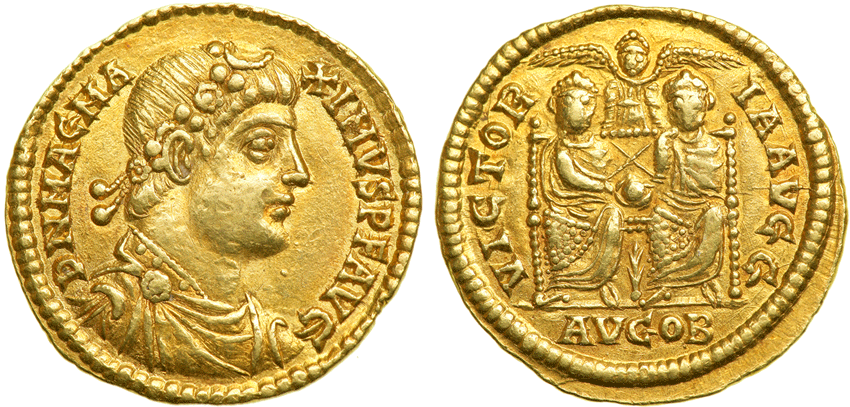
Quote: 7th century thyrmsas and sceattas are just awe inspiring, I know how they started as gold, but progressively got more silvery over time. Yes they are, and very different to other British coinage. It wasn't long until they only had silver pennies. Even this one is 'pale' gold, which is somewhere around 10-40% gold. Quote: I read the shilling is based on the old Roman solidus made up of 20 or 12 denarii or something. Yes the old abbreviation l.s.d. (pounds, shillings and pence) stood for librae, solidi and denarii. The Romans had the 'pound' as a weight. The symbol £ is based on the L of libra (which also gave us lb for the pound weight). The thrysma/shilling above is so much copied from the solidus, it even has the same design. Magnus Maximus Solidus, 383-388
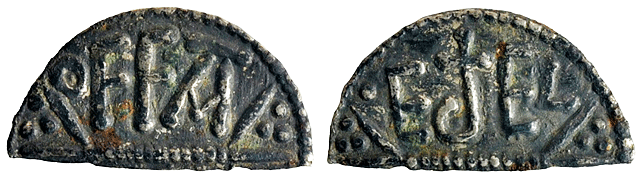
 London-Augusta. Gold, 21mm, 4.59g. Rosette-diademed, draped, and cuirassed bust right, seen from front; D N MAG MA-XIMVS P F AVG. Magnus Maximus and Theodosius I seated, jointly holding globe; Victory above facing between; vertical palm branch under throne; VICTOR-IA AVGG, AVGOB in exergue (RIC IX 2b).Quote: That coin was worth 20 silver pennies, so more than a standard shilling worth only 12 pence. 20 pennies would be a 1/8 mark or 1/12 of a pound, a quarter noble from 1351 and now of course 1/8 or 16.666 decimal pence. The Romans divided a 'libra' into 12 uncias (ounces) but their system was reformed so many times it got very confused. When Charlemagne came along he based his coinage on some estimate of what he thought the Roman system had been. It's Charlamagne's division of librae into 20 solidi and solidi into 12 denarii (1l. = 20s. = 240d.) that Offa imported when he introduced the flat Carolingian pennies to England, which would remain barely changed until Henry VII. Offa Cut Halfpenny, Light Coinage, 780-792
 London. Silver, 16mm, 0.43g. Offa (Rex). Aethel(weald), moneyer (S 904).
Edited by JohnConduitt 03/29/2022 07:23 am
|
| |
Replies: 36 / Views: 4,618 |
To participate in the forum you must log in or register.
Disclaimer: While a tremendous amount of effort goes into ensuring the accuracy of the information contained in this site, Coin Community assumes no liability for errors. Copyright 2005 - 2026 Coin Community Family- all rights reserved worldwide. Use of any images or content on this website without prior written permission of Coin Community or the original lender is strictly prohibited.
Contact Us | Advertise Here | Privacy Policy / Terms of Use
|
| Coin Community Forum |
© 2005 - 2026 Coin Community Forums |
| It took 0.28 seconds to rattle this change. |
 |
|