The 1923 Monroe Doctrine Centennial half dollar features two long-term Federal public servants via the conjoined, left-facing portraits on its obverse. Depicted are President James Monroe, the fifth US President, and his Secretary of State John Quincy Adams (JQA). John Quincy, the son of John Adams, the second US President, succeeded Monroe to become the sixth US President. Monroe is the portrait in the rear of the pair. Monroe served as the US President from March 4, 1817 to March 4, 1825.
Why is the President taking a "back seat" to the Secretary of State on the coin? See below for the answer!
James MonroePresident James Monroe Portrait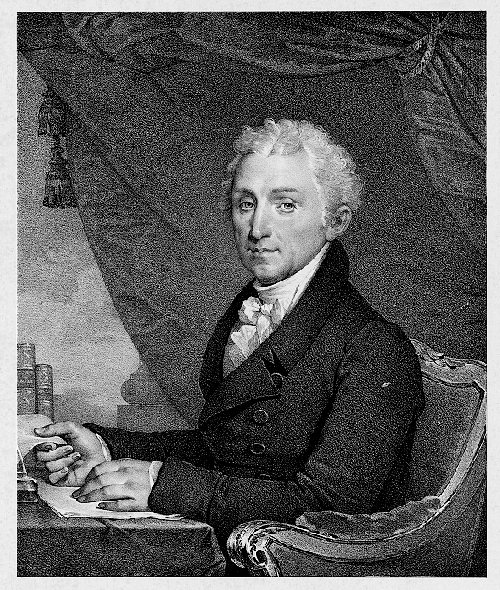 (Image Credit: Library of Congress, Prints and Photographs Division. Public Domain.)
James Monroe was born in Virginia on April 28, 1758. In 1774, he enrolled at William & Mary College to study law, but soon dropped out and joined the fight against the British by enlisting in the Continental Army (1775).
While serving under General George Washington, Monroe distinguished himself at the Battle of Trenton on December 26, 1776. Monroe was second-in command of a Company that was led by Captain William Washington, a second cousin of George Washington. When Captain Washington was shot and incapacitated, Lieutenant Monroe took over. Unfortunately, he was shot in the shoulder by a musket ball while leading a charge of his men and was also incapacitated to the extent that he had to be taken from the field of battle for medical treatment. Monroe, who was bleeding profusely, had his life saved by Dr. John Riker, a local physician who had volunteered to join up with the American forces the day before.
Monroe continued to serve in the Army and Virginia militia for several years, eventually attaining the rank of Colonel. After resigning his commission in the military, he returned to school, earned his law degree, was a member of the Continental Congress from Virginia, got married, practiced law in Fredericksburg, VA and went on to launch a highly-successful political/public service career that included:

US Senator from Virginia / November 9, 1790 -- May 27, 1794
US Minister to France / August 15, 1794 -- December 9, 1796 / Under George Washington
US Minister to the UK / August 17, 1803 -- October 7, 1807 / Under Thomas Jefferson
Governor of Virginia / Two non-consecutive terms: December 28, 1799 -- December 1, 1802 & January 16, 1811 - April 2, 1811
United States Secretary of State / April 6, 1811 -- March 4, 1817 / Under James Madison
United States Secretary of War / September 27, 1814 -- March 2, 1815 / Under James Madison
5th United States President / March 4, 1817 -- March 4, 1825 / Followed James Madison
John Quincy AdamsSecretary of State John Quincy Adams Portrait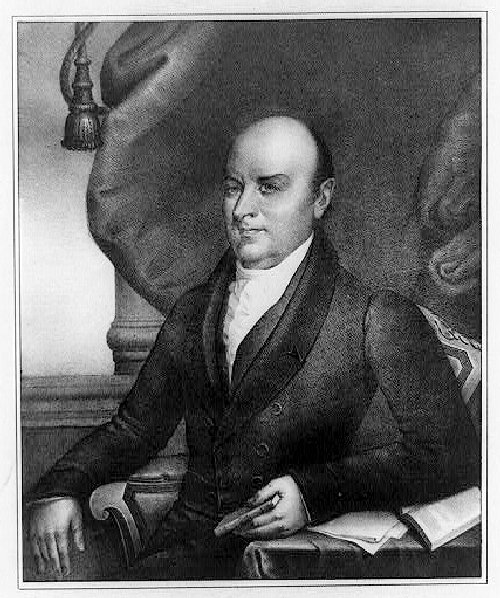 (Image Credit: Library of Congress, Prints and Photographs Division. Public Domain.)
At first glance, it seems odd that the portrait of James Monroe, the US President and leader of the country, not to mention the man whose name is permanently linked to the Doctrine, is positioned behind that of John Quincy Adams, the Secretary of State. But there is a reasonable explanation: the US was becoming concerned about the possibility of Spain attempting to regain its South American colonies and JQA was the man who convinced Monroe to have the United States enunciate the principles that warned against such activities. Adams also recommended that Monroe make his announcement independently vs. making a joint announcement with Great Britain.
JQA was responsible for outlining the principles Monroe announced and largely wrote the pertinent section of Monroe's address to Congress. In some respects, JQA is the reason there exists a "Monroe Doctrine." For that reason, JQA's prominent, forward position on the coin makes plenty of sense!
As did Monroe, John Quincy Adams had an extended public service career in office that included:
US Minister to the Netherlands / November 6, 1794 -- June 20, 1797 / Under George Washington
US Minister to Prussia / December 5, 1797 -- May 5, 1801 / Under John Adams
US Senator from Massachusetts / March 4, 1803 -- June 8, 1808
US Minister to Russia / November 5, 1809 -- April 28, 1814 / Under James Madison
US Minister to the UK / June 8, 1815 - May 14, 1817 / Under James Madison
Secretary of State / September 22, 1817 -- March 3, 1825 / Under James Monroe
6th United States President / March 4, 1825 -- March 4, 1829 / Followed James Monroe
US Representative from Massachusetts / March 4, 1831 -- February 23, 1848
1923 Monroe Doctrine Centennial Half Dollar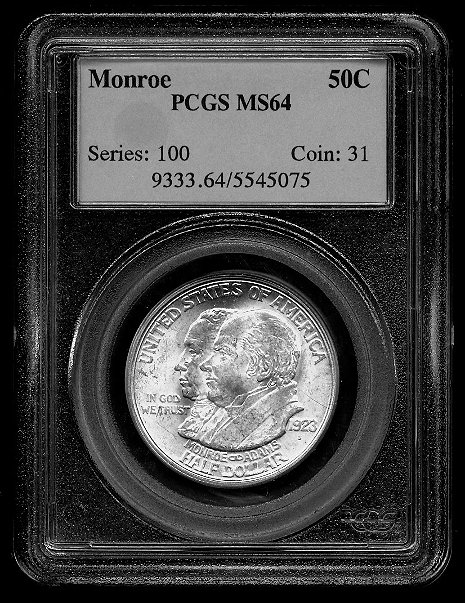
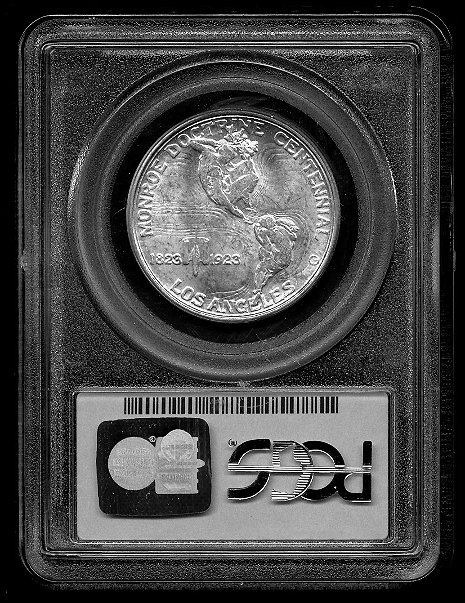
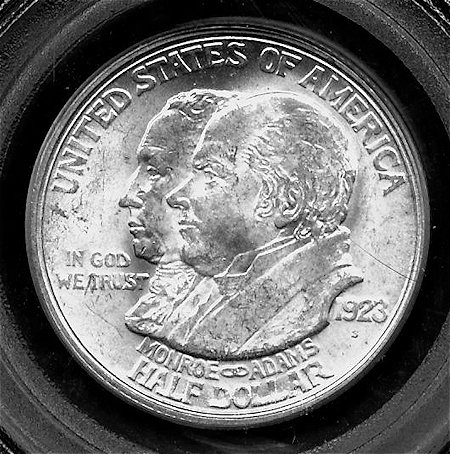
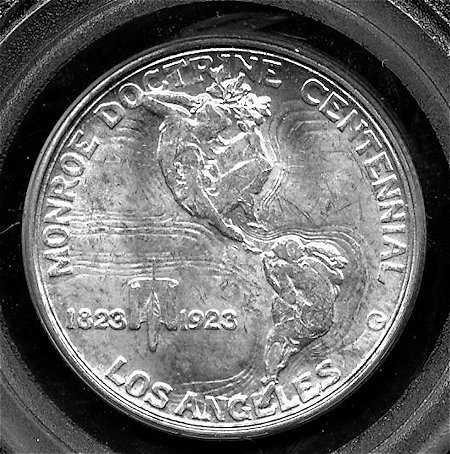
For other of my posts about commemorative coins and medals, including more on the history of the
Monroe Doctrine half dollar and discussion of its design elementss, see:
Commems Collection.




 First Page
 Previous Page




 Posted 05/17/2022 2:48 pm