| Author |
 Replies: 5,946 / Views: 249,321 Replies: 5,946 / Views: 249,321 |
|
|
|
Moderator
  United States
196100 Posts |
September Bump.  Still looking to get past 1341 C. E. (A. H. 742/741).   |
|
Pillar of the Community
Australia
2583 Posts |
Quote:
In any case, Jani Beg's reign seemingly started late enough in 742 AH that this coin should have been assigned to 1342 AD one way or another; I really should have caught that part, at least. (Wikipedia actually says that his reign started already into 1342.) Back again. I was just going over the comment above from @j1m And I must have missed this bit, or it didn't sink in. The same logic could possibly have been used to block many other AH dated coins, with or without clear dates. It brings me back to my original thoughts that we need to do one of two (or perhaps three) things to progress this game further. 1. Settle on an acceptable converter of AH dates. If the converter shows that there is more of the CE year coinciding within the AH year, then the coin qualifies, even if the majority is just one day. 2. Notwithstanding the clarity of a date, apply the same measure of inclusion for all coins, as was applied to @JohnConduitt's AH742 coin to exclude it. If it cannot be shown through investigation that the coin fits precisely within a CE year, then it doesn't get accepted. 3. Exclude AH coins from the game. The second and third method seems a bit harsh to me, I am sold on the first choice, but that doesn't make it correct. I don't see myself participating any further, unless a decision is made on a clear mode of acceptance. Enough said. The Ox moves slowly, but the Earth is patient.
|
|
Moderator
United States
196100 Posts |
Option 3 is never going to happen in my topics.  Option 1 is the easiest, but option 2 has some validity. If a coin can be dated to the non-majority CE year—by using a depicted ruler's reign, for example—we can use it for that year. I believe we should certainly move back when three AH coins are posted that cover two CE years. For example, AH 743, 742, 741 spans over CE 1342 and 1341. That being said, I am always inclined to defer to J1M's opinion* here, as he has much more invested in these investigations than I do. The progress we make here is really a pay-off to his work. Without it, the wonderful contributions to this topic would just be eye candy.  Thoughts?  * As long as he does not try to suggest Option 3. That one has already received my veto. * As long as he does not try to suggest Option 3. That one has already received my veto. |
|
Pillar of the Community
United States
1871 Posts |
I drafted this a while back, but now seems like a good time to post it. My examples concentrate mostly on AH/CE conversion since that is most common in this thread. Other calendars could be approached the same way. Here's my opinion on the calendar conversion situation, fwiw. The rules of the thread state, "Common era dating is preferred, but it is acceptable if the date can be converted from another calendar." So the rules require conversion to Common Era dating, but don't specify exactly what form that CE dating should take. I think that's really what is up for debate at this point. The way I see it, we have four reasonable options. The year minted on a coin must fall mostly in: A. the Gregorian year for all dates, including pre-Gregorian era B. the Julian year for dates prior to the creation of the Gregorian calendar, and the Gregorian year for dates after C. either the Gregorian OR Julian year D. both the Gregorian AND Julian year The arguments to each option: A. This usage (proleptic Gregorian) is allowed, but not required, under ISO 8601, an international standard for communication of date and time. https://en.m.wikipedia.org/wiki/ISO_8601 * B. This would initially appear to the the most historically accurate option, but many (most?) countries that used the Julian calendar did not change to the Gregorian calendar for a long time, and at many different times. On the other hand, coins from those would likely be dated with CE dates in the first place, so maybe that isn't relevant to this topic. C. Give ourselves a few days of leeway in the era of few to no CE dated coins D. Ease the doubt in "correctly" converting to CE dates All of these options assume that the CE year starts on January 1 which is not consistent in the Julian calendar throughout history. It is especially relevant to options "B" and "D." Additionally, the back-calculated start day of any given Hijri calendar month may not be perfectly historically accurate since (as I understand it) the months started based on the literal observation of the moon which is weather (and thus also location) dependant. Again, I don't think that is relevant to calculations for the purpose of this topic since the year would still have the same number of days, unless the moon couldn't be observed to start the new year (maybe). I guess I'm just saying it seems like a similar situation to the first month of the year changing in CE dating. There are obviously some exceptions where the date on the coin doesn't tell the whole story. For example, the situation as recently discussed where it is known that the ruler minted on a coin didn't come to power until the end of the Hijri year on the coin. This reduced the number of days which could be used to determine if it falls mostly within a CE year. In this case it seems to have ruled the coin out, but the opposite is also possible for different coins. Frozen dates that are not obviously frozen dates without addition context could be another stumbling block. How can we know which calendar (Julian or Gregorian) is used by each online converter? The converter I was using for a long time is this one https://www.muslimphilosophy.com/ip/hijri.htm. By using my new preferred converter ( https://www.muqawwim.com/), I was able to determine that the Muslim Philosophy converter accounts for Julian and Gregorian as in option "B" above. The converter linked in @ttkoo's post seems to use the Gregorian calendar. That is, 1 Rajab 742 was converted to December 18, 1341 CE versus December 19 in the Converter for Near East Historians' Gregorian conversion. The Muslim Philosophy converter returned December 11, 1341 CE (uses the Julian calendar for this CE year). My best guess on the one-day discrepancy is that it could come from a different method of calculating Gregorian leap years in the pre-Gregorian era between the two converters. How do these options fit with the upcoming CE year in question (1340)? A. 1340 CE can be fulfilled by AH 740 or 741 since 1 Rajab corresponds to January 10, 1340 CE and December 29, 1340 CE, respectively, using the proleptic Gregorian calendar B. Same result as A since 1 Rajab 740 corresponds to January 2 and 1 Rajab 741 corresponds to December 21, 1340 CE (Julian calendar) C. AH 740 or 741 are each acceptable to fulfill 1340 CE using your conversion of choice D. Again, both years convert to 1340 CE using both Julian and Gregorian and therefore either would be acceptable to move on. You can see that 1340 CE was a not a great example to differentiate these options, but it does clear up that either AH 740 or 741 can be used to fall back to 1339 CE (within two days, depending on the method). For unification purposes, it could first be decided what conversion method satisfies a coin being from a target CE year. Then we could choose a converter that best meets the needs of that conversion method. *The link to the actual ISO publication is in the external links if you'd like to read it. I'll admit that I only read the Wikipedia article. Edited by bd251
09/03/2025 12:04 pm
|
|
Moderator
United States
196100 Posts |
That is a lot to take in. I have some thoughts, but I am going to sit on them for a bit. |
|
Pillar of the Community
Australia
2583 Posts |
Agreed it is a lot to take in and consider. Nicely put together, bd251.  (Picking up on the upcoming CE year. It's 1341, not 1340. Just saying.) I have a 740AH coin ready for 1340CE provided that it is an acceptable conversion. It will be interesting, and important, to see @J1m's take on this discussion. For example, for the purposes of progressing this game, there are any number of 1341 CE Phillipe VI coins currently available in MA Shops at 80 to 90 $US. But I personally wouldn't outlay that much if there was a far cheaper acceptably dated AH coin option available. Contrarily, I would seriously consider purchasing CE datable gros or double parisis, if I knew with some certainty that there weren't any other options likely available. The Ox moves slowly, but the Earth is patient.
|
|
Moderator
United States
34562 Posts |
Quote:
C. Give ourselves a few days of leeway in the era of few to no CE dated coins This one has my vote. "If you climb a good tree, you get a push."
-----Ghanaian proverb
"The danger we all now face is distinguishing between what is authentic and what is performed."
-----King Adz
|
|
Moderator
United States
196100 Posts |
Quote:
Picking up on the upcoming CE year. It's 1341, not 1340. Just saying.  Quote:
I have a 740AH coin ready for 1340CE provided that it is an acceptable conversion. |
|
Pillar of the Community
Russian Federation
5186 Posts |
Sorry for being absent for so long; I was (and still am) on a vacation in Germany, and didn't have a lot of free time in the last few days... Quote:
The same logic could possibly have been used to block many other AH dated coins, with or without clear dates. It brings me back to my original thoughts that we need to do one of two (or perhaps three) things to progress this game further.
1. Settle on an acceptable converter of AH dates. If the converter shows that there is more of the CE year coinciding within the AH year, then the coin qualifies, even if the majority is just one day.
2. Notwithstanding the clarity of a date, apply the same measure of inclusion for all coins, as was applied to @JohnConduitt's AH742 coin to exclude it. If it cannot be shown through investigation that the coin fits precisely within a CE year, then it doesn't get accepted.
3. Exclude AH coins from the game. Option 3 is absurd; we'd have approximately no options for most of the upcoming dates otherwise. (The non-AH options are drying up already and soon there'd be almost none.) The rules I settled on for my listings, and (eventually) for the Walking Back from 1600 thread, were a combination of option 1 and part of 2; i.e. the AH year is accepted for whatever CE year the majority of it is in, even if the majority is by only a few days, but other evidence from (e.g.) reign timing can change this assignment. In this case, I would have accepted the Jani Beg AH 742 coin if we were looking for 1342, because by the available evidence it is clearly from that year, and consequently it would be strange to accept the same coin for 1341. I would accept an AH 742 coin for 1341 if the timing was not restricted (which basically means "from anyone except Jani Beg"), under the option 1 rule. (See also: my awkward entry for 1387 in the 6th edition, where the chronology of the conquests makes it very unclear whether the coin actually belongs to 1387, even though the relevant AH year ended in January 1388, making it an easy conversion to 1387 normally. I ignored this mess in the 7th edition entry because there was a different 1387 coin posted before it; I'll probably return to it in the 8th edition, to add more backstory to the coin.) Quote:
There are obviously some exceptions where the date on the coin doesn't tell the whole story. For example, the situation as recently discussed where it is known that the ruler minted on a coin didn't come to power until the end of the Hijri year on the coin. This reduced the number of days which could be used to determine if it falls mostly within a CE year. In this case it seems to have ruled the coin out, but the opposite is also possible for different coins. Frozen dates that are not obviously frozen dates without addition context could be another stumbling block. This ruled the coin out for 1341, but it would have allowed the coin for 1342 if we were looking for that year instead; as long as the possible span is less than a year, the coin has to be assignable to some year unless the timing ends up so close to splitting right in half that the exact conversion matters. I have a coin from 138 BCE that has to be from that year even though the date on it normally converts to 139 BCE, because the reign of the ruler it's from didn't start until the later year; we almost surely won't get all the way there in the How Far Back series (dates are too sparse in the Dark Ages) but I'm looking forward to posting it in the Walking Back thread(s) in a few years. Frozen dates are tricky, yes. I'm not sure what to do with those; they come up for clear AD dates too. It would obviously be preposterous to accept a late Maria Theresa thaler for 1780 (would it, actually? I'm actually not sure if it contradicts the rules anywhere), but sometimes it's far less obvious than that, and I have no idea what the rule is, if any. Quote:
The converter linked in @ttkoo's post seems to use the Gregorian calendar. That is, 1 Rajab 742 was converted to December 18, 1341 CE versus December 19 in the Converter for Near East Historians' Gregorian conversion. The Muslim Philosophy converter returned December 11, 1341 CE (uses the Julian calendar for this CE year). My best guess on the one-day discrepancy is that it could come from a different method of calculating Gregorian leap years in the pre-Gregorian era between the two converters. My guess for the one-day discrepancy is that it comes from a different method of calculating month lengths for early AH years; there's some disagreement on the exact rules and I'm guessing different converters use different versions of the tabular calendar. I was using the converters at Habibur (apparently Julian) and DateConverter (explicitly Gregorian); I don't know how they match up with your pair. Quote:
You can see that 1340 CE was a not a great example to differentiate these options, but it does clear up that either AH 740 or 741 can be used to fall back to 1339 CE (within two days, depending on the method). AH 740 or 741 both work for 1340, AH 742 works for 1341, and AH 739 works for 1339 (all of that, of course, assuming no further restrictions on plausible timing). It turns out (I went further into it on the Walking Back thread at some point) that for any AD year between 623 and (at least) 1600 AD, there is always at least one AH year that works (i.e. is mostly in the right AD year) by both the Julian and Gregorian calendars (sometimes there are two, as for 1340, but never zero), so we will never be stuck without any AH options until the AH dates run out themselves (in the 7th century AD). |
|
Pillar of the Community
Australia
2583 Posts |
Quote:
Option 3 is absurd; we'd have approximately no options for most of the upcoming dates otherwise. (The non-AH options are drying up already and soon there'd be almost none.) @january1may, Absurd is probably an over the top reaction to the options I presented, especially given that I labelled it myself as a bit harsh. That's just an observation, and no offence is meant. Quote:
In any case, Jani Beg's reign seemingly started late enough in 742 AH that this coin should have been assigned to 1342 AD one way or another; I really should have caught that part, at least. (Wikipedia actually says that his reign started already into 1342.) Quote:
I would accept an AH 742 coin for 1341 if the timing was not restricted (which basically means "from anyone except Jani Beg"), under the option 1 rule.
Now getting to the point of this post, I have some notes and references here which may cast doubt on the assumption that because wikipedia and others put Jani Beg's reign as beginning in late 742AH, the coins in his name dated 742 should be assigned to 1342. These notes are available to read on-line at http://podnet.net/main/coins-golden-horde.html(as an aside, I have no idea how to change the url above into a shortened link, like @january1may uses, and would appreciate someone telling me how to do this magic!  ) I have chosen some of the relevant points from that publication, for your consideration. Juchi Coins from the Excavation and Collection of the Kuibyshev Expedition in Bulghar, 1946-1952
S. A. Yanina
Translated by David Elliott, MA, MFT, LADC
In A. P. Smirnov, ed., Works of the Kuibyshev Archeological Expedition. Moscow: Soviet Academy of Sciences, 1954, No. 42: volume 1.
When studying copper Juchi coins,-memorials of local retail relations in Golden Horde markets,-there is revealed the connection from stratigraphy of cultural layers, appearing as a very visible demonstration of contemporary rise and fall of economic situation in the Golden Horde..................... So coins of types No 2 and 4(1256-1266 AD) continue for some time[7] with coins of type No 12 and 14 (1280-1300 AD). The last in turn are commonly assigned with coins of Uzbek (1312-1341 AD). A little more wide-spread type No. 50, minted in the beginning of the rule of Jani Beg (1339-1357) is found together with coins assigned to Khizr (1358-1360) although only twice were easily identifiable coins of his found. The four last types of coin are joined in one group by the resemblance of the reverse side with the image of the two-headed eagle.............................. The possibility of dating these coins is explained by a series of circumstances. The chronological limit, earlier than which they were not able to be minted, is indicated by the place of all four types are minted, which is named-Sarai al-Jedid. The first dated coins, minted in this city, are assigned to the very beginning of the rule of Jani Beg (compare below, No 45, dirham, 741 AH, 1340). Coins of the predecessors of Jani Beg, in any quantity like the coins of Uzbeg, minted in Sarai al-Jedid, are not known, although coin types of Uzbeg are present in hoards with a wide variety and a great quantity of examples.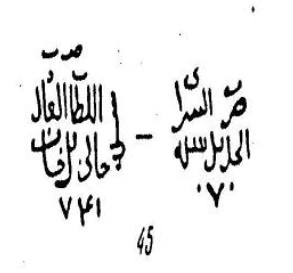 Obverse: Ruling Sultan Jani-Beg Khan, Above:Mint, Below: 741 (1340/1341). Reverse: Mint Sarai al-Jedid[30], year 7. The above inscription of "Ruling Sultan Jani Beg Khan" therefore seems to open the possibility that the whole of AH742 is attributable to Jani Beg coins of that AH date. Whether 742AH is to be considered mostly 1341, or mostly 1342 could be the point to settle on. The Ox moves slowly, but the Earth is patient.
|
|
Moderator
United States
196100 Posts |
This has been an interesting discussion, one I must admit has moved well beyond my ken.  I believe after someone posts an AH coin with an explanation as to how the CE date was determined, we will await approval from The Committee* which must unanimously agree that the coin passes muster. Obviously, committee members will be posting their own coins, so in those events will be waiting for the other members to make their assessments. Thoughts? * I am suggesting that J1M and ttkoo be on it, but Ideally we need a least three members. Spence and/or JohnConduitt, maybe? |
|
Moderator
United States
196100 Posts |
By the way, those who are just now seeing this topic... We need 1341 C. E. (whether and A. H. 742 or 741 example will work is TBD) |
|
Pillar of the Community
Australia
2583 Posts |
Quote:
This has been an interesting discussion, one I must admit has moved well beyond my ken.
I believe after someone posts an AH coin with an explanation as to how the CE date was determined, we will await approval from The Committee* which must unanimously agree that the coin passes muster. Obviously, committee members will be posting their own coins, so in those events will be waiting for the other members to make their assessments.
Thoughts?
* I am suggesting that J1M and ttkoo be on it, but Ideally we need a least three members. Spence and/or JohnConduitt, maybe? I think it is an idea worthy of consideration. january1may for sure, his depth of knowledge , plus his research ability makes him a no-brainer. Don't know if I should be on it, someone like @bd251 probably has more experience with the AH coins than me. Not sure if @JohnConduitt would be part of it, we don't see that much of him, but if he was of a mind to join a committee, then he would be an obvious starter in my opinion. The Ox moves slowly, but the Earth is patient.
|
|
Moderator
United States
196100 Posts |
Quote:
Don't know if I should be on it Do not undersell you knowledge here. Quote:
someone like @bd251 probably has more experience with the AH coins than me. A good recommendation. Quote:
Not sure if @JohnConduitt would be part of it, we don't see that much of him, but if he was of a mind to join a committee, then he would be an obvious starter in my opinion. Agreed.  |
|
Moderator
United States
196100 Posts |
October Bump. We still need to get past 1341 C. E. (A. H. 742/741). Will this be the month we do it?  |
| |
Replies: 5,946 / Views: 249,321 |
To participate in the forum you must log in or register.
Disclaimer: While a tremendous amount of effort goes into ensuring the accuracy of the information contained in this site, Coin Community assumes no liability for errors. Copyright 2005 - 2026 Coin Community Family- all rights reserved worldwide. Use of any images or content on this website without prior written permission of Coin Community or the original lender is strictly prohibited.
Contact Us | Advertise Here | Privacy Policy / Terms of Use
|
| Coin Community Forum |
© 2005 - 2026 Coin Community Forums |
| It took 0.99 seconds to rattle this change. |
 |
|







 First Page
 Previous Page


 Posted 09/02/2025 6:32 pm


