The Oregon Trail Association, forerunner of the Oregon Trail Memorial Association, was founded in February 1922 to perpetuate the name of the Old Oregon Trail and to permanently mark it with the insignia of the ox team and the covered wagon. (The root of the coin's obverse design!) Representative Addison Taylor Smith (R-ID) introduced multiple House Joint Resolutions intended to get Federal support for the initiative, but none were ultimately successful.
On Friday, January 15, 1926 in Washington, DC, the Oregon Trail
Memorial Association (emphasis added) was formally established. Ezra Meeker, aged 95, was elected as the Association's President. One of the first tasks the Association assigned itself was to secure the striking of a commemorative half dollar.
They moved quickly. On January 25, 1926, Representative John Franklin Miller (R-WA) continued to demonstrate his support for the Trail by introducing a bill in the House of Representatives that called for up to six million (!) 50-cent pieces "in commemoration of the heroism of the fathers and mothers who traversed the Oregon Trail to the Far West with great hardship, daring, and loss of life, which not only resulted in adding new States to the Union but earned a well-deserved and imperishable fame for the pioneers; to honor the twenty thousand dead that lie buried in unknown graves along two thousand miles of that great highway of history; to rescue the various important points along the old trail from oblivion; and to commemorate by suitable monuments, memorial or otherwise, the tragic events associated with that emigration -- erecting them either along the trail itself or elsewhere, in localities appropriate for the purpose, including the city of Washington."
The bill was referred to the House Committee on Coinage, Weights, and Measures. The Committee held a Hearing on the coin proposal in early March 1926 - one of the most extended in the US commemorative series. First to give a statement at the Hearing was Representative Miller who opened with "We of the far Northwest, Mr. Chairman, are deeply interested in the marking and preservation of the Oregon Trail. It was the one trail taken by the early pioneers of the far West, from points on the Missouri River to the North Pacific Coast, and was followed for years by all of our pioneers in the early days, before the completion of the railroads, except a few who came by sailing vessels to that then remote country."
He referenced Ezra Meeker and his importance to the Oregon Trail preservation project and the Memorial Association before providing an overview of his bill. He then introduced Representative Addison Taylor Smith (R-ID). Mr. Smith began by discussing his support of prior efforts to secure legislation for the Trail. He continued, "There is no more romantic history or story, it seems to me, in the development of any country than that connected with the Oregon Trail, for the reasons that, when the movement first started out into the Northwest, we had no railroads - no other means of conveyance, in fact, than the horse; because there were no roads, and scarcely any trails and no bridges; and we have no conception, those of us living in this age, of the hardships endured by those early pioneers."
Representative Smith also voiced his support for the coin bill and its objective of raising funds so that permanent markers could be erected along the Trail and selected historical structures on it could be restored.
Robert J. Grant, Director of the Mint, attended the Hearing and carried with him a letter from Andrew W. Mellon, the Secretary of the Treasury, expressing his objection to all commemorative coins. Director Grant, in replying to a Committee question about the letter, stated that the Secretary's "main reason is that they never accomplish the purpose for which they are coined."
Andrew W. Mellon, Secretary of the Treasury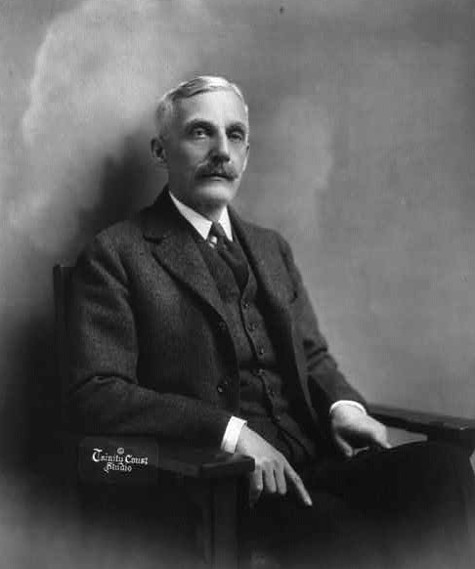 (Image Credit: Library of Congress, Prints and Photographs Division. Public Domain.)
Judging from multiple of his comments, Director Grant did not appear to be very well versed in the commemorative coins produced by the Mint. For example, he stated that the Mint struck coins for the 1876 Centennial Exposition in Philadelphia (it did not, though it did strike medals) and he did not have a clear understanding of how the Stone Mountain Memorial half dollar was faring in terms of sales - though he classified it, without corroborating evidence, as a "great disappointment" and "failure." (The Hearing was held in 1926 and sales of the Stone Mountain coin were ongoing at the time- though indications were that it would not be a sell out of its five million authorized coins, it was a bit early to consider it a failure.)
Misstatements aside, it was rather clear that Grant was toeing the "company line" as a direct report of Mellon, commemorative coin proposals were to be argued against as a general policy.
Following the lengthy Hearing, the Committee reported the bill out favorably without amendment. This meant the authorization of coins to be struck at any operating Mint facility, without a specific date date to be placed on them and with the opportunity to be struck in multiple years without a legislated expiration. As long as the Memorial Association paid for the coins it ordered, it could continue to request them from the Mint. (These open-ended provisions ultimately led to the Oregon Trail Memorial Association coin program becoming a 14-coin series struck, intermitently, from 1926 to 1939.)
When the House brought the bill up for consideration, Representative Louis Convers Cramton (R-MI) questioned whether a position on the coin had been taken by the Treasury Department. When Representative Miller, the bill's sponsor, attempted to dance around the issue and could not produce a copy of the Hearing Report that he claimed contained the Treasury's support, Cramton threatened to object to the bill and thus discontinue its consideration. Miller requested he hold his objection pending further explanation and finally stated "the Treasury is against practically all legislation of this character in respect to the coinage of special coins in commemoration of special events. They have no serious objection, however, to the passage of this particular bill." After reading the transcript of the Hearing (multiple times), I would have to say that such a characterization of the Treasury's position - and by extension, the Mint's - was a bending of the truth to the point of near breaking!
Cramton was appeased, however, and after Miller further assured him that the Treasury had stated that it did not believe producing the Oregon Trail coinage would "embarrass the [US] coinage system in any way or present any administrative difficulties" - another stretching of the truth by Miller - consideration of the bill proceeded and was passed by the House without objection. It was then sent ot the Senate for its consideration.
1926-39 Oregon Trail Memorial Half Dollar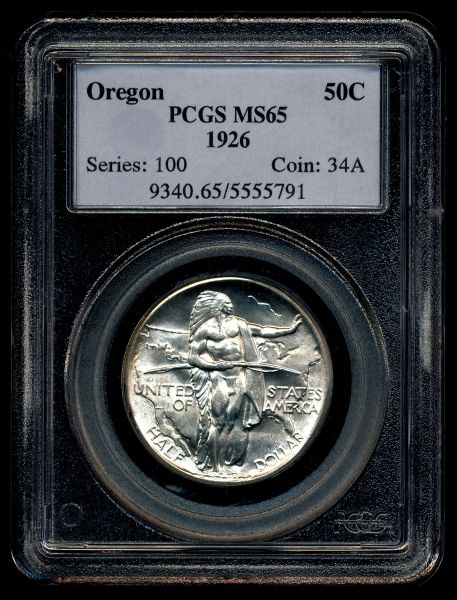
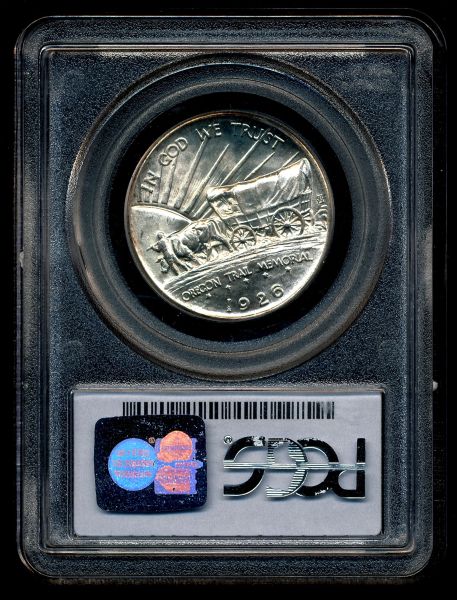 Part II will pick up the story with the House-passed bill beginning its journey in the Senate...
For other of my posts about commemorative coins and medals, including more on the history and designs of the Oregon Trail half dollar, see:
Commems Collection.






 Posted 08/15/2022 10:44 am





