PCGS - In this edition, we will consider one of the most common methods used by PCGS authentication experts to identify counterfeits: repeating surface aberrations.
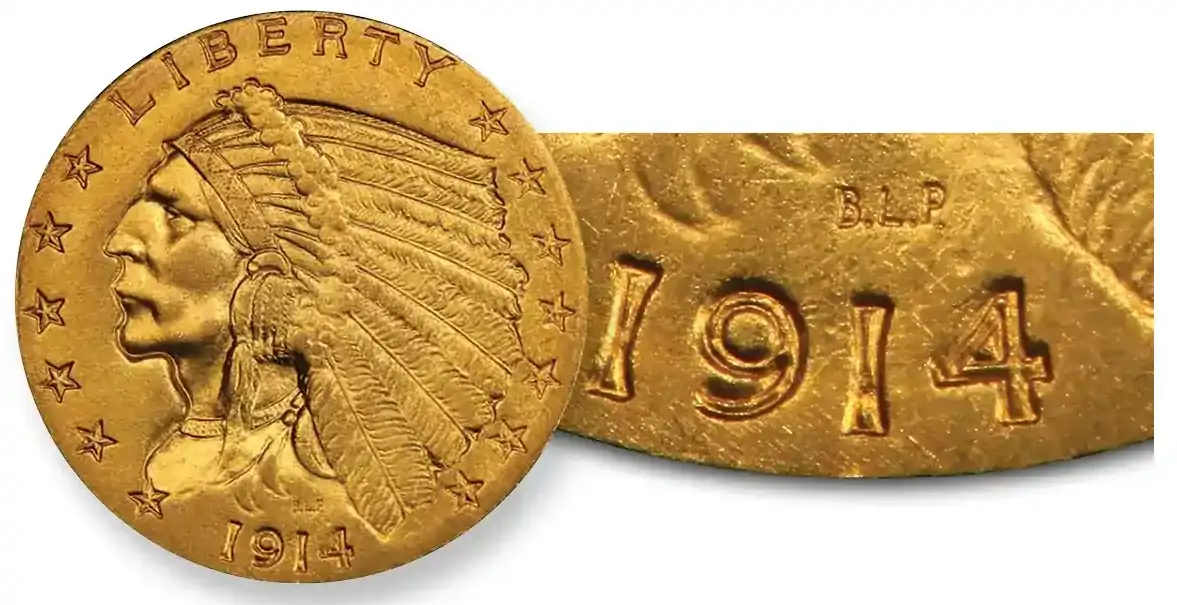
As with diagnostic markers on genuine dies, these repeating defects are present on the striking die itself and are therefore stamped onto all coins the die emits. Thus, once such a marker has been determined to be characteristic of a counterfeit, it serves as a useful tool for quick identification of the fakes that specific die produced. While the diagnostic attributes used to classify genuine coins are most often incuse or sunken on the die (thus raised on the coin), being the result of damage or wear, those on counterfeits are frequently raised or elevated aberrations on the die surface (lending to depressions on the coin) resulting from imperfections in the die's illicit and often highly economical creation.
The small gold denominations are some of the most frequently counterfeited, and the incuse design of the Indian Quarter Eagle and Half Eagle series can add an element of unfamiliarity to the authentication process. Aiding in detection, however, is the frequent use of the same counterfeit dies across several date and mintmark combinations. The 1914 obverse die images here show a repeating depression to the northwest of the "4" in the date, which is seen on both Philadelphia and Denver fakes of this year. Similarly, the undated reverse dies for this series are often encountered paired with obverses of multiple different dates.
Read More: Counterfeit Detection Series Check out 1914 Gold Indian Quarter Eagles on ebay
.











 Posted 08/15/2023 09:49 am


