PCGS - The 1877
Indian cent, the key to the series, is a very counterfeited piece. While many fakes are altered dates in lower grades, die-struck pieces exist also, such as the example here. Sharp-eyed readers may notice the "Strong-N" reverse is incorrect for the business strike coins of this date (see Richard Snow's study of the series), but authentic Strong-N pieces do exist in the form of proofs. This example, appearing to be a high-grade business strike, has a repeating raised defect above the "E" in "ONE" on the reverse, the result of a tooling mark or damage in the surface of the forged die.
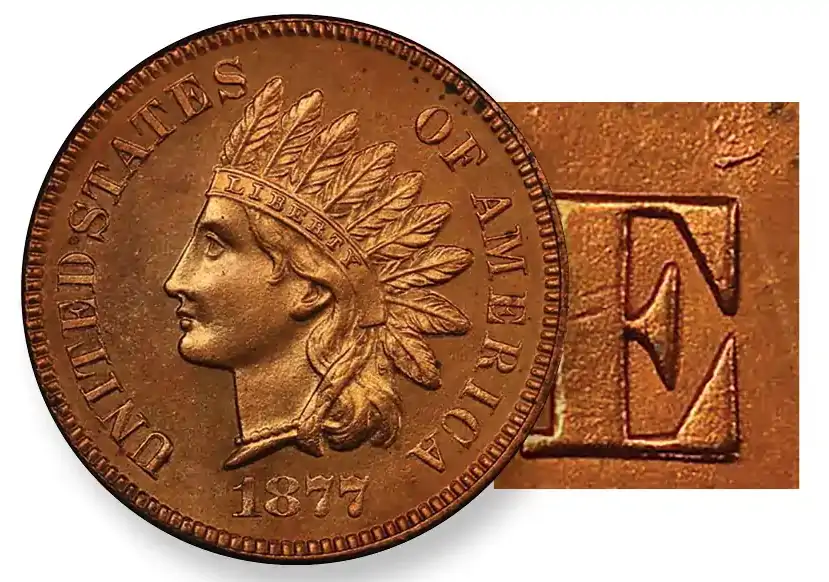 Counterfeit 1877 Indian Cent
Familiarity with repeating surface aberrations is just one of many tools used by PCGS authentication experts to keep collectors and the market safe from the ever-present threat of numismatic forgery. The experience of the grading team, combined with the unparalleled depth of our image database, means such repeating defects are quickly identified, even if originating from different parts of the globe over long periods. As new counterfeits will never cease to emerge, this area - as with all aspects of authentication - requires constant vigilance and continuing education.
Read More: Counterfeit Detection Series Check out 1877 Indian Cents on ebay
.












 Posted 08/15/2023 11:47 am


