| Author |
 Replies: 3,487 / Views: 97,023 Replies: 3,487 / Views: 97,023 |
|
|
|
Pillar of the Community
 United Kingdom
1273 Posts |
1860 Darmstadt Thaler. 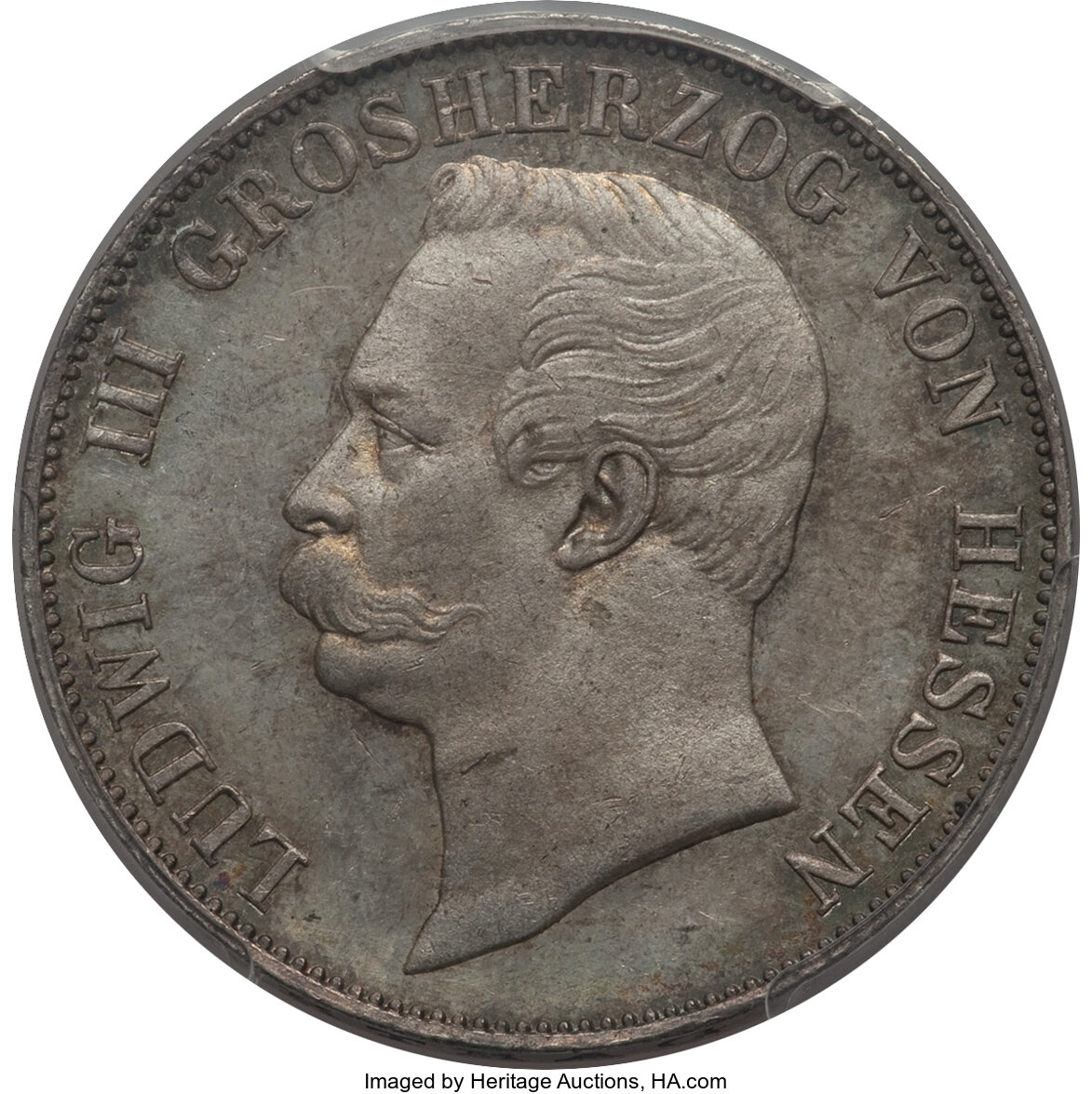 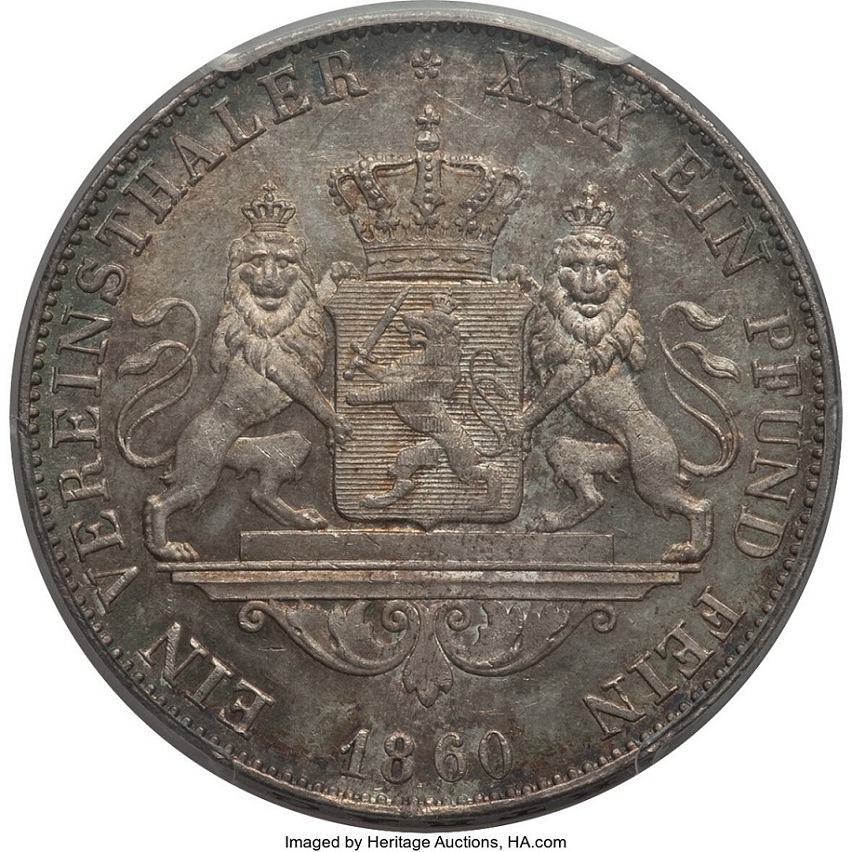 |
|
CCF Master Historian of Commemorative Coins
 United States
12515 Posts |
Up next for me is a coin whose designs are generally considered among the most iconic and beautiful among those used for coins of the classic-era US commemorative coin series - the 1926-39 Oregon Trail Memorial Half Dollar. The obverse of the coin (officially, per the US Mint) features a pioneer family heading west toward a setting sun in an oxen-drawn conestoga wagon. The reverse depicts a standing Native American Chief, facing east with his left hand raised, seemingly saying "Stop!" to those coming west. In his right hand, across his midsection, he holds his weapon - a bow. The design doesn't feature visible arrows, but it isn't hard to imagine that they are close by and available! 1926-39 Oregon Trail Memorial Half Dollar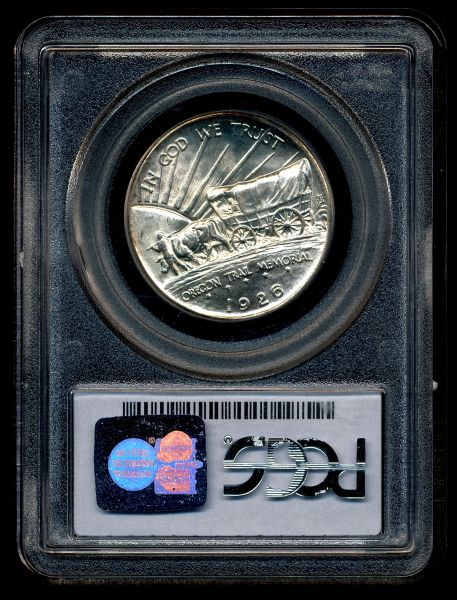 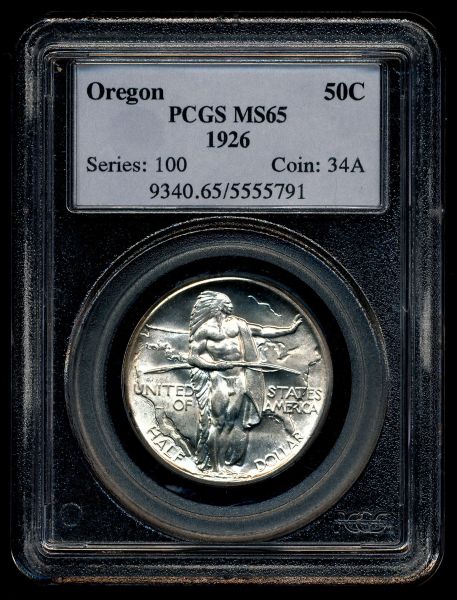 Collecting history one coin or medal at a time! (c) commems. All rights reserved.
|
|
Pillar of the Community
United Kingdom
1273 Posts |
He is certainly very muscular! I can't imagine that Native Americans were built like Arny! That's one of my favourite coin designs though.
|
|
Bedrock of the Community
United States
36940 Posts |
That is such a great coin design.
|
|
Bedrock of the Community
United States
36940 Posts |
|
|
CCF Master Historian of Commemorative Coins
United States
12515 Posts |
Collecting history one coin or medal at a time! (c) commems. All rights reserved.
|
|
CCF Master Historian of Commemorative Coins
United States
12515 Posts |
Next up is one of the three US Civil War-themed half dollars included in the classic US commemorative series: the 1936 Battle of Gettysburg 75th Anniversary coin. As the Pennsylvania battle took place in 1863, the 75th anniversary was a 1938 milestone (vs. 1936), but the coin's authorizing legislation included language that mandated the coin bear a "1936" date - the year of the coin bill's enactment. The obverse of the Gettysburg coin depicts a pair of unnamed / unidentified soldiers, one for each side of the battle line. A portrait of a representative Union soldier is at the front of the conjoined pair, with a solider of the Confederacy presented behind him. The coin's reverse presents the Union (left) and Confederate (right) shields with a fasces in between them; the fasces incorporates a double-bitted axe. The fasces, a bundle of branches/rods tied together, often with an axe, dates to ancient Rome (possibly earlier) where/when it was mostly used as a symbol of power and authority. The rods were symbolic of the authority to punish, while the axe was symbolic of the authority to execute. The elements of the fasces were, on occasion, put to actual use for disciplinary beatings and/or beheadings. 1936 Battle of Gettysburg Half Dollar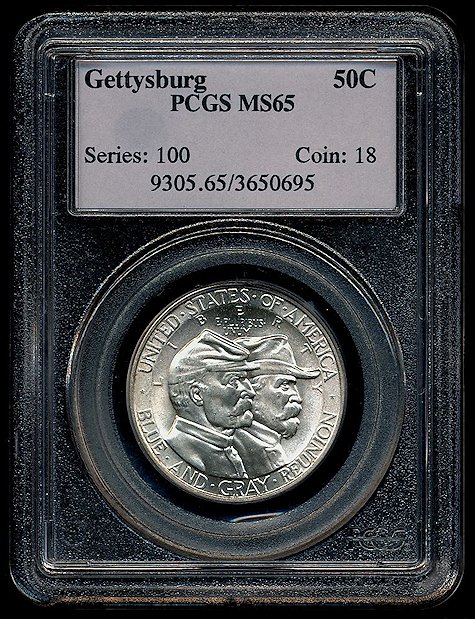 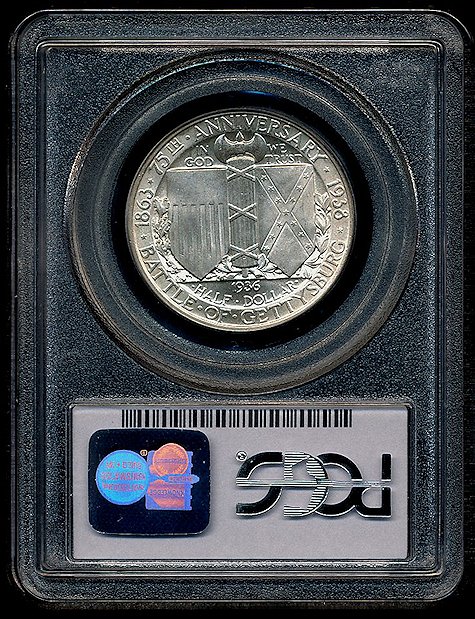 Collecting history one coin or medal at a time! (c) commems. All rights reserved.
|
|
Pillar of the Community
United Kingdom
1273 Posts |
Very good writeups commems and they are very interesting ! I'm on holiday for a week so will post some when I'm back. Keep them coming :)
|
|
Moderator
United States
195024 Posts |
Fantastic examples!  |
|
CCF Master Historian of Commemorative Coins
United States
12515 Posts |
At first glance, the axe presented on the 1936 Wisconsin Territorial Centennial half dollar's reverse (per the US Mint) might be viewed as the coin's "weapon" but it is simply a tool of the mining industry. The coin is included here due to the three arrows found as part of the obverse design (behind the head of the left-facing badger, viewer's perspective). The arrows are symbolic of the 1832 conflict known as the Black Hawk War - a battle between the US military (and local militia) vs. Sauk, Fox and Kickapoo Native American peoples that partially took place on lands that would become part of Wisconsin. The conflict arose as a result of a disputed US-Sauk treaty and the increased number of European settlers coming to the area, attracted by the potential riches of lead mining. Black Hawk was the leader of the unsuccessful Native American forces; hundreds of his followers died from battle (warriors) or from starvation/thirst (non-combatants) while attempting to flee. Near the badger's tail (at right) is seen an olive branch which symbolizes the eventual peace achieved between Wisconsin settlers and the local Native Americans. 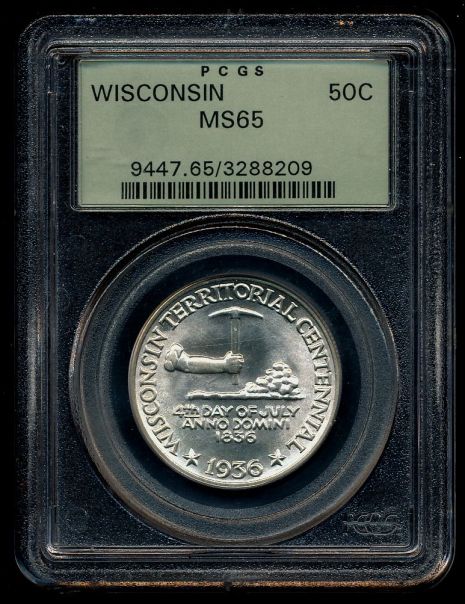 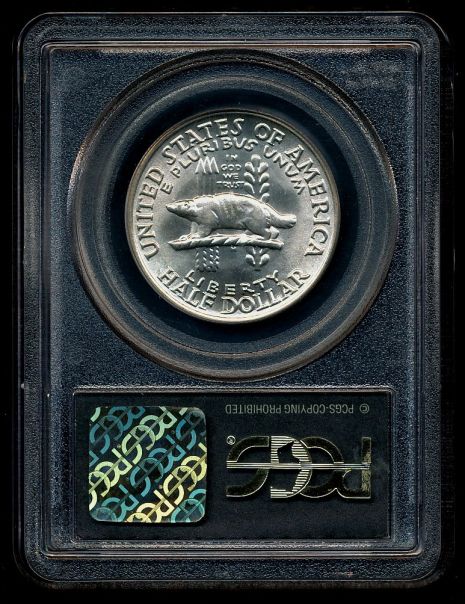 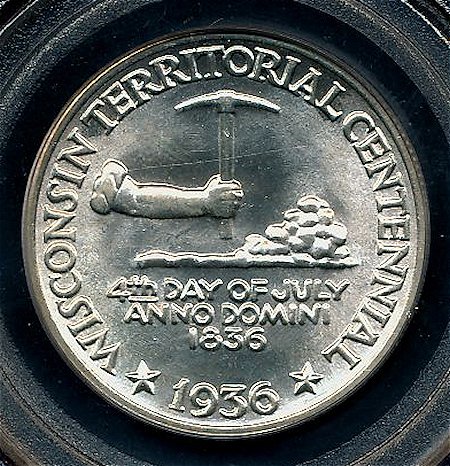 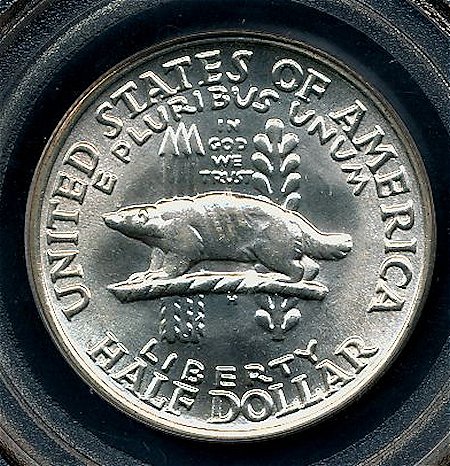 Collecting history one coin or medal at a time! (c) commems. All rights reserved.
|
|
Moderator
United States
195024 Posts |
Excellent! |
|
Bedrock of the Community
Canada
24885 Posts |
2014 Canadian $20 50th Anniversary of Canadian Peacekeeping in Cyprus 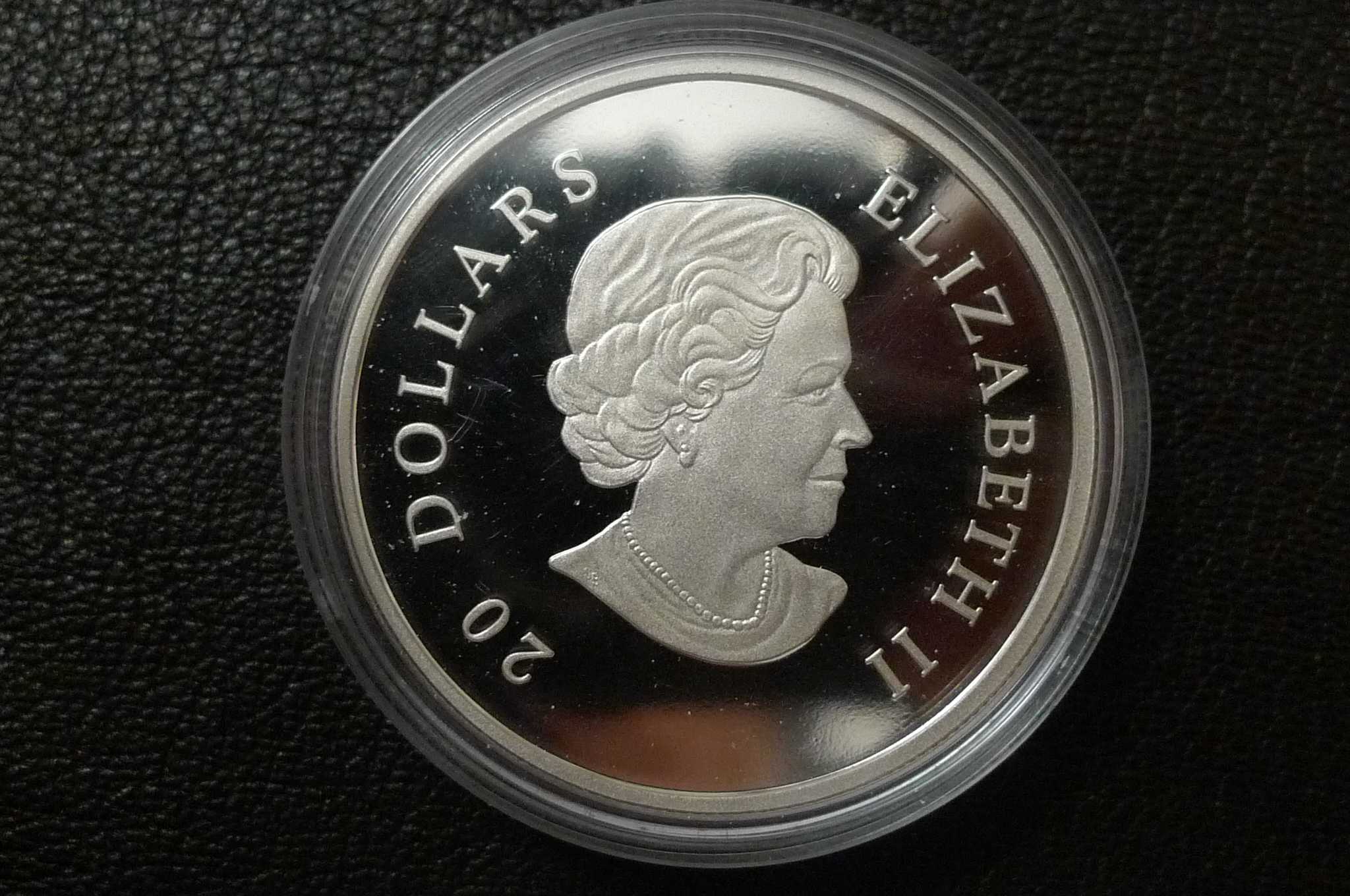 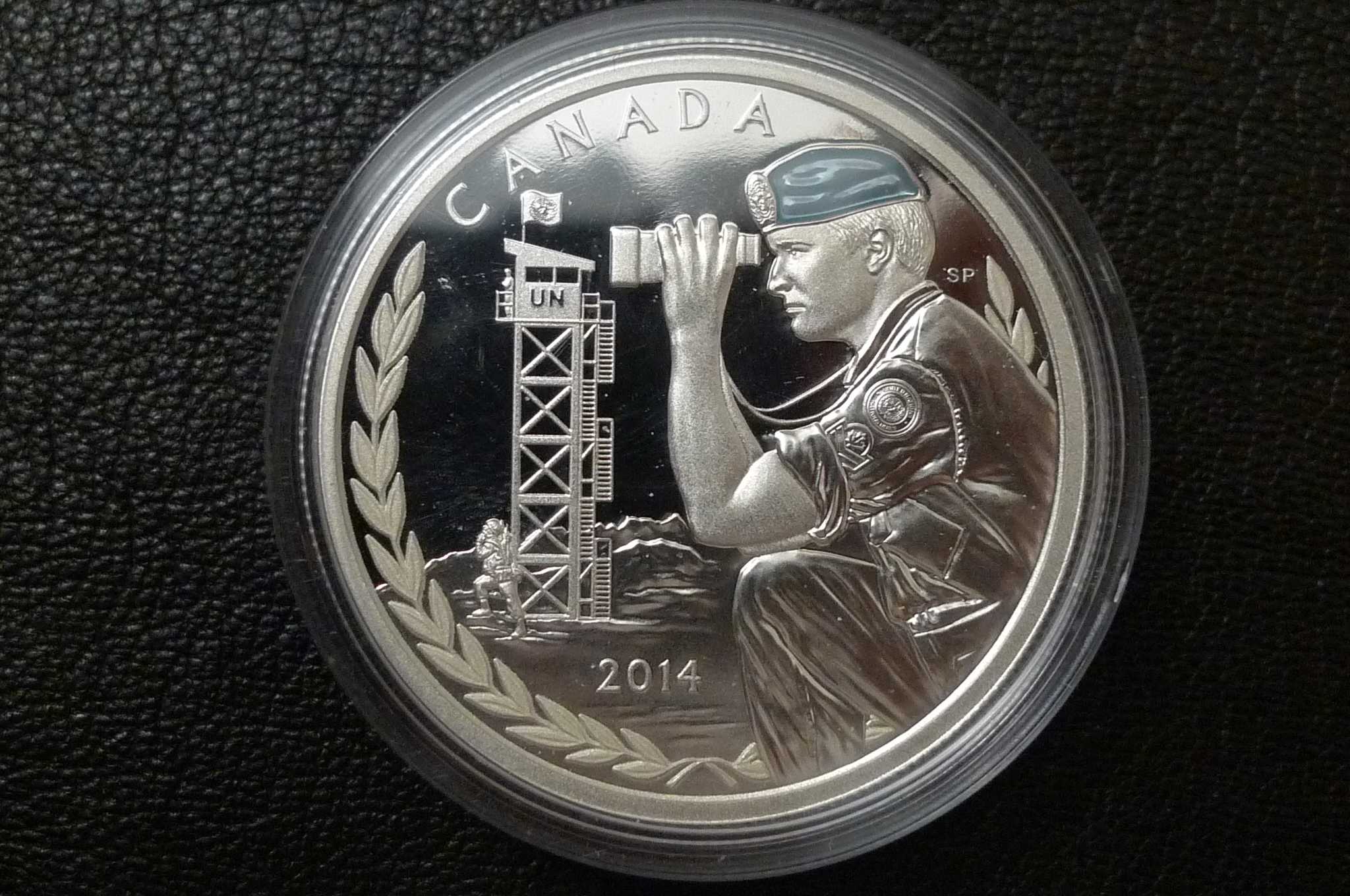 |
|
CCF Master Historian of Commemorative Coins
United States
12515 Posts |
Next up is the 1936 Columbia, SC Sesquicentennial Half Dollar which was issued to commemorate "the sesquicentennial anniversary of the founding of the capital of South Carolina at Columbia, South Carolina." On its obverse, Lady Justice, is depicted holding a balance scale in her upraised left hand while holding a sword, pointed down, in her right hand; surprisingly, she is not blindfolded. The pans of the scale are level, indicating fair and equitable treatment for all under the law. The sword is symbolic of the enforceability of the law; it is a double-sided sword which indicates that it will defend and protect either party in a dispute. It is also shown positioned below the scales, which is meant to indicate that the law is enforced after the evidence is weighed and not before. A weapon of justice! 1936 Columbia, SC Sesquicentennial Half Dollar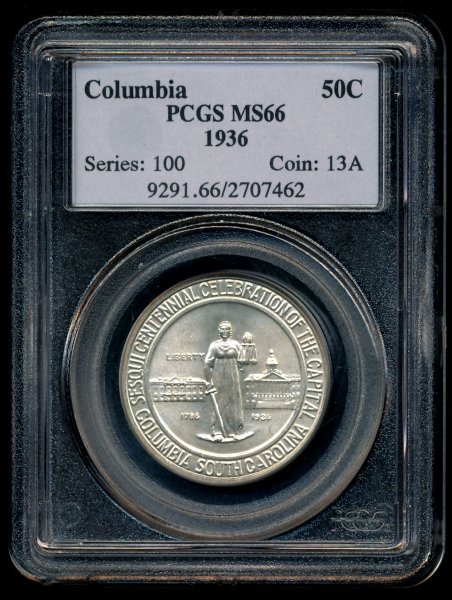 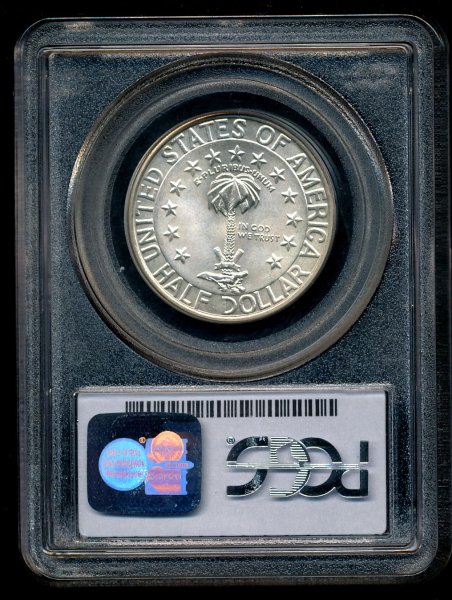 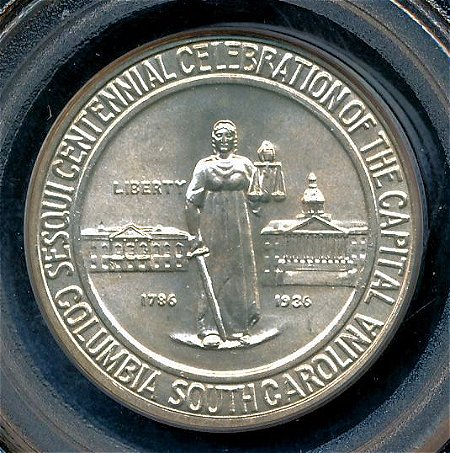 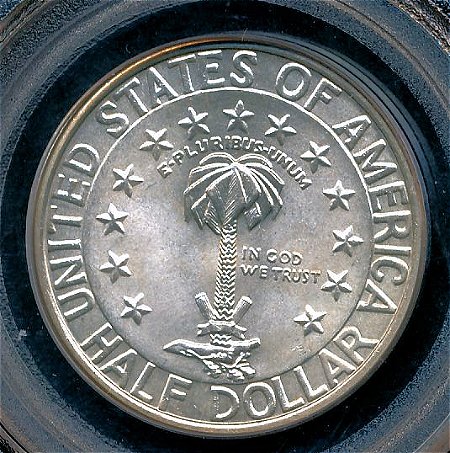 Collecting history one coin or medal at a time! (c) commems. All rights reserved.
|
|
Moderator
United States
195024 Posts |
Quote:
2014 Canadian $20 50th Anniversary of Canadian Peacekeeping in Cyprus Quote:
Next up is the 1936 Columbia, SC Sesquicentennial Half Dollar Nice examples! |
|
CCF Master Historian of Commemorative Coins
United States
12515 Posts |
The 1936 commemorative half dollar that celebrates the centennial of the founding of the city of Elgin, IL features a depiction of Trygve Rovelstad's Pioneer Memorial statue on its reverse. The statue presents a family being led through the American frontier by a scout. At the left is seen the scout; he is holding his long gun, ready to use it to defend the faimly. Behind him is the father, using his right hand to motion toward something ahead of them while his left arm is around his young wife who is holding the couple's newborn in her arms. At the far right in the group is the older son of the family, he is shown holding a walking stick in his left hand as he looks behind the group, alert for possible danger. The artist intended the statue to symbolically present a young family as it made its way across the Illinois prairie to settle in the area that would become Elgin, IL. The obverse of the coin presents the head of the scout seen in the statue; the scout is presented in profile, facing left. 1936 Elgin, IL Centennial Half Dollar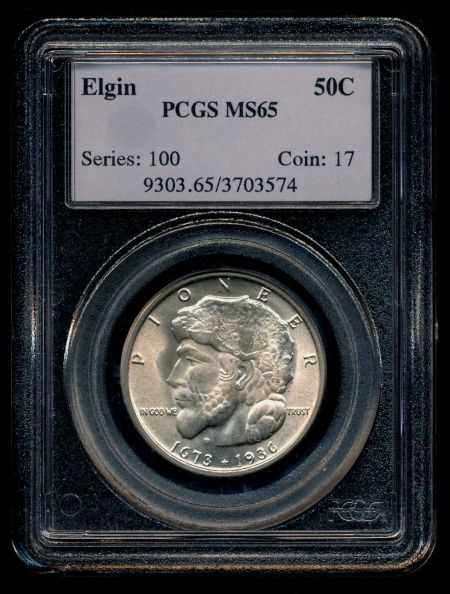 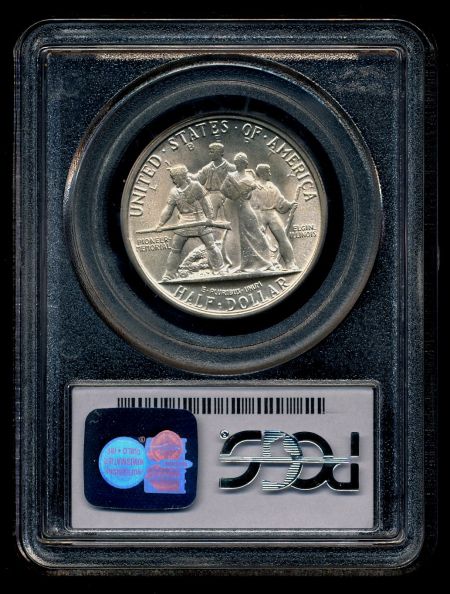 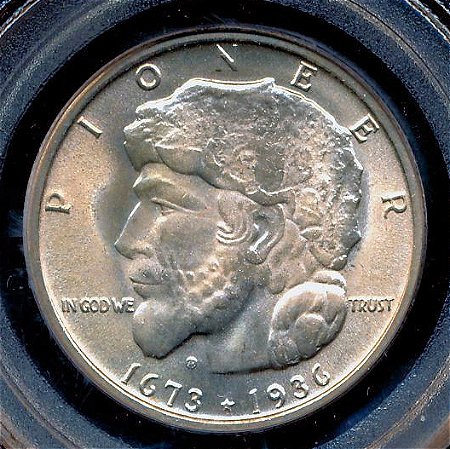 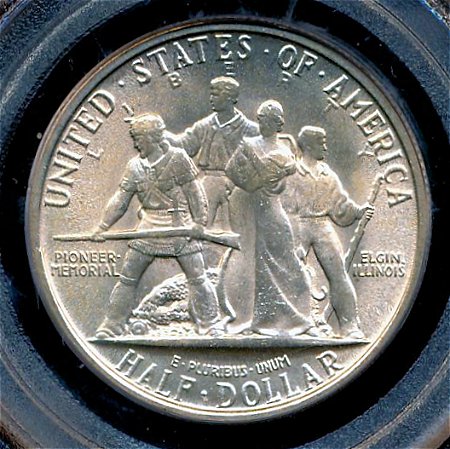 For more of my posts about commemorative coins and medals, including more about the Elgin, IL half dollar, see: Commems Collection. Collecting history one coin or medal at a time! (c) commems. All rights reserved.
|
| |
Replies: 3,487 / Views: 97,023 |






 First Page
 Previous Page


 Posted 09/10/2022 08:28 am