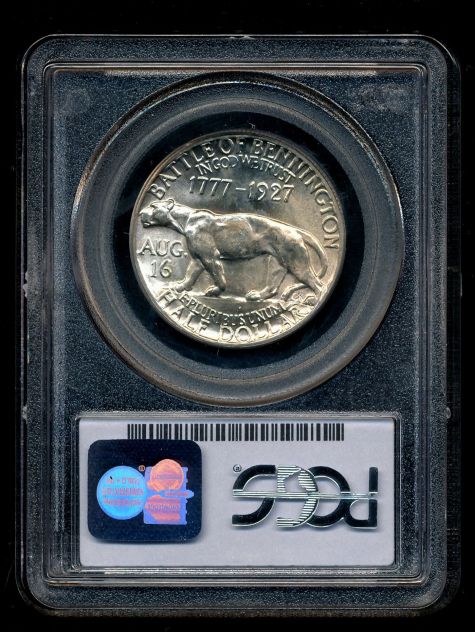
Collectors of the classic-era US commemorative coin series are very likely familiar with the 1927 Battle of Bennington / Vermont Independence Sesquicentennial Half Dollar and its designs by Charles Keck that depict Ira Allen (obverse) and a catamount (reverse). But many collectors are not aware of treasures held in the US National Archives that present the coin's rejected designs by Sherry Fry. Let's have a look at them!
1927 Battle of Bennington / Vermont Independence Sesquicentennial Half Dollar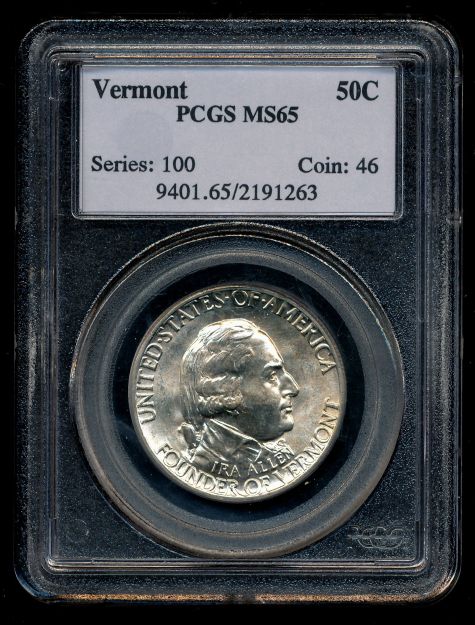
I've mentioned before that the Vermont Sesquicentennial Commission ("Commission") originally selected Sherry Fry to create the models for its commemorative half dollar; the Commission provided Fry with specific guidance on its desired designs. (You can read the original post here:
1927 Battle of Bennington Bennington/Vermont Independence Sesquicentennial.)
Fry (1879-1966) was an American-born artist-sculptor who is remembered for his statues, architectural sculptures and work with the US Army regarding camouflage during World War I.
Though a resident of New York, Fry had a very tangible connection to Vermont and its history - he was the artist responsible for the Ira Allen statue that is found on the University of Vermont campus in Burlington, VT; it was dedicated in 1921. With the Commission desiring to honor Allen on its coin, it was natural for them to engage Fry for the design and models for the half dollar.
Statue of Ira Allen on University of Vermont Campus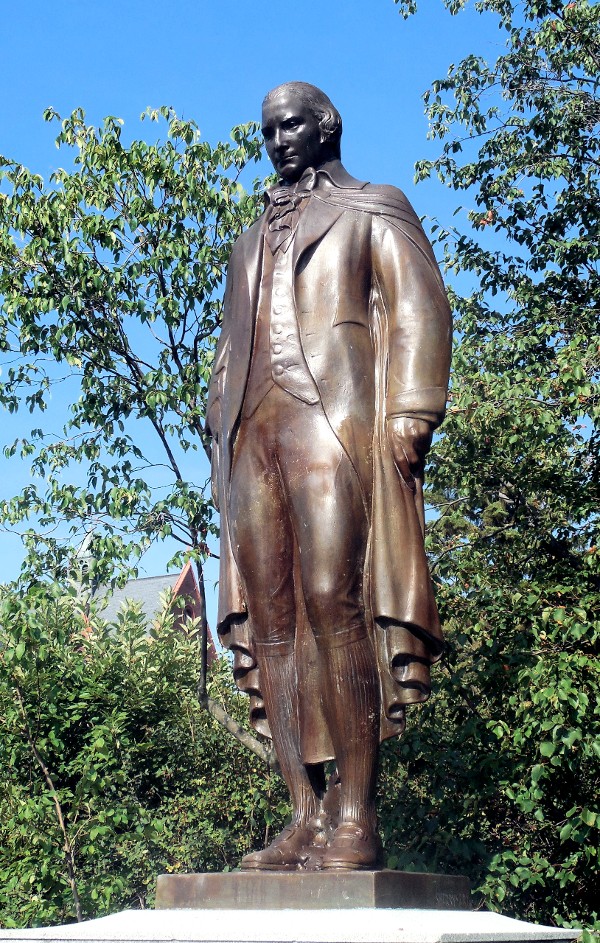 (Image Credit: Public Domain.)
Fry's prepared sketches of the Commission's design suggestions, and, on the obverse, presented a right-facing, head-and-shoulders portrait of Ira Allen; it was flanked by "IRA" and "ALLEN". The inscription "HE FOUNDED - VERMONT - THE 14TH STATE" was above the portrait at the upper rim, "IN - GOD - WE - TRUST" was at the lower rim.
The main device of the design's reverse was the Bennington Monument, flanked by "BATTLE OF" and "BENNIGTON". At the lower rim was found the inscription "1777 - HALF - DOLLAR - 1927". Above the Monument was "UNITED - STATES - OF - AMERICA".
Original Models Prepared by Sherry Fry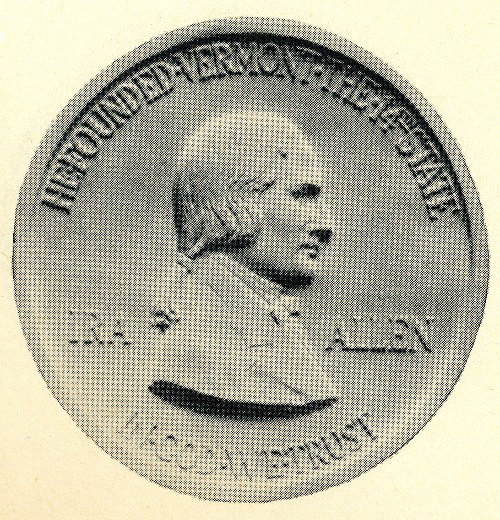
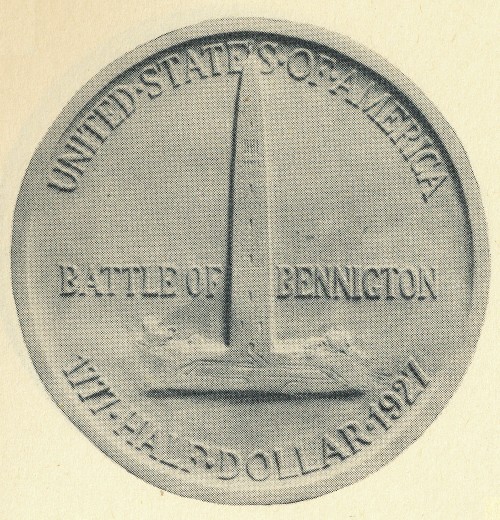 (image Credit: US National Archives via An Illustrated History of U.S. Commemorative Coinage. Fair use, education.)
The design sketches prepared by Fry were considered by the Commission of Fine Arts (CFA) in September 1925 - they were not well-received. The CFA grudgingly accepted the choice/depiction of Ira Allen for the obverse but questioned why the reverse featured a War of 1812 monument (it thought the monument depicted was the Battle of Lake Champlain Monument; aka Macdonough Monument).
Macdonough Monument / Battle of Plattsburg/Lake Champlain Monument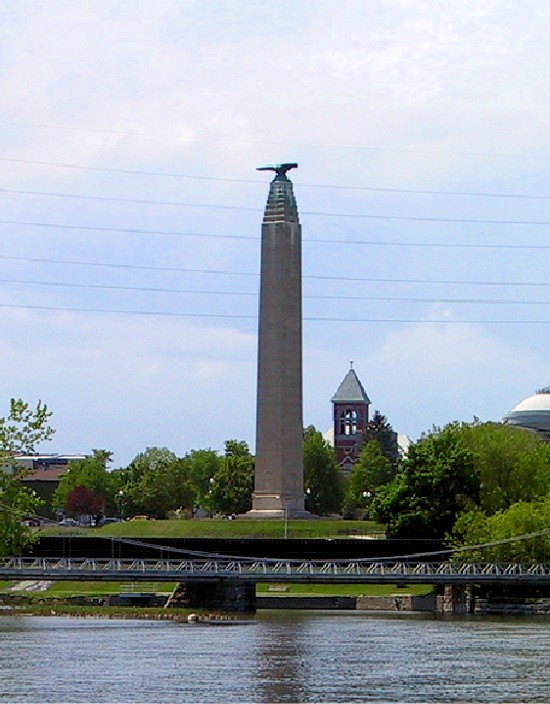 (Image Credit: Bestter, CC BY-SA 3.0 https://creativecommons.org/licenses/by-sa/3.0, via Wikimedia Commons/)Battle of Bennington Monument - 1891 State Centennial/Monument Dedication Program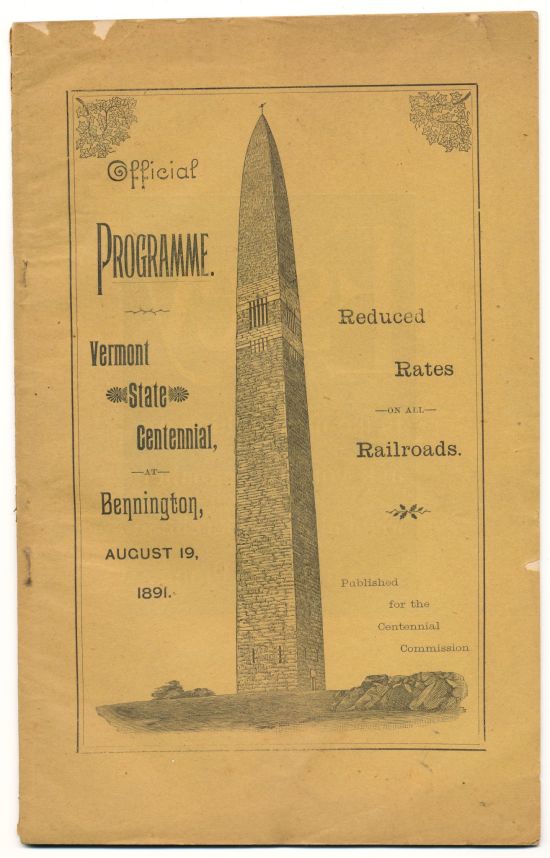
The CFA's confusion is
almost understandable as each of the monuments in question is a stone obelisk, though clear differences exist. As the Macdonough Monument was in the news in 1925 as it neared completion (it was dedicated in 1926), it might have been in the minds of the CFA members and they jumped to a false conclusion. FYI: The Macdonough Monument is 135-feet tall and is topped by a bronze eagle - the Bennington Monument is 306-feet tall with a plain, tapered, pyramid-shaped top.
The Vermont Commission wrote a letter to the CFA to defend its design choices (and correct the CFA regarding the monument depicted). The CFA acknowledged their mistake concerning the monument, but still questioned its appropriateness for the coin. Indicating its still lukewarm opinion concerning the IRA Allen portrait for the obverse, the CFA letter stated "the Commission felt that Sherry Fry had it in him to produce a very handsome coin and that he had not done so." The CFA also noted the need to correct the spelling of "Bennington" on the reverse.
Soon after, frustrated, Fry removed himself from the project and forced the Vermont Commission to seek a new artist for its coin. It selected Charles Keck to prepare the deigns for its half dollar and it official medal. I'll revisit Keck's involvement in a future post, but for now you can read more here:
-
1927 Battle Of Bennington-Vermont Independence Sesquicentennial Medal While I agree that Fry's models do not present overly inspiring designs, I think the Commission's design requirements constrained Fry - other examples of his work are far more impressive.
For other of my posts about commemorative coins and medals, including more on the Bennington/Vermont half dollar, see:
Commems Collection.







 Posted 08/14/2023 2:51 pm





