George Washington Carver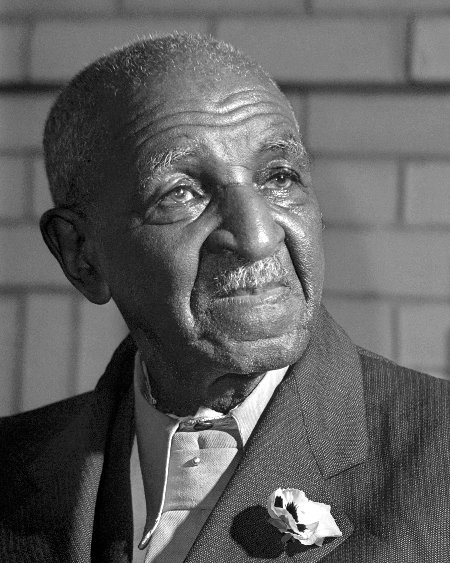
In a previous post (
1951-54 George Washington Carver-Booker T Washington - GWC National Monument), I referenced a 1943 bill passed by Congress that established the George Washington Carver National Monument in Diamond, Missouri (at GWC's birthplace). In an unexpected way, this bill might be responsible for the George Washington Carver-Booker T. Washington Half Dollar that is part of the classic-era series.
Context Note: George Washington Carver died January 6, 1943 - a trigger event for the above legislation.The purpose of the bill was clear: "the Secretary of the Interior is authorized and directed to acquire, on behalf of the United States, by gift or purchase, the site of the birthplace of George Washington Carver, distinguished Negro scientist, located near Diamond, Mo., together with such additional land and any improvements thereon as the Secretary may deem necessary to carry out the purposes of this act."
The bill was introduced by Dewey Jackson Short (R-MO). In its original form, the bill's funding was open-ended:
"SEC. 4. There are authorized to be appropriated such sums as may be necessary to carry out the provisions of this act."
After review by the House Committee on the Public Lands, the bill was returned to the House with a recommendation to pass, but with amendments. The first amendment removed the Secretary's authority to condemn property it could not otherwise acquire via purchase or gift, and the second amendment capped the budget at $30,000.
The House passed the bill with the Committee's amendments and sent it to the Senate for its consideration. The Senate had already introduced a similar bill, but put it aside in favor of the House bill. To bring the House bill more in line with the Senate version, the Senate offered several amendments. The most noteworthy change was the adding back in of language that authorized the Secretary to condemn needed property if other acquisition options failed. (Note: If property was condemned, fair market value was to be paid to its owner(s).)
The House rejected the Senate amendments and called for a Conference to resolve the differences. In Conference, the House appointees agreed to the Senate changes. As a result, the bill passed by Congress, and signed by US President Franklin Delano Roosevelt, authorized the Secretary of the Interior to condemn property he could not otherwise acquire.
The Act, however, continued to limit the Interior Department's spend to $30,000. Try as it might to work within this restriction, the Interior Department was unable to acquire the targeted property. As a result, the door opened for Sydney Phillips to get involved, and in 1949 he sprang into action. (See my previous post (link above) for the story.)
Had Congress not restricted the Department of the Interior's appropriation for the George Washington Carver National Monument in 1943, it's likely that negotiations on the property could have been completed without the need for additional legislation in 1950. (The primary objective of the 1950 amendment was to increase the appropriation for the property's acquisition.)
If the property would have been acquired earlier, Philips might not have seen the need to create the George Washington Carver Foundation to promote the GWC birthplace and to raise funds for it - this led to the GWC-BTW Half Dollar. (Recall that coining authority for the BTW coins expired in August 1951 and that the GWC-BTW coin came about via amendment to the original Act with a timeline extension. It was a "convenient" reason for Phillips to "stay in the coin game!")
If no need for a GWC-related half dollar had arisen, I would surmise that Philips would have instead taken steps to continue the Booker T. Washington Half Dollar series via an amendment to the original Act that extended its coining authority. Instead of a 1946-51 BTW series and a 1951-54 GWC-BTW series, we may have had a 1946-54 (or longer) BTW series.
It's just conjecture on my part, of course, but things generally happen as a result of a sequence of events. Disrupt/change the sequence, and outcomes can differ greatly. (If you ever travel back in time, make sure not to step on a butterfly!)
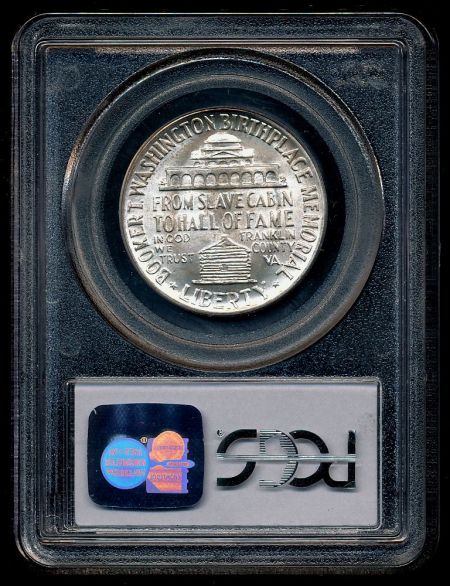
1946-51 Booker T. Washington Half Dollar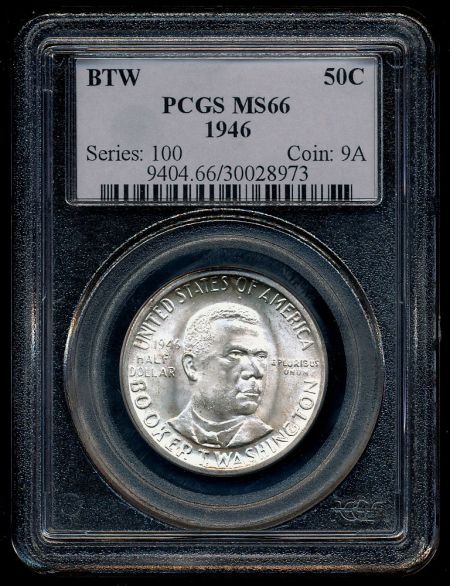
 1951-54 George Washington Carver - Booker T, Washington Half Dollar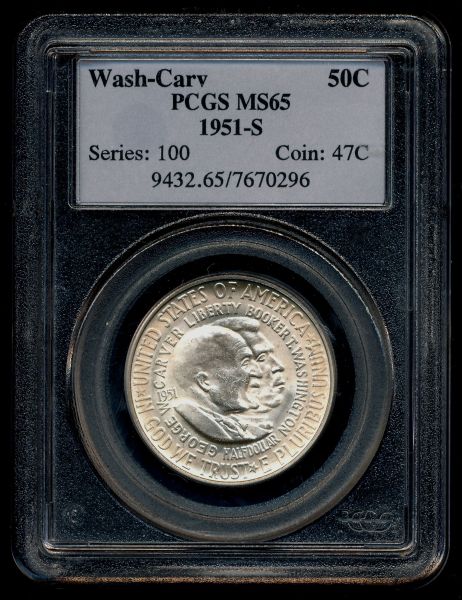
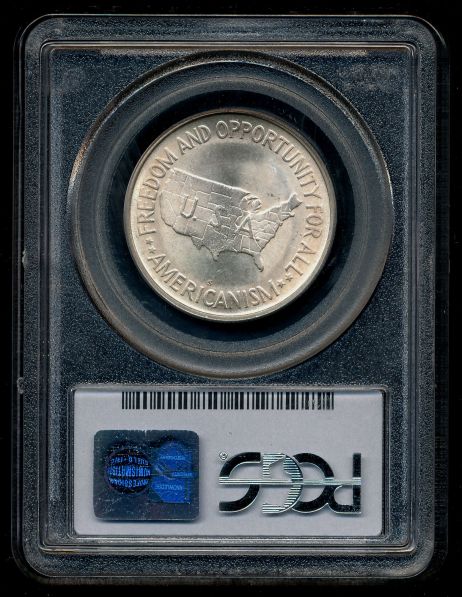
To learn more about the history of the GWC-BTW half dollar, and other commemorative coins and medals, check out:
Commems Collection. 






 Posted 11/18/2023 2:49 pm





