| Author |
 Replies: 163 / Views: 7,911 Replies: 163 / Views: 7,911 |
|
|
|
Pillar of the Community
  Sweden
2124 Posts |
Quote: Ironically enough, a trillina is a 3 denari coin, so kind of topical, I guess  Yes, it'll do!  |
|
Valued Member
United States
127 Posts |
Wow that's the one! I can't believe you guys found it. I spent a good deal of time looking for this mystery coin. Makes me think I should take some time and post some of the others I have ranging from Rome to France. Thanks again.
|
|
Pillar of the Community
United States
8062 Posts |
Quote: One finds plenty of them on ebay at any given time, but I had to look for quite some time before I found one as nice as this one. I really admire your skill in waiting for a nice coin rather than just "filling the gap." My 1708 is not quite so nice, but also not too bad: 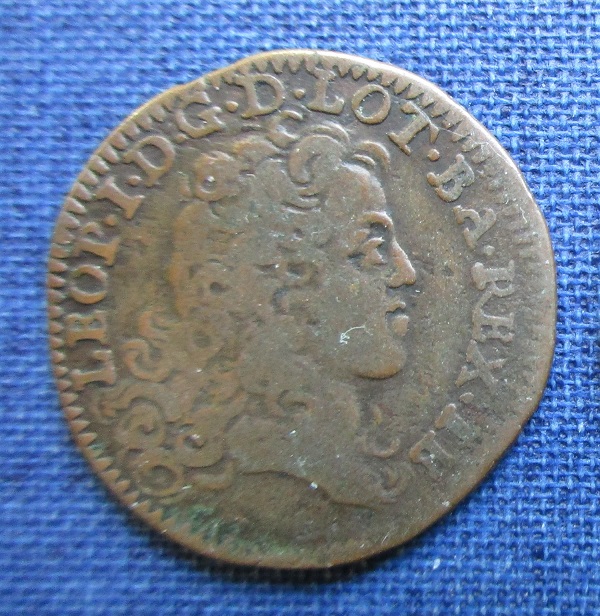 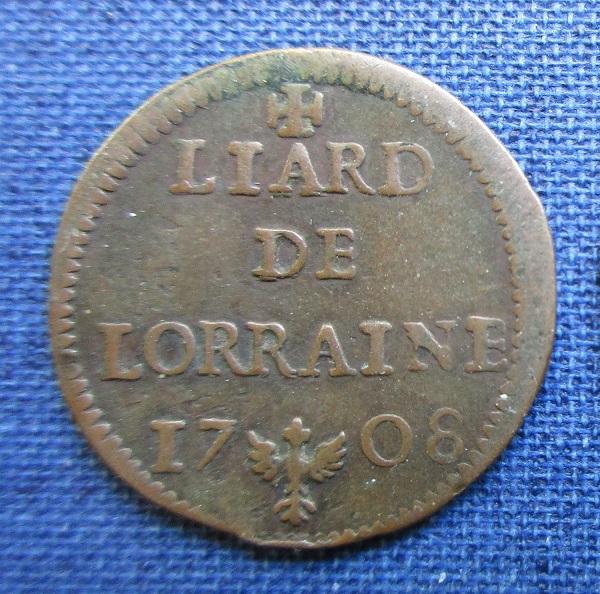 Probably the coins on ebay you mention are the very prolific 1726-1728 coins. I was lucky to see a 1729 offered, the year of Leopold's death, and a bit more scarce since he died early in the year. Not beautiful, but OK for a scarcer date: 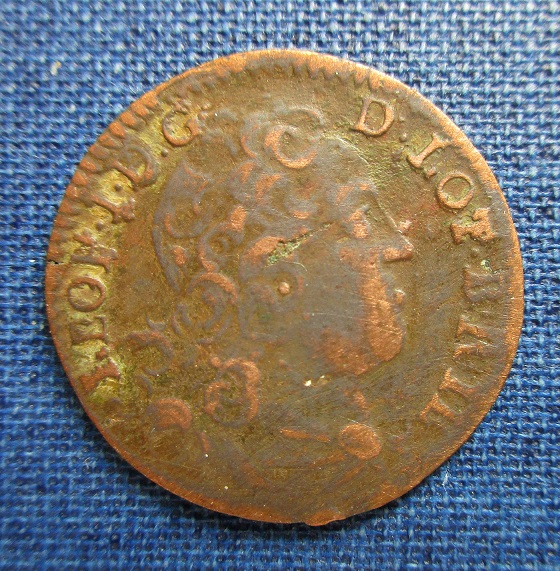 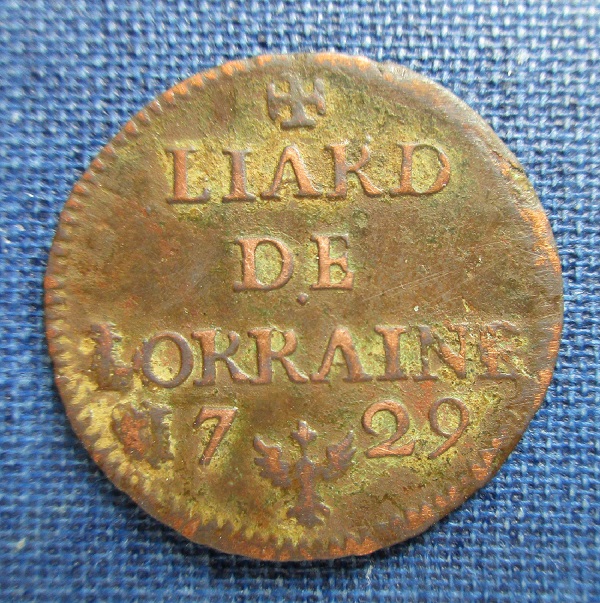 Edited by tdziemia
05/29/2024 9:02 pm
|
|
Moderator
 United States
196572 Posts |
Nice examples, Paul and TD!  |
|
Pillar of the Community
Sweden
2124 Posts |
Quote:
My 1708 is not quite so nice, but also not too bad It doesn't look bad at all! Quote:
I was lucky to see a 1729 offered, the year of Leopold's death, and a bit more scarce since he died early in the year. That would be the very last liard minted in Lorraine, I think. A significant contribution to the thread!  Quote:
Makes me think I should take some time and post some of the others I have ranging from Rome to France. I see you have already started doing that, do continue. There are several of us here at CCF who like a challenge.  |
|
Pillar of the Community
Sweden
2124 Posts |
CHAPTER 27: Long Live the King
= Late 18th Century =By 1740, French feudal liards were a thing of the past. In fact, all feudal coinage ended successively during the 18th century. Louis XIV (the Sun King, whose liards figured in Chapter 24) had been active in removing feudal rights and incorporating their lands into the royal domain, that is, France itself. His successor, Louis XV, continued that policy, and when his grandson Louis XVI took over in 1774, Monaco was the only remaining feudality with its own territory. A liard in the 18th century was small change. There was no smaller denomination than its 3 deniers. That corresponds to a value of about 10 US cents today. To buy one egg you needed 2-3 liards, a loaf of bread cost around 6 liards. Alms was probably the one thing where a single liard could be useful - in fact, a recurring motivation in the royal edicts ordering manufacturing of liards is their use as "relief for the poor". (18th century social welfare: Make coins so small that people are actually willing to part with them to help the poor . . .) Louis XVIn 1715 Louis XV takes over after his great-grandfather Louis XIV. He is five years old, and the state of the French finances is disastrous. While Louis played with rocking horses and toy soldiers, the country was ruled by the Duke of Orleans, Philippe II. He engaged the Scotsman John Law to straighten up the situation. Law devised a scheme with paper money backed by imaginary riches in the French colony of Louisiana. It led to a speculative bubble, causing the ruin of many and the need for Law to flee abroad. It is a fascinating story, which I will not tell here (but here is a start, if you are interested). The French royal and feudal copper liards that we have seen so far are pretty standardized. They all have the text "LIARD DE X" on the reverse. Louis XV introduces a new standard. Like previous royal liards, the king's portrait on the obverse, but the reverse now has the French coat of arms. The text is all titles, no denomination. Liard "with old head" (3 deniers tournois), France 1769, Louis XV, Reims. Copper. 2.73 g, 22 mm. Dup 1701. 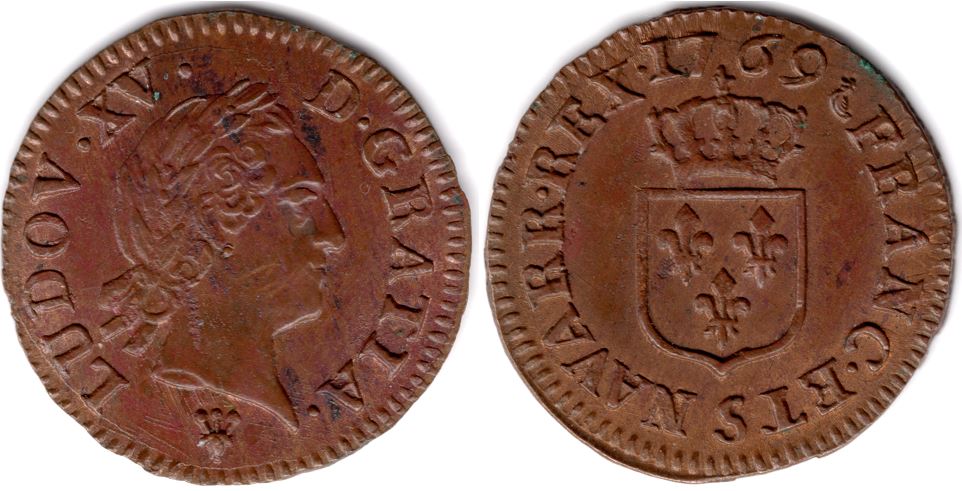 Obverse: LUDOV XV D GRATIA (Ludovicus XV Dei Gratia / Louis XV by Grace of God . . .). Louis XV, laureate. Poppy below the bust, mintmark for mint master Jean-Baptiste Cliquot. Reverse: FRANC ET NAVARR REX (Franciae et Navarrae Rex / . . . King of France and Navarre). Crowned coat of arms of France. 'S' at bottom, mintmark for Reims. Goose before 'FRANC', mintmark for master engraver Jerôme Savoy. There was an earlier liard by Louis XV, "with young bust". Its design is identical to the one "with old head", except for the head then. The "old heads" were minted in large numbers from 1768 until the king's death in 1774. The mint master's mintmark is a pun on his name, Cliquot: Poppy in French is coquelicot. The goose for the engraver Savoy - where -oy is pronounced the same way as oie, French for goose - looks like a pun too. Noteworthy is the return to inscriptions in Latin, after more than a century of using French for the small coppers. Louis XVIWhen Louis XVI takes over in 1774 at the age of 19, he is the first king in 185 years who is not a minor when ascending the throne. Apart from that finances - as usual - were bad, he took over a country in relatively good shape. There had been peace for a decade, harvests came in as they should, mostly, reforms to (slowly) modernize the country were underway. Little did he know what was to come. Liard (3 deniers tournois), France 1780, Louis XVI, Paris. Copper. 3.06 g, 21.5 mm. Dup 1716. 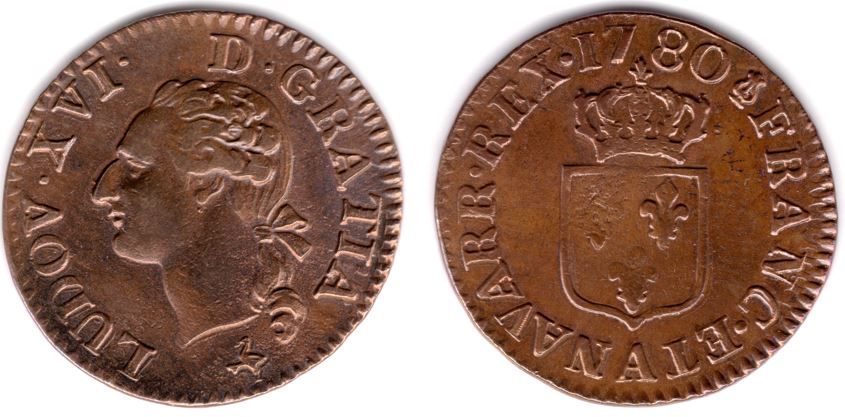 Obverse: LUDOV XVI D GRATIA (Ludovicus XVI Dei Gratia / Louis XVI by Grace of God . . .). Louis XVI. Heron below the bust, mintmark for mint master Jean Dupeyron I. Reverse: FRANC ET NAVARR REX (Franciae et Navarrae Rex / . . . King of France and Navarre). Crowned coat of arms of France. 'A' at bottom, mintmark for Paris. Lyre before 'FRANC', mintmark for master engraver François Bernier. The new king's liards showed little difference to the old one's. Louis XVI looked to the left instead of to the right, that was it. Another mintmark pun on the mint master's name: Heron is heron in French, pronounced like -eyron. Next: Revolution!Things go the wrong way for (probably) well-meaning king Louis XVI. But coins, liards and others, must still be minted.
|
|
Moderator
United States
196572 Posts |
Quote:
There had been peace for a decade, harvests came in as they should, mostly, reforms to (slowly) modernize the country were underway. Special mention for his assistance in the American revolution, but that was probably more about getting back at the British than it was helping the thirteen colonies win independence.  Quote:
Little did he know what was to come. Spoiler alert: His head in a basket.  Looking forward to the antepenultimate chapter. |
|
Pillar of the Community
Sweden
2124 Posts |
Quote:
Special mention for his assistance in the American revolution, but that was probably more about getting back at the British than it was helping the thirteen colonies win independence. Absolutely an important part of the French foreign policy at the time, although as you point out, not so much out of revolutionary spirit as revanchism against the British. |
|
Pillar of the Community
United States
8062 Posts |
While looking through a current (online) auction catalog, I was reminded that in addition to Low Countries feudal principalities that soetimes copied the coins of their neighbors (Gronsfeld, which you have pointed out), this was also a way of generating a revenue stream in some northern Italian principalities, Desana, Frinco, Castiglione della Stivere to name a few. So I was not terribly surprised to find this Italian "liard" imitating one of Henry III I suppose? 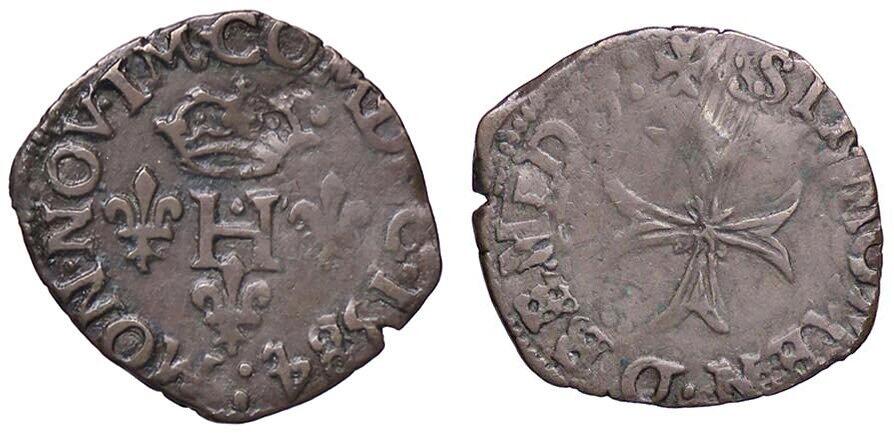 Copyright InAsta S.p.A. 1584 billon Liard of Delphino Tizzone (1583-1598) |
|
Moderator
United States
196572 Posts |
Very interesting! |
|
Pillar of the Community
Sweden
2124 Posts |
Quote:
So I was not terribly surprised to find this Italian "liard" imitating one of Henry III I suppose? Here is Henry's liard (described in Chapter 6): 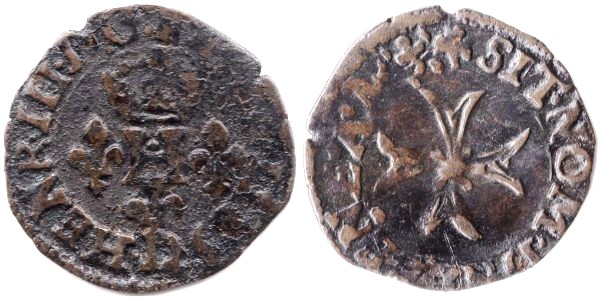 Yes. I think we know where Delfino looked for inspiration. But shouldn't he have rather used one of Henry's dolphin liards . . . ? Thanks for sharing, tdziemia! |
|
Pillar of the Community
Russian Federation
5186 Posts |
Quote:
But shouldn't he have rather used one of Henry's dolphin liards . . . ? Judging by the results for his coins on Numista, he used both - there are dolphin liards in his name as well! Edited by january1may
05/31/2024 3:50 pm
|
|
Pillar of the Community
Sweden
2124 Posts |
CHAPTER 28: King of the French, For a While
= Late 18th Century =July 14, 1789. The Bastille, the medieval fortress used as a prison in Paris, is stormed by an angry crowd of Parisians. They want the arms and gunpowder that has been transferred there as a precaution, following earlier outbreaks of unrest in the city. The commandant of the Bastille initially resists but eventually surrenders. He is brutally killed by the mob and the Bastille is taken. The French Revolution has begun. 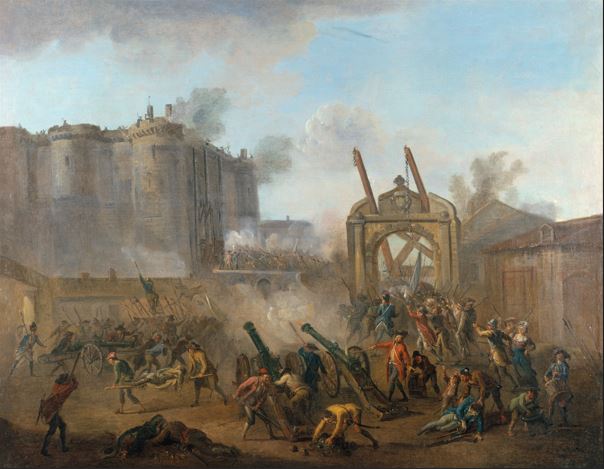 The storming of the Bastille, July 14, 1789. The storming of the Bastille, July 14, 1789.
Source: Painting by Jean-Baptiste Lallemand, ca 1790. parismuseescollections.paris.fr. Public domain under Creative Commons Zero license.
Two bad harvests in a row followed by food shortage and price rises, on top of that increased taxes (with the cost for military support to the American colonists against Britain being one reason) - those were some of the factors that triggered the outbreak of the revolution. I shall not go into the details of the events, there is plenty of information for those who want to know. Let me just point out that the revolution was not - to begin with - anti-monarchist. Louis XVI remained king, but no longer an absolute ruler, he was forced to settle for being a constitutional monarch, who shared his power with a parliament elected by the people. One effect of that was that he no longer was allowed to call himself "King of France", he was from now on "King of the French". A technicality, it may seem, but "King of France" was associated with having been placed on the throne by God, as an unquestionable fact. "King of the French" was something you were only as long as "the French", the people, agreed to it. We can see the shift on this constitutional liard: 3 deniers tournois, France 1792, Louis XVI, Lyon. Copper. 3.11 g, 21.5 mm. Dup 1725. 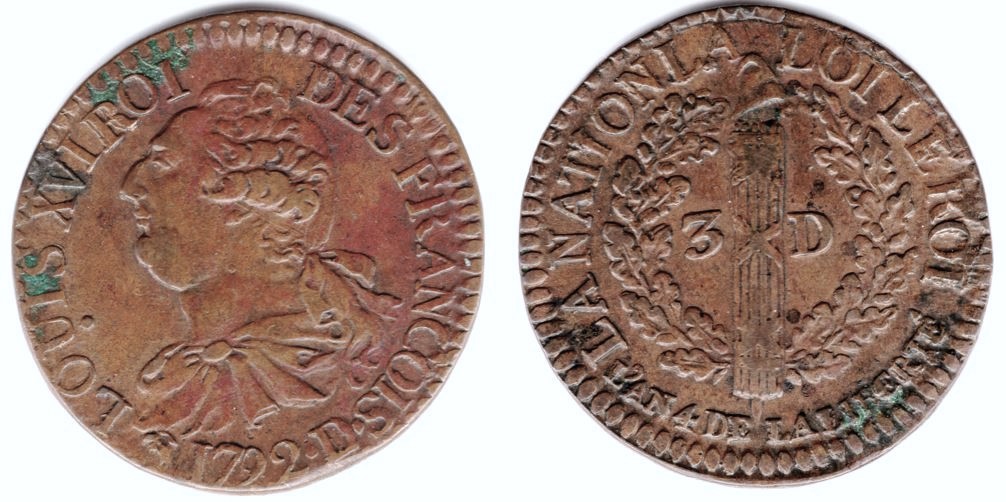 Obverse: LOUIS XVI ROI DES FRANCOIS (Louis XVI King of the French). Louis XVI, draped. 'D' right of year, mintmark for Lyon. Eagle head left of year, mintmark for master engraver Jean Humbert Bernavon. Point below 'U' in 'LOUIS' indicates minting during 2nd half of the year. Reverse: LA NATION LA LOI LE ROI // L'AN 4 DE LA LIBERTe (The Nation, The Law, The King // Year 4 of Freedom). Fasces with Phrygian cap, surrounded by oak leaves. The king has aged, clearly. But the big differences are found on the reverse. The inscription clarifies the new priorities: First comes the nation, then the law, then the king. The fasces has a twofold symbolism here. Firstly, it is the traditional symbol for the law, and the power to uphold the law. The Phrygian cap, the likewise traditional symbol for freedom, placed on top of the fasces shows that the law is under the control of the liberated people. Secondly, the fasces with its bundle of rods symbolizes the strength that comes from unity (of the people). "Year 4 of Freedom" refers to the number of years since the revolution, with 1789 being year 1 of freedom. (This is different from the Revolutionary or Republican calendar, which was introduced in 1793 and by which "Year 1 of the Republic" started Sept 22, 1792. Yes, it is messy.) One more thing. Now, for the first time, the denomination of a liard is stated in deniers. "3 D" on the reverse stands, of course, for 3 deniers. This is in line with doing away with the habit of the old regime to not mark larger coins with their value - silver coins were called ecu, ½ ecu, and so on, gold coins came as louis d'or, ½ louis d'or and double louis d'or, but how much an ecu and a louis d'or were worth, in livres and sous, was up to the king to decide, and change as he saw fit. The (few) silver and gold coins minted by the revolutionary government had the value in livres clearly stated on them. Consequently, the smaller denominations, in copper, should have too. Sept 21, 1792, the National Convention (the parliament) abolished monarchy and declared the Republic, effective the next day. Louis XVI became "citizen Capet", was accused of conspiracy and guillotined January 21, 1793. The absolute monarchy was replaced by a reign of terror and the traces of the ancien regime were washed away, in blood. Soon enough the First Republic would itself be swept away, by a man rising through its military ranks. But the story of Napoleon Bonaparte, and the rest of French history, is outside the scope of this thread. Epilogue to the French LiardWe are not quite done with the liards yet, but this is the last we will see of French liards. The "3 D" liard was minted only during 1792 and it was the last of its kind. In 1795, the old livre-sol-denier system was replaced by the franc, divided into 100 centimes. But copper was scarce, and France had other priorities than to mint small change, so the old copper coins remained valid. Not until 1856 were old liards demonetized. Up until then, they could be used at a value of 2 centimes. The Very Last Liards. . . are yet to come. Not so much later, but the Austrian Netherlands held out until 1794. In the next Chapter, it is time to look at those. Before doing that, let's take another break, to give a day or two to breath and search out those liards I am sure you have out there and show!
|
|
Pillar of the Community
Sweden
2124 Posts |
Quote:
Judging by the results for his coins on Numista, he used both - there are dolphin liards in his name as well! Indeed he did! Thanks january1may! |
|
Moderator
United States
196572 Posts |
A fantastic read leading up to the end. |
| |
Replies: 163 / Views: 7,911 |
To participate in the forum you must log in or register.
Disclaimer: While a tremendous amount of effort goes into ensuring the accuracy of the information contained in this site, Coin Community assumes no liability for errors. Copyright 2005 - 2026 Coin Community Family- all rights reserved worldwide. Use of any images or content on this website without prior written permission of Coin Community or the original lender is strictly prohibited.
Contact Us | Advertise Here | Privacy Policy / Terms of Use
|
| Coin Community Forum |
© 2005 - 2026 Coin Community Forums |
| It took 0.53 seconds to rattle this change. |
 |
|







 First Page
 Previous Page


 Posted 05/29/2024 7:51 pm


