In an earlier post about the 1922 Grant Birth Centenary Silver Half Dollar and Gold One Dollar, I referenced the commemoration held in Point Pleasant, Ohio for the anniversary and noted that US President Warren G. Harding attended the ceremony and gave the "Commemorative Address."
You can read the post and see images of the ceremony program here:
-
1922 Grant Centenary - Ohio CelebrationsThis post supplements the previous with a few excerpts from Harding's lengthy address.
President Harding at Point Pleasant, OH 1922 Ceremony for U. S. Grant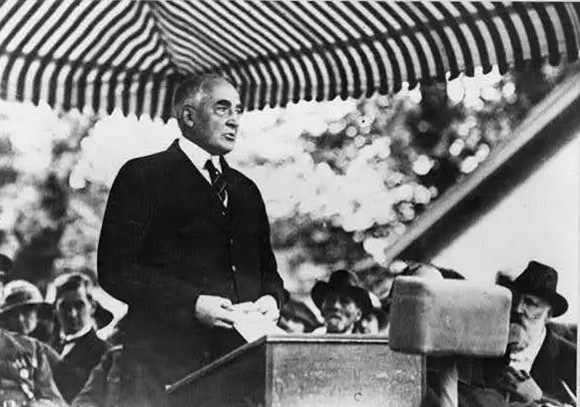 (Image Credit: Library of Congress, Prints and Photographs Division.)
Early in his address, Harding extolled the virtues of Grant's personality and approach to life's challenges:
"I sometimes wonder if the magnanimity of Grant, the dogged, persistent, unalterable Grant in warfare, the unconditional surrender Grant, would not be helpful in the world today. The great world struggle, which we might reasonably designate a civil war in western civilization, and in which we so creditably and helpfully participated, left peoples and nation prostate, hardly knowing which way to turn for restoration. I can not help but believe that of the spirit with which Grant welcomed victory, something of his eagerness for return to peaceful ways, would have speeded the restoration and hastened the return to prosperity and happiness, without which there can be no abiding peace."Harding continued, referring to Grant as:
"the military leader of the republic, a commanding figure in the military history of the world, the surpassing example of magnanimity of all times; the most striking example of the possibilities in American life; the confident and relentless commander in war, and the modest and sympathetic petitioner for peace after victory."Harding also stated his belief that Grant would have favored the US' actions following World War I:
"We know his cherishment of peace, intensified by the intimate knowledge of war. I can well believe he would have approved of all that the republic had recently done in joining other nations in lifting the burdens of armament and promoting understandings which make war less likely. I know he would have approved, because we surrendered no independence, we gave up none of our nationality for which we fought, but we have furthered the assurance of peace, which was the supreme yearning of his great brave heart."Referring to General Lee's surrender at Appomattox in 1865, and Grant's death in 1885, Harding noted:
"It is fifty-seven years since Grant landed victory with magnanimity. It is thirty-seven years since he laid down the wearied autobiographer's pen and made his one and only surrender. His fame is secure. The republic has not forgotten and will not forget."Harding went on to praise Grant and his approach to conflict and peace:
"Though he proclaimed the doctrine of moral disarmament at Appomattox, he believed in a nation equipped for a righteous cause. But no aggression was in his breast."Harding held Grant up as a noteworthy example for all Americans:
"Grant was himself the supreme example of American opportunity. Standing before his humble birthplace amid the surroundings of his obscure boyhood life, one doubts in three-quarters of a century ago anyone should have sought here for the military chieftain of a century."Harding's speech was respectful and admiring, and placed the life and legacy of U. S. Grant in a context that many did/do not appreciate. I especially liked the fact that it was not a "front" for political messaging.
IMO, Grant was definitely a subject worthy of a US commemorative coin.
1922 U.S. Grant Centenary Half Dollar, with Star Variety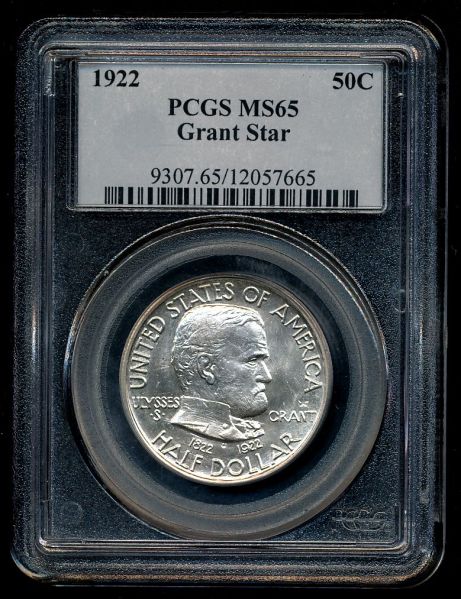
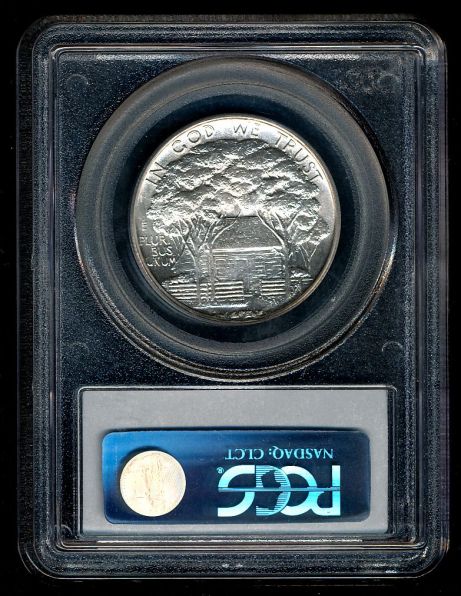
For other of my posts about commemorative coins and medals, including a number about the Grant Centenary coins, see:
Commems Collection - follow the US Classic link.






 Posted 05/26/2024 11:32 am





