| Author |
 Replies: 1,026 / Views: 36,444 Replies: 1,026 / Views: 36,444 |
|
|
|
Pillar of the Community
  Sweden
2124 Posts |
Wonderful deniers from all! I love the fine details on the Halberstadt denier, Keith 67. The 'M' also looks interesting on that Normandy denier, Spence. Your Liège denier, tdziemia, is really nice and it is interesting to see how the simplification of the Karolus monogram has begun, compared to my Charles "the Bald" denier. I will continue with the single letter theme. The small lordships of Anduze and Sauve in southern France were ruled by the Bermonds from the 900s until 1248. Most lords were named Bernard, and the few types of coins known all have a 'B' on the obverse - for Bermond or Bernard, we don't know. Denier, Anduze & Sauve, ca 1150-1160, Bernard of Bermond, Sommières. Silver, 0.91 g, 17 mm. 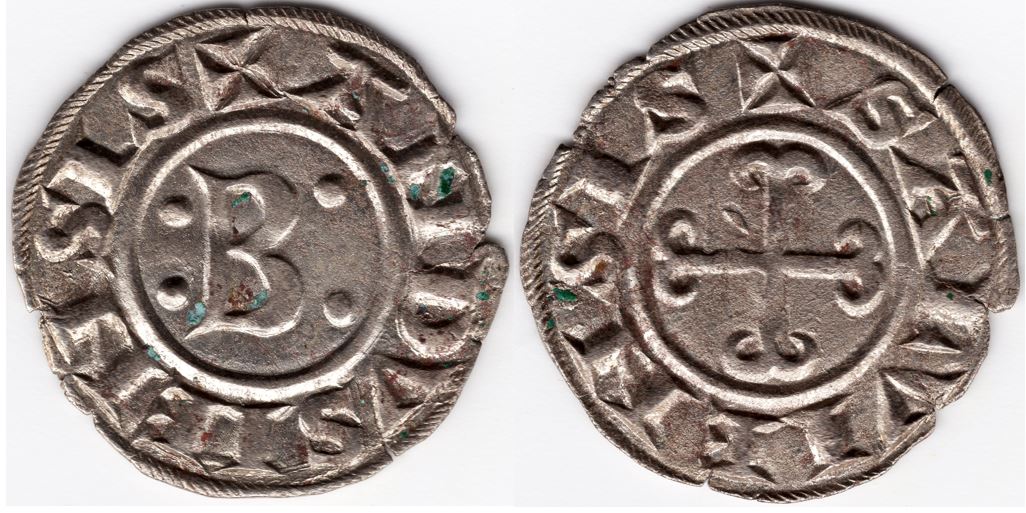 Obverse: ANDVSIENSIS (of Anduze). 'B' with pellets. Reverse: SALVIENSIS (of Sauve). Anchor cross. Edit: Added year of issue. Edited by erafjel
06/16/2024 09:38 am
|
|
Moderator
 United States
34539 Posts |
Ok great, I'm going to stay switch over to Germany for this late 10th-Century Denar from Goslar. 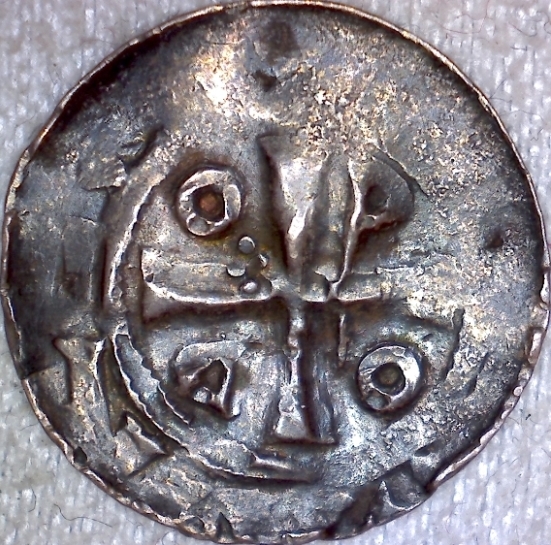 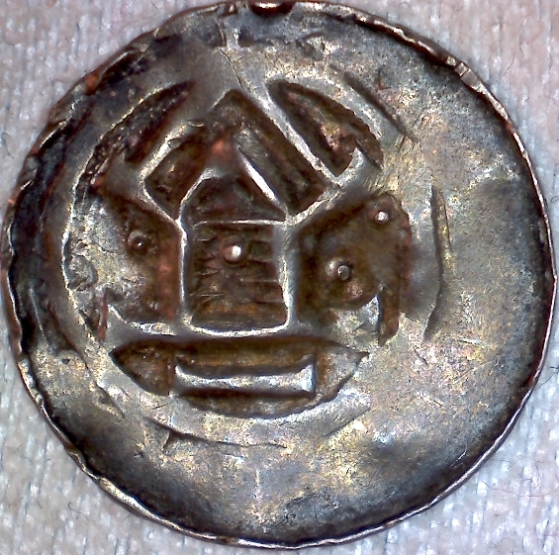 "If you climb a good tree, you get a push."
-----Ghanaian proverb
"The danger we all now face is distinguishing between what is authentic and what is performed."
-----King Adz
|
|
Bedrock of the Community
United States
78532 Posts |
More nice additions!  Errers and Varietys.
|
|
Pillar of the Community
United States
8042 Posts |
I am east of Goslar but probably still in the Germanic world with this anonymous temple type denar dated to the second half of the 10th century. The legends have degenerated to a series of strokes, Is and dots. It tends to be attributed to Magdeburg, but older Polish catalogs also have this type, so it may have circulated over quite a wide area: 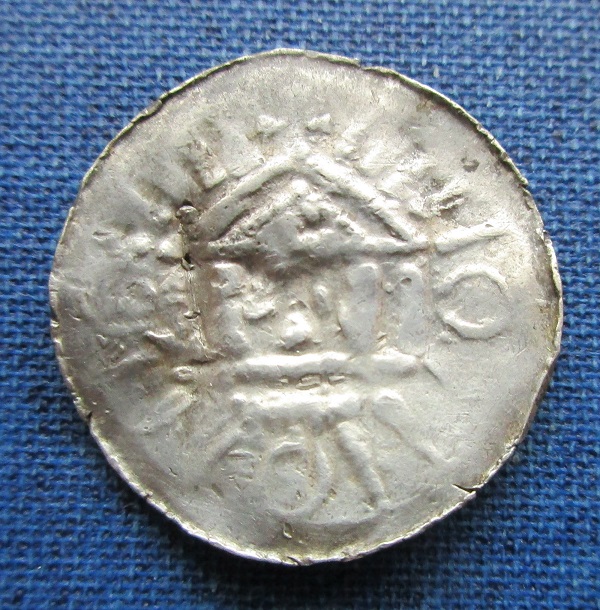 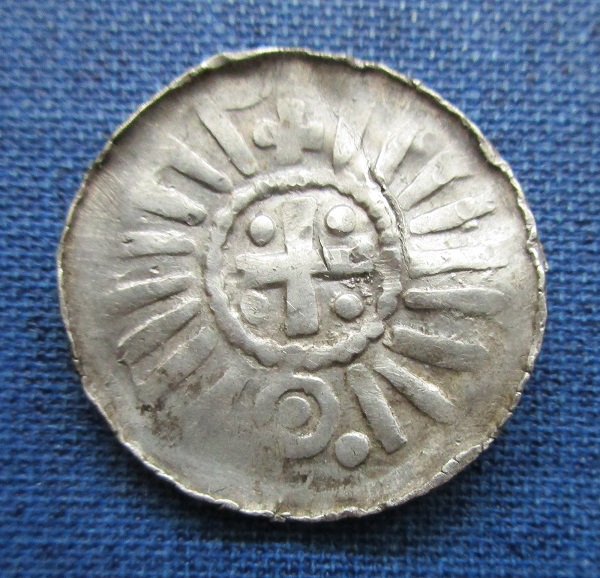 |
|
Moderator
United States
105886 Posts |
nice coin - If I didn't know any better, I would say that it was a ' Dryer Coin'  |
|
Pillar of the Community
Sweden
2124 Posts |
Nice adds! Inscriptions tend to degenerate over time on immobilized types. My "worst" example of that is this denier from the County of Melgueil. Denier, Melgueil, 1076-1316. Billon, 1.0 g, 18 mm. 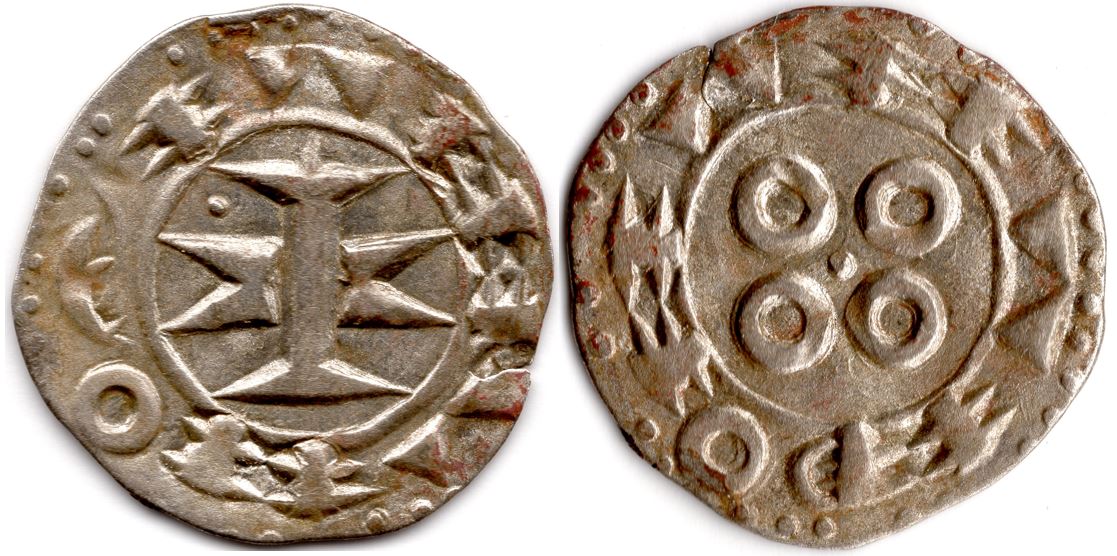 Obverse: ±Λ±±±V±±O ( ) (originally RAMVNDS / Raymond). Reverse: ±±Λ±DO±Λ (originally NAIDONA / Narbonne). The coin has its origin in a denier minted by viscount Raymond I of Narbonne around year 1000. The immobilized type was minted continuously during the period 1076-1316 and became widespread in southern France. In Andorra (which had no minting of its own) it became the standard currency. |
|
Moderator
United States
34539 Posts |
More from Germany for me. This Denar is from the South (Bavaria) and shows a little more detail on that temple on the rev. As I recall, there are a variety of letters known on the temple. Mine has M A O. 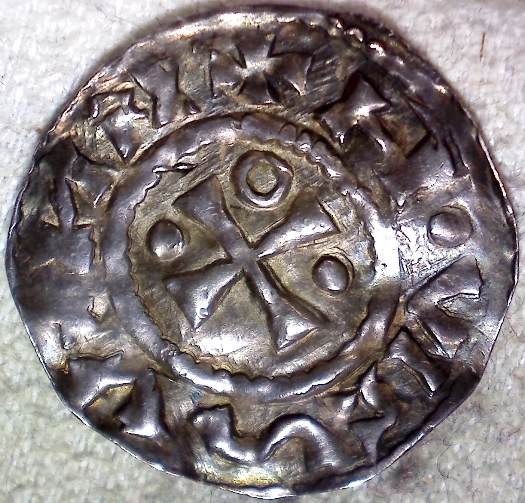 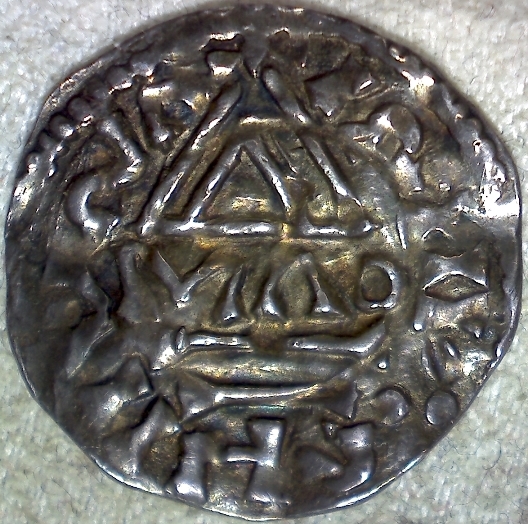 "If you climb a good tree, you get a push."
-----Ghanaian proverb
"The danger we all now face is distinguishing between what is authentic and what is performed."
-----King Adz
|
|
Bedrock of the Community
United States
78532 Posts |
Very nice additions. Errers and Varietys.
|
|
Pillar of the Community
United States
8042 Posts |
Quote:nice coin - If I didn't know any better, I would say that it was a ' Dryer Coin' Yeah, as I pulled up those photos, I thought the same thing. @spence's last coin has a bit of that going on at the rim, too. Not sure what causes it, but I'm pretty sure they had a different kind of dryer back then  . |
|
Moderator
United States
105886 Posts |
Quote:
but I'm pretty sure they had a different kind of dryer back then Yes, that would be a good bet.. |
|
Moderator
United States
105886 Posts |
|
|
Pillar of the Community
United States
8042 Posts |
As predicted by @spence yesterday morning, I also have a 10th century denar with S / COLONI / A, but with the twist that it is attributed as a Low Countries imitation (Elsen attributes it as "atelier mosan," so perhaps Maastricht or Liege). These places were all in the same "country" in the early tenth century: cities as far from each other as Colmar, France, Cologne, Germany and Antwerp were all in the Duchy of Lotharingia before it split into pieces around 959. 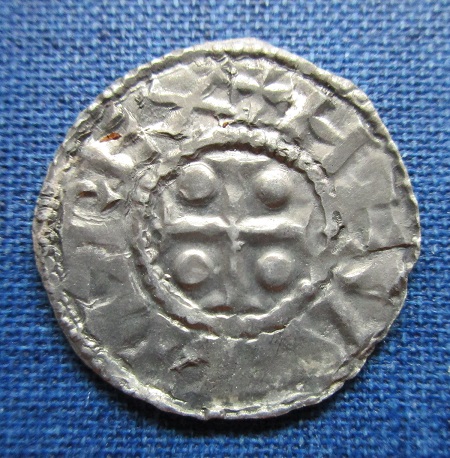 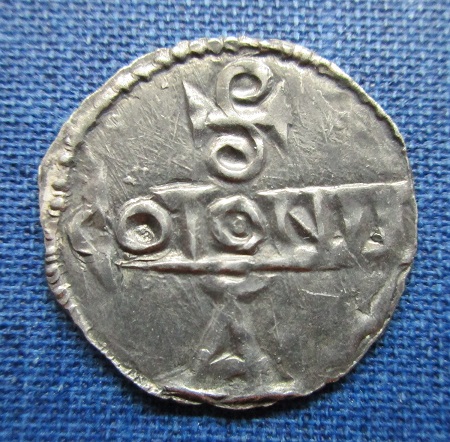 Obverse: + HENRIS REX for Henry the Fowler, King of Germany 919-936, and ruler of Lotharingia 923-936. Reverse: S / COLONII / A Edited by tdziemia
06/16/2024 2:22 pm
|
|
Moderator
United States
105886 Posts |
|
|
Pillar of the Community
Sweden
2124 Posts |
Drachms are actually outside the scope of this thread, Dearborn . . . although I must say yours is particularly nice.
Rules in my first post.
|
|
Moderator
United States
105886 Posts |
well Bummer - but thanks for the comment
|
| |
Replies: 1,026 / Views: 36,444 |








 First Page
 Previous Page


 Posted 06/15/2024 7:06 pm