Followers of the modern US commemorative coin series are likely familiar with current design development/review processes whereby a dozen or more designs (per side) are developed and made available for review by the sponsor, Citizens Coinage Advisory Committee (CCAC), the US Mint and others. This was generally not the case during the classic era. For example, I recently discussed the designs of the 1936 Long Island Tercentenary Half Dollar - a situation of one working pair of designs. (You can read about it here:
1936 Long Island Tercentenary - Minor Design Changes.)
The circumstances were a bit different for the 1936 Battle of Gettysburg 75th Anniversary Half Dollar.
When the Pennsylvania State Commission - the Gettysburg coin sponsor/beneficiary - met on June 30, 1936, it reviewed five potential design pairs for its coin. It did not select one at the meeting, however, and requested its Executive Secretary, Paul L. Roy, to gather "at least three more designs for further inspection."
The next time the Commission met - on July 28, 1936 - Roy had 14 designs and models for the Commission to review - nothing like exceeding expectations! Designs/models were submitted by:
- Frank Vittor, Pittsburgh
- J. E. Caldwell & Co., Philadelphia
- Bailey, Banks and Biddle Company, Philadelphia
- William Marks Simpson, Baltimore, and
- Adam Pietz, Philadelphia.
(Simpson, of course, would later go on to be selected for the US Civil War themed 1937 Battle of Antietam 75th Anniversary Half Dollar.)Following its review and discussion of the submitted designs, the Commission selected the designs of Frank Vittor. The Commission believed they were the "best representative of the theme and purpose of the Battle Anniversary observance and reunion program."
On August 21, 1936, the coin sub-committee of the Commission met with William Ludwig, Administrative Officer of the State art Commission, to get another opinion on the 14 potential designs. Ludwig also selected Vittor's designs, thus confirming the Commission's earlier selection.
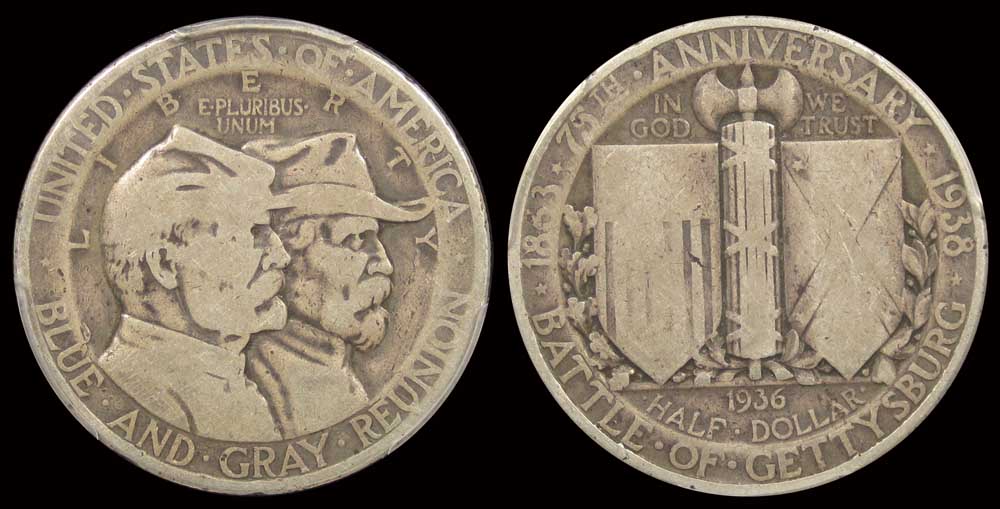
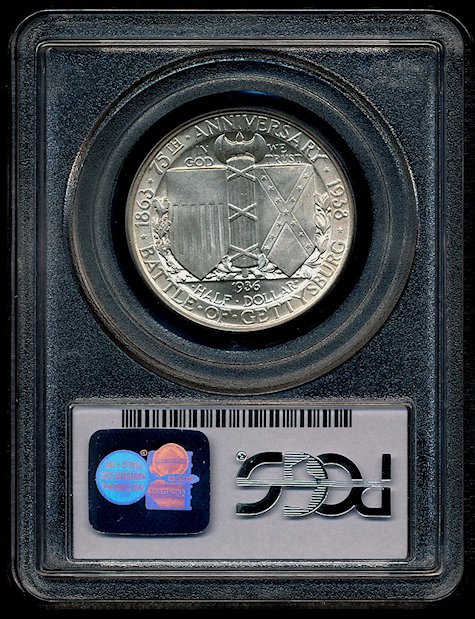
Vittor's designs presented conjoined portraits of Civil War veterans on its obverse (emblematic of the 1938 reunion) and the dual-shield emblem/logo of the Pennsylvania State Commission for the reverse (symbolic of the 1863 battle). Harry Rene Lee, Adjutant-General of the United Confederate Veterans, was the proposed model for Vittor's obverse portraits, but did not accept the invitation. Instead, James Power Sankey of Pittsburgh, a Civil War veteran (Union side), sat for Vittor as he prepared the coin's obverse design of conjoined portraits of a soldier from each side of the battle. One model, two portraits, similarities were inevitable.
The Coin Sub-Committee met with Ludwig again on September 25, 1936 for further discussions (re: refinements) on the selected models and then on October 16, 1936 to give final approval. Noted artist/sculptor R. Tait McKenzie also attended the October meeting to provide additional feedback.
With their approval secured, the models were sent to the US Mint for it to begin the final steps of the process. The Commission of Fine Arts reviewed photographs of the models in March 1937 and approved them with two small change recommendations: 1) On the obverse, remove the Confederate insignia from the collar of the Confederate soldier, and 2) Remove the stars from the Union Shield on the reverse.
The changes were made and coinage dies were prepared. The US Mint struck the Gettysburg coins in June 1937 - 50,028 were struck (including 28 for assay purposes). Later, 23,100 were returned to the Mint to be melted, leaving a net distributed total of 26,900 coins - just 53.8% of the authorized total. (See
To The Melting Pot #18 - 1936 Battle Of Gettysburg 75th Anniversary1936 Battle of Gettysburg 75th Anniversary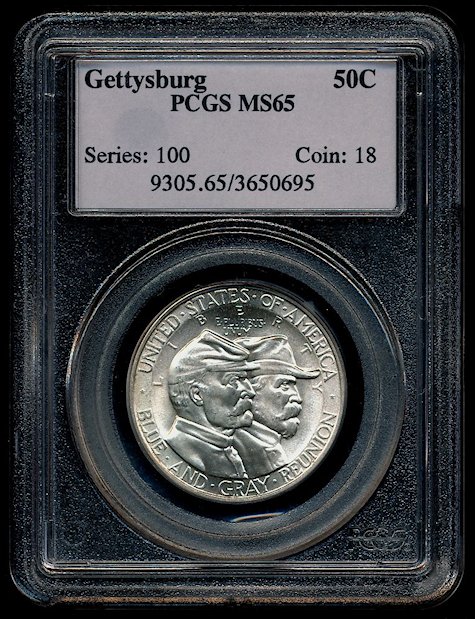
For more of my stories about commemorative coins and medals, including more on the Gettysburg half dollar, see:
Commems Collection.










 Posted 06/19/2024 4:17 pm