Quote:
That is an incredible gold collection Helder - and more impressive is that image of the cosmos - took you 3 nights to get it? How did you keep the star field the same?
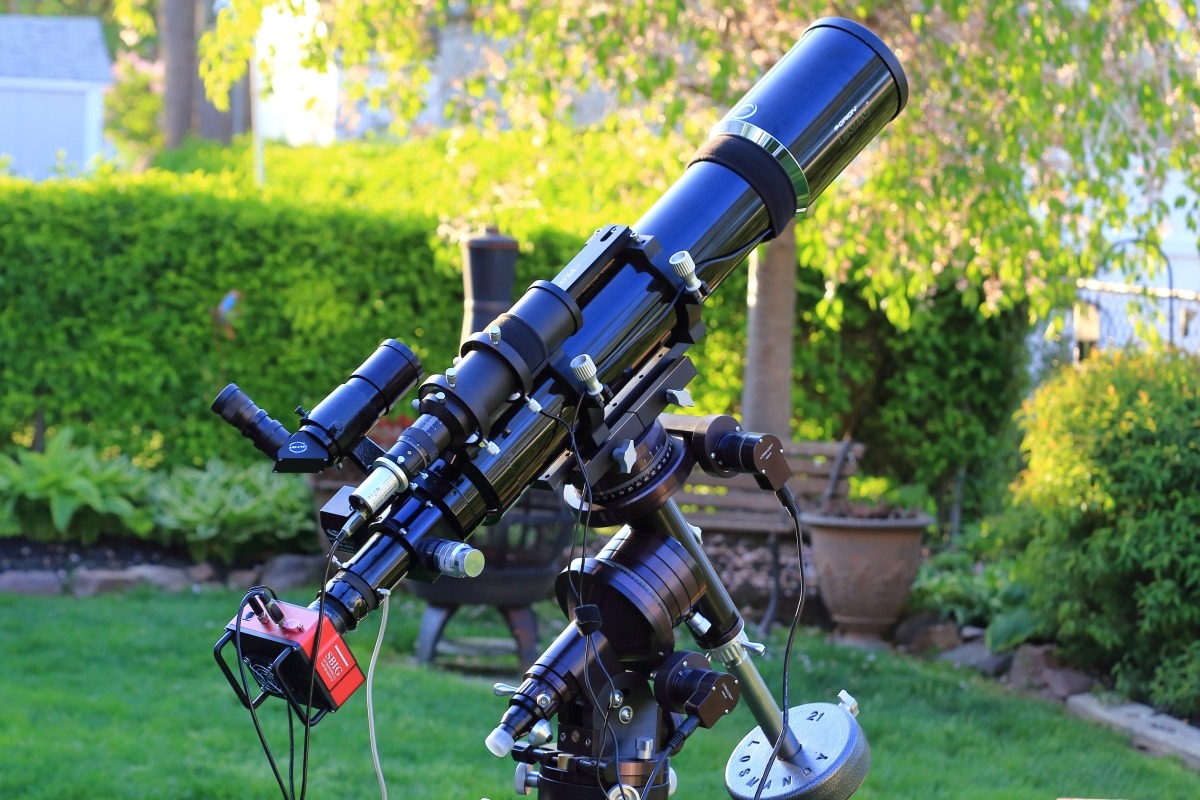
You need 2 telescopes mounted on top of each other.
The smaller scope is used to lock on to a star and keeps that star within a pixel throughout the night.
The second scope is linked to the mount and it has a larger camera. When I start the imaging session, I enter the coordinates of the object I want into a program on the laptop. There is another program called Plate Solving which you enter the telescope, camera and mount and it knows where 3-5 bright stars are supposed to be (based on the coordinates entered). Based on those stars the telescope goes back to the same location (within 50 pixels) every night and starts the routine again.
I probably spend an hour setting up the program before I even take my first picture.
I need to select the object, so I use
https://telescopius.com/ to see what's available. Use the program to see how the object will be framed. Then get the coordinates, enter the coordinates to my laptop.
Set-up how many frames (of each filter) and how long each image should be.
And then hook up everything.
Align the scope and set-up a model of the sky.
Once the scope and mount are ready to go. You run the acquisition program. And hope that clouds don't come in and ruin your sequence.
In the case of the above picture, one day of 4 was ruined, but I needed a lot of images as this object is faint.
And people think coin collecting is hard

Edited by hfjacinto
09/18/2024 12:20 pm








 First Page


 Posted 09/18/2024 09:36 am


