| Author |
 Replies: 803 / Views: 43,205 Replies: 803 / Views: 43,205 |
|
|
|
Bedrock of the Community
United States
78540 Posts |
Nice addition, Bacchus2.
Errers and Varietys.
|
|
Pillar of the Community
  United States
8044 Posts |
Quote:
1740 1/2 Baiocco from the Sede Vacante period when Annibale Albani was the Camerlengo Super coin! I don't have any sede vacante coins. For those who have been following along, the obverse of a sede vacante coin differs from normal papal coins in two ways: - the papal triregnum (tiara) above the keys is replaced by the umbraculum - and the coat of arms beneath is the family arms of the camerlengo as mentioned by @Bacchus2 for coins struck in Rome (versus the family coat of arms of the pope), but may be the arms of the Papal legate in the farther flung mints like Ferrara. The only other type I have which has not already been posted is this 1747 baiocco struck in Ferrara, distinguished by the backward numeral 1 in the denomination 9and maybe some kind of defect that has obliterated parts of some letters?): 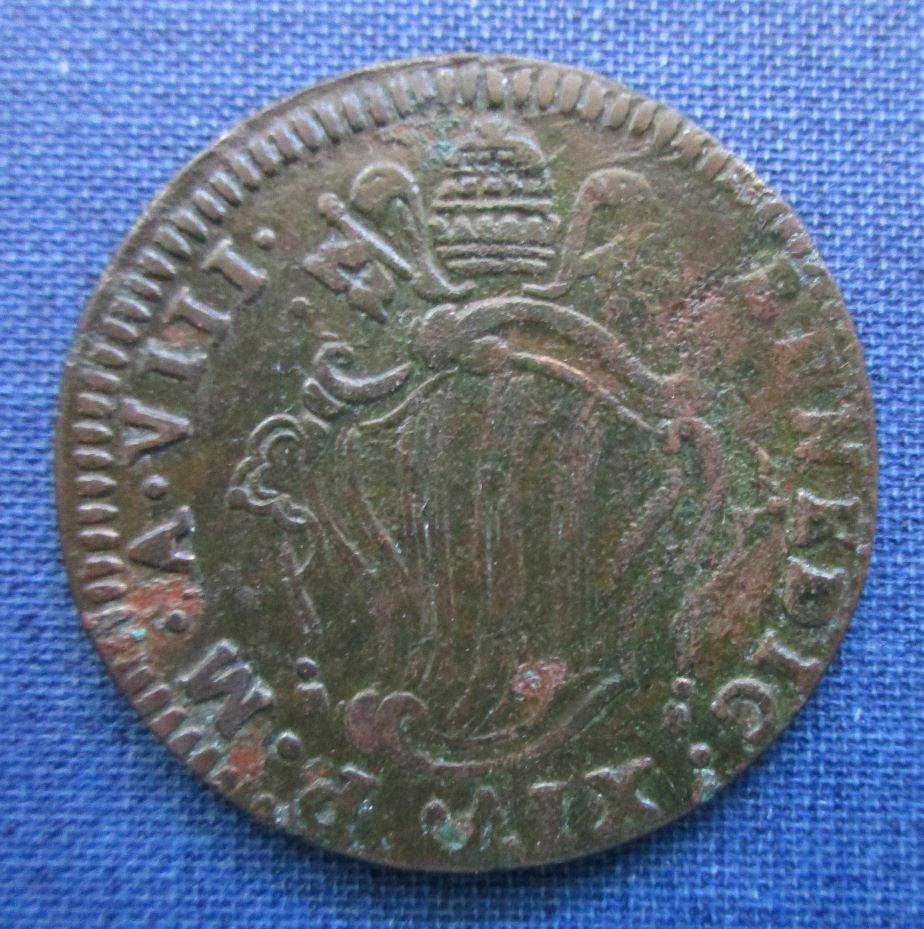 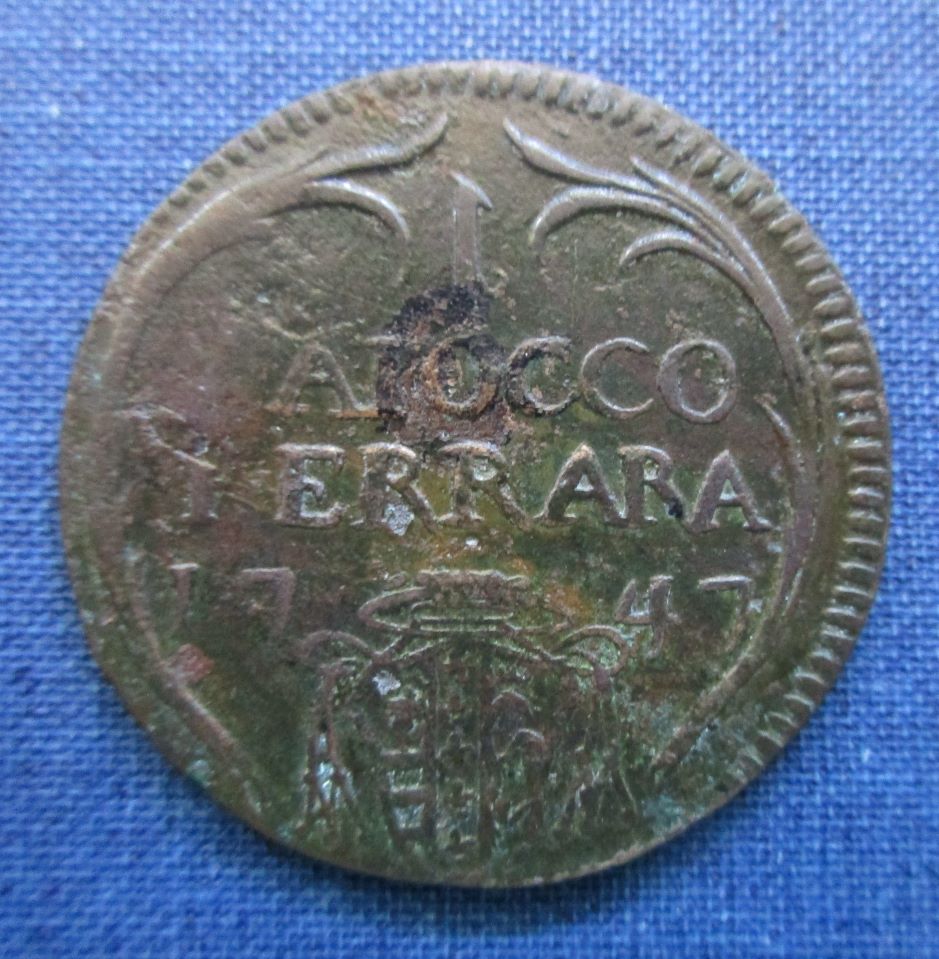 The full baiocco is not only hefty, but quite large at 34 mm (i.e. larger than a U.S. half dollar). Edited by tdziemia
03/14/2025 2:01 pm
|
|
Moderator
 United States
105895 Posts |
|
|
Pillar of the Community
United Kingdom
2928 Posts |
Thanks for the extra bit of information. Nice coin as well.
I believe that in the entire history of the Papacy there have only been two times where the camerlengo has went on to become Pope (Leo XIII and Pius XII)
|
|
Pillar of the Community
United Kingdom
2928 Posts |
On checking the timeframe I do have one last coin to add to this section - one of Clement XII. At the base of the reverse is the coat of arms of Bishop Filippo Casoni. Clement XII was born Lorenzo Corsini. I haven't yet worked out the link between the two. . Although not dated it is attributed to 1735 1 Giulio (I'm a bit more awake this time for recognising the right denomination!) 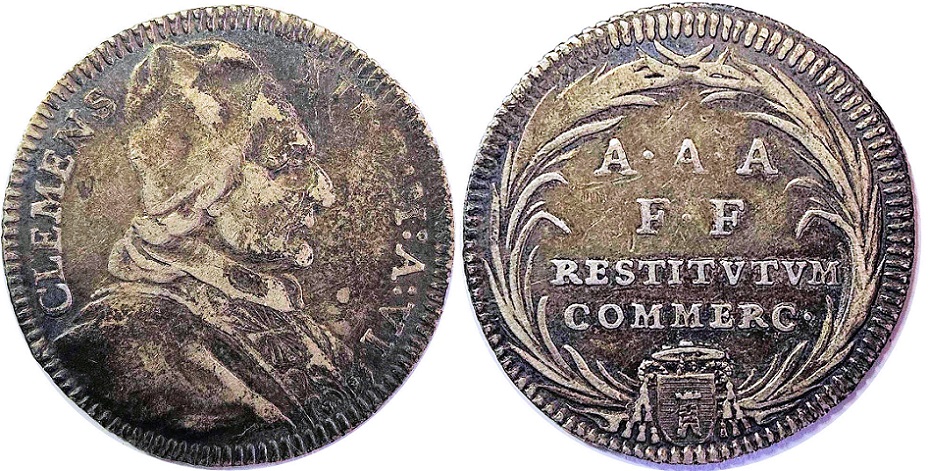 |
|
Pillar of the Community
United States
8044 Posts |
Nice coin with, as you point out, some mysteries. Not only the Cassoni connection, but I wonder what AAA FF stands for?  In addition ... on your earlier post of the 2 giulio coin of Pius VI, the location of the Gregorian date (1784 for yours) is on the reverse around 5:00: 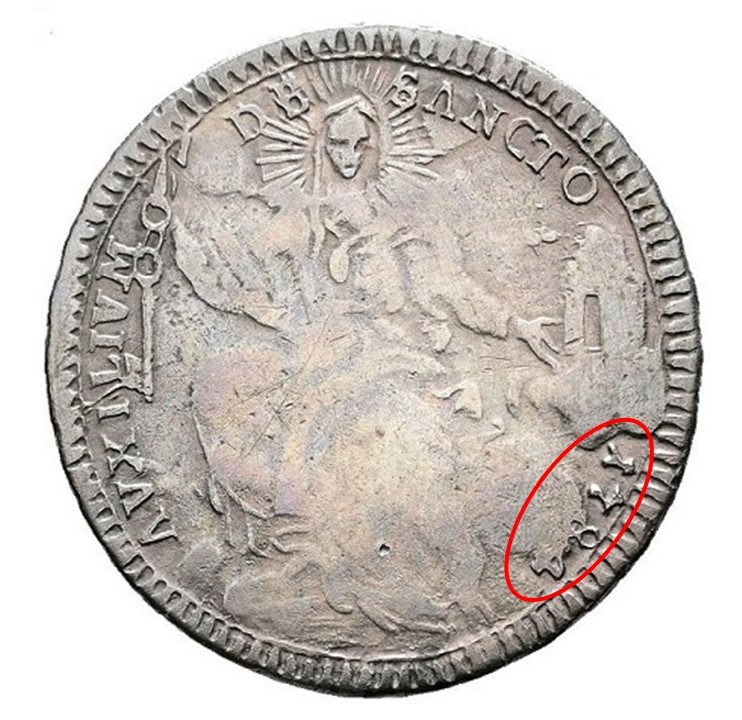 As you mentioned in that post, Numista (which has followed Krause) uses an image of a later coin where the date is obverse beneath the coat of arms. I think the 1784 fits better under this type: https://en.numista.com/catalogue/pieces377855.html Edited by tdziemia
03/15/2025 09:37 am
|
|
Moderator
United States
105895 Posts |
very nice Addition Bacc, good set of eyes tdz  |
|
Pillar of the Community
Russian Federation
5186 Posts |
Quote:
I think the 1784 fits better under this type AFAICT the difference is in the style of the coat of arms on the obverse (a complex ornate shield vs. a much simpler oval one). I'd probably have classified them as three distinct types, but honestly type classification for premodern coinage is always a mess... Ironically enough, the date was clear enough to me but I didn't comment on it because the original post mentioned a date "at the end of the obverse [sic] legend" (and this one was of course on the reverse) and I didn't think of checking the Numista entry (which does indeed say "reverse"). |
|
Pillar of the Community
United States
8044 Posts |
I think KM could have done a better job with how they divided this this type, and then Numista copied KM.
I would have split it by
Date reverse (1775-1787, 1796)
Date obverse (1788-1792).
To me, date location trumps changes in shape of the coat of arms, and as you say, there are more than two shapes for the coat of arms across the sub-types (1786/1787 have a common "square" shape, 1796 is spade shaped, etc.). The Muntoni catalog appears to give them all a separate type. Berman is between.
I'll go add examples in the Numista listing so it is more helpful
|
|
Pillar of the Community
United States
8044 Posts |
A tally on what's been posted thus far:
Pius IX (1846-1870) - 4 types (all Rome mint)
Gregory XVI (1831-1846) - 2 types/3 coins (all Bologna)
Pius VIII (1829-1830) - nothing
Leo XII (1823-1829) - 1 type (Rome)
Pius VII (1800-1823) - 2 types Bologna, Rome)
Pius VI (1775-1799) - 8 types (Ancona, Bologna, Perugia, Rome)
Clement XIV (1769-1774) - nothing
Clement XIII (1758-1769) - 2 types (Rome)
Benedict XIV (1740-1758) - 7 types/9 coins (Bologna, Ferrara, Gubbio, Ravenna, Rome)
Clement XII (1730-1740) - 3 types (Gubbio, Rome)
Tomorrow let's move to these reigns to finish out the (productive!) 18th century:
Benedict XIII (1724-1730)
Innocent XIII (1721-1724)
Clement XI (1700-1721).
I am lacking the first two, and I will hold off on posting Clement XI types till we see what others have.
|
|
Moderator
United States
105895 Posts |
thanks for that list tdz. |
|
Pillar of the Community
United Kingdom
2928 Posts |
Thanks for all the extra info -= and pointing out the date in the 2 giulio coin of Pius VI - great spot.
Alas I don't have anything to contribute for the period 1700 - 1730 but looking forward to seeing what others post.
|
|
Pillar of the Community
United States
8044 Posts |
Quote:
Thanks for all the extra info -= and pointing out the date in the 2 giulio coin of Pius VI - great spot. The Numista listing for the 2 giulio coin has now been updated with illustrative examples of the different combinations of shields and date locations, as mentioned by january1may: https://en.numista.com/catalogue/pieces89416.html |
|
Moderator
United States
195053 Posts |
Fantastic examples! |
|
Pillar of the Community
United States
8044 Posts |
I'll start with my first coin of Clement XI, this copper half baiocco struck in Ferrara, probably in 1719. The coin has a pontifical date of XIX obverse. Since year 1 of Clement's reign was from Nov. 23, 1700 to Nov. 22, 1701, then year 19 would have run from Nov. 23, 1718 - Nov. 22, 1719. 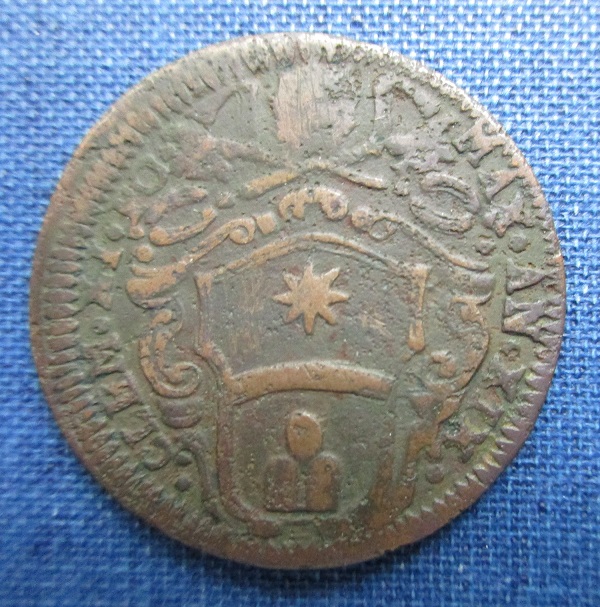 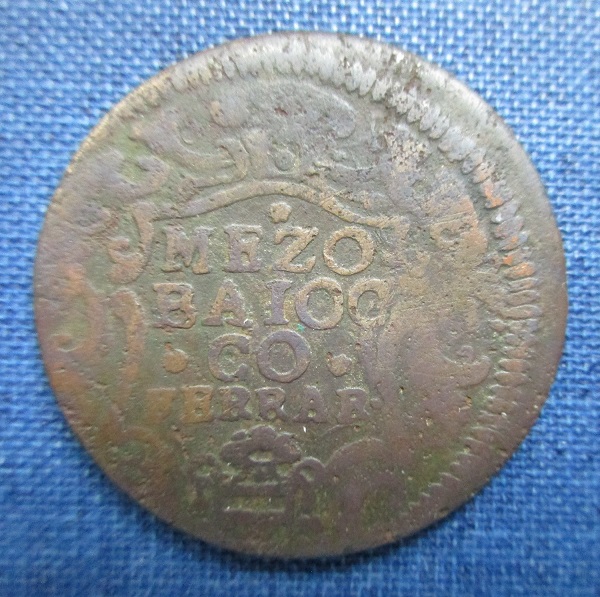 Clement was born Giovanni Francesco Albani, so the shield of arms obverse is that of the Albani family; it looks like a star in the upper half, and what I believe to be three stylized mountains in the lower half. The family hailed from Urbino, which is quite a mountainous place. Something I noticed about 1/2 baiocco Papal coins ... The modern Italian spelling of "half" is MEZZO (with two Zs). And if we look at 1/2 baiocco coins struck in Rome (starting in 1740), this is the only spelling we see. But mints in the farther flung provinces (Ferrara, Gubbio) used the speling MEZO before the mid-1700s. I don;t know if this reflects a process of standardization of the written Italian language or something else. It seems unlikely that engravers in two different places would make the same mistake over two or three generations. Edited by tdziemia
03/17/2025 09:02 am
|
| |
Replies: 803 / Views: 43,205 |








 First Page
 Previous Page


 Posted 03/14/2025 1:54 pm


