| Author |
 Replies: 55 / Views: 3,936 Replies: 55 / Views: 3,936 |
|
|
|
Moderator
 United States
195024 Posts |
Quote:
My next entry is the 1936 Cincinnati Music Center 50th Anniversary Half Dollar. It is one of, if not the, most controversial of the classic-era US commemorative coins. Indeed. A good example of bad history. |
|
Bedrock of the Community
United States
78532 Posts |
Nice example, commems.  Errers and Varietys.
|
|
Moderator
Australia
16976 Posts |
If you're after some foreign medals, there are three that come to my mind. In 1804, Napoleon had medals struck to commemorate his successful invasion of Britain. The medals were even pre-emptively stamped "Made in London". Of course, no such invasion ever occurred and Britain remained happily un-French. Royal Museum Greenwich example. There are medals commemorating the coronation of king Edward VII on 26 June 1902, including the official government-issued medal for the occasion. However, if you check the history books you will see that Edward VII was actually crowned on 9 August 1902. The reason for the "wrong date" is interesting: the king came down with acute appendicitis a few days before the ceremony. Back in 1902, appendicitis was invariably fatal, but they decided to attempt an experimental surgical procedure. The procedure was a resounding success (and appendix removal is now a routine procedure), but the king was still recovering from the surgery on the scheduled coronation date, so the ceremony was postponed a couple of weeks until he recovered fully. Souvenir-hawkers had medals made and sold in 1936 for the upcoming coronation of King Edward VIII, scheduled for 12 May 1937. Example. However, as history records, Edward VIII chose to marry a divorcee rather than remain King of England, and abdicated in December 1936, leaving these medals commemorating a non-existent event. Edward's replacement, his younger brother George VI, was crowned on the originally scheduled day of 12 May 1937, so it's possible to acquire medals celebrating the "coronation" of two different kings on the same day. Don't say "infinitely" when you mean "very"; otherwise, you'll have no word left when you want to talk about something really infinite. - C. S. Lewis
|
|
Moderator
United States
195024 Posts |
Very interesting examples, Sap! |
|
Moderator
United States
105886 Posts |
nice Sap! very interesting trivia!
|
|
CCF Master Historian of Commemorative Coins
 United States
12515 Posts |
@Sap: Thanks for the info on the medals. Interesting stuff!
I was aware of the Edward VIII fantasy pieces, but the others you referenced are new to me!
Hopefully, someone has one or more in their collection and can post an image/images.
Collecting history one coin or medal at a time! (c) commems. All rights reserved.
|
|
CCF Master Historian of Commemorative Coins
United States
12515 Posts |
Next up is a US half dollar with a minor dating issue as a result of the actions of Congress. The coin bill for the 1936 Landing of the Swedes Half Dollar was authorized/approved in 1936. The Swedes landed in present-day Delaware in 1638, and established Fort Christina within what is today the City of Wilmington. This would make 1938 the logical 300th Anniversary year for a commemorative coin. The bill that became Public Law, however, stipulated that the commemorative coin needed to bear the date of the year it was authorized vs. the event's actual anniversary date. This meant a coin dated "1936" for a 300th Anniversary that took place in 1938. The coin's reverse design, however, includes the anniversary dates of "1638-1938" so the 1936 coin date is more of a minor element of confusion vs. a major error in the anniversary's narrative. Semi-Bad History! 1936 Landing of the Swedes in Delaware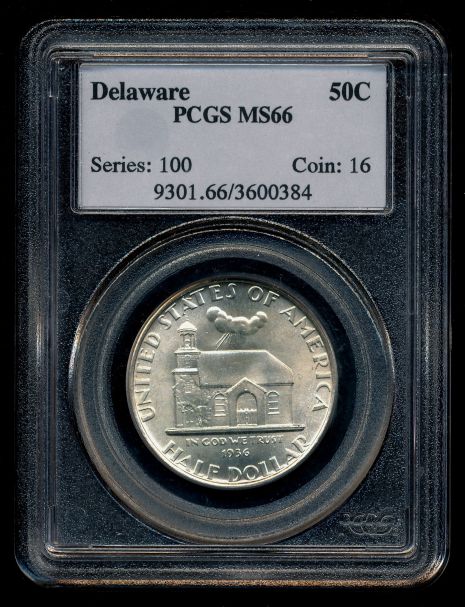 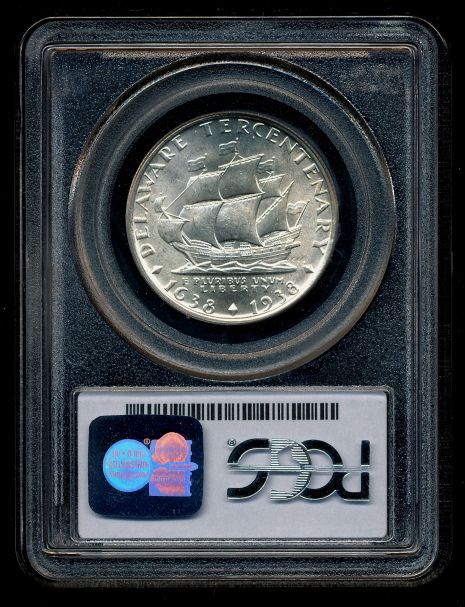 For other of my posts about commemorative coins and medals, including more details about the 1936 Delaware half dollar, see: Commems Collection. Collecting history one coin or medal at a time! (c) commems. All rights reserved.
|
|
Moderator
United States
105886 Posts |
|
|
Moderator
United States
195024 Posts |
Quote:
... the commemorative coin needed to bear the date of the year it was authorized vs. the event's actual anniversary date. This meant a coin dated "1936" for a 300th Anniversary that took place in 1938. Oh my.  |
|
Bedrock of the Community
United States
78532 Posts |
Nice example, commems.
Errers and Varietys.
|
|
CCF Master Historian of Commemorative Coins
United States
12515 Posts |
Time for a trip to Elgin, Illinois to assess the 1936 Elgin, Illinois Centennial Half Dollar. The Elgin is yet another example of a US commemorative coin that plays fast and loose with dates. Though authorized, minted and distributed in 1936, it was actually in 1935 that Elgin celebrated the centennial of its founding. Also, the "1673" date on the coin has no relation to Elgin, it marks the year in which Father Jacques Marquette and Louis Joliet traveled the Mississippi River and passed through what is now the State of Illinois. Bad History! 1936 Elgin, Illinois Half Dollar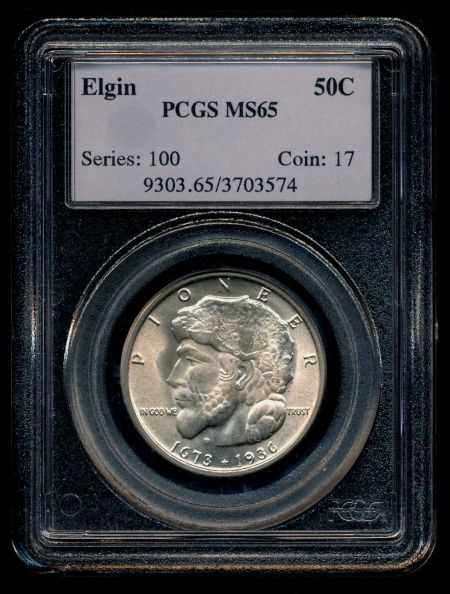 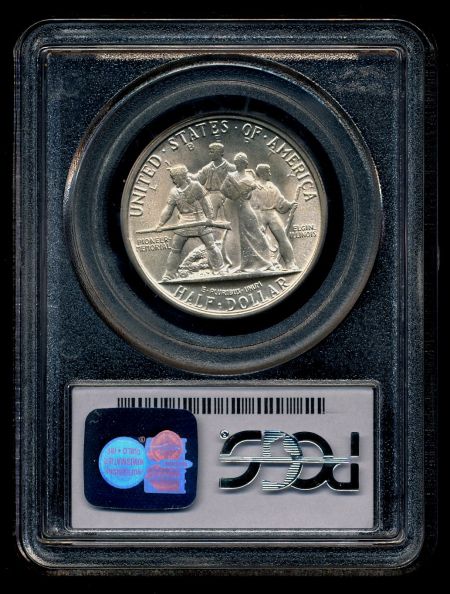 For other of my posts about commemorative coins and medals, including more details about the 1936 Elgin half dollar and its anniversary date issues, see: Commems Collection. Collecting history one coin or medal at a time! (c) commems. All rights reserved.
|
|
Moderator
United States
105886 Posts |
|
|
Bedrock of the Community
United States
78532 Posts |
Nice example, commems. Errers and Varietys.
|
|
CCF Master Historian of Commemorative Coins
United States
12515 Posts |
The 1936 Battle of Gettysburg 75th Anniversary Half Dollar is another example of the US Congress causing a bit of confusion regarding dates on a US commemorative coin. As such, I consider such coins to be "minor offenders." The three-day Battle of Gettysburg is acknowledged as the Civil War battle with the highest number of casualties and, with the North emerging victorious, the point in the war at which the North began to take firm control of the War's outcome. The Battle took place July 1-3 1863, so its 75th Anniversary took place in 1938. Why then is the coin dated "1936"? "Blame" Congress. In an effort to minimize collector abuse by sponsors/dealers, the Senate amended the original House bill that proposed a Gettysburg half dollar to tighten up its language and limit its coinage. Among other things, it specified that the struck coins be dated with the year in which the legislation was enacted (this explains why coins marking a 1938 anniversary are dated "1936"), and that the coins could only be struck for one year. The coin's reverse features the "1863-1938" anniversary dates that correspond to the true anniversary, so the "1936" on the obverse can be confusing and raise questions. Semi-Bad History! 1936 Battle of Gettysburg 75th Anniversary Half Dollar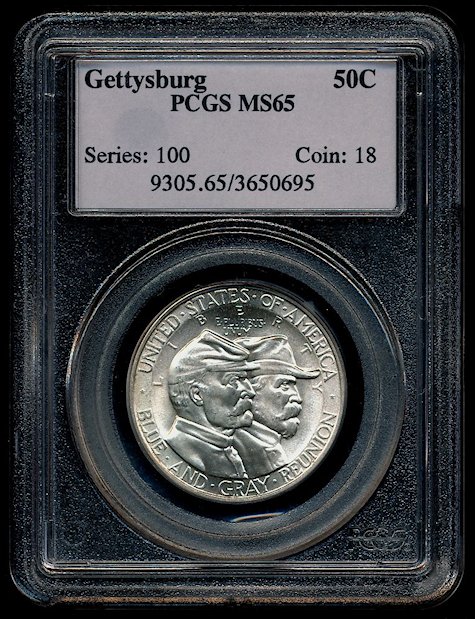 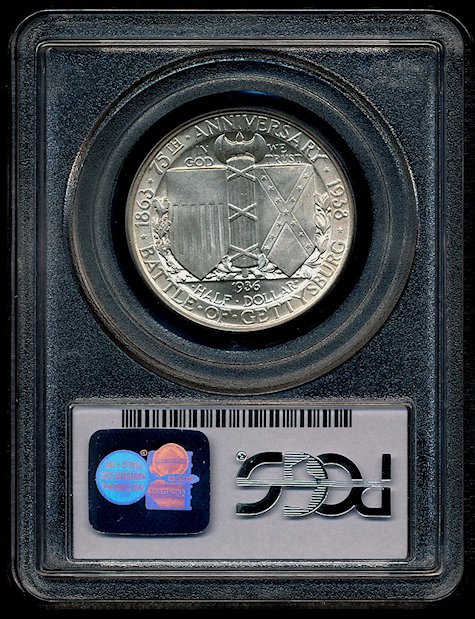 For other of my posts about commemorative coins and medals, including more details about the 1936 Battle of Gettysburg half dollar and its anniversary issues, see: Commems Collection. Collecting history one coin or medal at a time! (c) commems. All rights reserved.
|
|
Bedrock of the Community
United States
78532 Posts |
Nice addition, commems. Errers and Varietys.
|
| |
Replies: 55 / Views: 3,936 |






 First Page


 Posted 05/01/2025 11:57 am





