| Author |
 Replies: 55 / Views: 4,024 Replies: 55 / Views: 4,024 |
|
|
|
Bedrock of the Community
Canada
21954 Posts |
Interesting, never noticed the difference in dates before.
|
|
Moderator
 United States
109671 Posts |
very nice read and coins! thanks commems
|
|
CCF Master Historian of Commemorative Coins
 United States
12628 Posts |
Time to take a look at a US commemorative coin that was, at best, one that marked an event of regional significance vs. national significance, and at worst an issue that misrepresents the facts of its subject anniversary - the 1936 York County, Maine (ME) Tercentenary Half Dollar. In 1636, the year celebrated by the coin, there was not yet a York County! Its forerunner - Yorkshire County, Massachusetts - didn't even exist yet (it was established in 1652)! The present-day county's ties to 1636 rest on the establishment of a local court of commissioners that first convened in Saco, Maine in that year and the fact that the town (now city) of Saco is located within the present-day borders of York County, ME. This "government" did not become officially recognized until 1639, however, when King Charles I granted such governing authority to Sir Fernando Gorges, the then sole title holder/owner of the land (via a previous Royal Grant - James I in 1622). The area defined in the grant was officially referred to as the Province of Maine, not York County. So, while its lineage may extend back to the 1630s, it is quite a stretch to claim 1636 as the Tercentenary of York County, Maine. Bad History! 1936 York County, Maine Tercentenary Half Dollar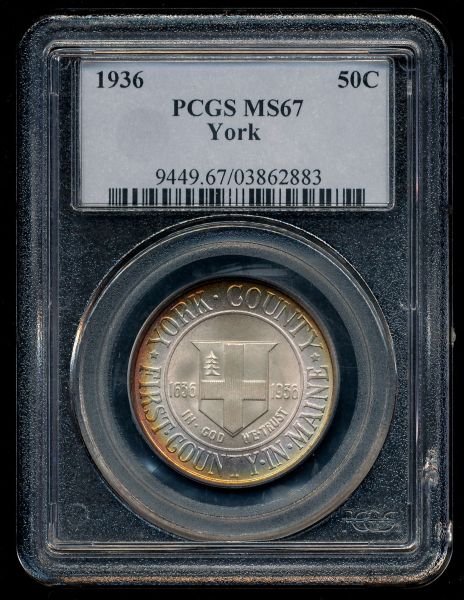 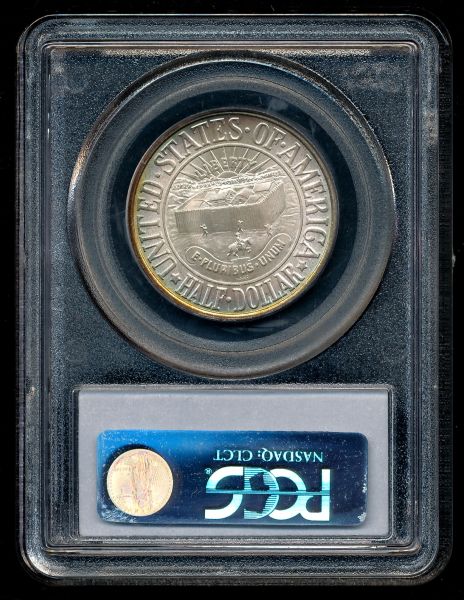 For other of my posts about commemorative coins and medals, including more details about the 1936 York County half dollar and its historical date issues, see: Commems Collection. Collecting history one coin or medal at a time! (c) commems. All rights reserved.
Edited by commems
05/05/2025 8:54 pm
|
|
Moderator
United States
197800 Posts |
Interesting examples!  |
|
Bedrock of the Community
United States
80309 Posts |
Very interesting, commems!
Errers and Varietys.
|
|
Moderator
United States
109671 Posts |
|
|
CCF Master Historian of Commemorative Coins
United States
12628 Posts |
While an argument can be made that multi-year commemorative coin programs for a specific anniversary year are potentially "Bad History," I can make the case that a program such as the 1934-38 Daniel Boone Birth Bicentennial is reasonably "OK" as it began in the Bicentennial year of Boone's birth and then carried forward. The same cant't be said, however, for the 1934-38 Texas Independence Centennial program or the 1935-39 Arkansas Statehood Centennial program - in each case, commemorative coins were issued before the anniversary of the year being commemorated (primarily to maximize sales). Arkansas achieved Statehood in 1836, yet coins for the milestone were released beginning in 1935 (a year earlier than the Statehood Centennial). The Republic of Texas achieved independence from Mexico in 1836, but the coin's sponsor got a two-year jump on things by launching its Centennial commemorative coin program in 1934 rather than waiting until the actual Centennial in 1936. A Bad History double! 1934 Texas Independence Centennial Half Dollar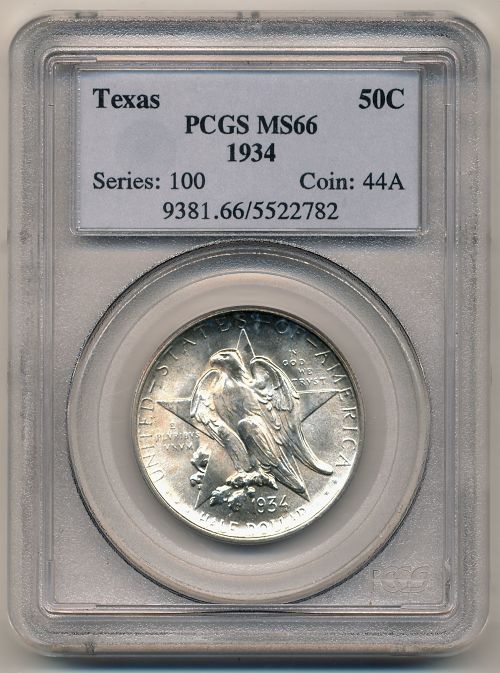 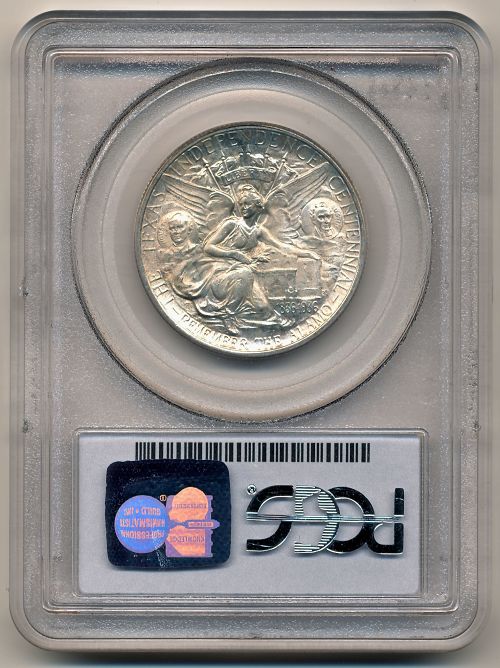 1935 Arkansas Statehood Centennial Half Dollar 1935 Arkansas Statehood Centennial Half Dollar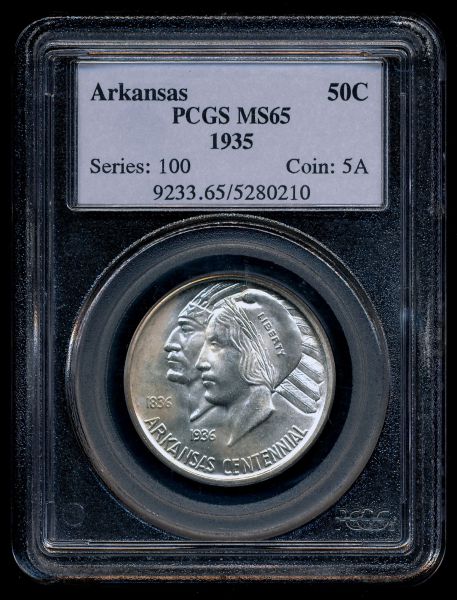 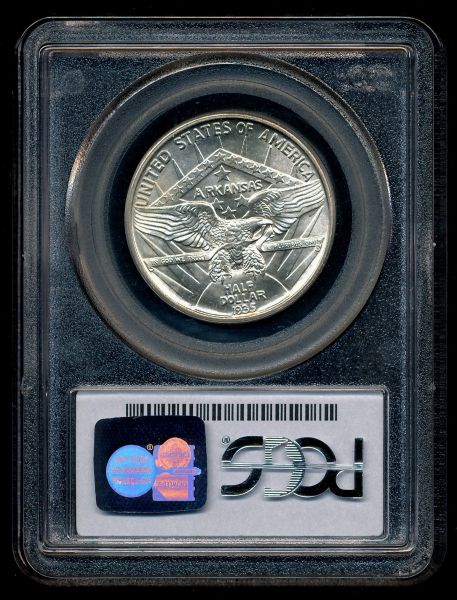 For other of my posts about commemorative coins and medals, including more details about the Arkansas and Texas half dollars, see: Commems Collection. Collecting history one coin or medal at a time! (c) commems. All rights reserved.
|
|
Moderator
United States
109671 Posts |
|
|
Moderator
United States
197800 Posts |
Quote:
A Bad History double! Nice examples! |
|
Bedrock of the Community
United States
80309 Posts |
Nice pair, commems!
Errers and Varietys.
|
|
CCF Master Historian of Commemorative Coins
United States
12628 Posts |
I'll wrap up my look at "Bad History" coins within the classic era of US commemorative coins with a look at a coin that is less "Bad History" and more "Confusing History" - the 1935 Connecticut Tercentenary Half Dollar. If you were to search for early European settlements of present-day Connecticut, you would likely encounter settlements that date prior to 1935 - Dorchester/Windsor in 1633, for example, with another being Watertowne/Wethersfield in 1634. As each of these settlements date to before 1635, why was 1935 selected as the Tercentenary year? The Connecticut Tercentenary Commission considered several dates between 1933 and 1939 (Connecticut's Fundamental Orders adopted) to designate as the States' Tercentenary year. It ultimately decided on 1935, stating that "the beginning of settlement had been made" in that year via the river settlements of Windsor, Wethersfield and Hartford, plus the fort established at Saybrook. So, while arguments can be made for earlier settlements/other 300th Anniversary years, 1935 was a reasonable choice for Connecticut. 1935 is particularly relevant considering the three settlements created that year joined together in 1636 to form the Connecticut Colony. 1935 Connecticut Tercentenary Half Dollar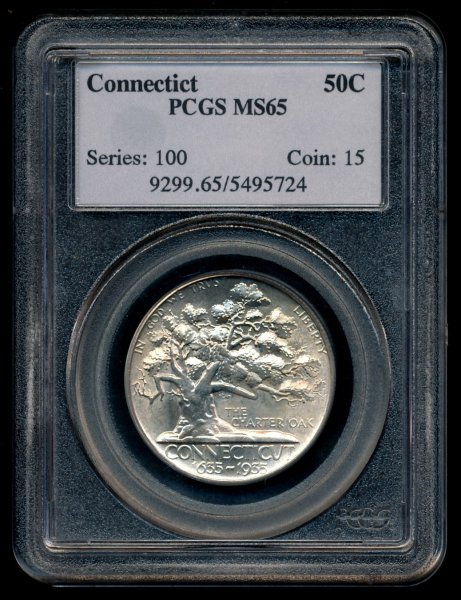 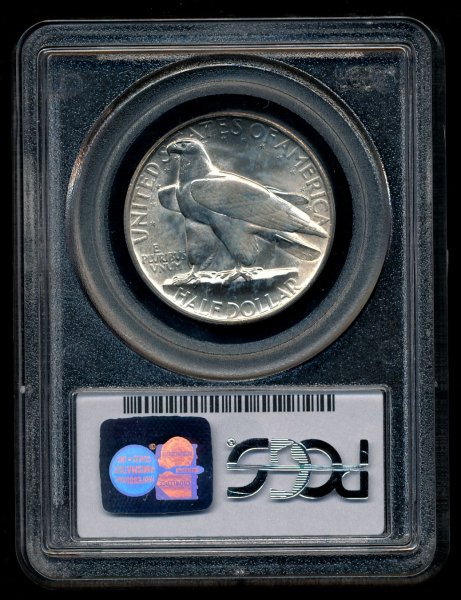 For other of my posts about commemorative coins and medals, including more details about the Connecticut half dollar, see: Commems Collection. Collecting history one coin or medal at a time! (c) commems. All rights reserved.
|
|
Moderator
United States
197800 Posts |
Very interesting! |
|
Bedrock of the Community
United States
80309 Posts |
Very interesting, commems! Errers and Varietys.
|
|
Moderator
United States
109671 Posts |
|
|
CCF Master Historian of Commemorative Coins
United States
12628 Posts |
I somehow forgot to include this one in my survey of "Bad History" US classic-era commemorative coins. It was on my list, but I inadvertently skipped over it as I was preparing my posts. So, to correct my oversight, I present the story of Daniel Boone and the Coonskin Hat!The obverse of the 1921 Missouri Statehood Centennial Half Dollar features a left-facing portrait of Daniel Boone wearing a coonskin cap. The depiction, by Robert Aitken, is well-executed, and in line with the popular vision of what the 18th Century frontiersman looked like. One problem, Boone did not wear coonskin hats! As reported on the web site of The Boone Society, "My father, Daniel Boone, always despised the raccoon fur caps and did not wear one himself, as he always had a hat." -- (Nathan Boone: "My Father, Daniel Boone," The Draper Interviews with Nathan Boone, edited by Neal O. Hammon.) An interesting and informative look into the history of Daniel Boone and the Coonskin Cap can be found here: Daniel Boone Never Wore a Coonskin Cap! Definitely recommended! The reverse of the 1934-38 Boone Birth Bicentennial Half Dollar depicts a standing Boone facing Shawnee Chief Black Fish with the Boonesborough Fort in the background. Boone is depicted wearing a coonskin cap. Nathan Boone's revelations make the depictions of Boone on the obverse of the Missouri half dollar and the reverse of the Boone Birth Bicentennial half dollar examples of popular misconceptions becoming "Bad History" for all to see! 1921 Missouri Statehood Centennial Half Dollar - Plain Variety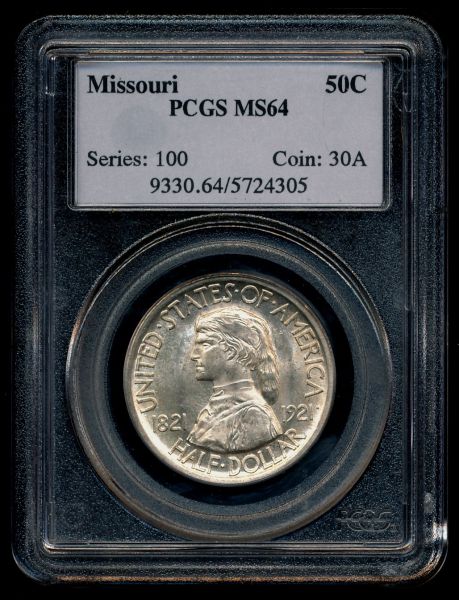 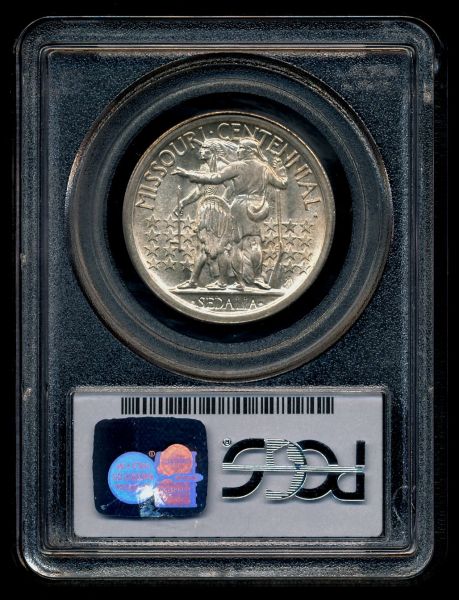 1934-38 Daniel Boone Birth Bicentennial Half Dollar 1934-38 Daniel Boone Birth Bicentennial Half Dollar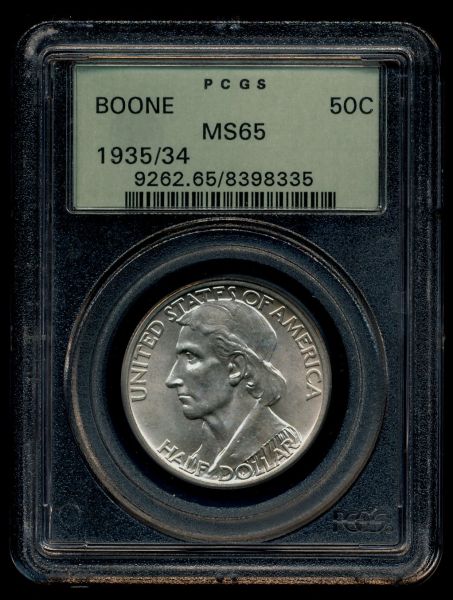 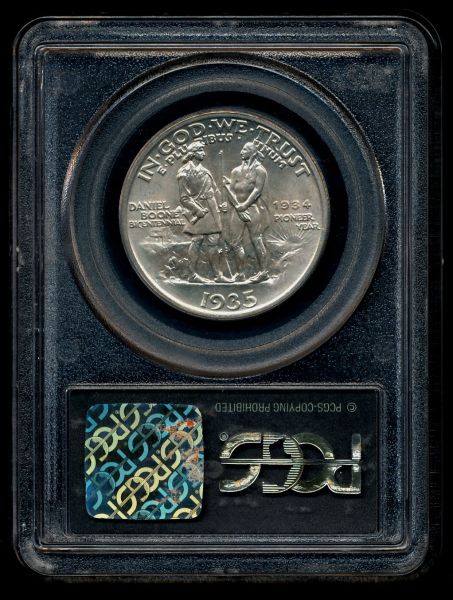 For other of my posts about commemorative coins and medals, including other stories about the Missouri Statehood and Boone Birth half dollars, see: Commems Collection.
Collecting history one coin or medal at a time! (c) commems. All rights reserved.
|
| |
Replies: 55 / Views: 4,024 |





 First Page
 Previous Page


 Posted 05/04/2025 3:24 pm


 Uncirculated American Silver Eagles


