Here are a few interesting factoids about the 1935 Connecticut Tercentenary Half Dollar:
Tidbit #1When the Connecticut half dollar was announced in April 1935, the name given to the coin was "Charter Oak Half Dollar." The name apparently never caught on, however, as the contemporary dealers ads that I have reviewed all referred to it simply as the "Connecticut."
Tidbit #2The depiction of the Charter Oak on the coin's obverse was meant to meet the Federal requirement that obverse designs on United States ("US") were to be emblematic of Liberty. This requirement was not always enforced on US commemorative coins - e.g., Cow Skull on 1935 Old Spanish Trail Half Dollar.
Tidbit #3Henry Kreis was the artist responsible for the designs of the Connecticut half dollar. He was supervised on the Federal Public Works Administration project by noted artist/sculptor Paul Manship. Manship, no doubt, offered Kreis verbal critiques as he developed his designs and models, but I've long wondered if Manship had any type of "hands on" role in the project?
Tidbit #4The Charter Oak was available to Connecticut colonists to hide their Royal Charter in 1687 as the result of an agreement between Samuel Wyllys - the man who purchased the parcel of land upon which the large oak tree was located - and the local Native American tribes (under Chief Sesquassen) made decades earlier. The agreement discussion was initiated because the oak tree was the site of many past sacred ceremonies by local tribes and they did not want their "sacred" tree to be cut down and lost. Wyllys agreed to leave the oak tree alone, though he did cut down many other trees on his land to clear it for farming. (I wonder what design would have been used on the Connecticut half dollar if the famous tree had been cut down decades before the Charter-hiding event?)
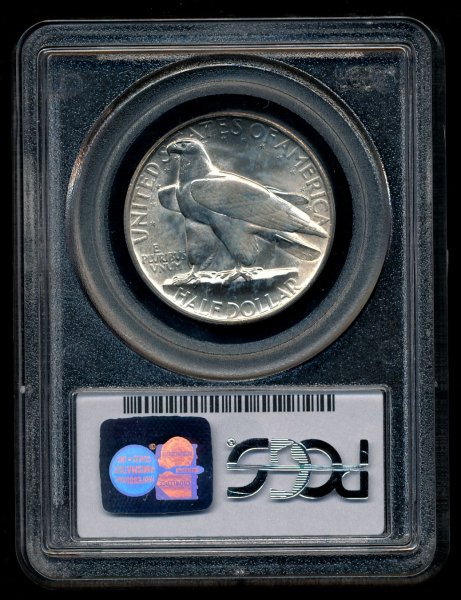
1935 Connecticut Tercentenary Half Dollar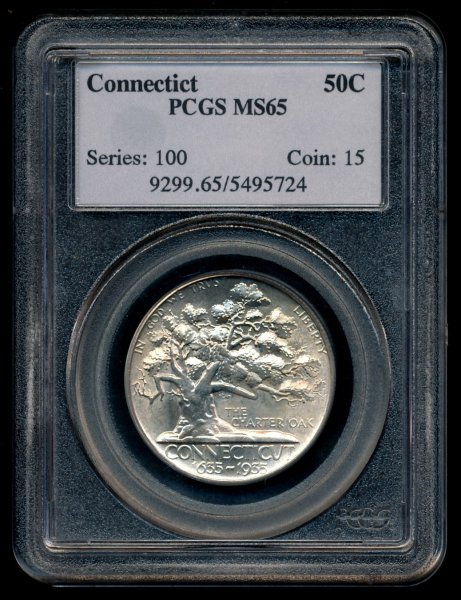
For other of my posts about commemorative coins and medals, including more Connecticut half dollar stories, see:
Commems Collection.










 Posted 09/21/2025 11:21 pm


