The Annnunzio vs. St Germain 'battle' has a few twists remaining...The day after the final session of the Hearing, the Subcommittee met for a Markup Session, during which Fernand St Germain, the Chairman of the House Committee on Banking, Finance and Urban Affairs, motioned for the Subcommittee to report Subcommittee Chairman Annunzio's two Silver Dollar / one Gold Eagle bill to the full Committee. The motion carried and the recommendation was forwarded. (St Germain "Passed" when the vote was taken, however.)
A funny thing happened on the way to the bill's consideration by the full House of Representatives ("House"). The Annunzio bill was reported by the Subcommittee to its 'parent' Committee - the House Committee on Banking, Finance and Urban Affairs (under St Germain). The full Committee did not report Annunzio's bill, however, it reported St Germain's. Thus, the proposed large coin program with private marketers was brought up for consideration by the full House.
Then things took another turn...
In response to the Banking Committee's Report, the House Committee on Rules recommended House Resolution 470 - a Resolution that called for the House to immediately take up consideration of an amended version of the original Senate bill introduced by Alan Cranston (D-CA) (See:
1983-84 Los Angeles Olympics - The Coin Proposal).
Note: The version considered was essentially the 17-coin version proposed by Representative St Germain vs. Senator Cranston's proposed 29-design coin program.Following the passage of the House Resolution, the House began a lengthy debate over the proposed legislation - I refer to it as the
1984 Olympic Coin Amendment Parade, as six Amendments were offered to the proposed bill and its provisions were changed dramatically.
Representative Frank "Bulldog" Annunzio (D-IL) came out firing:
"The question before the House, Mr. Chairman, is not whether or not we will have an Olympic coin program, but whether we will have an Olympic coin program free of scandal, run by the U.S. Government, and with all of the money going to the athletes of the United States. That is the program contained in the substitute that I will offer.
"Members will also have an opportunity to vote for an Olympic coin program that will turn control of the U.S. Treasury over to special interests, privileged interests, if you please, allow the coins to be sold at a windfall profit by a company that has not paid a penny of Federal income taxes in 3 years, allow that company to siphon off 65 percent of all profits, with only 35 percent going to our athletes.
"That is the approach embodied in [St Germain's bill]."The lengthy debate that followed brought up many of the topics covered in the House Subcommittee Hearing, introduced some new 'arguments' and appeared to have little/no impact on the supporters of each bill.
Regarding the amendments:
The first was introduced by St Germain. He wanted to require that "funds that have been paid in advance into the [coin program] trust funds may be used to reimburse without delay the appropriation against which charges properly chargeable to the trust fund have been made."
The amendment was introduced at the request of the Treasury Department to address a technical accounting issue/problem that would have required the Treasury to set up a more complicated reimbursement model that would likely have required the setup of a separate account specifically for the Olympic coin program vs. using a single/general reimbursement account.
The amendment was passed.
The next amendment was introduced by Daniel David Rostenkowski (D-IL). The amendment called for the removal of the bill's language that allowed the deduction of part of a coin's purchase price from taxes as a charitable contribution.
The amendment was passed.
Next was another amendment offered by St Germain. It stipulated "that nothing in the bill is to mean that contractors under the bill will not have to comply with small, minority, or female owned businesses regulations or with equal employment requirements."
The amendment was passed.
The next amendment was introduced by Silvio Ottavio Conte (R-MA). It directed the Secretary of the Treasury to "obtain silver for the coins from stocks of silver held by the Secretary of the Treasury of from any other federally owned stocks of silver."
The amendment was passed.
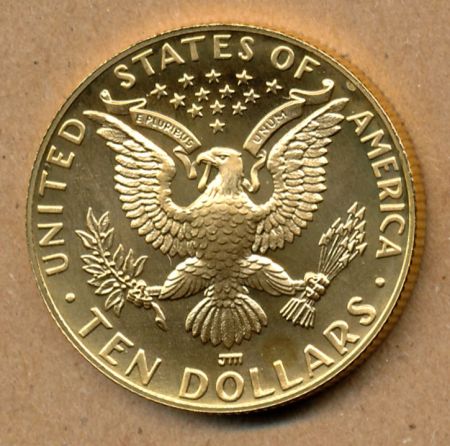
Next up, an amendment by Representative Annunzio. The amendment was a complete substitute for St Germain's bill. It provided for Annuzio's two Silver Dollars and one old Eagle coin program and authorized the Treasury Department to not only mint the Olympic coins, but also to sell them instead of having a private marketer handle it.
The amendment was passed. (The "Bulldog" got his way!)
With the substitute bill in place, Representative Conte introduced an amendment that required the Secretary of the Treasury to "obtain silver for the coins from stocks of silver held by the Secretary of the Treasury or from any other federally owned stocks of silver."
The amendment was passed.
With the amendments addressed, the House passed the coin bill and sent it to the Senate for its concurrence; it was referred to the Senate Committee on Banking, Housing and Urban Affairs upon its receipt.
The Committee was subsequently discharged from consideration of the bill and it was considered in the full Senate. When received in the Senate, it seemed as if the chamber had given up the fight and was resigned to the Annunzio Olympic coin program. Senator Edwin Jacob "Jake" Garn (R-UT) offered:
"I have the following points to make about this legislation as it now stands, which cause me to believe that it will fail to achieve anything even close to $200 million for the Olympic committees.
"First, the Bureau of the Mint will not be able to sell 52 million coins in a 2- to 3-year time period. The Mint's own record on sales speaks for itself:
"The Mint only sold 38 percent of the 1.5 million 1-ounce, and 1/2-ounce gold medallions authorized for 1980.
"Similarly, for 1981, the Mint sold 15 percent of only 400,000 gold medallions.
"Of 150 million Eisenhower dollars authorized, the Mint only sold 21 million proof and uncirculated coins over 4 years.
"Finally, it took the GSA 8 years and seven sales to sell only 2.9 million Morgan silver dollars, with a $10 million budget for advertising.
Note: Some of Garn's 'facts' seem to be incorrect, or at least a misrepresentation of reality.
"Second, the private marketing expertise is not available under this bill to advertise, promote, sell, and deliver the coins to a non-numismatic audience, thereby increasing coin sales. Government sales of coins have not produced large sales because they have been unable to reach and sell to the non-numismatic audience. The Mint sells to coin collectors. A GSA employee involved with the sale of Carson City silver dollars remarked that "if you are really selling coins and going out to the numismatists and coin collectors, serious collectors, you are not going to have a big response."
"In recent hearings before the committee, the GAO stated that the Treasury would have great difficulty selling 52 million coins in three designs in 2 years without the help of private enterprise.
"Third, a big response to this coin program has been precluded by the small number of coins. The variety of Olympic designs for the coins, which would have prompted more sales, has been replaced by a program with only three coin designs.
"Fourth, the program faces immediate competition from the George Washington coin program. At the end of June, the Mint released orders for $1 George Washington commemorative coins to be sold for $8.50 and $10.50; and in 6 months time they will advertise the sale of another $1 coin the Olympic coin-for twice that price. With no outside marketers for the coins, reliance is placed on numismatists to purchase coins through the Mint list. The response to mailings from that list will certainly be reduced if collectors have so recently decided to purchase a George Washington coin.
"Despite my reservations with this legislation, I believe that we should continue the Olympic coinage tradition and have a coin program. The administration wants an Olympic coin program. The Olympic committees support even this small program. The passage of time, coupled with the complete intransigence of the House to cooperate in putting together a more realistic program, dictate that this version of the bill is the only game in town. I hope that it will do something for our Olympic efforts."The Senate passed the bill and it was signed into law on July 22, 1982 by US President Ronald Reagan.
And that's the story - in more words than you ever asked for! - of Congress and the 1983-84 Los Angeles Olympic coins. I'll circle back with mintage and pricing information within the next few days.
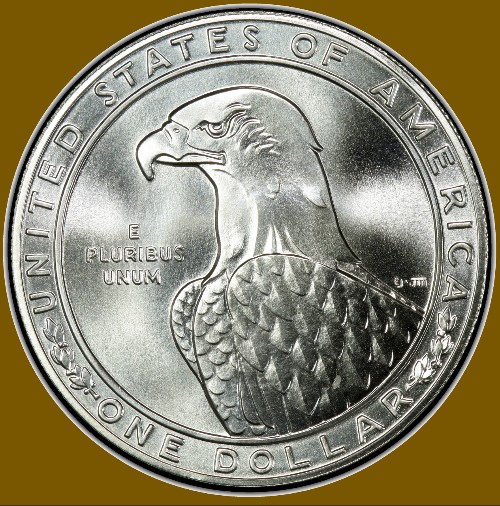
1983 Los Angeles Olympic Games Silver Dollar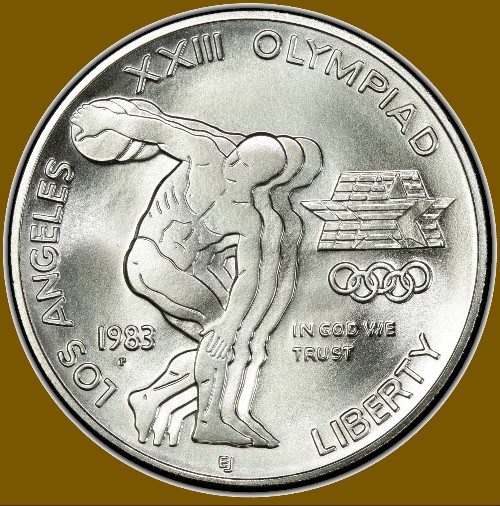
 1984 Los Angeles Olympic Games Silver Dollar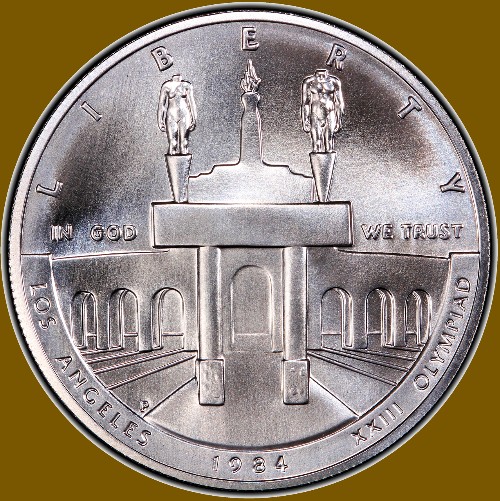
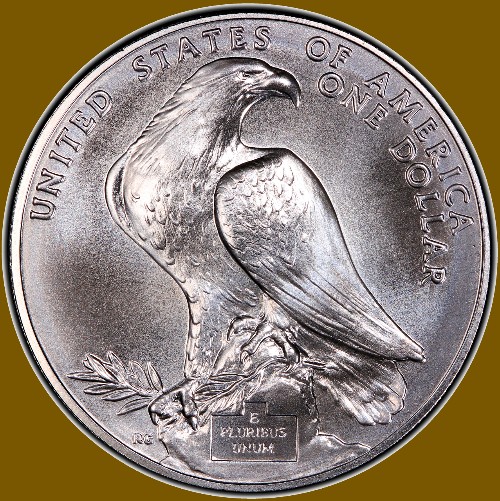 1984 Los Angeles Olympic Games Gold Eagle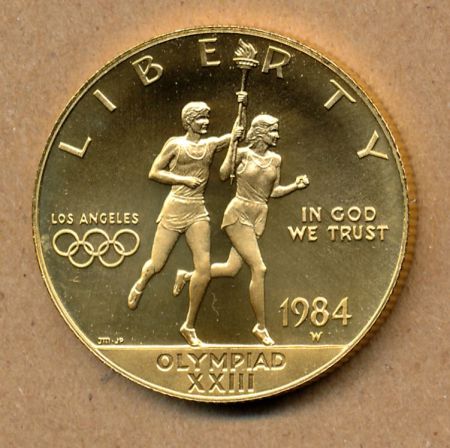
For other of my posts about commemorative coins and medals, including more modern commemorative stories, see:
Commems Collection 









 Posted 05/28/2026 7:18 pm


