| Author |
 Replies: 9 / Views: 5,693 Replies: 9 / Views: 5,693 |
|
|
Pillar of the Community
United States
2150 Posts |
Does anyone own any of these ingots?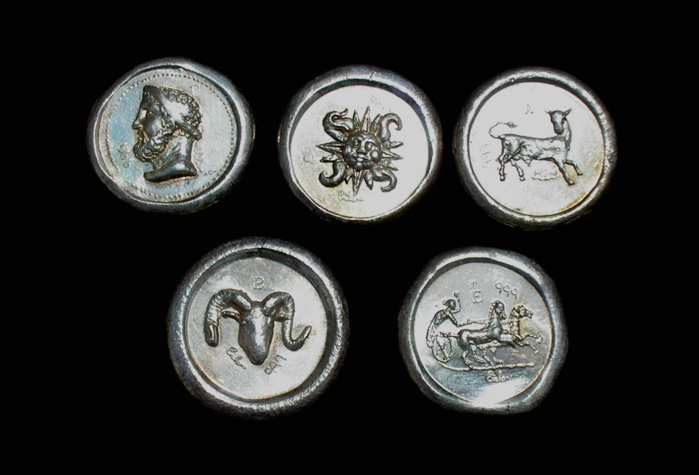
|
|
|
|
Pillar of the Community
United States
3098 Posts |
What's USVI?
Thanks biokemist! Wow! That's a very interesting concept!
Edited by wd1040
07/17/2009 12:13 am
|
|
Bedrock of the Community
United States
12437 Posts |
|
|
New Member
United States
37 Posts |
Hi. Those were the first type of ingots we made at USVI Ingot Co. We later turned to industrial techniques involving extrusion presses and punch presses with lots of subsequent tool and die expense. However, if someone wanted to go into small scale production using our first technique, the set up and production costs would be manageable. The product is a bit 'funky', but there must surely be a market out there for art pieces. These free-form edge ingots were stamped with dies originally created for making gold jewelery, and I always liked the artistic aspects about them. I don't remember if I mentioned the problems we had with dies cracking, but it was a chronic problem throughout our history. Most of the round dies pictured above eventually cracked under pressure. Instead of replacing them, Mr. Eichen opted to invest in a new method of ingot production, and that was the stacking one ounce art bars.
Our business was not the business of buying and selling silver. We offered our services for a fee to suppliers in the silver business. They sent the raw material and we made it into ingots for 50 cents each. We had partners who owned a gold refinery and a building, and it was they who helped us through a transition period where we rented a small corner and an office at a bronze art casting shop. We 'jobbed out' most of the work to other industrial businesses... a machine shop, a stamping house, a tumbling and burnishing shop, an extrusion manufacturer. I usually had to go and sit with the silver, or else we had to make elaborate check in and check out procedures. We kept moving from shop to shop until we found one place where three of the above services could be performed. The extrusion people came on as partners for awhile, and we moved there. Then they sold us the extrusion press and we moved to the gold refinery. Whew! I don't know how many people owned a piece of it along the way, but there were quite a few.
It's probably a lot more fun buying silver than it is making it. It was an interesting adventure while it lasted. It even might have been sustainable if we had kept things simple. A drop in silver prices is what ultimately ended the experiment, unfortunately.
Edited by USVI Ingot
08/14/2009 12:30 am
|
|
Pillar of the Community
 United States
2150 Posts |
Robin, your insight into this is amazing. I am so glad you are around to tell this remarkable story. Thats amazing $.50 cents apiece for services. I was wondering if you could tell me who the 1 ounce stackable bar that has the big one in the middle of it was produced for? My collection is getting there I picked up 2 San Diego coin exchange bars and a 10 oz C Rhyne and associates bar and I'm in the middle of trying to get a 10 oz anaheim metal bar. Every time I think I'm getting closer to completion another piece pops up that I havent seen before and I have to have it!!
|
|
New Member
United States
37 Posts |
jokingjoker~ Yes, can you believe we worked so cheaply? That was the price for making 1 ounce stacking loaf bars. I think the faux Roman rounds cost a lot more to produce, mostly because of planchet production methods. For Mr. Eichen, it was all about getting to the point of nearly complete automation. It didn't turn out to be automated, far from it, but we tried. The production methods for the stacking bars were very interesting, and I will try to get the story written some day.
If you have photos of any USVI Ingot ingots that aren't in the original article, would you mind posting them or sending them to me? I could not afford to collect 10 oz. bars for myself, and I don't think I've found photos of all of them.
I think we offered a one ounce bar with a generic "1" on the obverse for clients who chose not to advertise their business name. Mostly we made stuff for A-Mark who shipped us many thousands of ounces. Anaheim Metal Co. were our partners. They owned the building where we eventually settled. They seem to be gone now, so I guess it's OK to talk about them. There was a precious metals trading company, a jewelry shop, a gold refinery, and a silver stamping business all under the same roof. Maybe some gemstone sales, too, but that was hush hush. Anyway, Anaheim Metal decided to leave their name off their products. Any 1 ounce ingots you find stamped Anaheim Metal were early, and few were produced.
I'm not recalling 10 oz. bars with the Anaheim Metal stamp, but that's not surprising... we had employees handling production when we made the larger bars. 10 oz. bars were simple and easy. Being larger, there was much less stress on extrusion dies. They were stamped in a small punch press and the finish dies were not over taxed. Burnishing was more problematic than usual, for they tended to scratch each other in the tumbler, so we had to burnish in small batches. Yes, good product. Easier than one ounce pieces. Highly desired on the market.
Edited by USVI Ingot
08/15/2009 2:04 pm
|
|
Pillar of the Community
Mexico
1304 Posts |
Those are simply beautiful!
|
|
New Member
United States
37 Posts |
Harrison, I just posted an updated 'catalog' of all USVI Ingot Co. silver. https://goccf.com/t/55465I've noticed some of these ingots appear on ebay from time to time. |
|
New Member
United States
2 Posts |
I own the rams head coin and I am thinking to sell it. . 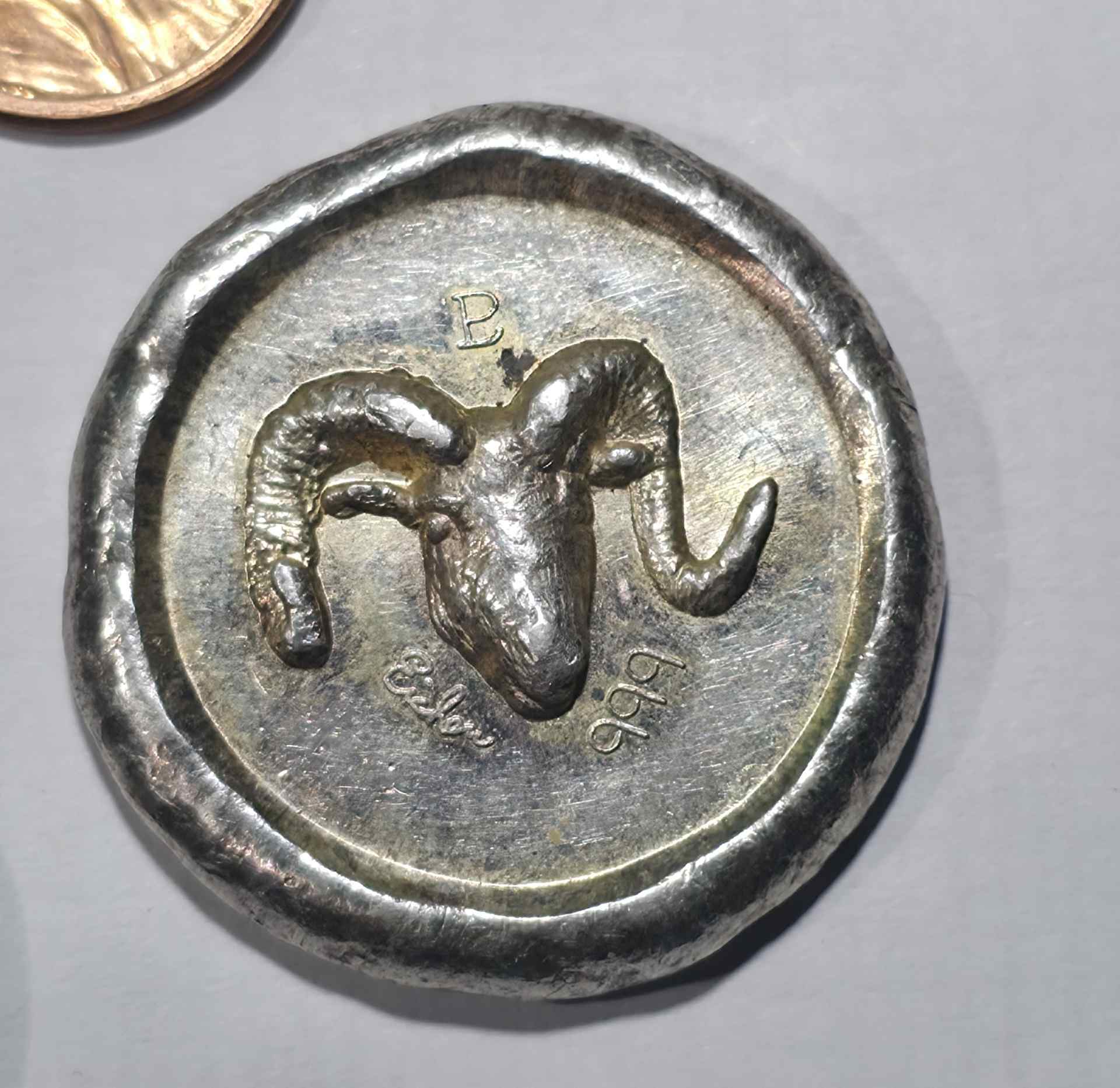 |
|
Moderator
 United States
197842 Posts |
|
| |
Replies: 9 / Views: 5,693 |
|




 Posted 07/17/2009 12:11 am





 to the Community!


