| Author |
 Replies: 8 / Views: 6,866 Replies: 8 / Views: 6,866 |
|
|
New Member
Australia
42 Posts |
Hello All,
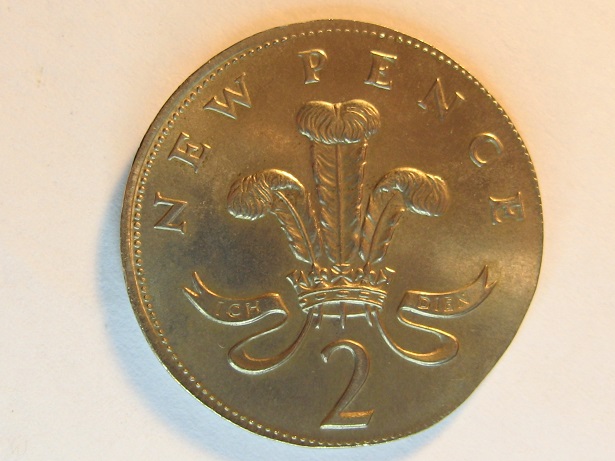
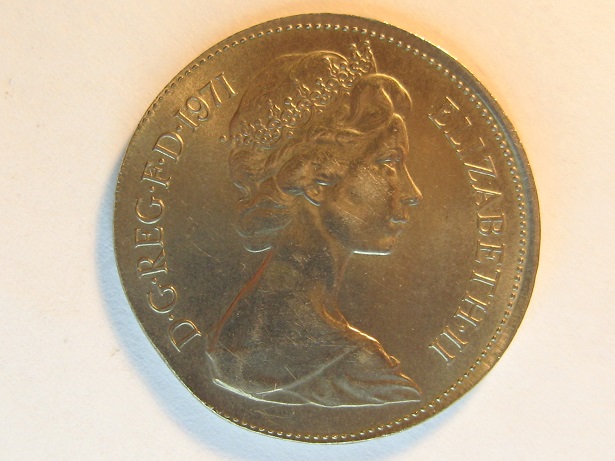
Could anyone please advise if there is any known record or suggestive inuendo of the British 2 new pence coin dated 1971 being trial minted in any metal other than bronze. I have reason to believe that at least one and possibly another seven exist, all being minted in cupro nickel.
Any info would be much appreciated,
Regards, Ray
|
|
|
|
Moderator
 Australia
17005 Posts |
I've heard nothing, and there's nothing in Spink on the subject.
The 2p and the old 10p were virtually the same size; cupronickel would never have been considered an option for the 2p coin, as it would have caused mass confusion. Assuming they exist, I suspect any such "cupronickel 2p coins" would be wrong planchet errors, rather than a deliberate off-metal striking by the Mint.
Don't say "infinitely" when you mean "very"; otherwise, you'll have no word left when you want to talk about something really infinite. - C. S. Lewis
|
|
Pillar of the Community
United States
2605 Posts |
Coincraft Catalogue doesn't mention anything either. Krause talks about trial patterns (including off-metal) and private patterns, but nothing for the year or the type.
|
|
New Member
 Australia
42 Posts |
Sap and svslav, thanks for the replies. Some years ago I did come by a 1971 cupro-nickel 2 New Pence coin given to me by a friend. The coin itself is slightly struck off centre which gives the effect of it being minisculey out of round. I'm not at all familiar with the 10p planchet, but if it's a tad smaller than the 2p planchet, this may explain the out of round appearance. I'm not a collector of world coins, although I did understand the possible rare nature of this particular piece, but things being what they are, the subject has languished in the darkness until now. The reason for mentioning in my earlier post the possibility of there being at least seven other coins of this type in existence, was because of a conversation I had at the time with a person at the Brisbane coin fair who said the operational nature of the presses used at The Royal Mint in 1971 would have meant that coins were minted in lots of eight. Maybe someone could confirm this or otherwise. I have made enquiries with The Royal Mint but no reply as of yet. I was probably being a little optimistic in thinking there may have been a trial mintage of eight specimen 2p coins in cupro-nickel, and actually having one in my possession would have been outstanding. But at the very least, it looks as if a stray planchet somehow made it's way into the 2p bin at The Royal Mint. I would venture to say there shouldn't be too many of these around anyway, so that's not so dusty either! |
|
New Member
Australia
42 Posts |
|
|
Moderator
Australia
17005 Posts |
Well, it's certainly more than just a "home-made plate job". It sure looks like a wrong planchet of some kind.
The 10p is actually larger than the 2p, not smaller as seems to have been the case here, so it might be the blank from a 5p, or perhaps a foreign coin the RM was striking at the time.
Do you have a weight? That might help narrow down the coin the planchet was intended for.
Don't say "infinitely" when you mean "very"; otherwise, you'll have no word left when you want to talk about something really infinite. - C. S. Lewis
|
|
Bedrock of the Community
United Kingdom
18861 Posts |
Huge numbers of new coins were being produced between 1968-71 as the UK prepared for decimalisation. The Royal Mint had just opened a new main production centre at Llantrisant in Wales with new machines and a lot of new staff. In such circumstances it would be normal to expect a certain number of mis-strikes. I wonder if this is a 5p blank. It's a nice thing to have - wow! |
|
Bedrock of the Community
Australia
21792 Posts |
In the first few years after The Royal Mint moved to Llanstrisant, a few wrong planchet errors escaped from the Mint. Does not happen so often now. |
|
New Member
Australia
42 Posts |
Thanks for your input everyone. Had the coin weighed today, it went 5.6g which is close to that as gleaned from Wikipedia of 5.65g for a 5p planchet. The dia. ranges from a tick over 24mm up to 25mm.
|
| |
Replies: 8 / Views: 6,866 |
|







 Posted 11/29/2009 9:32 pm



 Only 5 1/2 years