| Author |
 Replies: 421 / Views: 66,129 Replies: 421 / Views: 66,129 |
|
|
|
Bedrock of the Community
 United States
20048 Posts |
The conditioner system is slightly oily feeling on the coin, but not near as bad as oil. Also, a thorough rinse with water substantially reduces this oil feel.
Great question! Keep'em coming!
|
|
Bedrock of the Community
United States
20048 Posts |
Today I did a "quick and dirty" experiment to determine approximately how much product is on the surface immediately after application, after drying and how much is removed with a water rinse then dry. First coin was a 1967 browned Lincoln Cent: COIN WEIGHT: 3.10279g (grams) COIN WET WITH FRESHLY APPLIED PRODUCT: 3.10340g AMOUNT OF PRODUCT ON SURFACE: 0.61mg (milligrams) AMOUNT OF PRODUCT ON SURFACE AFTER DRYING: 0.56mg (I don't think I dried it long enough) To check the product removal rate with water, the coin was thoroughly rinsed with deionized water. TOTAL WEIGHT AFTER WATER RINSE: 3.10267g DIFFERENCE BETWEEN STARTING WEIGHT AND FINAL WEIGHT: -0.00012g A final negative weight indicates some of the circulation surface debris must have been removed during the process. There was no change in the coins appearance other than it did look a bit glossier. The second coin was a 1977 Jefferson nickel, looked to be about XF-AU. The surface was slightly dulled and slightly dirty. COIN WEIGHT: 4.98936g(grams) COIN WET WITH FRESHLY APPLIED PRODUCT: 4.98987g AMOUNT OF PRODUCT ON SURFACE: 0.51mg (milligrams) AMOUNT OF PRODUCT ON SURFACE AFTER DRYING: 0.26mg To check the product removal rate with water, the coin was thoroughly rinsed with deionized water. TOTAL WEIGHT AFTER WATER RINSE: 4.98913g DIFFERENCE BETWEEN STARTING WEIGHT AND FINAL WEIGHT: -0.00023g Once again, the slightest negative weight that represents the surface material removed during the test. CONCLUSION: Most of the product is removed with a simple water rinse in both tests. More testing to come. Lincoln Cent Lover!VERDI-CARE™ INVENTOR https://verdi.care/
Edited by BadThad
04/01/2010 8:15 pm
|
|
Moderator
 United States
196100 Posts |
I am curious... Could you run the tests again on the coins now that the "crud" has been removed? Maybe it will show how much (or little) of the actual product remains; since there should be an insignificant amount of organic material left to remove. Good work! This is a very interesting thread.  |
|
Bedrock of the Community
United States
20048 Posts |
EXCELLENT IDEA!
Thanks for the input. You guys are a big help to me. It's hard to dream-up tests and ideas.
Lincoln Cent Lover!VERDI-CARE™ INVENTOR https://verdi.care/
|
|
Bedrock of the Community
United States
20048 Posts |
Decided to test on a woody, it needed a little TLC. The coin felt tacky to the touch. First, I soaked in deionized water followed by acetone. The tacky layer seemed to be about 90% removed. Then I poured VERDI-CARE™ onto a micro-fiber towel, rotated the coin around the wet area for about 20-30 seconds, patted dry with clean area of cloth, patted dry in a Kimwipe, and further dried with canned air. I LOVE how this one came out!  Note: Surface debris below the portrait easily removed. 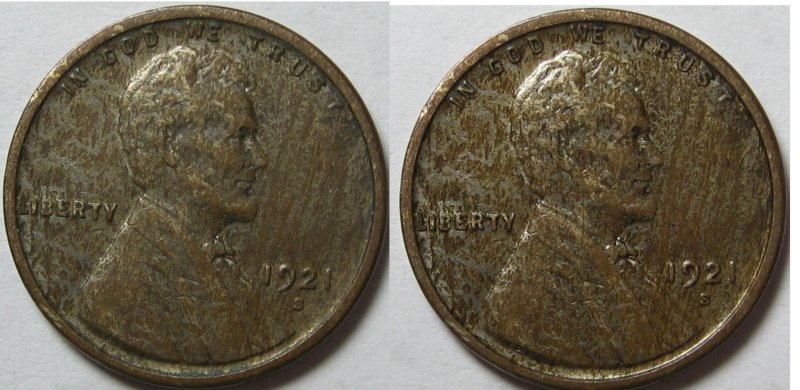 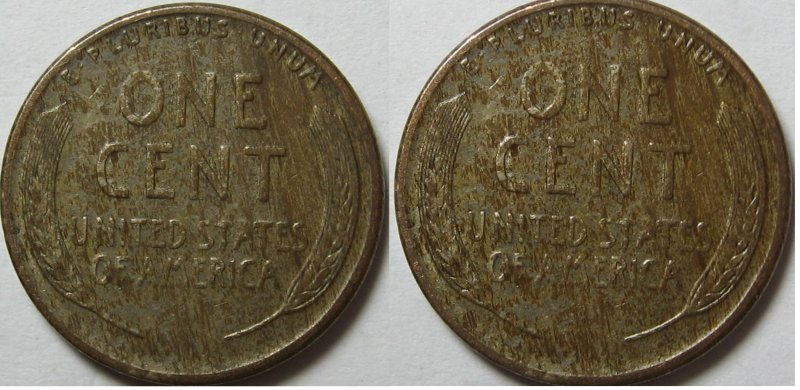 Edited by BadThad
04/04/2010 01:45 am
|
|
Bedrock of the Community
United States
20048 Posts |
Soaked this nickel for 5 days, no rubbing, just a soak. The light verdigris was removed, but the moderate/heavy stayed behind. I was somewhat surprized it worked as well as it did without rubbing. Notes: The soak fluid remained clear, no change from start to end. Surfaces greatly improved, dullness gone. 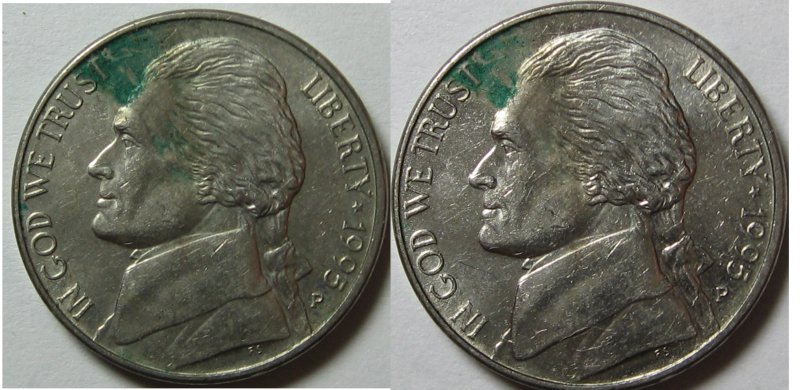 Next, I submerged the coin in just enough VERDI-CARE™ to cover the surface. I gently rubbed the remaining verdigris with a toothpick and it came right off. This took about 1 minute to complete the removal. 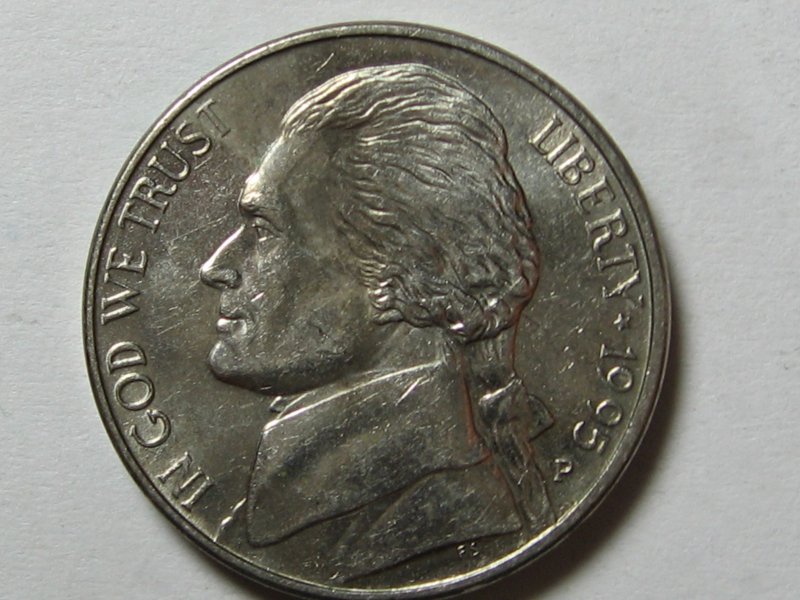 Lincoln Cent Lover!VERDI-CARE™ INVENTOR https://verdi.care/
Edited by BadThad
04/04/2010 2:15 pm
|
|
Bedrock of the Community
United States
10284 Posts |
Nice, I think it would be OK to give that common date 85 P a jab with a soaked toothpick and a little rub while that stuff you are working on is nice and soggy on it. It's not like you'll ruin a good coin.
Maybe you can soak it in Olive oil for awhile too and then acetone and then give it another try.
I sure would like to know when you are finished tweaking. I'll take a 55 gallon drum of it! LOL!
|
|
Pillar of the Community
United States
1534 Posts |
Wow, those are some great results. I may have to buy a bottle.  Quick question though, sorry if it's already been asked: Will Verdi-Care be the end of Verdi-Gone, since Verdi-Care can do what Verdi-Gone is intended for? |
|
Moderator
United States
16697 Posts |
Thad, those results are incredible!
swcoin.ecrater.com
|
|
Bedrock of the Community
United States
10284 Posts |
Ha! I was typing at the same time as you and it's gone. While you can see there was something going on there, it sure is an improvement and I think you did good.
|
|
Bedrock of the Community
United States
20048 Posts |
Quote:
Will Verdi-Care be the end of Verdi-Gone, since Verdi-Care can do what Verdi-Gone is intended for?
No way! VERDI-CARE™ is a companion product to VERDI-GONE™. Each product has it's own unique characteristics and purposes. These are just the first two products in the VERDI-™ line. I'm planning on developing more products in the future...but I work slowly and carefully. No VERDI-™ product will be sold until it's fully tested! |
|
Bedrock of the Community
United States
20048 Posts |
This experiment is a little more complicated. This is the first head-to-head comparison I've made with the Betterbilt Chemicals, oil based, product called CoinCare. First, VERDI-CARE™ was applied to this test coin. As always, the unconserved picture is on the left: 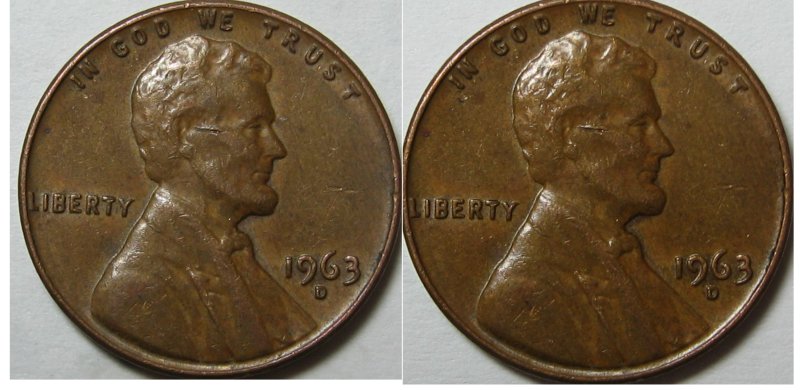 Next, the VERDI-CARE™ application was "removed" by quickly rinsing with water, acetone and xylene. Note: May need to try soaking longer to remove next time. Quick rinse wasn't very effective at removal. On the left is the original coin, on right is the VERDI-CARE™ treated coin rinsed with water, acetone and xylene.  In this next picture the VERDI-CARE™ treated coin is on the left and on the right is the coin after being rinsed with water, acetone and xylene: Note: The rinse looks like it was pretty effective, but not 100% (expected). Could do better with long soaking. 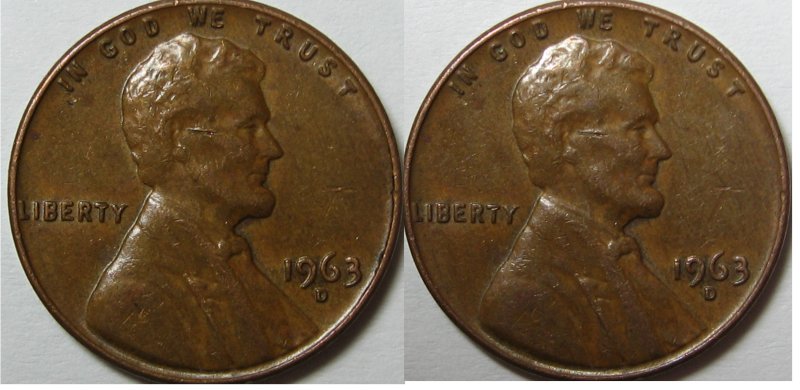 Finally, the "cleaned of VERDI-CARE™" and then treated with COINCARE picture is on the left and the VERDI-CARE™ coin is shown on the right. This should show a direct comparison of COINCARE versus VERDI-CARE™....the goal of the experiment. Note: The COINCARE treatment made the coin very slippery (expected) and the surfaces a LOT glossier than VERDI-CARE™ (also expected). The coin looked unnatural in hand. COINCARE scattered the lighting and created new reflections. The lighting, camera settings and coin position were the exact same in both pictures. 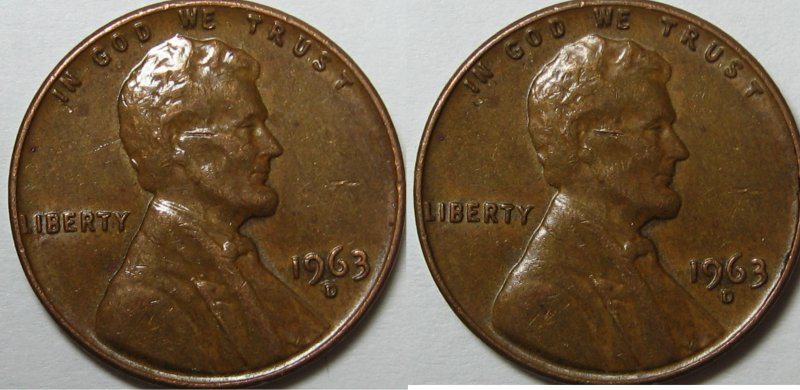 Lincoln Cent Lover!VERDI-CARE™ INVENTOR https://verdi.care/
Edited by BadThad
04/04/2010 11:07 pm
|
|
Pillar of the Community
United States
4846 Posts |
|
|
Bedrock of the Community
United States
20048 Posts |
In this test I selected two coins that were the same year with almost the same patina. The first picture is of the UNCONSERVED coins, no applications: 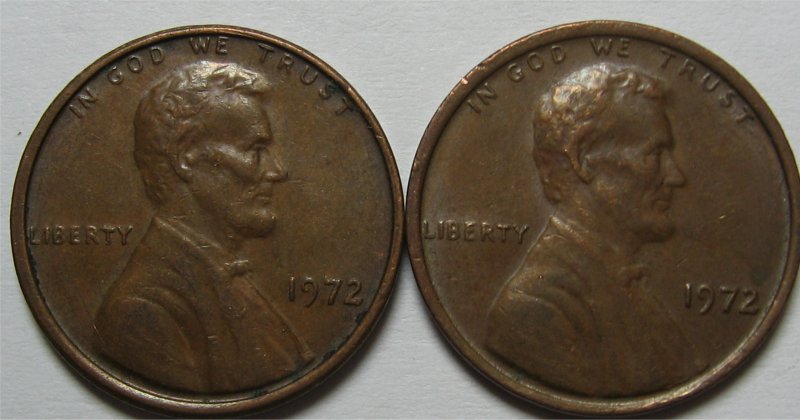 The second picture shows the same coins treated with COINCARE (left) and VERDI-CARE™ (right): 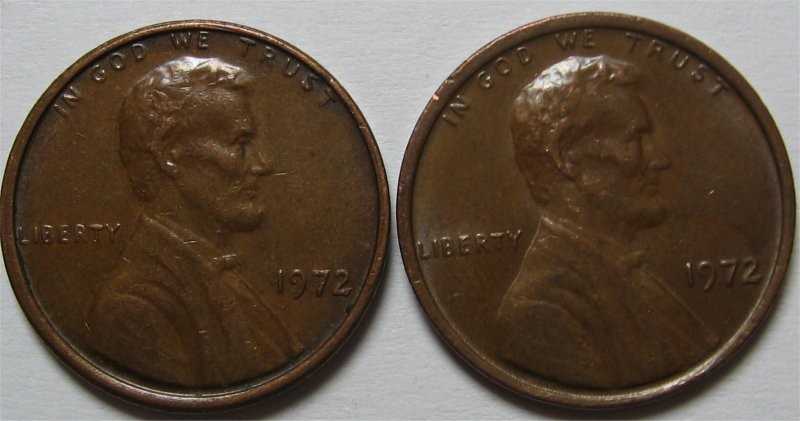 Lincoln Cent Lover!VERDI-CARE™ INVENTOR https://verdi.care/
Edited by BadThad
04/04/2010 11:33 pm
|
|
Bedrock of the Community
United States
20048 Posts |
In this experiment I decided to try using a blunt toothpick to remove the moderate verdigris remaining after the soak. The coin was submerged in fluid and I rubbed very hard at the verdigris with the toothpick for about 2 minutes, then I let it soak for 30 minutes and rubbed hard again for about 2 minutes. Some moderate verdigris was removed, but the remaining is tightly adhered to the surface. Perhaps a thorn would have been a better choice, I suspect this would be a highly ambitious project. The rubbing barely removed additional verdigris. VERDI-CARE™ is only good at removing LIGHT verdigris. 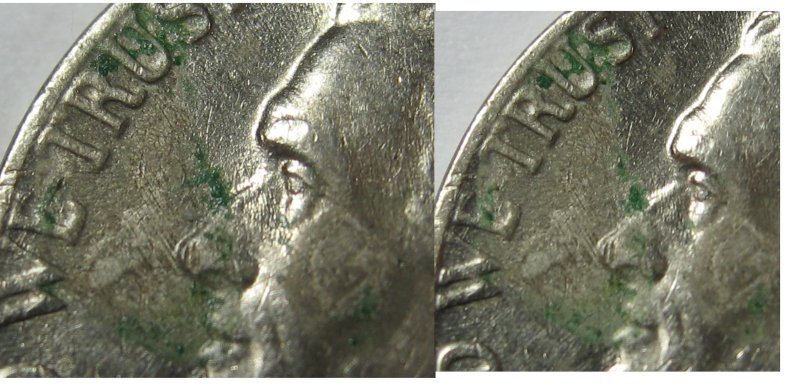 |
| |
Replies: 421 / Views: 66,129 |








 First Page
 Previous Page


 Posted 04/01/2010 8:13 pm


