| Author |
 Replies: 21 / Views: 4,660 Replies: 21 / Views: 4,660 |
Page 2 of 2
|
|
|
|
Pillar of the Community
 Canada
9879 Posts |
I had always believed that the first steam powered presses at the mint were screw presses.
"Dipping" is not considered cleaning...
-from PCGS website
Edited by DBM
01/30/2022 8:23 pm
|
|
Pillar of the Community
United States
3848 Posts |
I would think 1836 because that is when bust halves started to get their reeded edge.
Suffering from bust half fever. Want to learn how to attribute early half dollars by die variety? Click Here: http://goccf.com/t/434955Shoot me a PM if you are looking to sell bust halves. |
|
Pillar of the Community
United States
4680 Posts |
Adding a couple images of the first press mentioned in the link NS posted. Took these shots at the ANA museum while on display there. And a cropped image of the placard. 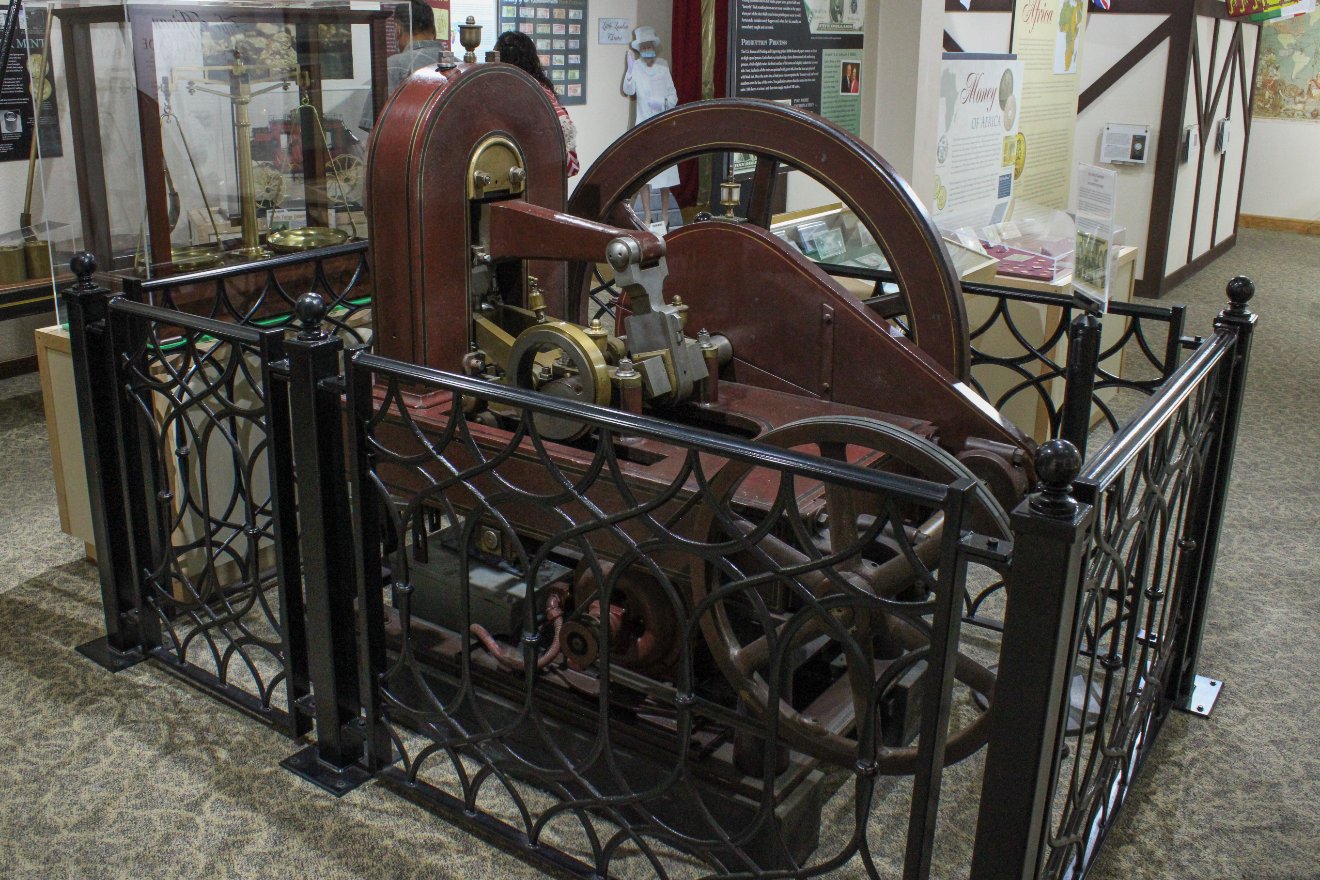 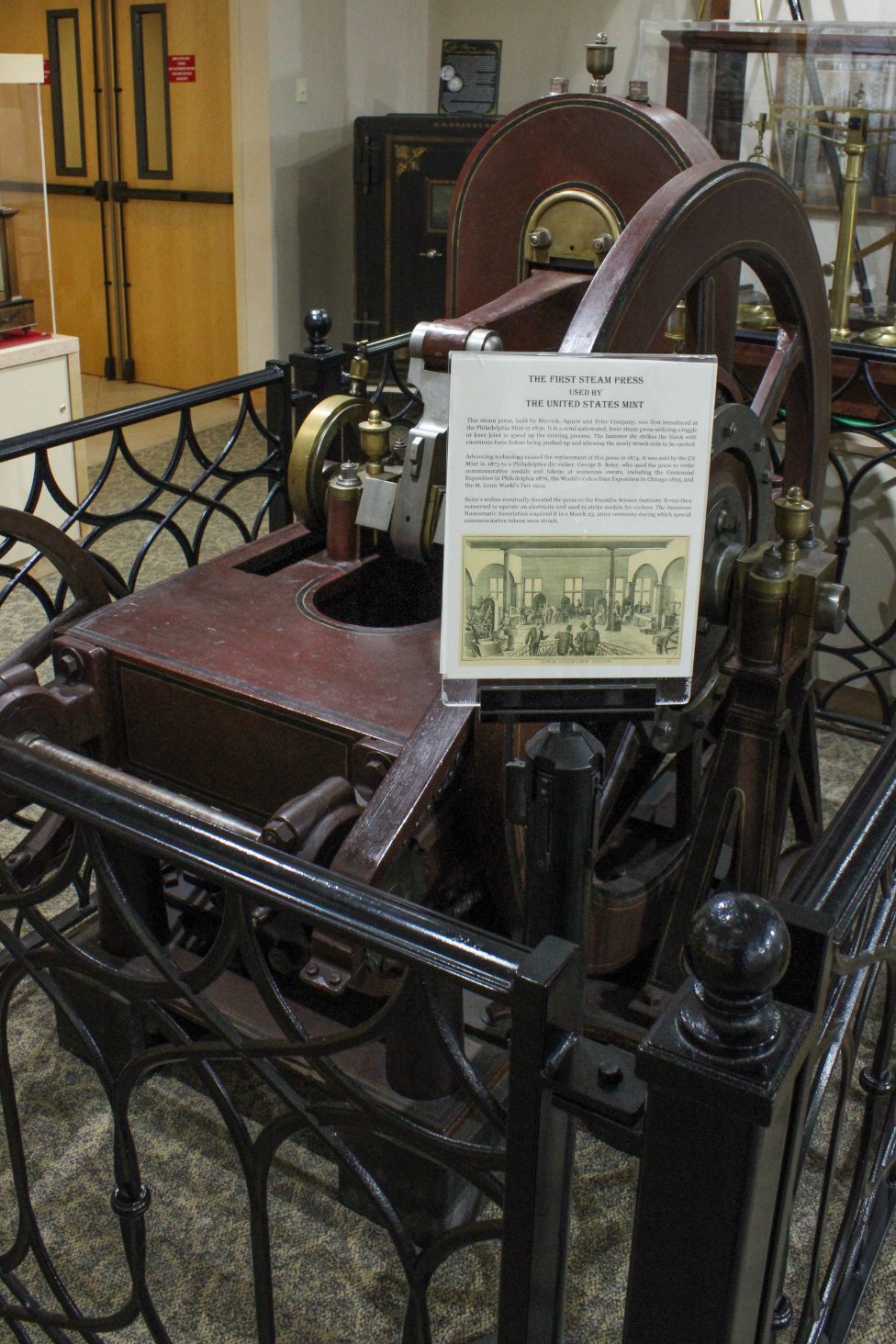 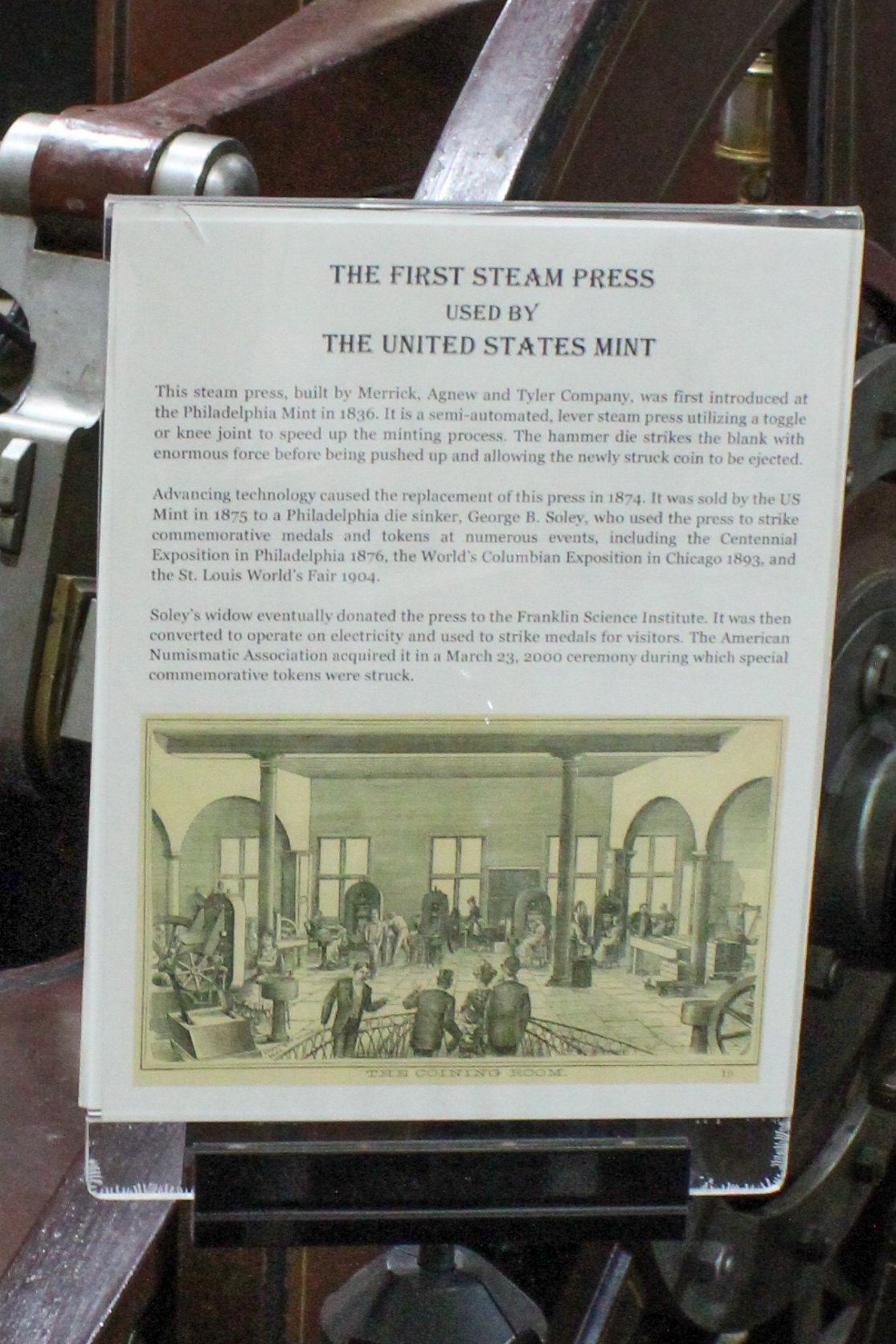 |
|
Pillar of the Community
 United States
3237 Posts |
Thanks for all the great information everybody!
|
|
Moderator
 United States
191727 Posts |
A very interesting topic!  |
|
Valued Member
United States
466 Posts |
Can anyone tell me about screw presses which I know nothing about. How did they work? Did the mint use them from 1792 to 1836? How were the screws driven? Hard to imagine human power for this. Mules on a treadmill?
|
|
Pillar of the Community
United States
4680 Posts |
|
|
Pillar of the Community
United States
1613 Posts |
According to Mr. Roger Burdette's diligent records searching, the screw press was retired in 1893. Proof, specimen, master coins and medals were all struck using one of several until replaced with hydraulic presses that year.
For those interested in this sort of stuff, I highly recommend his book From Mine to Mint (2013).
ANA member - PAN Member - BCCS Member There are no problems only solutions - the late, great John Lennon
Edited by Ballyhoo
01/31/2022 9:27 pm
|
|
Bedrock of the Community
United States
17884 Posts |
As mentioned the first coinage was March 23, 1836. It was supposed to be Feb 22, Washingtons Birthday, but some technical problems delayed the start. They even struck a token to mark the event and on the originals you can see where the Feb 22 date has been changed to Mar 23. (Originals are scarce but there are prenty of restike pieces that don't show the corrected date)
Not all the coinage immediately switched over to the steam press. The started with Large Cents and half dollars but by 1837 all the circulation coins were being struck on steam presses. As Ballyhoo points out the screw press continued to be used for proof and pattern coin production until 1893.
|
|
Pillar of the Community
United States
3332 Posts |
"Nummi rari mira sunt, si sumptus ferre potes." - Christophorus filius Scotiae
|
|
Pillar of the Community
United States
3848 Posts |
Thank you Bump111 for adding that link to the sold listing. What a cool token!
Suffering from bust half fever. Want to learn how to attribute early half dollars by die variety? Click Here: http://goccf.com/t/434955Shoot me a PM if you are looking to sell bust halves. |
|
New Member
United States
1 Posts |
I know in 1836 the half dollar was changed to smaller size and reed edge instead of lettering edge to use the new hydraulic press so that Capped Bust half dollar and forward after 1836 was all hydraulic. Also in my opinion that's why prior to 1837 so many die cracks, light pressing and I think harder to grade. Some that people say are worn was do to light press. Anytime people muscles are in total control you will not get the same quality of coin from day to day minute to minute |
|
Pillar of the Community
United States
4989 Posts |
I believe screw presses were continued to be used, well after 1836, for producing proof coinage. Up to about 1890 or so.
|
|
Bedrock of the Community
United States
94367 Posts |
That's interesting, thanks.
|
|
Moderator
United States
191727 Posts |
 to the Community, Lcflooring! |
|
Page 2 of 2
|
Replies: 21 / Views: 4,660 |
Page 2 of 2
|








 First Page

 Posted 01/30/2022 9:10 pm


