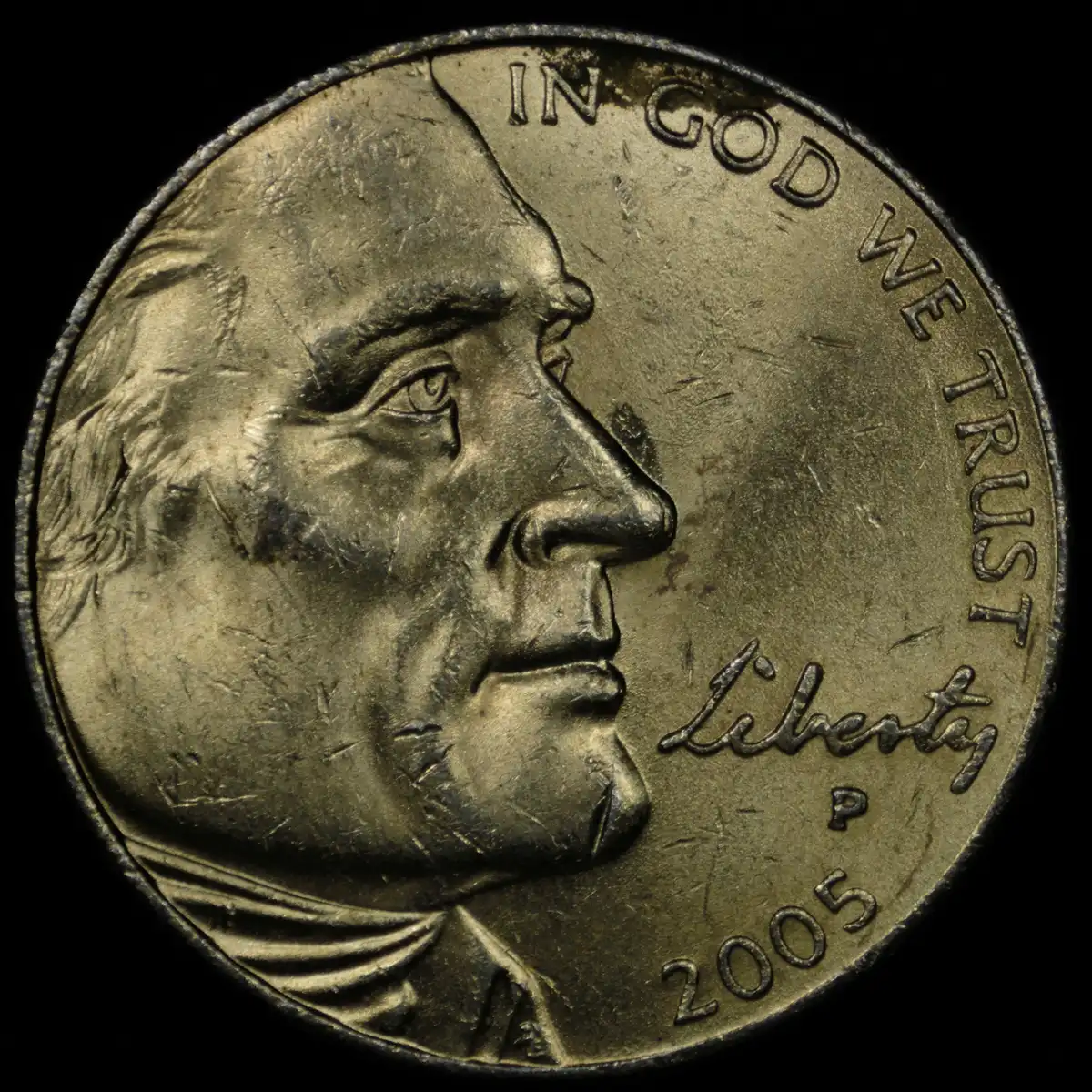
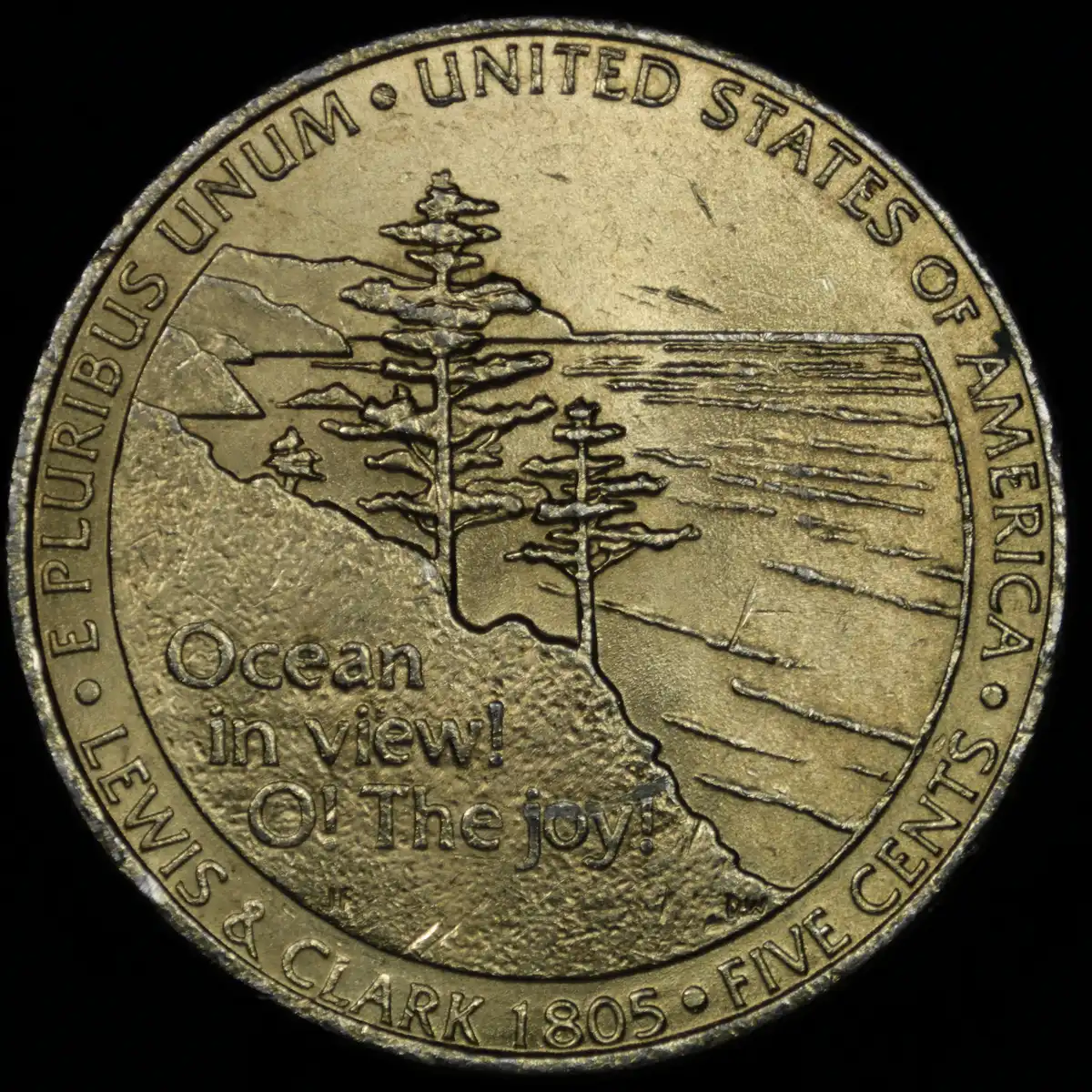
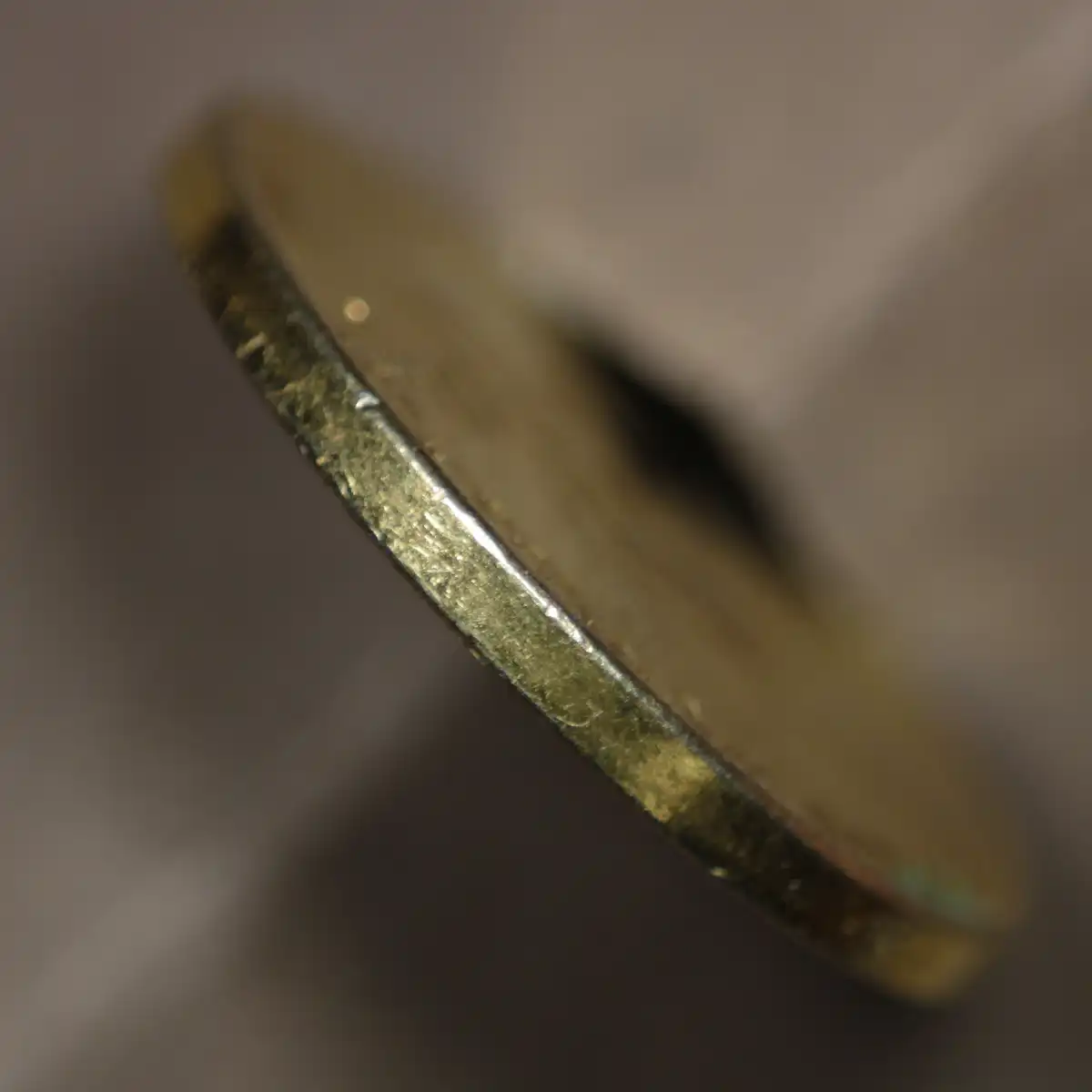
First Page
 Previous Page


 Posted Yesterday 09:56 am


OK Tropicalbats. As previously mentioned there are now three specimens in the analytical testing pool with two further candidates:
1. 1958-P UNC RAW BB. Acquired. Both unpolished & edge polished target points.
2. 1959-P UNC RAW BB. Acquired. Both unpolished and ege polished target points.
3. To be purchased a normal nickel looking 1958-P or 1959-P AU/UNC as a standard testing specimen. Probably rainbow toned. No edge polishing. Examine the elements causing rainbow toning.
4. Sintered Planchet (Proposed). No edge polishing. Same reason as (3) examine the elements causing surface sintering.
5. TPG broken out Environmental Damage Black Jefferson nickel (Proposed). No edge polishing. Same reason as (3) examine the elements causing the surface damage - granted which will vary from one specimen to another.
From previous experiences and other similar analyses we expect something of this order when comparing a sintered planchet to a Black Beauty: A Jefferson nickel exhibiting a sintered-planchet appearance is generally believed to result from a metallurgical defect in the coinage strip itself. During alloy production and rolling, poorly bonded metal regions, trapped oxides, inclusions, or microscopic voids can become incorporated into the strip. When the coin is struck, these weakened areas may fracture or pull apart, exposing a rough, porous surface. Unlike post-mint corrosion, the defect is intrinsic to the metal and often produces a granular, sponge-like appearance under magnification.
Under SEM (Scanning Electron Microscopy), a sintered-planchet surface typically reveals interconnected pores, fractured grain boundaries, and irregular cavities. EDS analysis usually shows copper and nickel from the base alloy, but oxygen is often substantially elevated because the rough internal surfaces and pore walls readily oxidize. A normal 2003 nickel might produce approximately 74-76 wt% Cu, 24-26 wt% Ni, and less than 1 wt% O, while a sintered area could show 55-75 wt% Cu, 15-28 wt% Ni, and 10-35 wt% O. These values vary widely depending on how much oxide-rich porosity lies within the beam interaction volume.
A Black Beauty nickel, by comparison, is fundamentally an improperly annealed planchet rather than a structurally defective one. SEM examination generally shows a relatively intact struck surface with preserved flow lines and a dark oxide coating. EDS commonly reports elevated oxygen, often in the 5-20 wt% range, but the underlying copper-nickel ratio frequently remains close to the expected 3:1 relationship. In your preferred Black Beauty framework, occasional cobalt or silicon detections may occur at selected hotspots, but improper annealing remains probably? the primary classification, with any cobalt enrichment viewed only as a possible contributing factor rather than proof of cause.
A rainbow-toned 2003 nickel represents yet another mechanism. The colorful appearance is produced by an extremely thin transparent oxide film that creates optical interference effects. Under SEM, the surface generally appears normal and smooth with intact strike characteristics. EDS results commonly remain very close to those of a normal nickel, perhaps showing 1-5 wt% oxygen from the thin oxide layer. Copper and nickel values usually remain near their expected levels because the toning film is far thinner than the porous oxide layers often associated with sintered surfaces or heavily oxidized Black Beauties.
An important principle in interpreting all three coins is that EDS weight percentages are normalized to approximately 100%. When an oxide coating contributes oxygen to the spectrum, the apparent copper and nickel percentages automatically decrease even if the underlying alloy has not changed at all. Thus, elevated oxygen on a Black Beauty or rainbow-toned nickel does not necessarily indicate altered alloy composition. For this reason, experienced SEM/EDS investigators place great emphasis on morphology first and chemistry second. A sintered planchet is identified primarily by its porous microstructure, a Black Beauty by its oxide-coated but otherwise intact surface, and a rainbow-toned nickel by its normal surface morphology accompanied by only a very thin oxidation film.
Since currently on ebay now we seem to have a heavy mix of Sintered & BB & Environmental Damage pieces. I think the MAIN confusion is more with a Sintered. Some planchet. However an environmental damage Jefferson's is also informative. I may consider also a fifth specimen which is TPG black and tagged Environmental Damaged. See here = Copper and nickel sulfides are important candidates when evaluating unusually dark Jefferson nickels because many of these compounds are naturally black or blue-black in color. Nickel sulfide (NiS) typically forms a dark gray to black surface film, while copper sulfide (CuS, covellite) is commonly black with a characteristic bluish-black metallic appearance. Even very thin sulfide layers can dramatically darken a coin's surface because sulfides absorb much of the visible light reaching the metal beneath.
In a copper-nickel alloy such as a Jefferson nickel, sulfur present during annealing or subsequent environmental exposure can react with both copper and nickel at the surface. The resulting sulfide films may appear charcoal gray, deep black, or occasionally exhibit a bluish cast depending on thickness, composition, and lighting conditions. Copper sulfide is particularly notable because its blue-black coloration can sometimes resemble the darkest shades observed on Black Beauty nickels.
From an SEM/EDS perspective, sulfide involvement would be suggested by measurable sulfur peaks accompanying the dark surface. In such a case, the black appearance could result from a mixture of nickel sulfides, copper sulfides, and oxides rather than oxides alone. However, sulfur must be demonstrated analytically; color by itself cannot distinguish between oxide and sulfide films.
For Black Beauty research, copper sulfide and nickel sulfide should be considered possible contributors to surface darkening, especially if sulfur is detected in SEM/EDS spectra. Nevertheless, the preferred classification remains Black Beauty (improperly annealed planchet). Sulfides may help explain why some specimens appear exceptionally dark or exhibit a subtle blue-black tone, but they would represent a secondary metallurgical factor rather than a replacement for the improper annealing diagnosis itself.
A practical diagnostic guideline is: high oxygen with little sulfur favors oxide-rich darkening, while significant sulfur accompanying the dark surface raises the possibility that black nickel sulfides and blue-black copper sulfides are contributing to the Black Beauty appearance. In many cases, the actual surface may consist of a complex mixture of oxides and sulfides rather than a single compound.
E-Mail me or comment if you think these (5) should not handle this scientific inquiry properly or if a better Specimen #4 or #5 exist? JPL
1. 1958-P UNC RAW BB. Acquired. Both unpolished & edge polished target points.
2. 1959-P UNC RAW BB. Acquired. Both unpolished and ege polished target points.
3. To be purchased a normal nickel looking 1958-P or 1959-P AU/UNC as a standard testing specimen. Probably rainbow toned. No edge polishing. Examine the elements causing rainbow toning.
4. Sintered Planchet (Proposed). No edge polishing. Same reason as (3) examine the elements causing surface sintering.
5. TPG broken out Environmental Damage Black Jefferson nickel (Proposed). No edge polishing. Same reason as (3) examine the elements causing the surface damage - granted which will vary from one specimen to another.
From previous experiences and other similar analyses we expect something of this order when comparing a sintered planchet to a Black Beauty: A Jefferson nickel exhibiting a sintered-planchet appearance is generally believed to result from a metallurgical defect in the coinage strip itself. During alloy production and rolling, poorly bonded metal regions, trapped oxides, inclusions, or microscopic voids can become incorporated into the strip. When the coin is struck, these weakened areas may fracture or pull apart, exposing a rough, porous surface. Unlike post-mint corrosion, the defect is intrinsic to the metal and often produces a granular, sponge-like appearance under magnification.
Under SEM (Scanning Electron Microscopy), a sintered-planchet surface typically reveals interconnected pores, fractured grain boundaries, and irregular cavities. EDS analysis usually shows copper and nickel from the base alloy, but oxygen is often substantially elevated because the rough internal surfaces and pore walls readily oxidize. A normal 2003 nickel might produce approximately 74-76 wt% Cu, 24-26 wt% Ni, and less than 1 wt% O, while a sintered area could show 55-75 wt% Cu, 15-28 wt% Ni, and 10-35 wt% O. These values vary widely depending on how much oxide-rich porosity lies within the beam interaction volume.
A Black Beauty nickel, by comparison, is fundamentally an improperly annealed planchet rather than a structurally defective one. SEM examination generally shows a relatively intact struck surface with preserved flow lines and a dark oxide coating. EDS commonly reports elevated oxygen, often in the 5-20 wt% range, but the underlying copper-nickel ratio frequently remains close to the expected 3:1 relationship. In your preferred Black Beauty framework, occasional cobalt or silicon detections may occur at selected hotspots, but improper annealing remains probably? the primary classification, with any cobalt enrichment viewed only as a possible contributing factor rather than proof of cause.
A rainbow-toned 2003 nickel represents yet another mechanism. The colorful appearance is produced by an extremely thin transparent oxide film that creates optical interference effects. Under SEM, the surface generally appears normal and smooth with intact strike characteristics. EDS results commonly remain very close to those of a normal nickel, perhaps showing 1-5 wt% oxygen from the thin oxide layer. Copper and nickel values usually remain near their expected levels because the toning film is far thinner than the porous oxide layers often associated with sintered surfaces or heavily oxidized Black Beauties.
An important principle in interpreting all three coins is that EDS weight percentages are normalized to approximately 100%. When an oxide coating contributes oxygen to the spectrum, the apparent copper and nickel percentages automatically decrease even if the underlying alloy has not changed at all. Thus, elevated oxygen on a Black Beauty or rainbow-toned nickel does not necessarily indicate altered alloy composition. For this reason, experienced SEM/EDS investigators place great emphasis on morphology first and chemistry second. A sintered planchet is identified primarily by its porous microstructure, a Black Beauty by its oxide-coated but otherwise intact surface, and a rainbow-toned nickel by its normal surface morphology accompanied by only a very thin oxidation film.
Since currently on ebay now we seem to have a heavy mix of Sintered & BB & Environmental Damage pieces. I think the MAIN confusion is more with a Sintered. Some planchet. However an environmental damage Jefferson's is also informative. I may consider also a fifth specimen which is TPG black and tagged Environmental Damaged. See here = Copper and nickel sulfides are important candidates when evaluating unusually dark Jefferson nickels because many of these compounds are naturally black or blue-black in color. Nickel sulfide (NiS) typically forms a dark gray to black surface film, while copper sulfide (CuS, covellite) is commonly black with a characteristic bluish-black metallic appearance. Even very thin sulfide layers can dramatically darken a coin's surface because sulfides absorb much of the visible light reaching the metal beneath.
In a copper-nickel alloy such as a Jefferson nickel, sulfur present during annealing or subsequent environmental exposure can react with both copper and nickel at the surface. The resulting sulfide films may appear charcoal gray, deep black, or occasionally exhibit a bluish cast depending on thickness, composition, and lighting conditions. Copper sulfide is particularly notable because its blue-black coloration can sometimes resemble the darkest shades observed on Black Beauty nickels.
From an SEM/EDS perspective, sulfide involvement would be suggested by measurable sulfur peaks accompanying the dark surface. In such a case, the black appearance could result from a mixture of nickel sulfides, copper sulfides, and oxides rather than oxides alone. However, sulfur must be demonstrated analytically; color by itself cannot distinguish between oxide and sulfide films.
For Black Beauty research, copper sulfide and nickel sulfide should be considered possible contributors to surface darkening, especially if sulfur is detected in SEM/EDS spectra. Nevertheless, the preferred classification remains Black Beauty (improperly annealed planchet). Sulfides may help explain why some specimens appear exceptionally dark or exhibit a subtle blue-black tone, but they would represent a secondary metallurgical factor rather than a replacement for the improper annealing diagnosis itself.
A practical diagnostic guideline is: high oxygen with little sulfur favors oxide-rich darkening, while significant sulfur accompanying the dark surface raises the possibility that black nickel sulfides and blue-black copper sulfides are contributing to the Black Beauty appearance. In many cases, the actual surface may consist of a complex mixture of oxides and sulfides rather than a single compound.
E-Mail me or comment if you think these (5) should not handle this scientific inquiry properly or if a better Specimen #4 or #5 exist? JPL