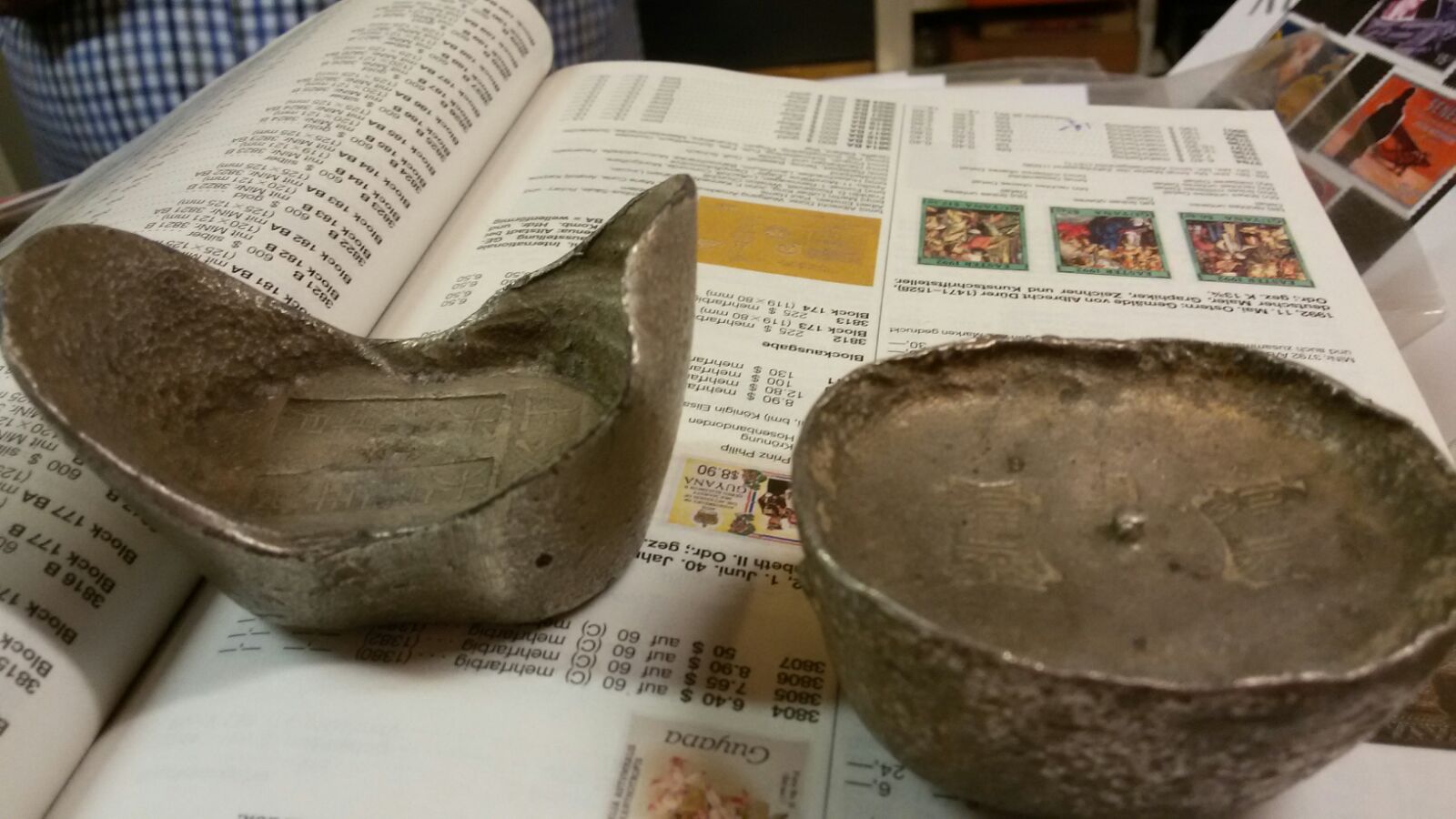
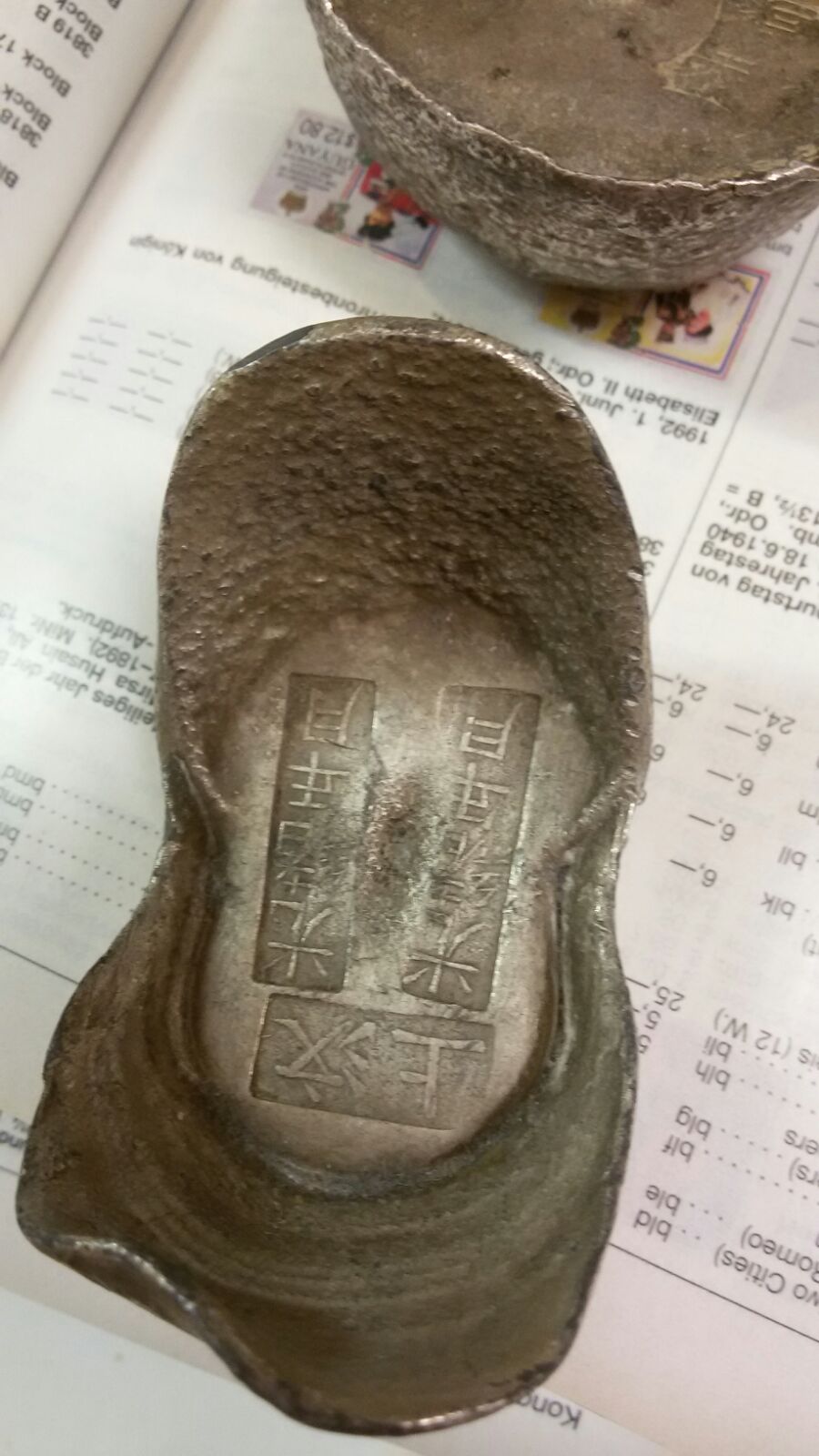
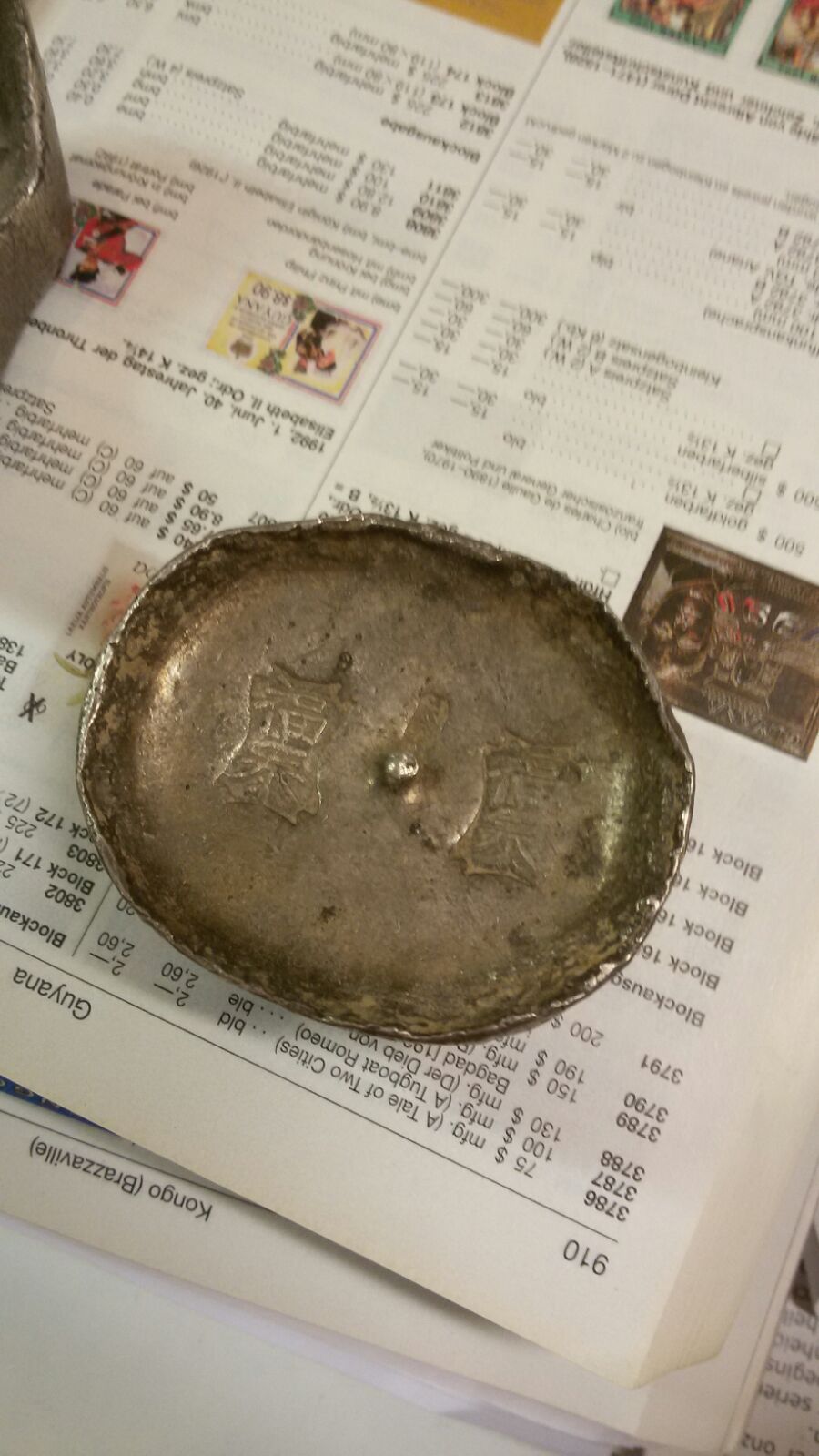
Even though I am quite new to the party here and I don't post that frequently, some of you might know that I mostly specialise in the Warring States era-coinage. But even the most hard-core specialists (not that I am one though), sometimes feel the urge to buy something out of their area of specialization. Well, to make a long story short, this is what I bought on a local coin fair this weekend:
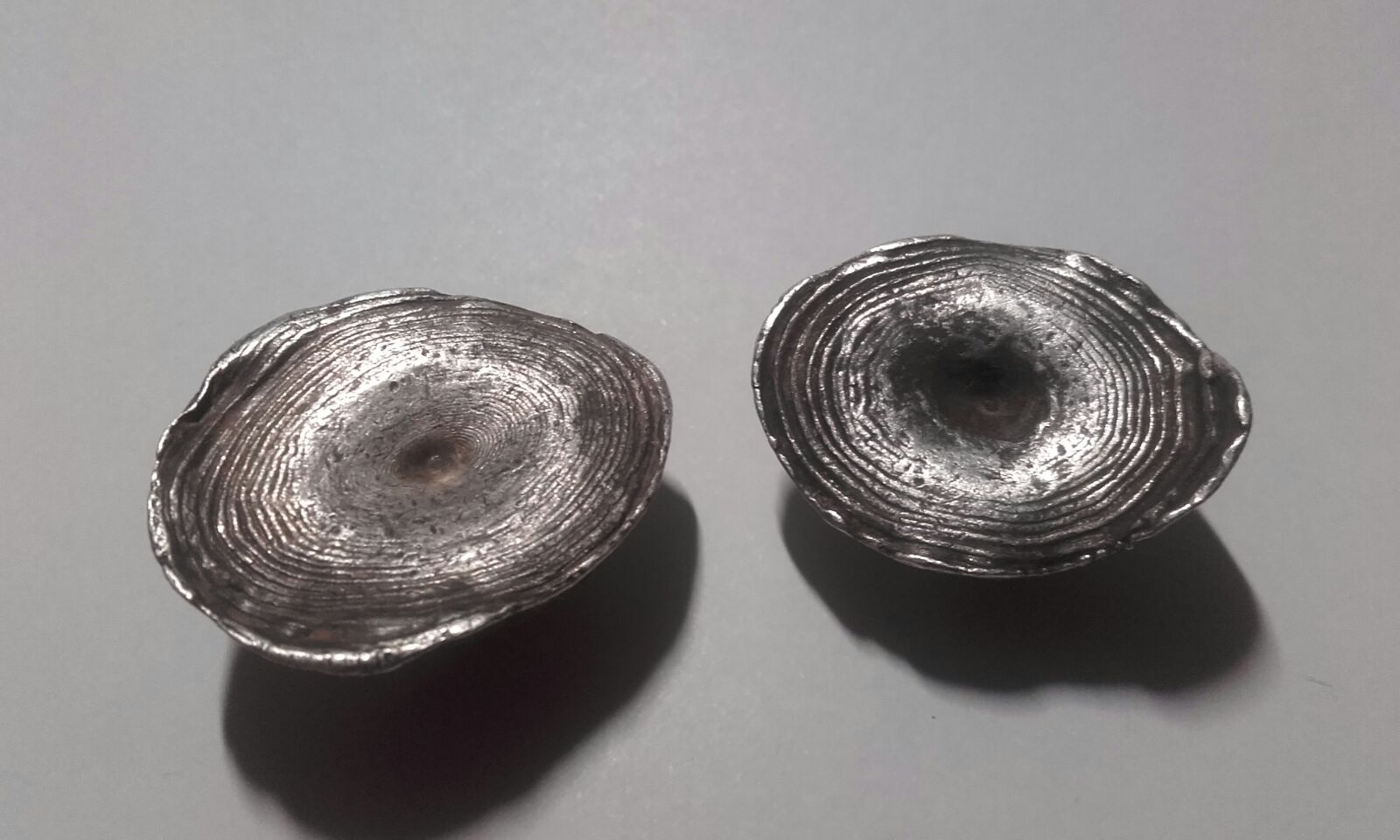
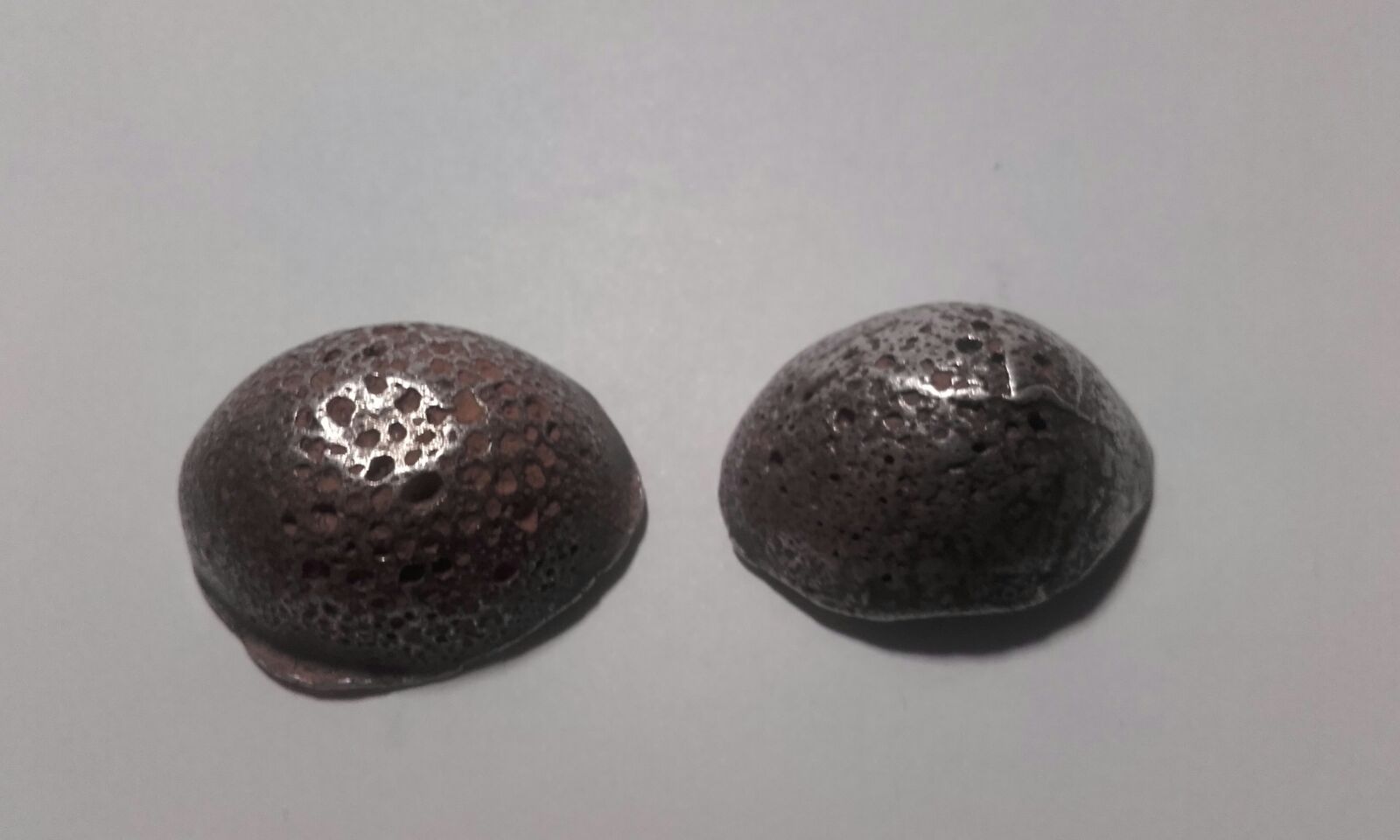
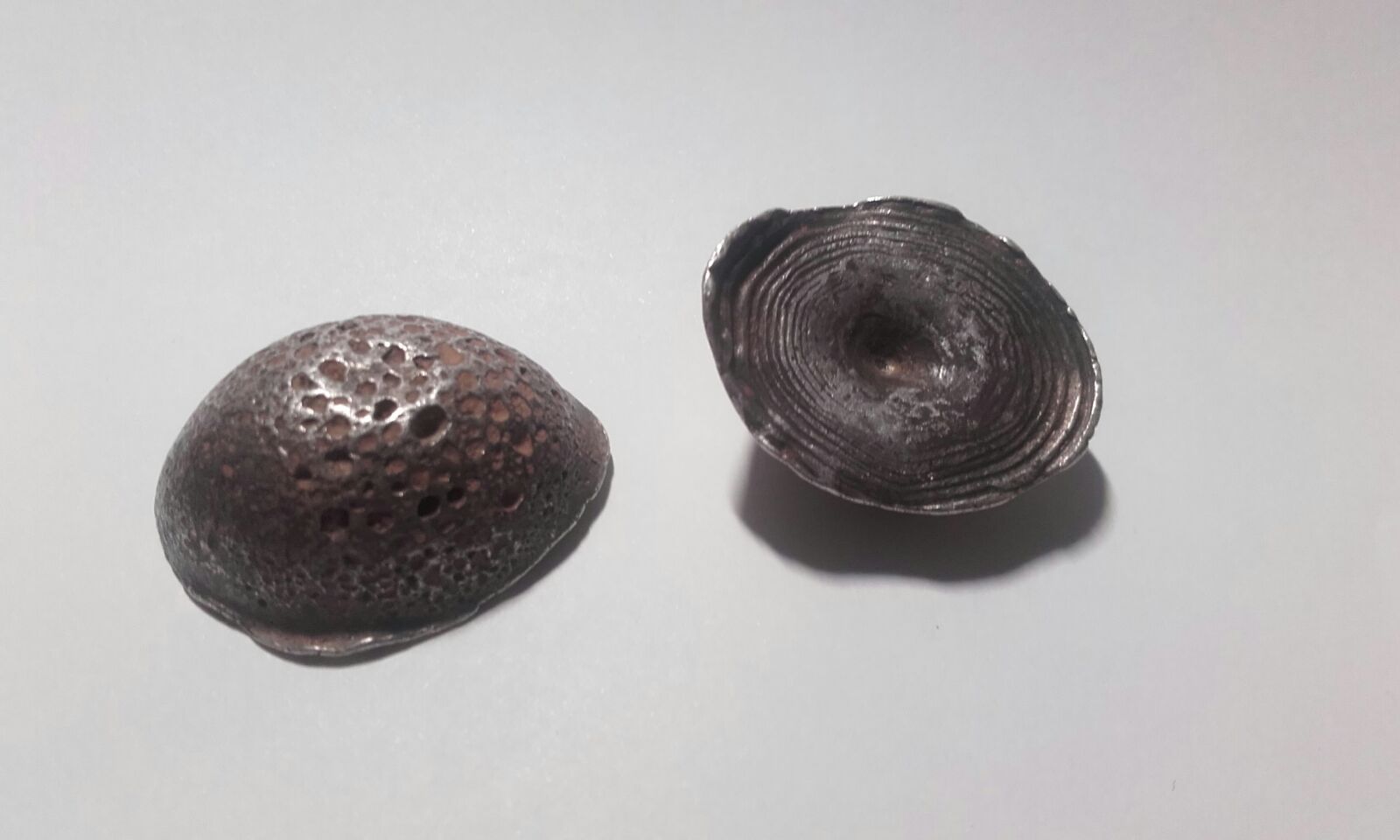
Sycee's! Or "Yuanbo", as the correct Romanization now is. In my opinion, one of the most interesting forms of money ever to be used in China, besides those during the Warring states period, of course ;). I had been looking for a sycee for quite some time, but was put off by the price. Most of these are far heavier than mine, thus a whole lot more expensive. While visiting a local coin fair this weekend however, I was pleasantly surprised when I found these two being offered. The seller normally deals in provincial Dutch coins, but had quite a few primitive and other non-standard late Asian coinage for sale. Right from the start, I told myself to be cautious. I am nowhere near an expert on Sycee's, and they were being offered on a show, and not by a dealer who was renowned for being an expert on Asian coinage. After examining them in hand and finding fairly little wrong with it from what I could tell, I decided to weigh them. The slightly larger one clocked in at around 38 gram, which would be approximately one Tael, the main unit of weight during this period, and a common weight for small sycee's. The other one weighted around 27 gram, about the weight of a silver dollar/an 8 real. Also a common weight for smaller Sycee's.
Still, I wasn't completely convinced. "fake until proven guilty" is what applied here, and rightly so. As with most forms of Chinese coinage, the amount of fakes on the market is astonishing. I asked the seller where he got the lot, seeing as he had more Asian silver for sale (Thai bullet's, lat's, etc.). He had bought the entire lot, which came in an amazing wooden "treasure-chest", from the relatives of a deceased collector quite a few years ago. The collection was amassed before WWII, possibly even when sycee's where still in use within China. The fact that it is such an old collection does not immediately mean that they are genuine, yet do point in somewhat the right direction. But combining all this, plus the fact that I felt so fascinated by them, I finally decided to buy them. They have an excellent return policy, but let's hope for the best. I am certainly no expert on Sycee's, but I think they make quite a fun addition to my collection, regardless of their authenticity. I am still in the process of authenticating them for 100%, reaching out to several far more experienced collectors, but I just couldn't wait with posting them here.
These sycee's belong to the so-called "Broken silver" category. Not that these were actually broken off of anything, but any sycee under 5 tael belonged to this category. The large sycee's where mostly used for taxes, huge transactions or for stacking. These smaller ones however, were mostly used for every day, smaller purchases. One Silver Tael equalled to roughly 1500~2000 cash coins, which would buy you about 25 litres of rice in late imperial China. Sycee's come in many different shapes and sizes, these being of the so-called "hen's-nest" type, because they, well. look like a hen's nest apparently. Sycee's where issued as far back as the Tang-dynasty, but only became really popular in the Ming and Ching dynasties. For the date of these, we should be looking at the latter half of the Ching Dynasty, somewhere in the nineteenth century.
Besides just entirely fake sycee's, we also have another problem within this area of numismatics. In apparently the 60's and 70's, long after they were officially demonetized as a currency in China in 1933, the local inhabitants of the "Shan" region (Shan is Chinese for mountain, in this case the north of Thailand/ Burma/ Vietnam), a people with a long tradition of the usage of big chunks of silver as money, finally stopped using these as a currency. Smart businessmen then bought these for melt value, after all, they had no monetary value anymore, applied fake counterstamps to them, and sold them as historical artefacts, rather than simply bars of silver. A lot of these genuine sycee's with a fake counterstamp have found their way into numerous important collections. The same seller had another, similar sized, sycee for sale, but with a doubtful stamp that read "Guangxi". This of course being a then province, now autonomous-region, within China. Besides not having the budget (it was a little more expensive than both of these put together), I also am a little doubtful of this stamp. It is not the fact that the province is named that makes this stamp doubtful. After all, naming the region of origin on a sycee was a practice commonly done. However, we know of many stamps with the same lay-out and very similar calligraphy, each from different provinces. It would make fairly little sense, although it is not impossible, for a local silver trading company half-way across China to use such similar stamps. It could be however, that the fakers used genuine, official stamps as inspiration for their fake counterstamps, which could be the case here, seeing as the one they had for sale came from an old collection.
Anyway, enjoy! I hope someone found it interesting, and if anyone has any comment or additions, feel free to post them!
Oh and I apologize for the blurry pictures. Seeing as these don't fit underneath my scanner, I had to take pictures with my Phone. Terrible quality ensued.
Kind regards,
Mika
Ps. I have placed this post in the "Ancient" coinage part of the forum. Due to their age, they might better fit under "modern" world-coinage or even bullion. However, when looking at the way these were made and used as a currency, I felt they would be more at home here. Should a moderator want to move them, no problems.







 Posted 02/14/2017 5:39 pm