Coin Community Family of Web Sites Join Thousands of Coin, Bullion, & Money Collectors
Coin, Banknote and Medal Collectors's Online Mall Join Thousands of Coin, Bullion, & Money Collectors Royal Canadian Mint products, Canadian, Polish, American, and world coins and banknotes. 300,000 items to help build your collection! Royal Estate Auctions - $1 Coin AuctionsVancouvers #1 Coin and Paper Money Dealer Specializing in Modern Numismatics


Username:
Password:
Save Password
Forgot your Password?


This page may contain links that result in small commissions to keep this free site up and running.

Welcome Guest! Registering and/or logging in will remove the anchor (bottom) ads. It's Free!

Norman Sicily - Unheralded Source Of Numismatic Innovation

To participate in the forum you must log in or register.
Author Replies: 8 / Views: 210Next Topic  
Pillar of the Community
Learn More...
tdziemia's Avatar
United States
7981 Posts
 Posted 07/23/2026  7:44 pm Show Profile   Bookmark this topic Add tdziemia to your friends list Get a Link to this Message Number of Subscribers
Long before the Crusades, and decades before the more famous Norman landing at Pevensey on the English coast, Norman knights arrived in southern Italy intent on conquest.

By 1066 members of the Norman Drengot and Hautville families had wrested the principalities of Capua, Calabria and Apulia from their previous Lombard and Byzantine overlords, and had gained a foothold at Messina for a prolonged struggle to take the island of Sicily from the Islamic caliphate. Pope Nicholas II had lent an air of legitimacy (or at least inevitability) to these endeavors when, in 1059 he invested Robert Guiscard (Hauteville) with the Duchies of Apulia and Calabria, and, aspirationally Sicily, should he be able to take it.

The monetary landscape encountered by the Normans when they arrived would have seemed alien, coming from the silver-based Carolingian monetary system of their homeland. The northern part of their realm (toward Naples) used Byzantine (or Byzantine inspired) coppers and gold, and to some extent the small imperial (Holy Roman Empire) silver denari struck at Pavia and Lucca that circulated in nearby Papal realms. Southward, toward the tip of "the boot," and into Sicily, the circulating coin likewise included copper follari for small change, but also tiny (0.25 gr) billon kharrubas and Islamic quarter dinar gold coins of about 1 gram called robai (later tari), for larger transactions. The Emirate of Sicily had adapted the normal system of gold dinars / silver dirhams / copper fals to their local needs

So, local models for coin designs were largely Byzantine (varied images and Greek inscriptions) or Islamic (no images, only Arabic inscriptions). For deeper background, see Grierson and Travaini, Medieval European Coinage, Volume 14 (1998).

The remainder of this post and subsequent ones will list (with examples) some "firsts" or at least notable features of the coins struck by these rulers between their coming into power around the time of the Norman conquest of Engand, and their replacement by the Hohenstaufen in 1194. When the coin is not mine, copyright of the image owner is acknowledged.

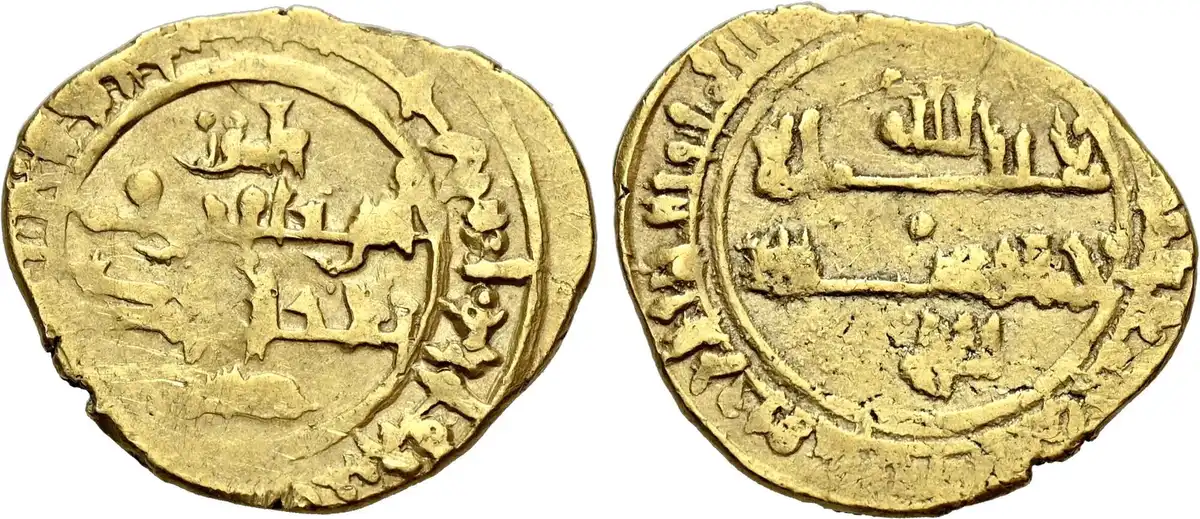
1. Dated coins. Robert Guiscard was perhaps the first "western" ruler of the second millenium to date some of his coin types. As early as 1072 gold taris were struck in his name with their AH year spelled out in words (MEC 14, 66; N#558092):
Norman-Sicily---Unheralded-Source-Of-Numismatic-Innovation
Copyright Numismatica Ars Classica 2025

The central legend on the obverse has been translated as "By the great duke Robert, lord of Sicily," and the marginal inscription "Palermo year 464" though I expect the year is written out as four and sixty and four hundred.
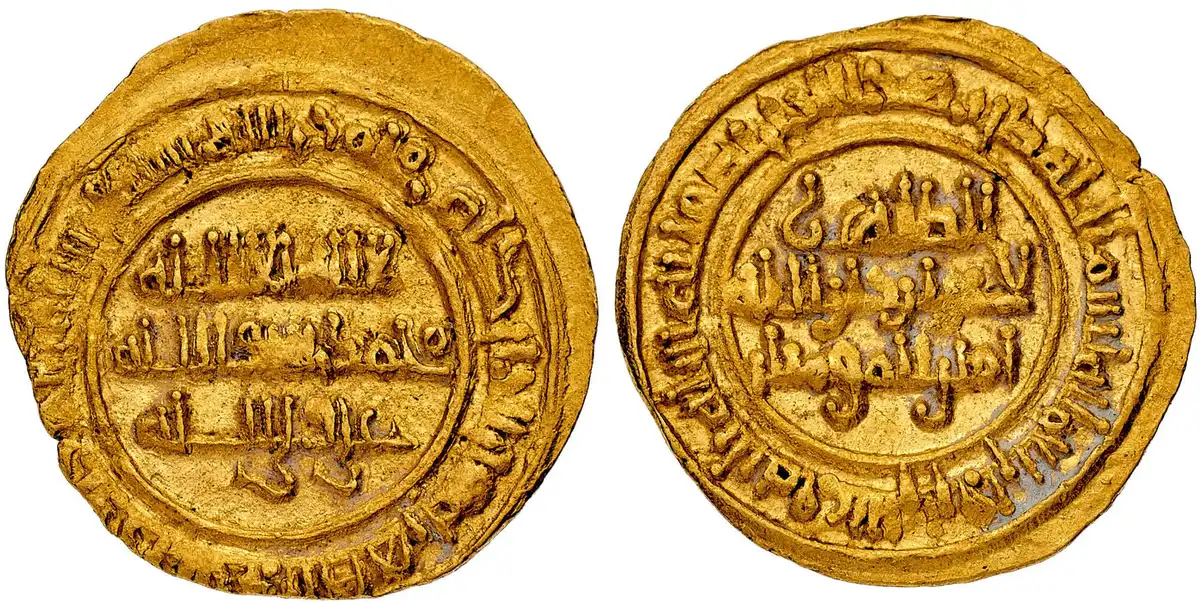
This type imitated the design of earlier 11th century taris struck by recent Fatimid rulers of the island, for example this tari of Al-Zahir (1021-1036; Spahr 25, #457156):
Norman-Sicily---Unheralded-Source-Of-Numismatic-Innovation
Copyright Aste Bolaffi


Mid-12th century, Guiscard's nephew Roger II struck copper follari dated AH533 (1138-1139), possibly the first European coin struck with a numeric date, albeit in the Hijri system (the 33 is easily recognizable at the bottom right reverse, the 5 less so):
Norman-Sicily---Unheralded-Source-Of-Numismatic-Innovation

Next up: radically bicultural coin types.
(This post contains no brain-rotting AI content)
Edited by tdziemia
07/24/2026 09:48 am
Pillar of the Community
Learn More...
NumisEd's Avatar
United States
5209 Posts
 Posted 07/23/2026  8:22 pm  Show Profile   Bookmark this reply Add NumisEd to your friends list Get a Link to this Reply
Great first post about Normal Sicily, tdziemia. If you have not already done so, read a bit about Roger II of Sicily. Probably one of the most enlightened rulers in Europe.
Bedrock of the Community
Learn More...
HondoB's Avatar
United States
26220 Posts
 Posted 07/23/2026  8:31 pm  Show Profile   Bookmark this reply Add HondoB to your friends list Get a Link to this Reply
Excellent article, tdziemia! Thank you for this eclectic education.
Inordinately fascinated by bits of metal with strange markings and figures
Pillar of the Community
Bud250r's Avatar
United States
847 Posts
 Posted 07/23/2026  8:41 pm  Show Profile   Bookmark this reply Add Bud250r to your friends list Get a Link to this Reply
Nice history lesson.
You learn something new everyday.
Pillar of the Community
Bacchus2's Avatar
United Kingdom
2908 Posts
 Posted 07/24/2026  04:19 am  Show Profile   Bookmark this reply Add Bacchus2 to your friends list Get a Link to this Reply
Great post - many thanks.

And yes, quite curious about the number 5. At first glance the central part looks more like a 7.
Moderator
Learn More...
jbuck's Avatar
United States
191499 Posts
 Posted 07/24/2026  10:34 am  Show Profile   Bookmark this reply Add jbuck to your friends list Get a Link to this Reply
Very interesting history! Thank you for sharing it and all the examples!
Pillar of the Community
Russian Federation
5185 Posts
 Posted 07/26/2026  05:50 am  Show Profile   Bookmark this reply Add january1may to your friends list Get a Link to this Reply

Quote:
possibly the first European coin struck with a numeric date, albeit in the Hijri system
Possibly the first coin struck with a (positional) Hindu-Arabic numeric date anywhere at all, including Islamic regions; I've heard that some earlier examples exist but so far I have yet to find any specific ones that I could confirm.

(AFAIK there were many much older marginally-European coins struck with dates in Roman numerals, or indeed in Greek alphabetic numerals [as opposed to dates spelled out in words]; the former were mostly regnal dates, though.)
Pillar of the Community
Learn More...
tdziemia's Avatar
United States
7981 Posts
 Posted Today  7H 53M ago  Show Profile   Bookmark this reply Add tdziemia to your friends list Get a Link to this Reply
Thanks, all.
NumisEd, I will keep an eye out for more on Roger II. Certainly the Normans inherited a cultural mixture far different than where they had come from. Only at the northwestern edge of their territory would they have felt the familiar themes of Roman Christianity. The eastern and southern parts of the mainland had Byzantine (Eastern/Greek) heritage, and Siciliy had been Muslim since around 850.

Bacchus, yes I agree, the first digit looks more like a 7 or an 8 lying on its side.
But, as we will see, this unusual combination of design motifs identifies the coin to this period in the south of the Italy. By AH 733 (1333 AD) the coins being struck were fully "western" in their design.

2. Radically Bi-cultural Coin Types

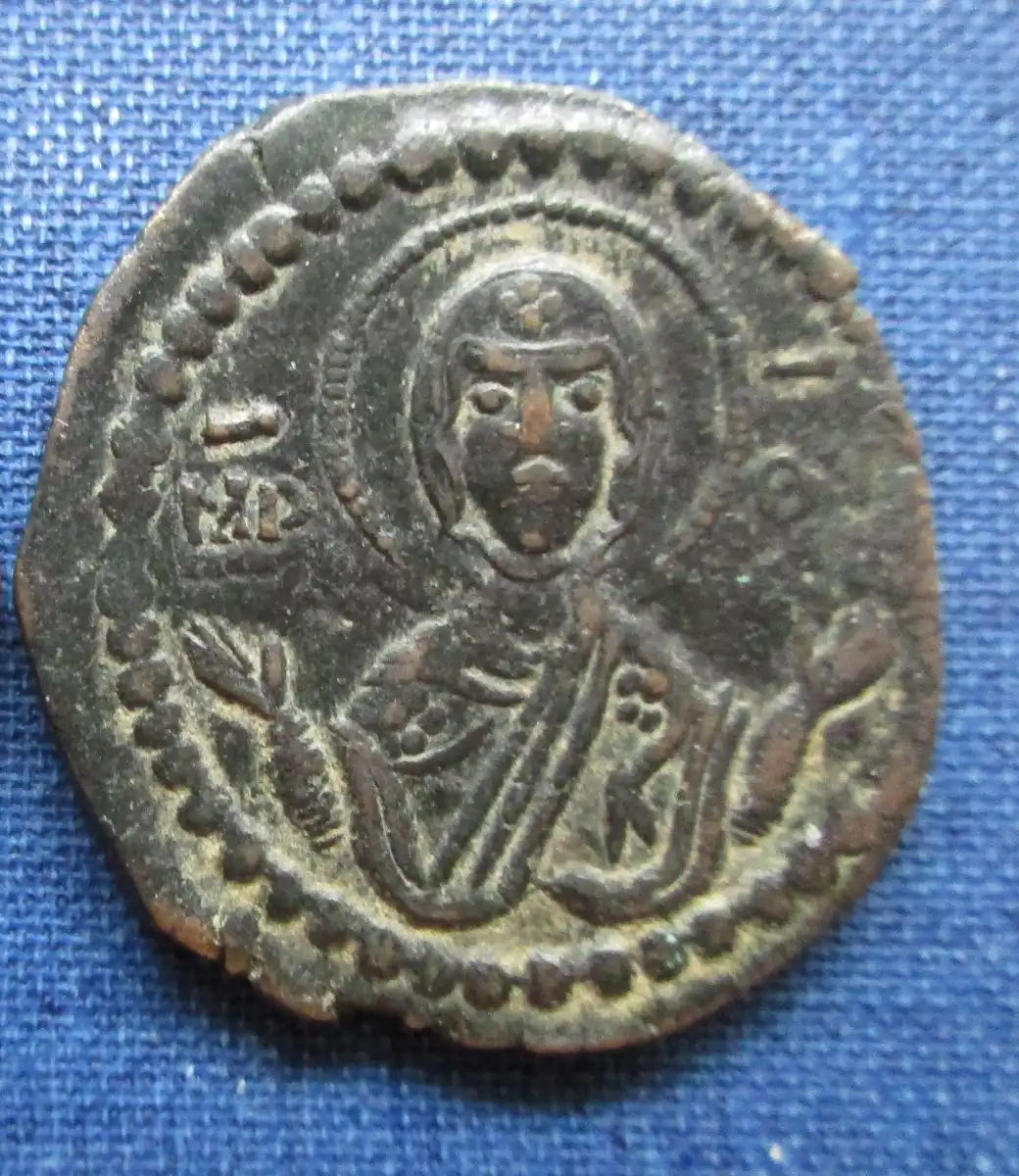
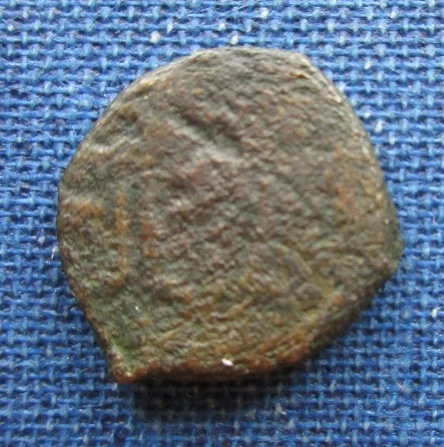
As shown with Robert Guiscard's Sicilian tari in the first post, the Norman rulers started with stylistic "knock-offs" of coins of earlier rulers in the region, in that case of a Fatimid tari which was a traditional Sicilian type. Likewise, Guiscard struck copper follari on the mainland that hewed closely to recent Byzantine types, like this one struck in Salerno dated by Grierson and Travini to 1076-1085 (MEC 14, 68):
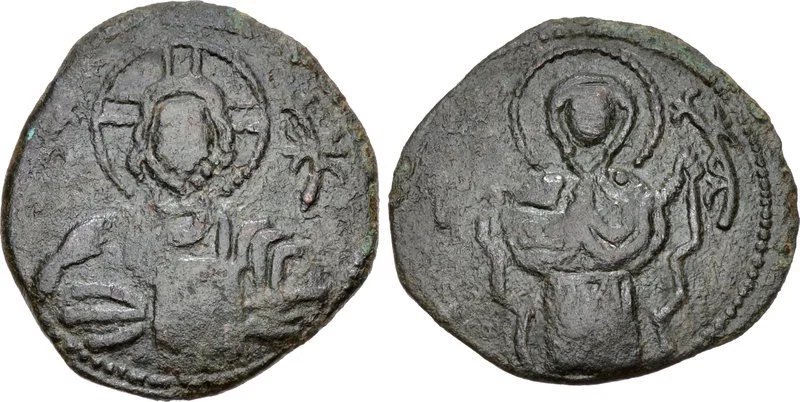
Norman-Sicily---Unheralded-Source-Of-Numismatic-Innovation
which clearly copied this Byzanine follis of Romanus IV (1068-1071, S. 1867)
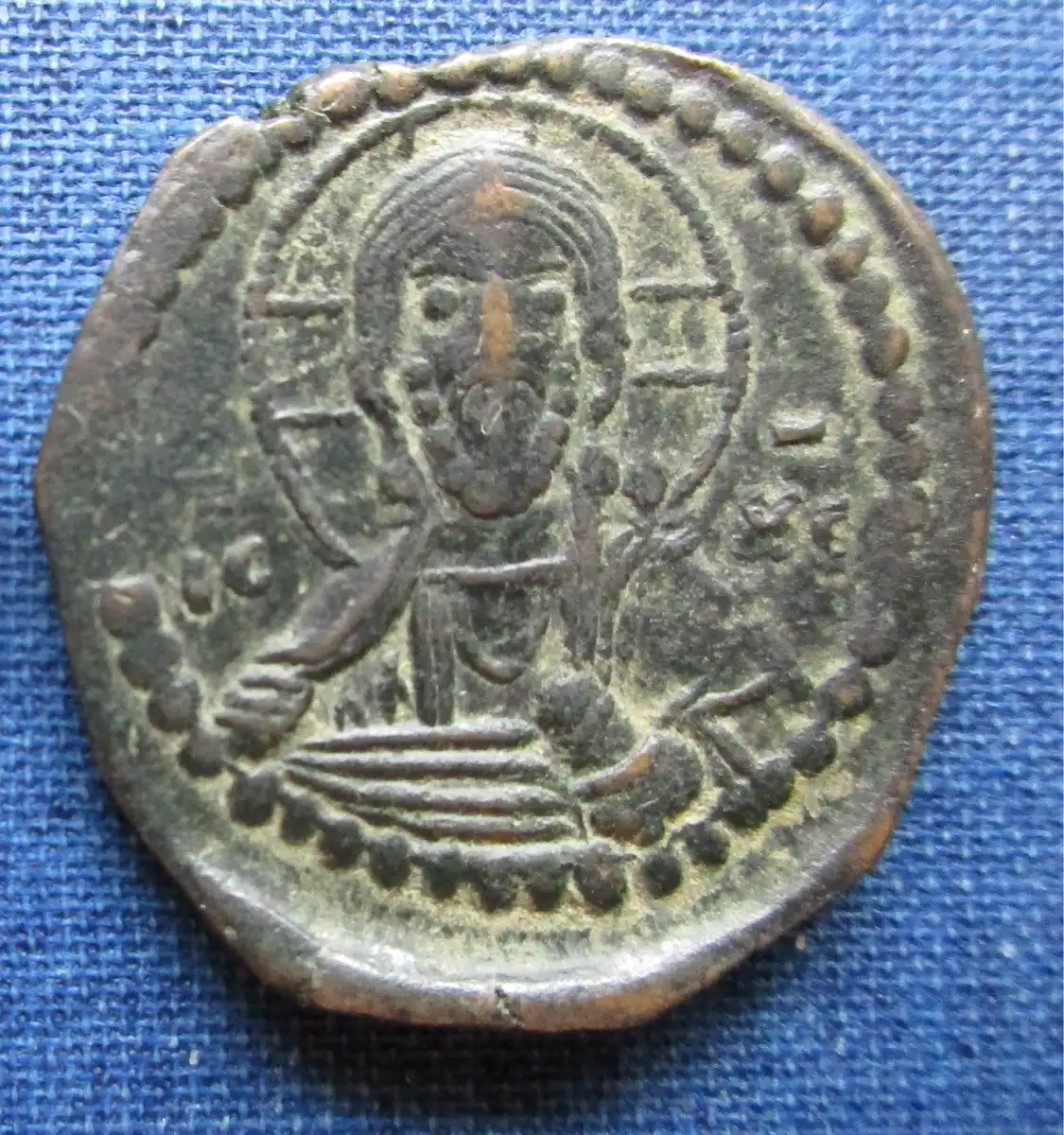
Norman-Sicily---Unheralded-Source-Of-Numismatic-Innovation

But Guiscard's successor on Sicily, Roger I (1085-1101) began fiddling with the tari design, placing what looks like a letter T (or tau), but may have been a modified cross in the center of one side, while leaving Arabic inscriptions in place elsewhere on the coin, including even the Islamic profession of faith on the reverse (MEC 14, 83-86)
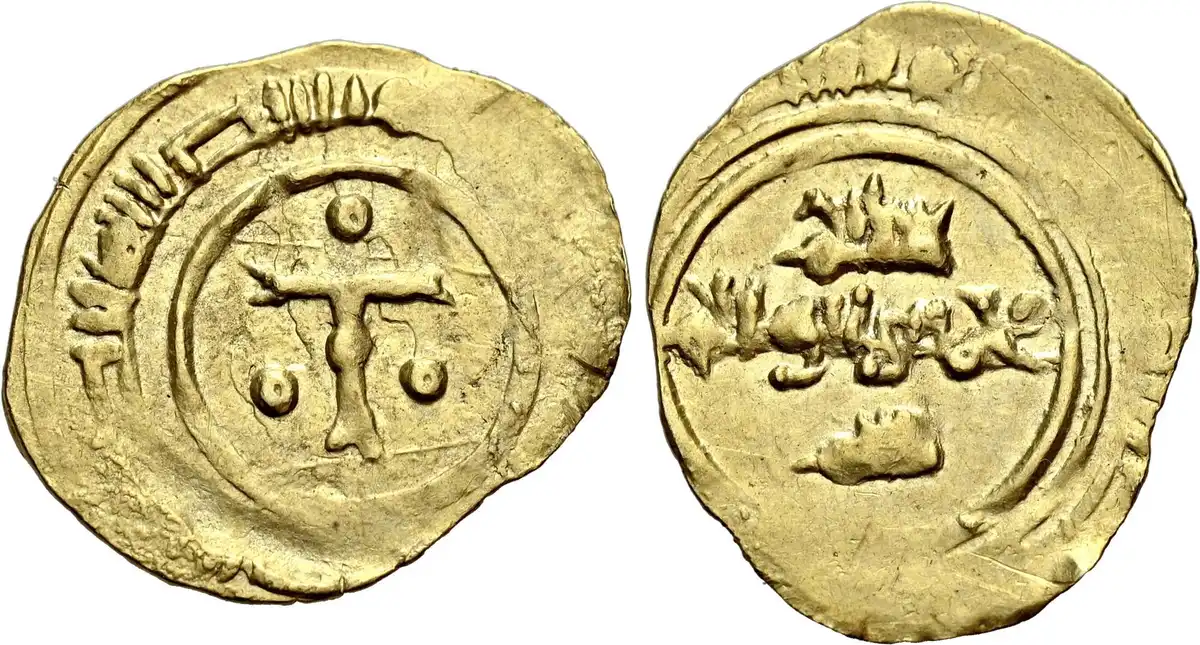
Norman-Sicily---Unheralded-Source-Of-Numismatic-Innovation
Copyright Numismatica Ars Classica 2025

Guiscard's successor in Apulia and Calabria, Roger Borsa (1085-1111) was more subtle, just inserting his Latin initials in the center of a traditional "bull's eye" Islamic design (MEC 14, 102, N#558732):
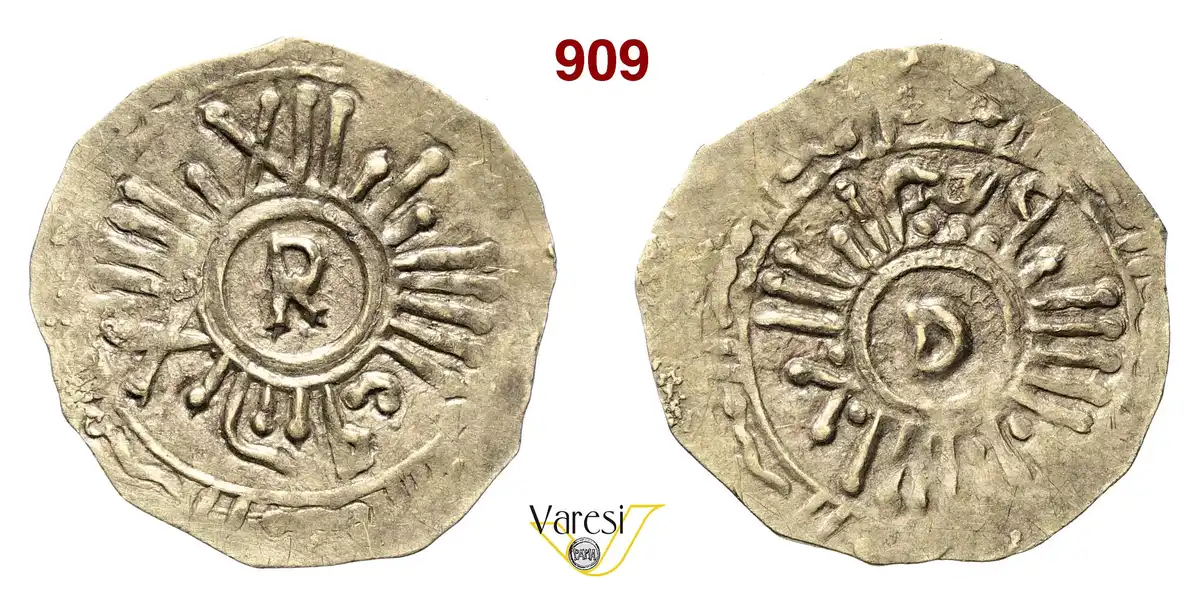
Norman-Sicily---Unheralded-Source-Of-Numismatic-Innovation
Copyright Numismatica Varesi 2023

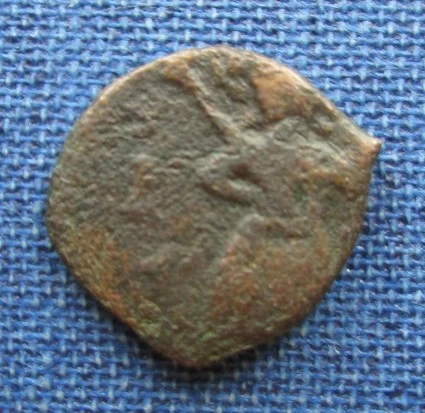
As we saw at the end of the first post, by the mid-12th century, designs featuring an image of a Christian figure (in that case Christ), but with an Islamic legend reverse, had become common on follari. This one features St. Demetrius, a Byzantine patron saint, and an Islamic legend reverse (unfortunately illegible on my example) on a follaro thought to have been struck at Bari (MEC 14, 188):
Norman-Sicily---Unheralded-Source-Of-Numismatic-Innovation
(an example in better condition can be seen here: https://www.numisbids.com/sale/5764/lot/?lot=631)

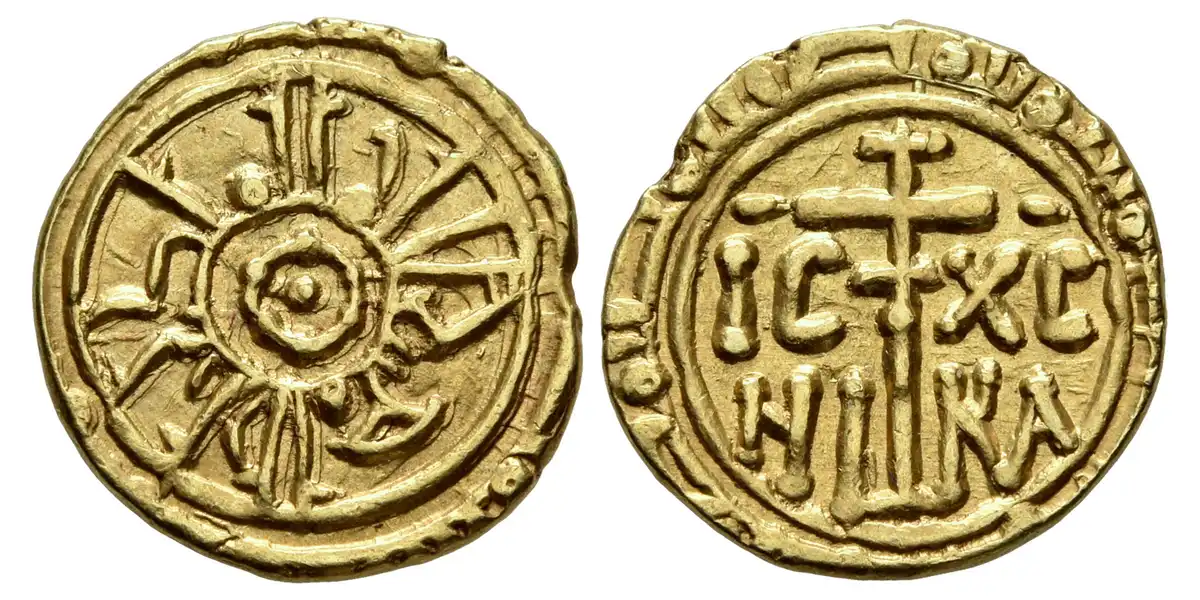
Finally, Roger II also introduced his own tari design, featuring Islamic legends on both sides, but a central design on one side of a cross with the Greek IC XC NI KI (Jesus Christ victorious), borrowing from a Byzantine follis design first used by Michael IV (MEC 14, 201-204m N#102756):
Norman-Sicily---Unheralded-Source-Of-Numismatic-Innovation
Copyright Leu Numismatik 2026

Enough for now on "Islamo-Byzantine fusion"

Next: New Denominations

Edited by tdziemia
Today 7H 9M ago
Moderator
Learn More...
jbuck's Avatar
United States
191499 Posts
  Replies: 8 / Views: 210Next Topic  

To participate in the forum you must log in or register.


Disclaimer: While a tremendous amount of effort goes into ensuring the accuracy of the information contained in this site, Coin Community assumes no liability for errors. Copyright 2005 - 2026 Coin Community Family- all rights reserved worldwide. Use of any images or content on this website without prior written permission of Coin Community or the original lender is strictly prohibited.
Contact Us  |  Advertise Here  |  Privacy Policy / Terms of Use

Coin Community Forum © 2005 - 2026 Coin Community Forums
It took 0.66 seconds to rattle this change. Forums