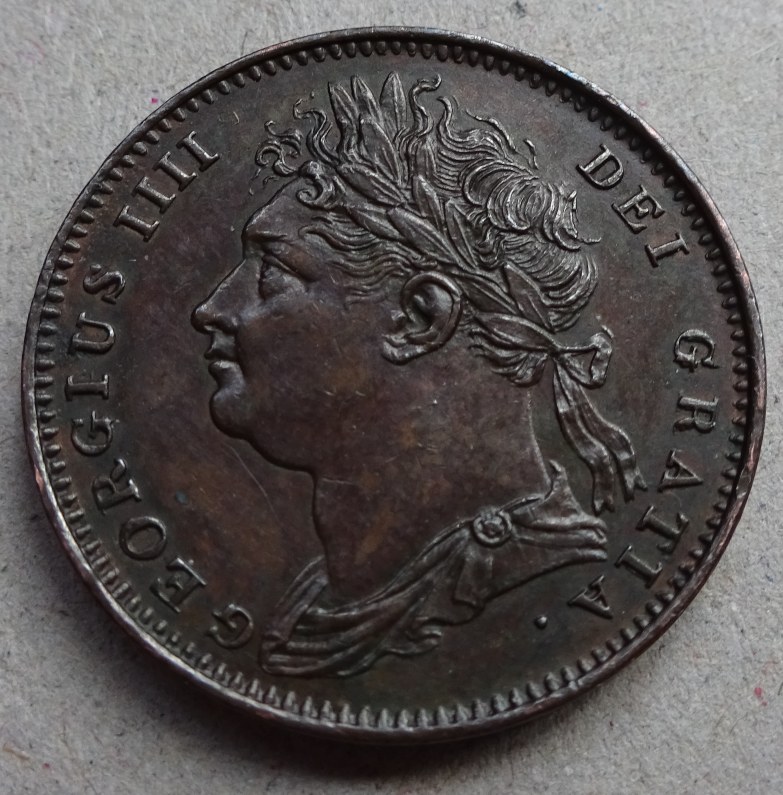
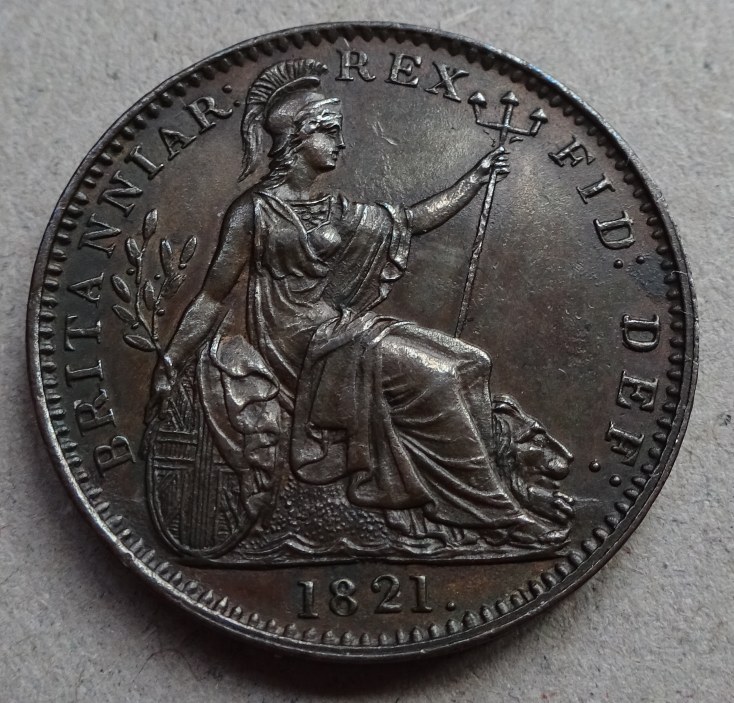
And now .. for something completely different! "What the heck is that?!" you might ask. Or (hopefully) "That's not to Tom's usual exacting standards!" And no, it's not. Frankly, it's a pretty banged up piece of ****. But something I've been after for quite some time now.
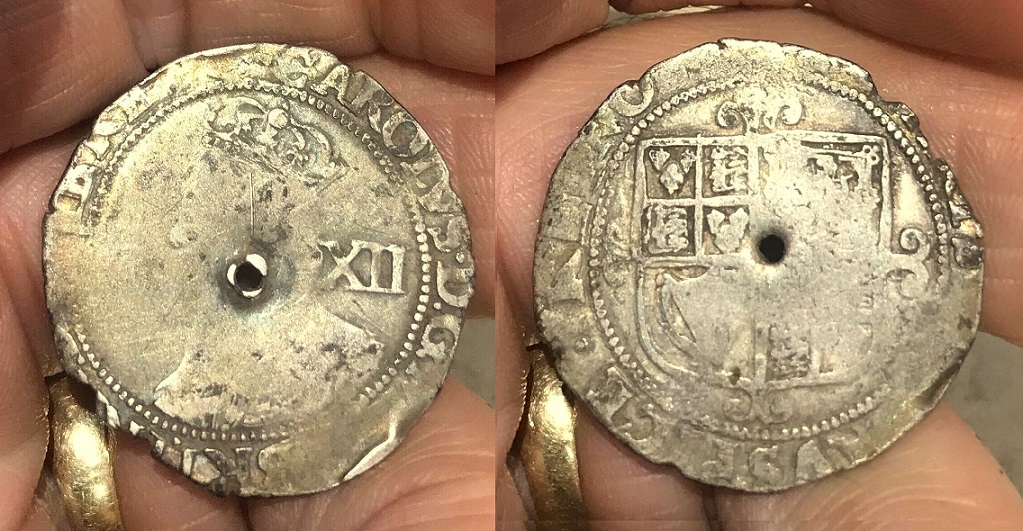
What is it? Well, it's a later (probably 1641-1643) hammered shilling of Charles I, struck at the Tower (of London) mint. And it has a hole in it.
"But why did you buy it?" I bought it .. for the hole! (And it's the most I've ever spent on one!) Because the hole shows that this coin survived right through to 1697 and beyond. How do I know?
Well, by the end of the 1600s Britain's currency was in a terrible state. Supplies of silver had dried up despite the state-sponsored piracy. What coin was circulating was worn out and in some cases unrecognisable. And a fair amount of it had been clipped (an illegal practice with severe consequences for those caught doing it, where the edges of coins were trimmed of silver).
Given the irregular shape of hammered coinage generally it was often hard to tell without weighing the piece if a coin
had been clipped. And so many took advantage of this. Unfortunately this meant that coin was often not accepted for trade abroad at face value, instead being smuggled out as bullion, a disastrous situation for commerce and for the general population who needed coins to spend.
So the Warden of
The Royal Mint, Isaac newton, came up with a scheme to call in the old coin and replace it with a clip proof, harder to copy coinage where the face value no longer reflected the value of the metal the coin was made from. New additional mints to London were set up in Bristol, Chester, Exeter, Norwich, and York to assist. Between 1696 and 1700 the value of silver coin struck was more than 50% higher than for all the preceding 35 years.
However this took time to bring into circulation. All of the old coin had to be called in and melted down. And so it was decided that generally full hammered coin would be permitted to circulate for a bit longer at face value, provided it was officially pierced in a recognisable manner.
The piercing appears to have been a two part process where a small indent was made from one side and then the coin turned over and the hole enlarged. This ensured that no silver was lost in the process and made a characteristic mark.
Eventually all old coin was meant to be melted down and certainly, little of it was of the quality or condition for people to have wanted to hold onto it. Consequently such pieces that have survived until today are quite scarce, most having been inadvertently lost until now. I've only seen five other 'Recoinage' shillings of Charles I come up for sale in perhaps 20 years. This is in no way a 'perfect' example (I have my eyes on one I'd like, but it's currently been 'looked after' by another collector!) But it will do for now.








 First Page
 Previous Page


 Posted 06/01/2022 2:51 pm