| Author |
 Replies: 148 / Views: 19,998 Replies: 148 / Views: 19,998 |
|
|
|
Moderator
  United States
34564 Posts |
Speaking of Saxony, here is Spitzgroschen dated 1477. It is smaller than the previous coin--20 mm and 1.4 g. The obv legend is E W A D G DVCS SX TV L HA HS and if you read the prior post then you will recognize that shield as being Saxon. The rev legend is GROSSVS NOVVS MARCH HIS ^^ and this surrounds a trefoil with the shield of Landsberger. Both legends begin with the "cresent and annulets" mintmark of Zwickau. The attribution is Levinson I-156, but I do note that this coin also showed up in Saurma as #4397. As with many early dated coins, the numerals are not in their current shape. In this case, the sevens look like upside down letter Vs. How difficult this must have been for world traders at this time--recall that the Arabic number *eight* has this same shape! 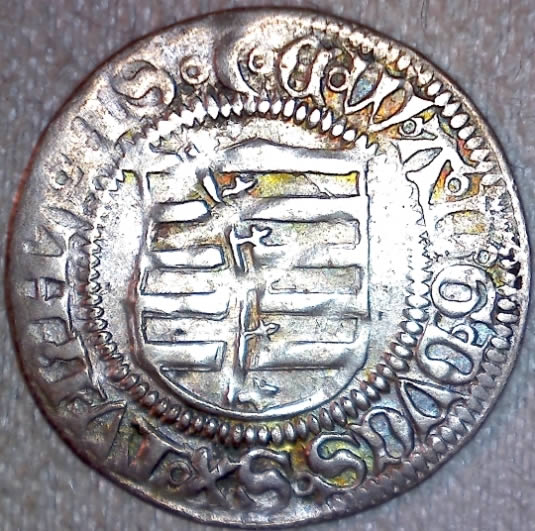 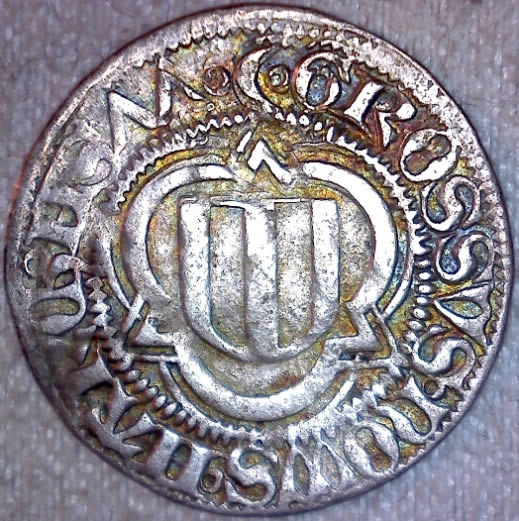 "If you climb a good tree, you get a push."
-----Ghanaian proverb
"The danger we all now face is distinguishing between what is authentic and what is performed."
-----King Adz
|
|
Pillar of the Community
Belgium
1194 Posts |
very interesting thread , but there are no many dated coins in this centuries , so , I think , most menbers look and enjoy , like me . albert
|
|
Pillar of the Community
United States
7067 Posts |
Quote:
...most menbers look and enjoy , like me And me! Great run of coins here, Dave. |
|
Pillar of the Community
Poland
3201 Posts |
Indeed. All I can contribute is that I've found out that the Goettingen koertlings went on at least until 1538 (still written as MCCCCCXXXVIII) and half-decent specimens from the 16th century aren't that expensive.
I'm not going to ask about the cost, instead I'll ask how many years it took to accumulate so many pre-1501 dated coins. Considering the fact that you probably can't just go and buy 20 different ones straight away like you can with other coins, and assuming you have specimens to show for all of the "categories" you listed, it must have taken quite some time!
Edited by DL20K
09/24/2016 12:56 pm
|
|
Moderator
United States
34564 Posts |
Quote:
how many years it took take to accumulate so many pre-1501 dated coins Good question @DL20K. Like many others here, I started collecting as a fairly young kid--encouraged by a numismatic relative (in this case my grandfather). I worked on US coins for quite a while, but have been almost fully devoted to non-US coins for more than a decade I guess. In looking more closely through these dated coins, I see two or three that I purchased in 2007 and at least one from 2008, with the others being more recently arriving in my hands. At the risk of fawning too much over Levinson's book, I would state that collecting these coins prior to its publication in 2007 was nearly impossible. The only relevant book on the subject was the book by Frey, seemingly covering less than half the dated coins. Without Levinson, you had to look in separate books covering the individual geographic regions. Some that I used were Krug for Saxony, Huszar for Hungary, Probst for Salzburg, Szego for Austria, HMZ for Switzerland, Biaggi for Italy, and Duplessy for France. Even buying some of these rarer books was a multi-year process! "If you climb a good tree, you get a push."
-----Ghanaian proverb
"The danger we all now face is distinguishing between what is authentic and what is performed."
-----King Adz
|
|
Moderator
United States
34564 Posts |
Ok folks. Here is the last early dated coin from Germany that I'm going to post in this thread. Starting tomorrow, we will move on to the Southern Netherlands. This is a 1/4 Groschen from the German City State of Aachen dated 1496. I've posted coins from this city previously, but never of this denomination. The coin is 17 mm in diameter with a mass of 0.6 g. It is attributed Levinson I-337a. The obv inscription is MONETA VRBIS AQVENSIS with the date (1&96) in the corners of a floriated cross. The rev inscription is AVE GRAC PLENA C TEC around a (barely visible) portrait of the Madonna and child. You can also see the shield of Aachen at the bottom. This particular coin is wicked rare in high grades and so you see that my example is pretty well worn. A variation of this coin has the error date of 1&69. 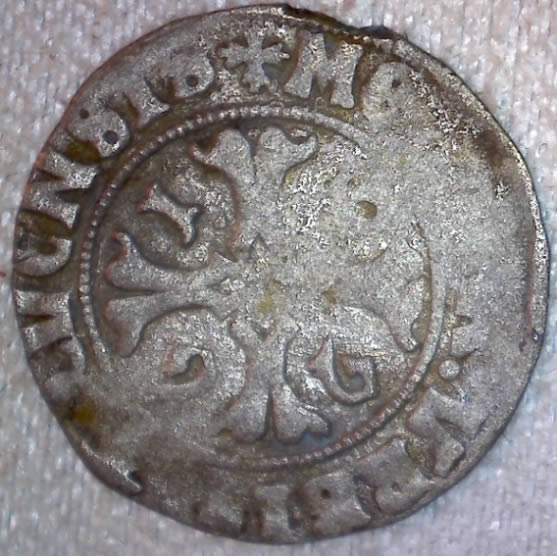 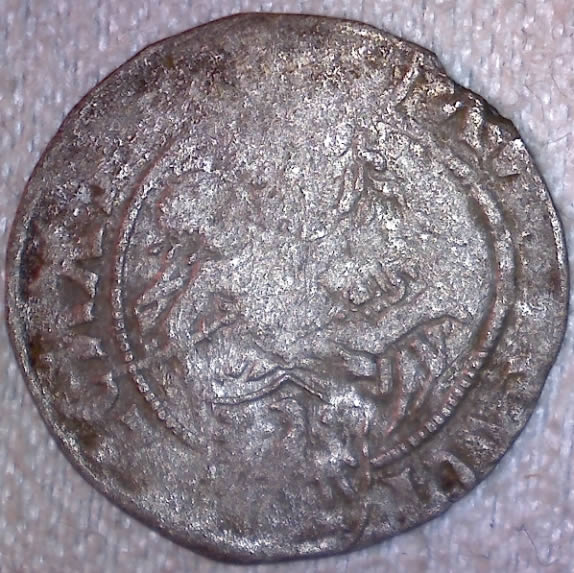 "If you climb a good tree, you get a push."
-----Ghanaian proverb
"The danger we all now face is distinguishing between what is authentic and what is performed."
-----King Adz
|
|
Moderator
United States
34564 Posts |
Ok on to the second geographic region of Levinson: the Southern Lowlands (Netherlands). Coins in this section are overwhelmingly from Brabant, Flanders, and Leige, although a few minor mints also exist like Brussels, Ghent, Namur, Schoonvorst-Sichem, and Tournai. My first coin that I'd like to talk about is from the Duchy of Brabant. It is a Double-Briquet dated 1476. It is 25 mm in diameter and 2.4 g in mass. The attribution is Levinson II-22. The obv inscription is KAROL DEI GRA DX BRA Z LI with two seated lions on either side of a briquet. The rev inscription is SALVV FAC PPLM TVV DNE A 1&^6 (which represents a minor variation from the inscription listed in Levinson) and surrounds a floriated cross with the shield of Burgundy. A couple interesting factoids for you: first, the denomination on these coins can be determined by the number of lions on the obv: 2, 1, or 1/2. How convenient is that? Also, the ruler of Brabant at this time (1467-77) was Charles The Rash. I believe that this moniker came from his decision-making difficulties as opposed to his complexion. 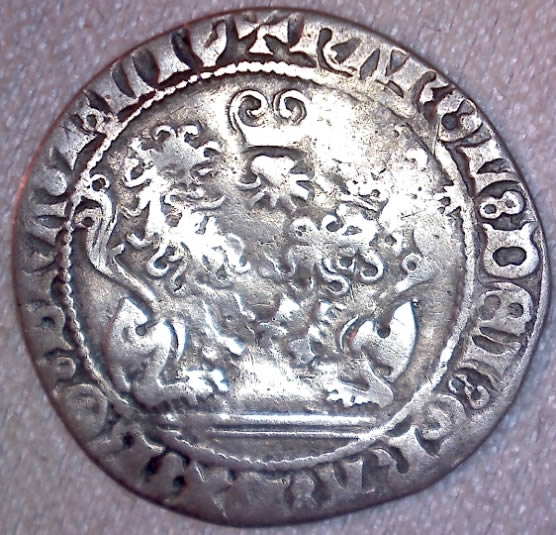 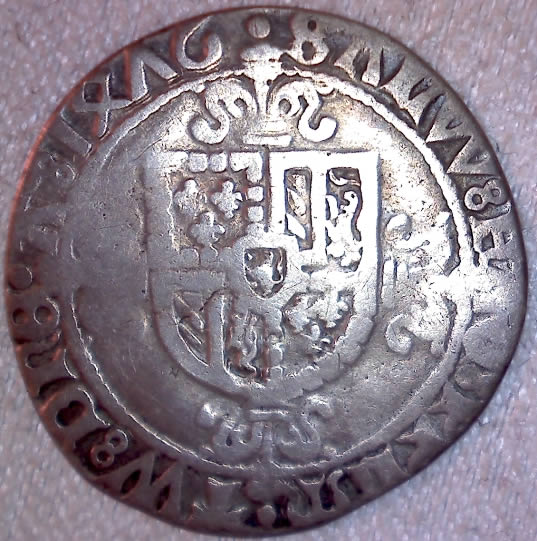 "If you climb a good tree, you get a push."
-----Ghanaian proverb
"The danger we all now face is distinguishing between what is authentic and what is performed."
-----King Adz
|
|
Pillar of the Community
United States
7067 Posts |
Love the symmetrical lions on this one. Quote:
...this moniker came from his decision-making difficulties Perhaps...but I bet the guy who first said, "It's good to be the king" was prone to certain kinds of rashes.  |
|
Moderator
United States
34564 Posts |
Quote:
certain kinds of rashes Not touching this comment.  Instead, I'd like to show a coin from his only child (Marie of Burgundy). Here is another Double Briquet, but this one is from the Dutch County of Flanders. It was minted in Bruges and is 28 mm in diameter and 2.9 g in mass. It was minted in 1478 and is attributed Levinson II-34. The obv inscription is MARIA DVCISSA BG COMIT F while the rev inscription is SALW FAC PPLM TVV DNE 1&^&. Except for these differences in the insciptions, it is very similar to the previous coin. According to Levinson, there is also an overdate of this coin type: 1478/1748. 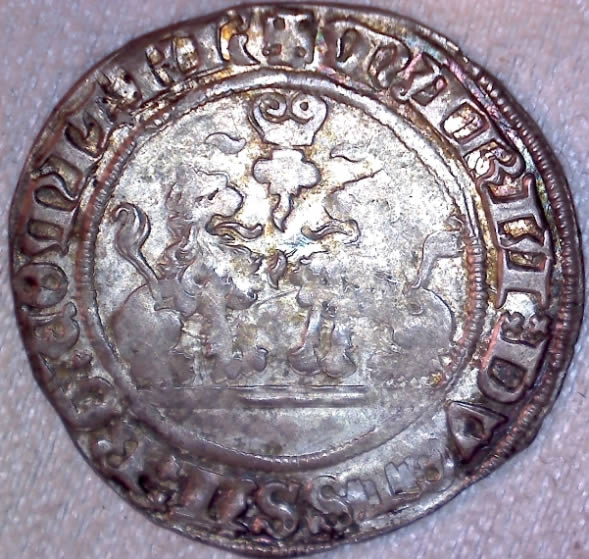 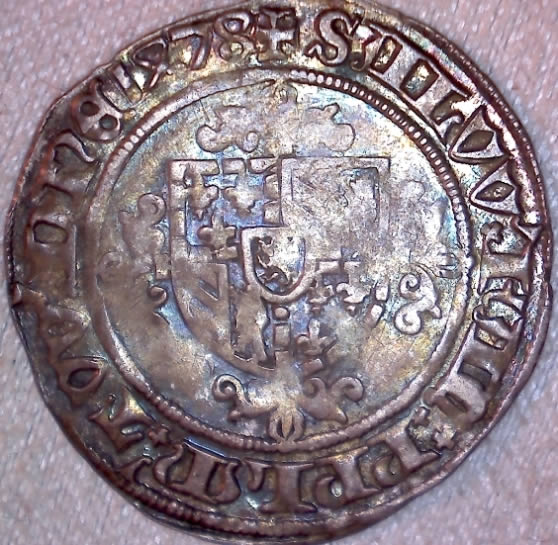 "If you climb a good tree, you get a push."
-----Ghanaian proverb
"The danger we all now face is distinguishing between what is authentic and what is performed."
-----King Adz
|
|
Pillar of the Community
United States
9395 Posts |
My only coin for this thread. Belgium - Brabant, Antwerp -- 1498 toison d'argent (double briquet) -- Levinson II-141:   That's supposed to be a golden fleece on the reverse. |
|
Pillar of the Community
United States
4963 Posts |
Pepactonius- it may be your only coin, but it's certainly a nice one!
Spence- I've noticed that most of the coins you have posted from the 1470s have a seven that appears to be rotated 90° counterclockwise, while your 1478 double briquet has a seven of a more modern form. Are these just two different styles that were used interchangeably?
Edited by Numisma
09/26/2016 08:22 am
|
|
Moderator
United States
34564 Posts |
@pepactonius, thanks for posting that double briquet!
@numisma, yes that is correct--the number seven was represented in two different ways in the same years. I would point out that this may have been at least somewhat regional as the German regions were still using the "old" form while these lower Netherlands regions had already converted to the modern form. As I mentioned above, this old form of the number seven was identical to the concurrent form of the Arabic number eight!
"If you climb a good tree, you get a push."
-----Ghanaian proverb
"The danger we all now face is distinguishing between what is authentic and what is performed."
-----King Adz
|
|
Moderator
United States
34564 Posts |
Here is my third, and last, early dated coin from this region. It is a Gros from the Belgian County of Flanders. It was minted in 1479 in Bruges and is attributed as Levinson II-41. It is 23 mm in diameter and 1.6 g in mass and, as you can see, the centers are quite weak. The obv legend is MARIA DVCISSA BG CO F while the rev legend is BENEDIC AIA MEA DNO 1&79. Interestingly, the name "Flanders" was abbreviated in multiple ways on the coins of this region: F, FL, FLA, FLAN, FLAD, and FLAND are listed in Levinson. If the center devices had struck up a little better, you would see a letter M in a quatrefoil on the obv and a floriated cross on the rev. This coin was also struck under Marie of Burgundy. 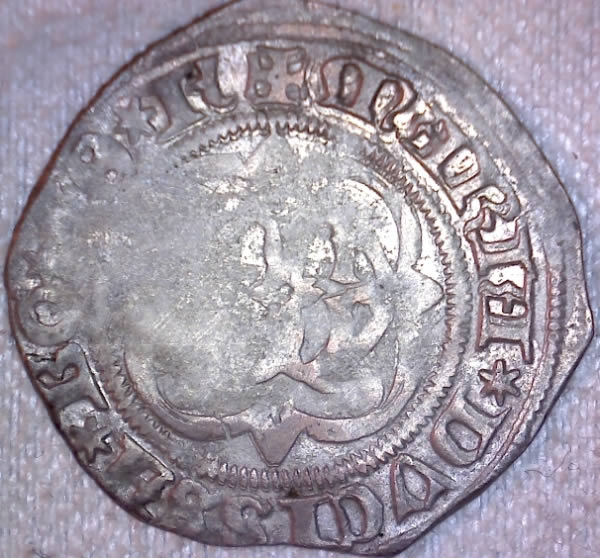 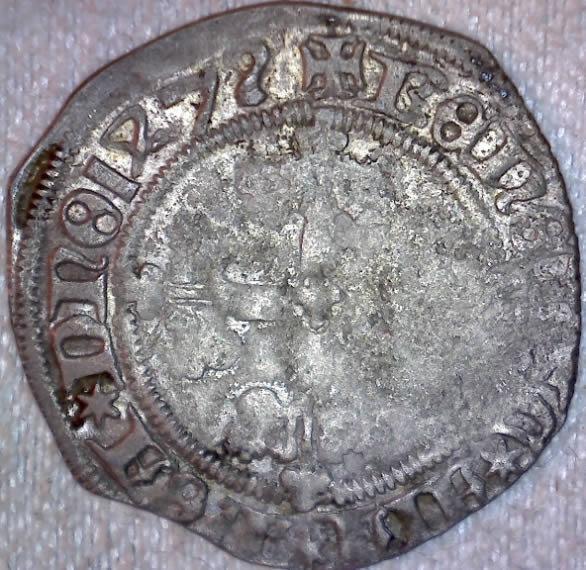 "If you climb a good tree, you get a push."
-----Ghanaian proverb
"The danger we all now face is distinguishing between what is authentic and what is performed."
-----King Adz
|
|
Pillar of the Community
Belgium
2895 Posts |
County of Namur Mint: Namur Philips the Handsome 1482-1506 doubele groot (1499-1503) date 1499 Literature: Van Gelder/Hoc 119-7 +PHS:DEI:GRA:ARCHID:AUS:DVX:BVR:COM:NA: OMNIS:SPIRITUS:LAUDET:DOMINUM:date:NA: 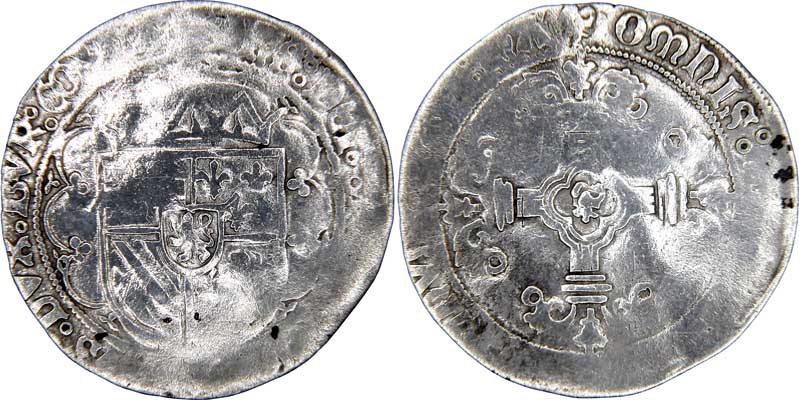 |
|
Pillar of the Community
Belgium
2895 Posts |
Flanders, Brabant, Brussels mint Philips the Handsome 1482-1506 doubele groot 1492 Literature: Van Gelder/Hoc 98-1 PHS+ARCHIDVX+AVSTRIE+BVRGUNDIE+BR BENEDIC+HEREDITATI+TVE+ANNO+DNI+1492 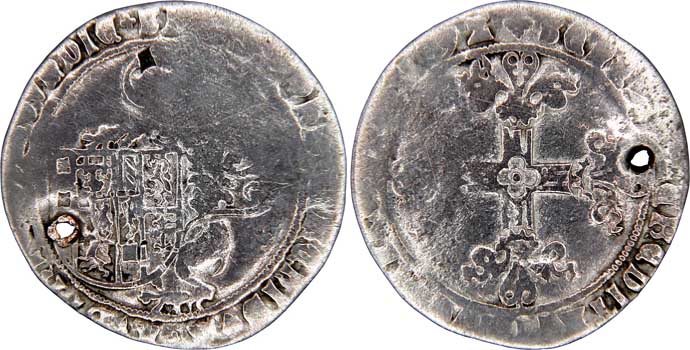 |
| |
Replies: 148 / Views: 19,998 |






 First Page
 Previous Page


 Posted 09/24/2016 10:53 am





