| Author |
 Replies: 199 / Views: 36,645 Replies: 199 / Views: 36,645 |
|
|
|
Bedrock of the Community
 United States
20057 Posts |
Quote:
how about peach juice? I have read good things on that one. No, I didn't try that one! LOL That's a simple acid reaction, peaches contain citric acid, which is very harsh. From my work thus far with acids (organic and mineral), they all do damage to the surface and I don't like them. They are also corrosive or irritating to the skin, my fluid is not.  |
|
Bedrock of the Community
United States
20057 Posts |
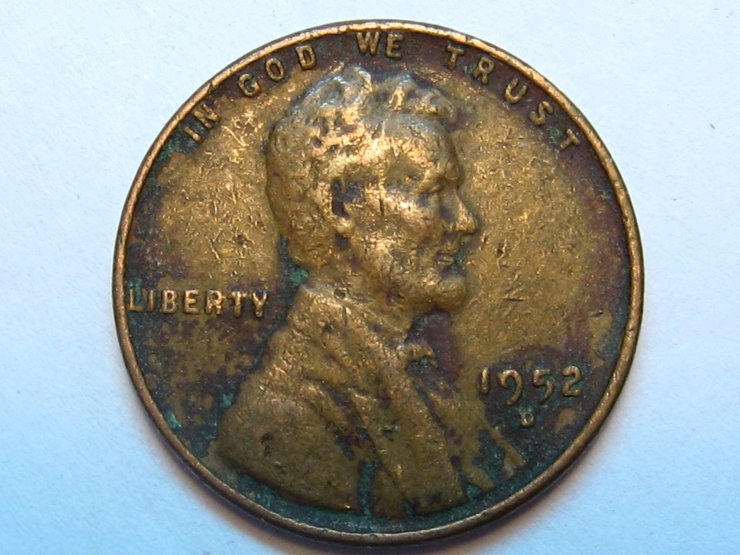
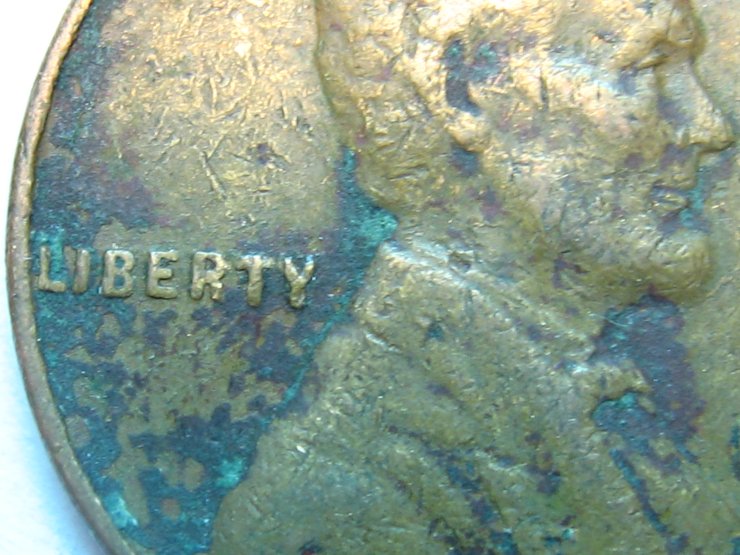
Results for #8.6 2 days. Initial  After 2 days 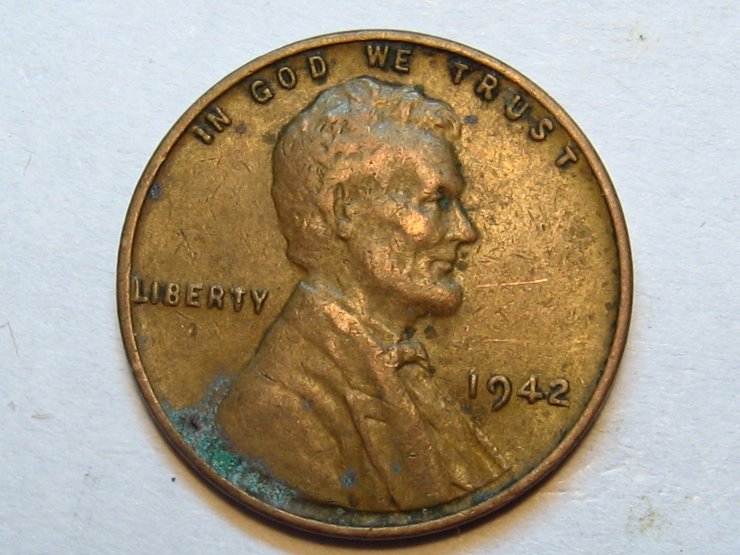 Initial Close 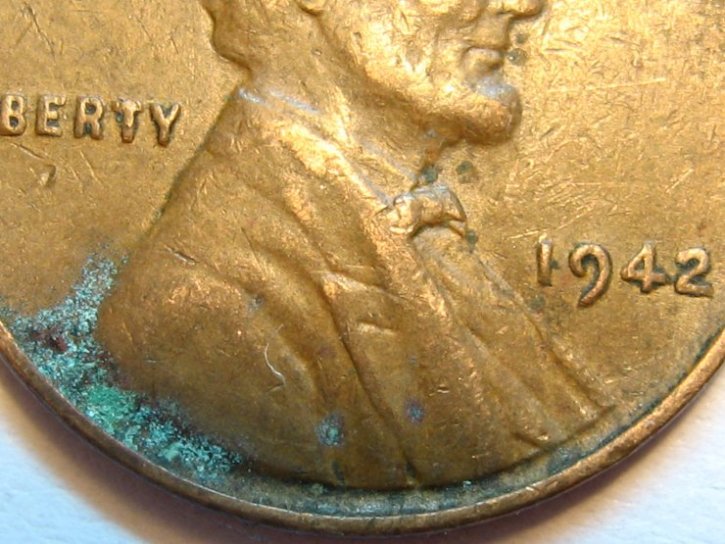 After 2 days  Summary SummaryI'm very disappointed. The fluid is barely reacting with the verdigris, but it's doing a good job of lightening the patina. If there's no improvment tomorrow, this one is going down the drain. Of course, this is a very tough specimen too. I think I backed-off the concentration too much trying to preserve the patina, and that didn't even work. I have a new copper protection package I'm going to try soon. I'm hoping it will adhere to the oxidized copper surface and not the verdigris. In theory, it will protect the patina so my main ingredient can attack the verdigris. If it's sucessful, I can possibly increase the concentration of the "verdigris eater" so the reaction can proceed faster. Right now, I'm fighting with the patina! It seems to me some of the patina might be due to extremely light verdigris, let's call it "attactive verdigris". I might have to do some surface scans with our electron microscope + EDXRF (Energy Dispersive X-Ray Fluorescence). It let's me not only look at the surface, but identify what's on it. The wheels in my head are turning.... Lincoln Cent Lover!VERDI-CARE™ INVENTOR https://verdi.care/
Edited by BadThad
06/02/2008 4:16 pm
|
|
Bedrock of the Community
United States
12437 Posts |
If you have access to an XRF, use it man  It will certainly give you a better idea of the exact composition of what you are working on. That would give you better guidance for altering the formula. |
|
Pillar of the Community
United States
5318 Posts |
This has been an interesting process to watch!  I see the patina lightening...interesting challenge, good luck!  |
|
Pillar of the Community
United States
1713 Posts |
Quote:
Yes I have, sadly, I only had one test specimen. I've been hoarding all the copper cents I come across and yesterday when I was looking through them, I noticed a few I had that were completely green. If you'd like them, drop me a PM. I'd be more than willing to donate them in the name of science. |
|
New Member
Canada
13 Posts |
Very Very interesting, keep up the good work.
|
|
Bedrock of the Community
United States
20057 Posts |
Results for #9.7 24 hours" Initial 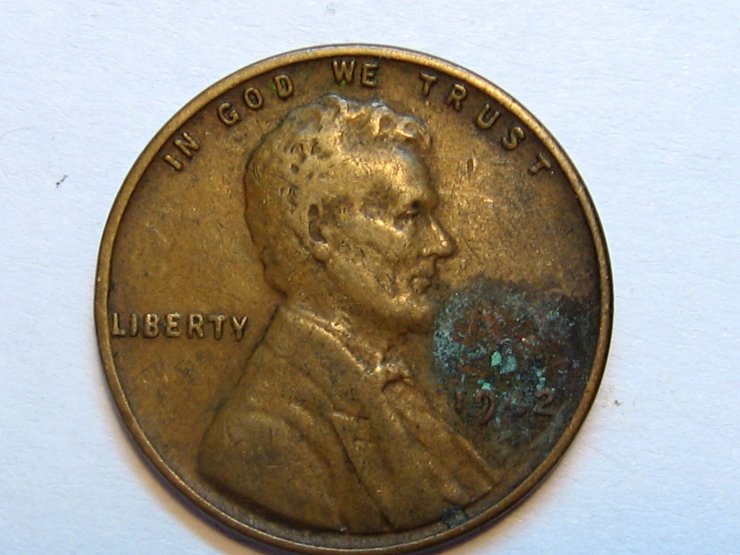 After 24 hours 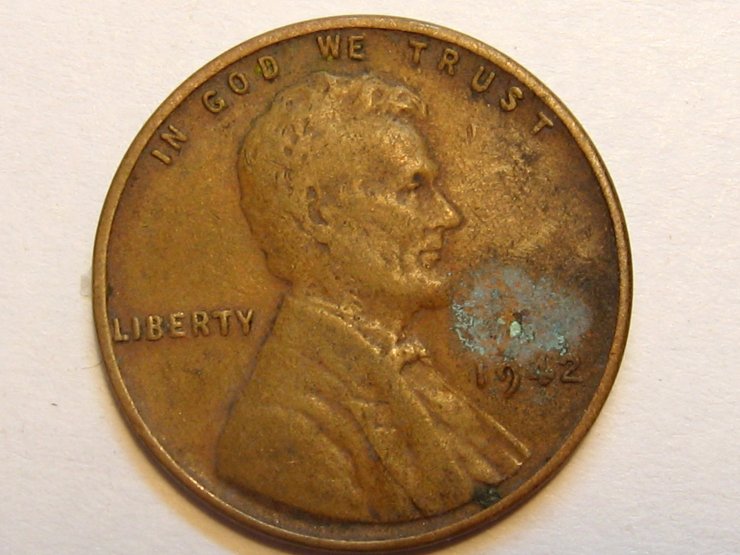 CLOSE UP Initial 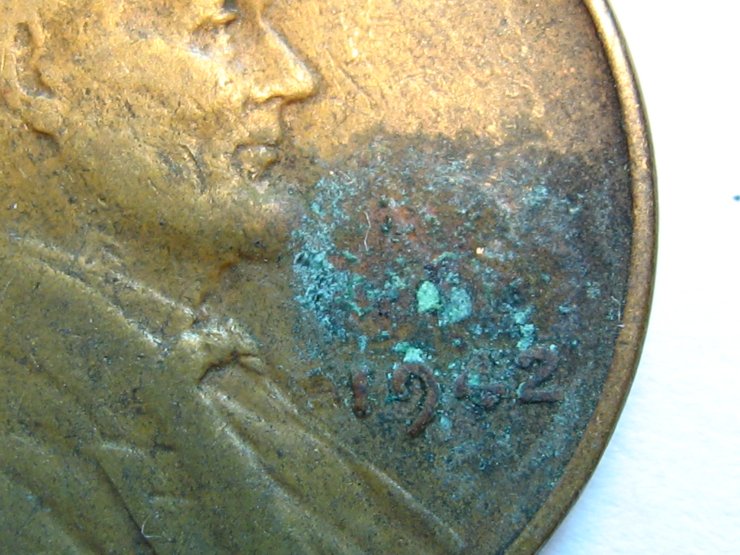 After 24 hours 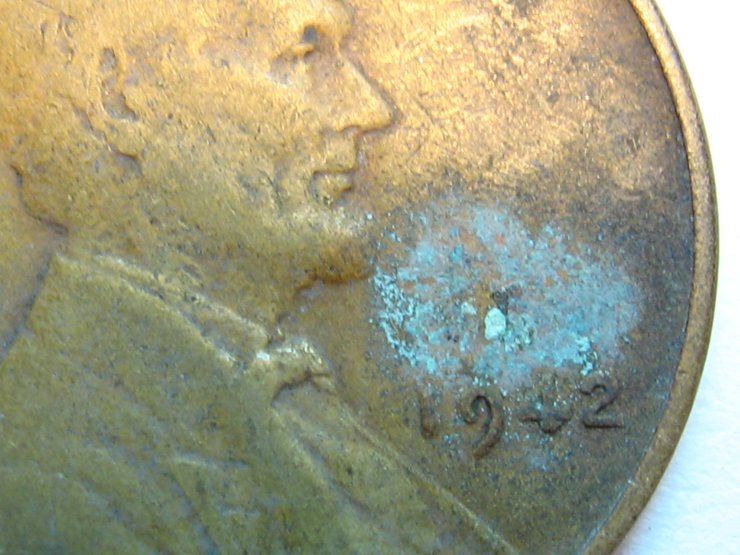 Summary SummaryI think I have the strength of the active ingredient about right. It's working rapidly. Sadly, the patina is definately lighter. Another encouraging thing is the carbon spot just below the chest, it's virtually untouched. That demonstates the mildness of my approach. It's mostly only going after what I want it to, the verdigris. I have a new forumla with a stronger copper protection package I'm going to put together soon. With luck, it will keep the patina darker thoughout the test. I could be headed for a two stage process (which I'm trying to avoid) where I first coat the coin and let it dry for 24 hours before hitting it with my active. Hummm.... I'm also starting to wonder if I'm just removing some water soluble dirt, although part of the chemical chain of my main ingredient has a bit of non-polar character...it could be perfoming some undesired cleaning. I may try shortening the chain length to remove some non-polar characteristics. Edited by BadThad
05/22/2008 6:15 pm
|
|
Bedrock of the Community
United States
20057 Posts |
arthrene - YGPM THANKS! Lincoln Cent Lover!VERDI-CARE™ INVENTOR https://verdi.care/
|
|
Valued Member
United States
226 Posts |
This is very fascinating watching your progress ! I was wondering if you could accelerate the reaction by submerging the coin in some type of electrolyte and then apply a small electrical potential acrossed it, with the coin being the anode  . we use this process at high currents to pre-clean parts prior to electroplating, and then change polarity to deposit metal onto the cathode. Keep up the good work I will look for some more test coins for you. |
|
Pillar of the Community
United States
2177 Posts |
|
|
Bedrock of the Community
United States
20057 Posts |
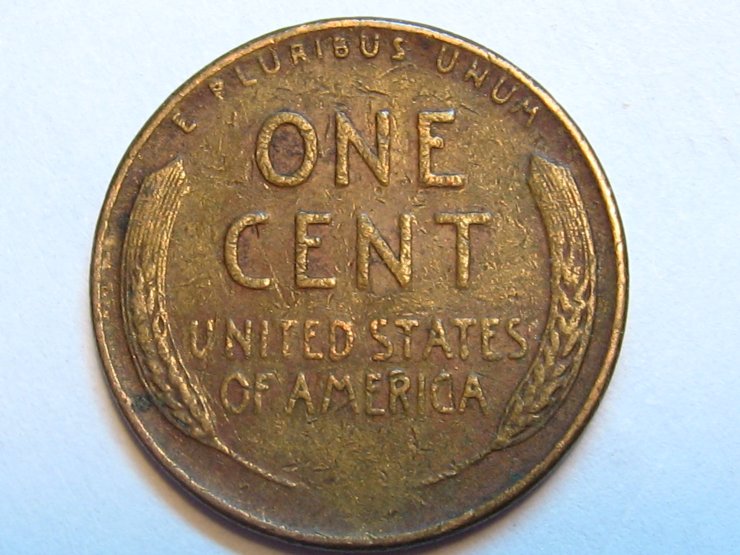
I've been out of town the last few days, so the 1942 sat in #9.7 solution for 5 days now: Initial After 5 days 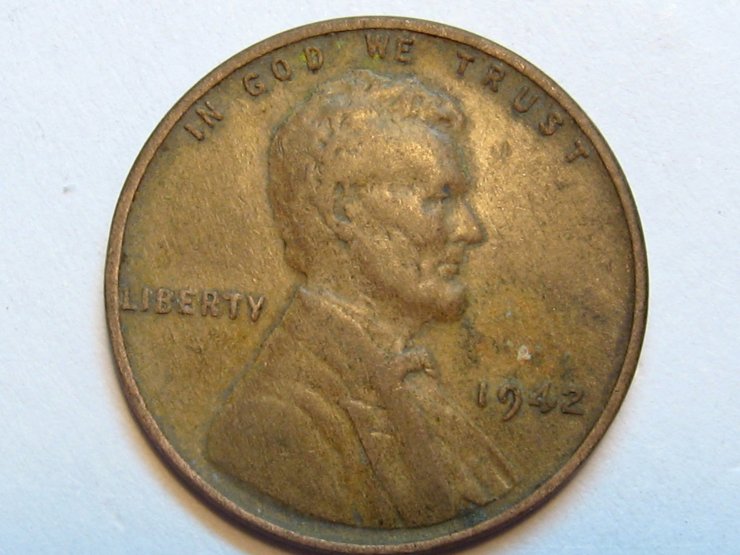 Initial Close Close after 5 days 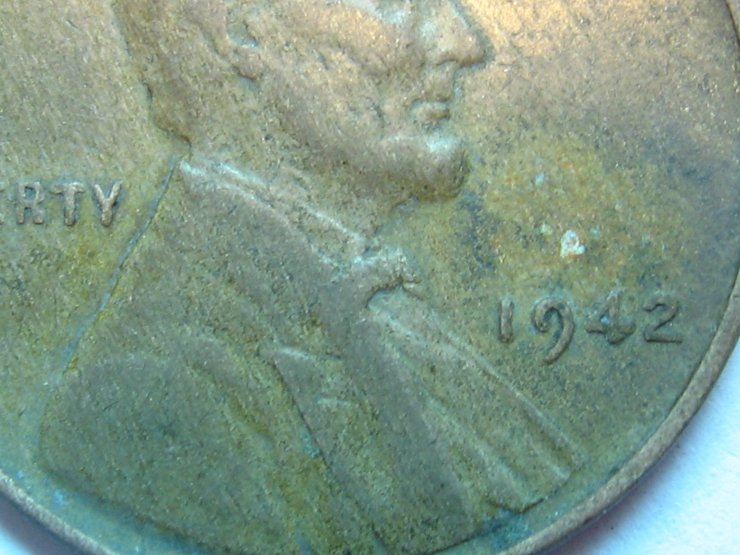 Summary SummaryDefinately dulling and lightening of the patina. I expected this to happen. When I poured this solution off into a glass culture plate, the solution had a a blue color characteristic of a copper solution. I might try reoxidizing (retoning) this coin for a few weeks to see it the natural patina returns. I started a test of a new solution today. The formula is 9.6-166. It contains an entirely new copper protection package. The verdigris on the test specimen is lighter than the others I've tested. I hoping to conclude this test in a day or two. Pictures will be posted after 24 hours. EDIT: Pictures of the reverse: Initial 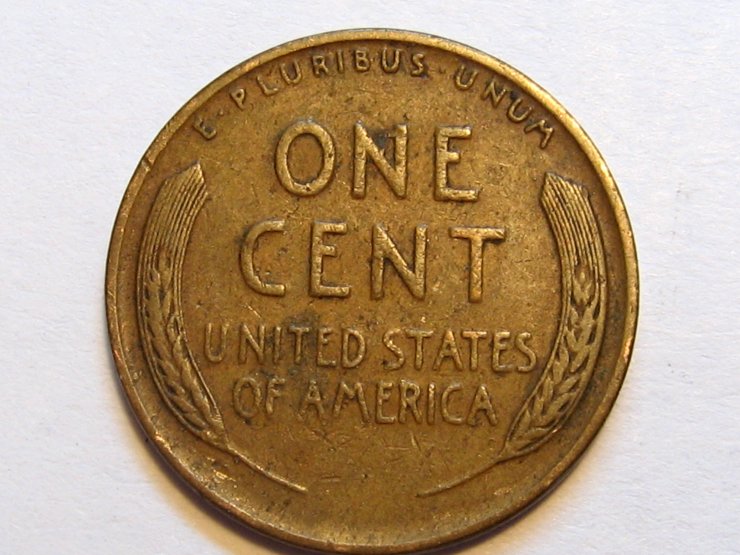 After 5 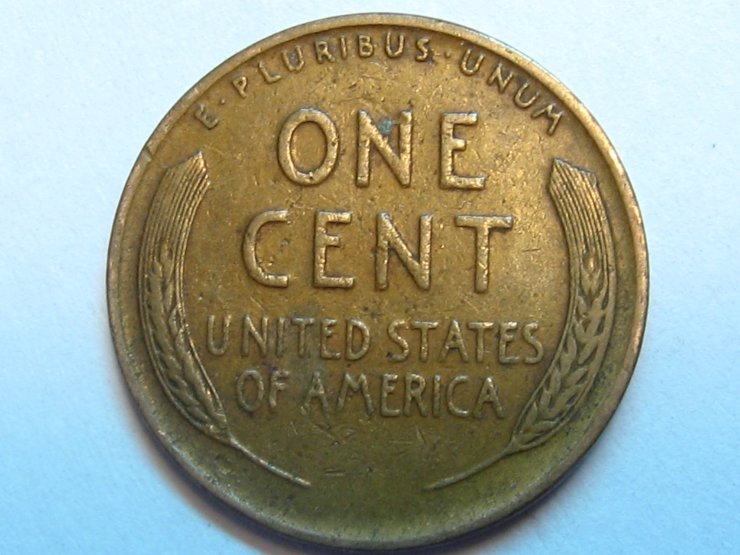 Edited by BadThad
05/26/2008 7:53 pm
|
|
Bedrock of the Community
United States
20057 Posts |
Lincoln Cent Lover!VERDI-CARE™ INVENTOR https://verdi.care/
Edited by BadThad
05/26/2008 8:00 pm
|
|
Bedrock of the Community
United States
20057 Posts |
I've been tossing a couple more ideas around in my head.... The first involves heating the coin to 200-300°C under nitrogen. The melting point of CuCO3 is about 200°C which is well below copper's of 1084°C. Theoretically, heating the coin to 200-300°C should completely vaporize the verdigris. However, there's a risk of changing the coins appearance because everything else on the surface would also vaporize. Nitrogen would also be required to ensure an inert environment. Have any of you tried this? Maybe not under laboratory conditions, but with an oven even? It'd be about 400-500°F, within the range of most regular ovens. If I can't get the patina issue minimized: My second idea is to use a clean base mineral oil with an added organic ingredient. It would be similar to the EVOO approach, but under tightly controlled conditions. EVOO is full of various organic chemicals and, thus, unpredictible. I would essentially make an artifical EVOO. |
|
Pillar of the Community
United States
936 Posts |
Thad, I have had good luck with witch hazel, I do not know what is in it, I just know it is easy on the coin. It does lighten the patina somewhat though, I have to put the coin in the window sill for a couple of days to bring it back to life. Have you seen the posted pics of an bi-metal coin that has soaked for a year in mineral oil? Check it out here- http://www.coppercoins.com/forum/vi...ht=olive+oil |
|
Bedrock of the Community
United States
20057 Posts |
That coin on coppercoins came out pretty good.....but it took a year. Witch hazel is a plant extract or distillate, from Wiki: Quote:
Witch hazel is mainly used externally on sores, bruises and swelling. The main constituents of the extract include tannin, gallic acid, catechins, proanthocyanins, flavonoids (kaempferol, quercetin), essential oil (carvacrol, eugenol, hexenol), choline, saponins, and bitters. Distilled witch hazel sold in drug stores and pharmacies typically contains no tannin.
I suspect the gallic acid is responsible for attack on the verdigris. The problem with such plant extracts is they can vary from batch to batch. I might give this a look just for fun. |
| |
Replies: 199 / Views: 36,645 |








 First Page
 Previous Page


 Posted 05/21/2008 7:41 pm