First Page
 Previous Page




 Posted 06/09/2016 1:33 pm


I have been really bad about not posting recently, but I still have been busy acquiring. Of all my recent pickups, this one is the one that has me the most intrigued, at the moment.
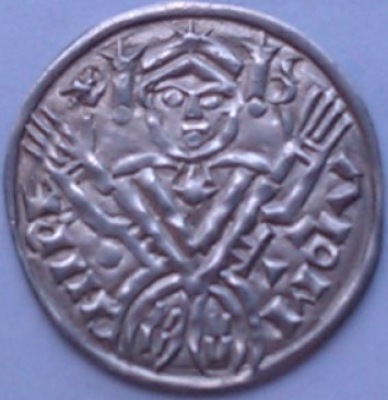
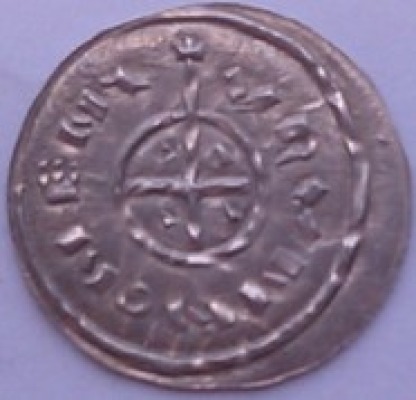
The 1891-O Liberty Seated dimes are notorious for die breakage, and I saw something that I could only most closely attribute to being a F-115a, which is a nice R6. The condition of this one had me salivating because there are not a lot of known high-grade examples of this variety. The pictures are from the seller, as I have fallen horribly behind on taking my own, of late.

What has me excited about this, is that I think it may actually be a transitional variety that has not been documented, yet. It is definitely a N Reverse, and looks to be early for a N.2 reverse. It has the die cracks that would eventually become the more pronounced Cuds, which are not present on F-115. It is the obverse, though, that has me hopeful. While the reverse appears to be more closely relatable to a F-115a, the obverse appears to be more closely related to the F-115.
The F-115a does not have the die scratch/defect across the chest, while mine does. Plus, mine appears to be shattered on the obverse, which is not attributable to either. The die scratch on the chest is gone in F-115a, but it is there in the F-115. However, you can definitely see the progression of excessive cracking around the entire rim and motto on the front, plus the Cud under the 8, that is not present on the F-115. To me, that would signify that somewhere between F-115 and F-115a, the obverse die started to quickly deteriorate and was switched out before F-115a, while the reverse was already to show the cracking that would become massive Cuds later on.
The diagonal die crack through the mintmark on the reverse is a hallmark of Reverse N, and made that easily identifiable. No clue what is going on with the obverse, though, other than the above theory. I've sent in pictures and a description to Gerry Fortin, to see if this truly is a new discovery, or not.
Either way, though, it is a very nice addition to the set. I have a "soon-to-be" acquisition that I am not supposed to know about, too. Will definitely get pictures of it when I get it for my birthday from my wife, but I had asked her to get me a BU 1845 SLD that is a F-107a. After I saw the dealer didn't have it in inventory any more, I sent him an email asking if he was going to relist it, because I wanted to pull the trigger on it, and he said that it was already sent out to me (assuming my wife).
The 1891-O Liberty Seated dimes are notorious for die breakage, and I saw something that I could only most closely attribute to being a F-115a, which is a nice R6. The condition of this one had me salivating because there are not a lot of known high-grade examples of this variety. The pictures are from the seller, as I have fallen horribly behind on taking my own, of late.
What has me excited about this, is that I think it may actually be a transitional variety that has not been documented, yet. It is definitely a N Reverse, and looks to be early for a N.2 reverse. It has the die cracks that would eventually become the more pronounced Cuds, which are not present on F-115. It is the obverse, though, that has me hopeful. While the reverse appears to be more closely relatable to a F-115a, the obverse appears to be more closely related to the F-115.
The F-115a does not have the die scratch/defect across the chest, while mine does. Plus, mine appears to be shattered on the obverse, which is not attributable to either. The die scratch on the chest is gone in F-115a, but it is there in the F-115. However, you can definitely see the progression of excessive cracking around the entire rim and motto on the front, plus the Cud under the 8, that is not present on the F-115. To me, that would signify that somewhere between F-115 and F-115a, the obverse die started to quickly deteriorate and was switched out before F-115a, while the reverse was already to show the cracking that would become massive Cuds later on.
The diagonal die crack through the mintmark on the reverse is a hallmark of Reverse N, and made that easily identifiable. No clue what is going on with the obverse, though, other than the above theory. I've sent in pictures and a description to Gerry Fortin, to see if this truly is a new discovery, or not.
Either way, though, it is a very nice addition to the set. I have a "soon-to-be" acquisition that I am not supposed to know about, too. Will definitely get pictures of it when I get it for my birthday from my wife, but I had asked her to get me a BU 1845 SLD that is a F-107a. After I saw the dealer didn't have it in inventory any more, I sent him an email asking if he was going to relist it, because I wanted to pull the trigger on it, and he said that it was already sent out to me (assuming my wife).