First Page
 Previous Page




 Posted 10/13/2018 11:46 pm


A coin with an interesting story.
Poland - 1664-AT 30 Groszy (Tymf / Gulden)
Bydgoszcz (Bromberg) mint. 6.5 grams, 30-31mm.
John II Casimir (Vasa). KM #120.
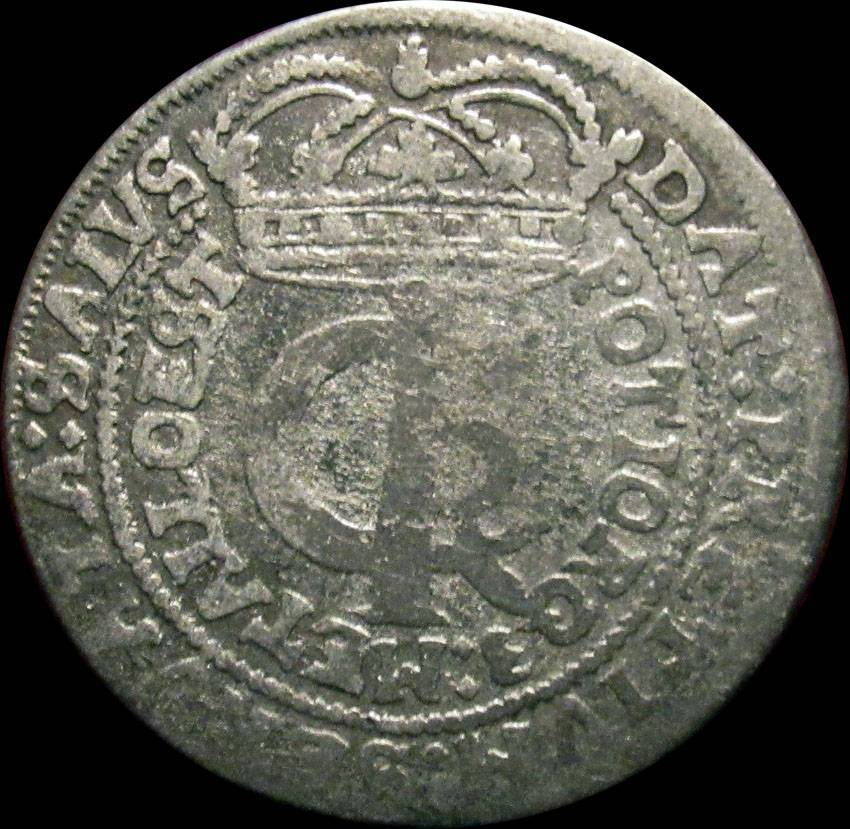
Obv: Crowned monogram ICR. Two line inscription in Latin:
DAT(VM) PRETIVM SERVATA SALVS POTIORQ(VE) METALLO EST
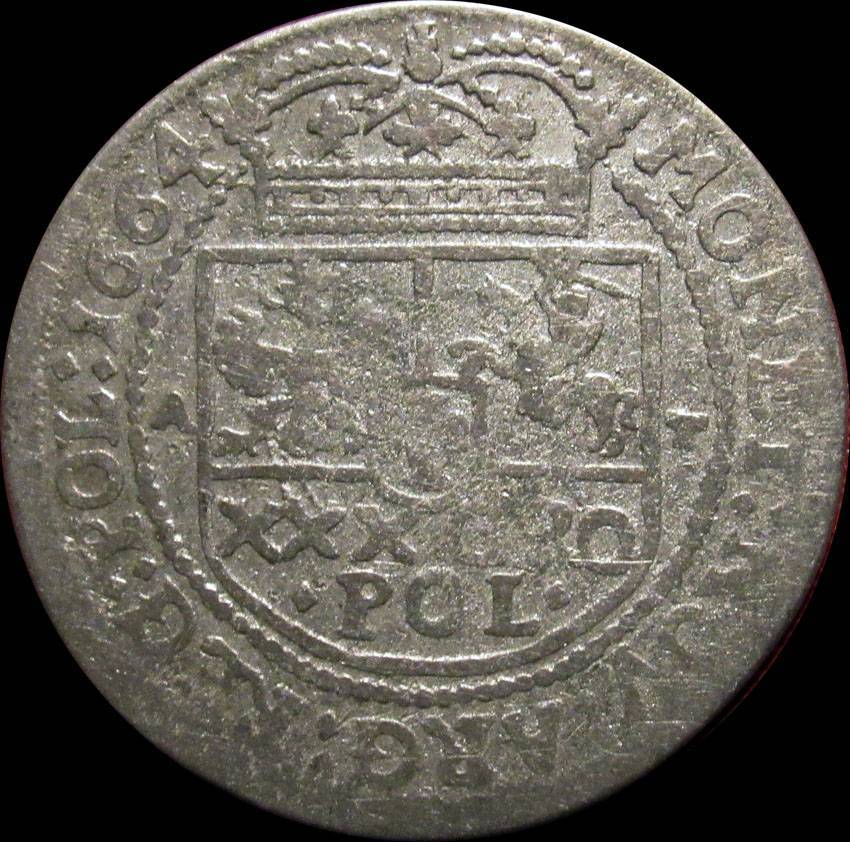
Rev: Crowned arms, the mintmaster's initials AT on either side, beneath which, the text: XXX GRO POL. Legend and date surrounding the devices: MONET NOV ARG REG POLO 1664.
Nominally valued at 30 groszy, the silver was sufficiently debased as to make the actual value closer to 10 groszy. John II Casimir is widely known as the King whose disastrous rule led Poland to economic and diplomatic ruin; the House of Vasa's reign ended with his death.
These coins were minted at the end of his reign, at the mint run by Andrzej Tymf (whence the name), with little care towards die engraving, production quality, or anything at all other than making great haste in their striking. Blundered legends and weak/off-center strikes are common. Tymf was later run out of the country for his fraud and misconduct as mintmaster.
The Swedish conquest of large areas of Poland and the resulting looting and plunder had nearly, if not completely, bankrupted the Polish royal treasury, and along with the "boratynka" solidi (small copper issues, nowadays still nearly ubiquitous detector and hoard finds) the debasement of the coinage was considered the only means of saving the country from economic ruin.
Worse, counterfeiters -- who still have to make a living, right? -- quickly debased even further the already-debased coins, producing "close enough" copies in billon alloys all the way down to a Roman Imperial-style silvered copper core. (Not that it mattered; the Swedish effort pretty much sent the economy back to the Dark Ages -- with most of the means of production destroyed, sacked, looted, and burned, you couldn't buy much of anything even assuming you could find a merchant.)
The obverse Latin legend explains the King's motivation, a sort of plea to his Polish subjects to accept the newly-debased coins; a loose translation is something like "The safety of the country is worth more than the metal."
Konopczynski notes that the obverse monogram (ICR) was sarcastically and quite aptly punned in Latin as Initium Calamitatis Regni (the beginning of the kingdom's misfortune.)
Poland - 1664-AT 30 Groszy (Tymf / Gulden)
Bydgoszcz (Bromberg) mint. 6.5 grams, 30-31mm.
John II Casimir (Vasa). KM #120.
Obv: Crowned monogram ICR. Two line inscription in Latin:
DAT(VM) PRETIVM SERVATA SALVS POTIORQ(VE) METALLO EST
Rev: Crowned arms, the mintmaster's initials AT on either side, beneath which, the text: XXX GRO POL. Legend and date surrounding the devices: MONET NOV ARG REG POLO 1664.
Nominally valued at 30 groszy, the silver was sufficiently debased as to make the actual value closer to 10 groszy. John II Casimir is widely known as the King whose disastrous rule led Poland to economic and diplomatic ruin; the House of Vasa's reign ended with his death.
These coins were minted at the end of his reign, at the mint run by Andrzej Tymf (whence the name), with little care towards die engraving, production quality, or anything at all other than making great haste in their striking. Blundered legends and weak/off-center strikes are common. Tymf was later run out of the country for his fraud and misconduct as mintmaster.
The Swedish conquest of large areas of Poland and the resulting looting and plunder had nearly, if not completely, bankrupted the Polish royal treasury, and along with the "boratynka" solidi (small copper issues, nowadays still nearly ubiquitous detector and hoard finds) the debasement of the coinage was considered the only means of saving the country from economic ruin.
Worse, counterfeiters -- who still have to make a living, right? -- quickly debased even further the already-debased coins, producing "close enough" copies in billon alloys all the way down to a Roman Imperial-style silvered copper core. (Not that it mattered; the Swedish effort pretty much sent the economy back to the Dark Ages -- with most of the means of production destroyed, sacked, looted, and burned, you couldn't buy much of anything even assuming you could find a merchant.)
The obverse Latin legend explains the King's motivation, a sort of plea to his Polish subjects to accept the newly-debased coins; a loose translation is something like "The safety of the country is worth more than the metal."
Konopczynski notes that the obverse monogram (ICR) was sarcastically and quite aptly punned in Latin as Initium Calamitatis Regni (the beginning of the kingdom's misfortune.)
Member ANA - EAC - TNA - SSDC - CCT #890
"Most of the things worth doing in the world had been declared impossible before they were done." -- Louis D. Brandeis
"Most of the things worth doing in the world had been declared impossible before they were done." -- Louis D. Brandeis


 Great read.