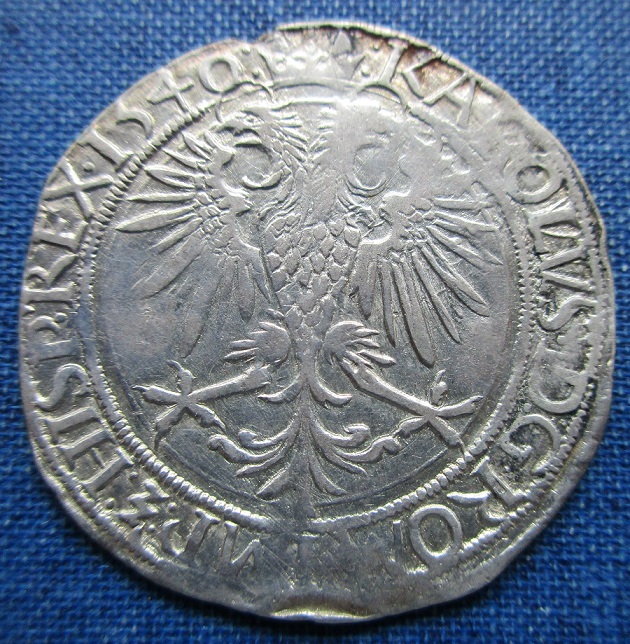
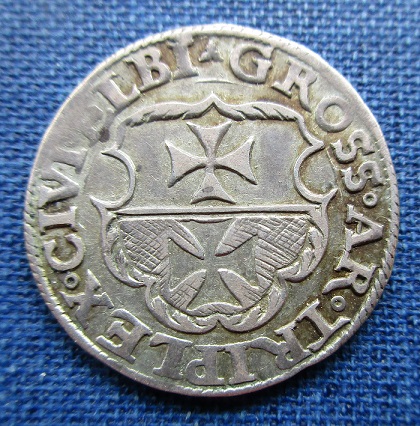
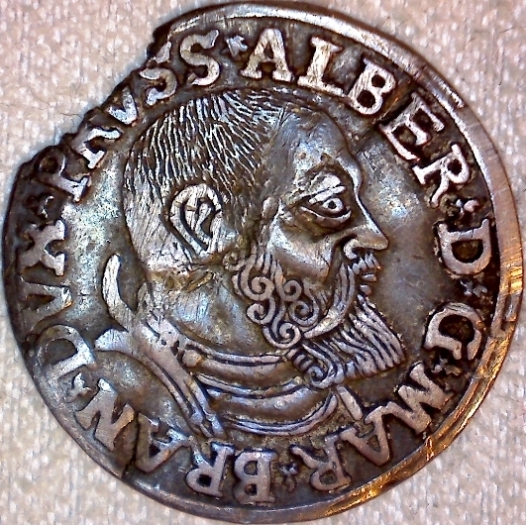
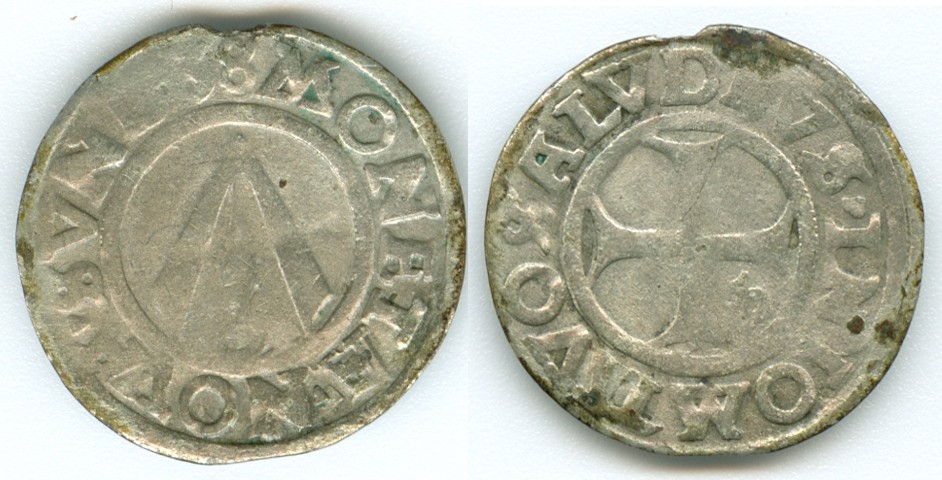
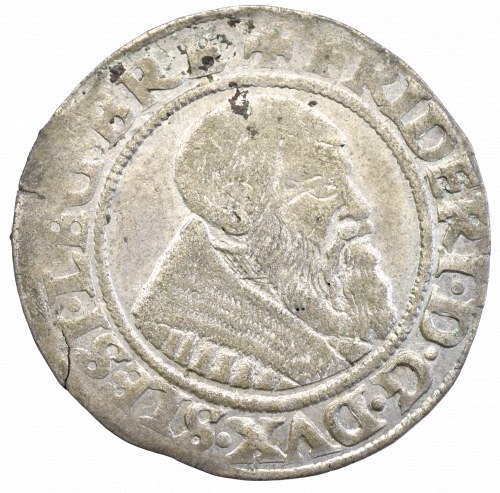
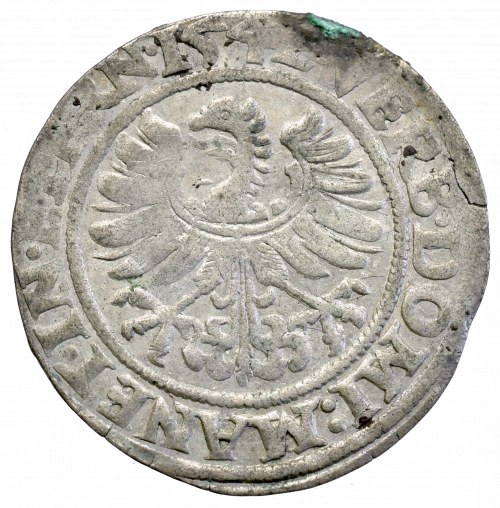
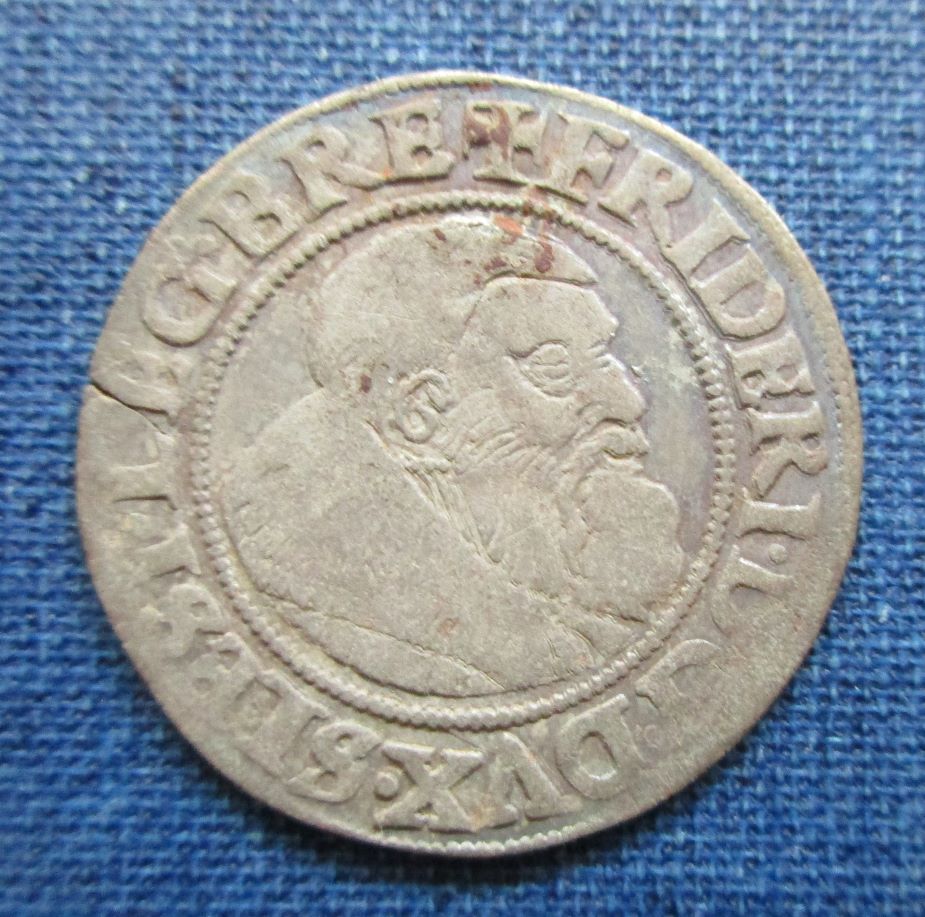
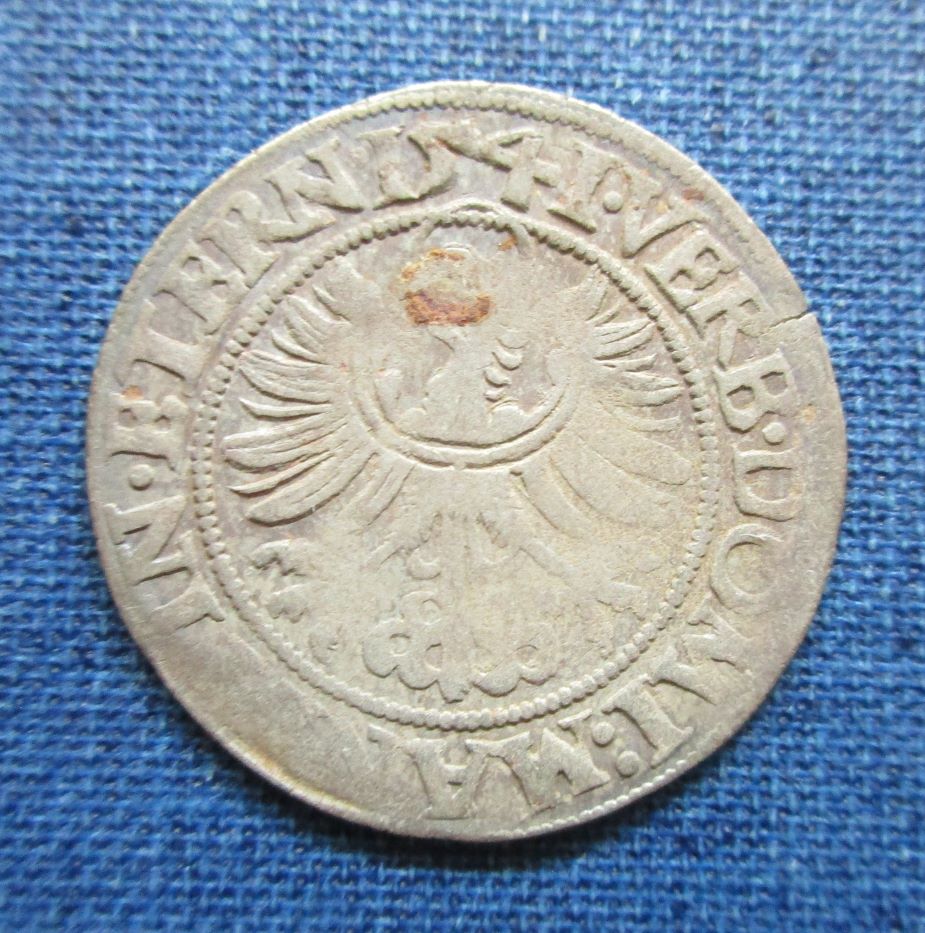
Thaler, Brandenburg-Franconia, 1542
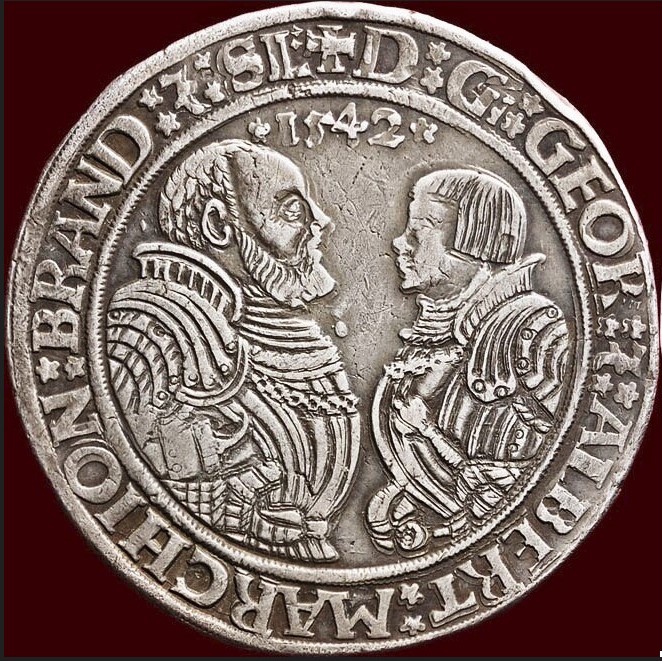
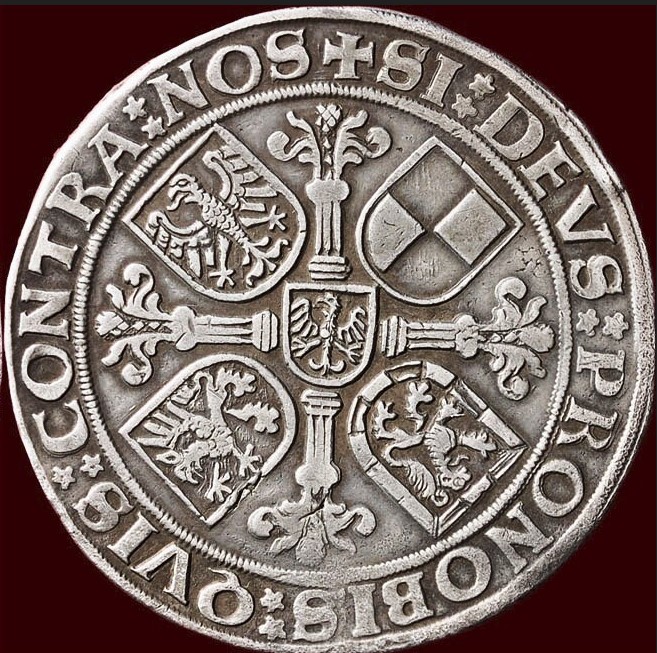
George and Albert II of Brandenburg were members of the Hohenzollern dynasty, one of the most influential noble families in the Holy Roman Empire. They played important roles as Margraves of Brandenburg in the first half of the 16th century, a time of great political and religious upheaval, especially the Reformation.
---
George of Brandenburg-Ansbach (1484-1543)
George, also known as George the Pious, was Margrave of Brandenburg-Ansbach from 1515 until his death in 1543. He was a prominent figure in the Reformation and an early supporter of Martin Luther and his teachings. His political power and religious convictions made him an important supporter of Protestantism in the German states.
Support for the Reformation: George was one of the first nobles to convert to Protestantism, and he protected Protestant reformers such as Andreas Osiander in his realm. He introduced Lutheran reforms in his territories and strengthened the Protestant faith in the Franconia region.
Political role: George sought to balance the power of the Habsburgs with the Protestant Schmalkaldic League, which he supported at times. His loyalty to the Reformation brought him into conflict with Emperor Charles V.
George is remembered as a prince who put his religious beliefs above political considerations, which had a lasting impact on the region.
---
Albert II of Brandenburg-Ansbach (1490-1568)
Albert II, also known as Albrecht of Prussia, was George's younger brother and one of the most notable Hohenzollerns. He began his career as Grand Master of the Teutonic Knights, but played a crucial role in the transformation of Prussia.
Abolition of the Teutonic Knights: Albert was Grand Master of the Teutonic Knights from 1511. After meeting Martin Luther, he converted to Protestantism and secularized the Teutonic Knights' estates in 1525. He established the Duchy of Prussia as a secular, Protestant state and became its first duke.
Duchy of Prussia: Albert ruled Prussia as a vassal of the Polish king, marking an important political change in the region. The Duchy of Prussia became a key region for Protestantism and for the future ambitions of the Hohenzollerns.
Culture and Education: Albert helped strengthen the educational system in Prussia and founded the University of Königsberg in 1544, which became an important center of Protestant theology.
Albert II was a political and religious pioneer who laid the foundation for the Hohenzollerns' later rise to power, culminating in the establishment of the Kingdom of Prussia.
---
Relationship between the Brothers
George and Albert had a close relationship and shared a strong interest in the Reformation. While George focused on reforming his margraviate in southern Germany, Albert expanded Protestant influence northward. Their cooperation and leadership helped secure the Hohenzollern role as protectors of Protestantism and paved the way for Brandenburg-Prussia's rise as a great power.




 First Page
 Previous Page


 Posted 12/29/2025 09:32 am






 )
)