| Author |
 Replies: 7 / Views: 385 Replies: 7 / Views: 385 |
|
|
Pillar of the Community
United States
1855 Posts |
I just picked this out of a dollar bin of mostly slicks. I love the "G", should I do anything about the green reverse? It's not flaky like verdigris, unsure if I should acetone or leave as-is. I don't mind the green if it won't rot... thanks for looking. 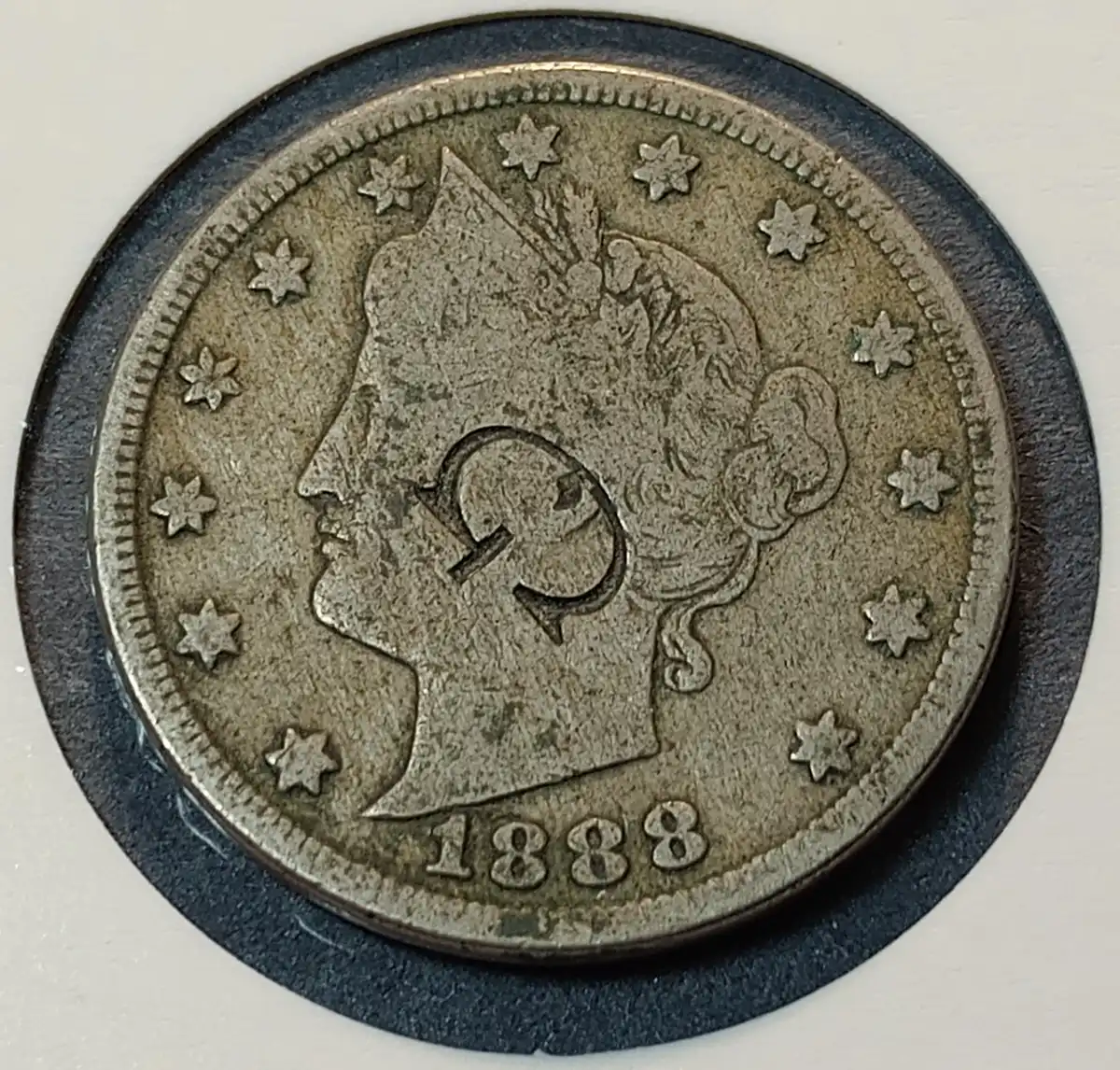 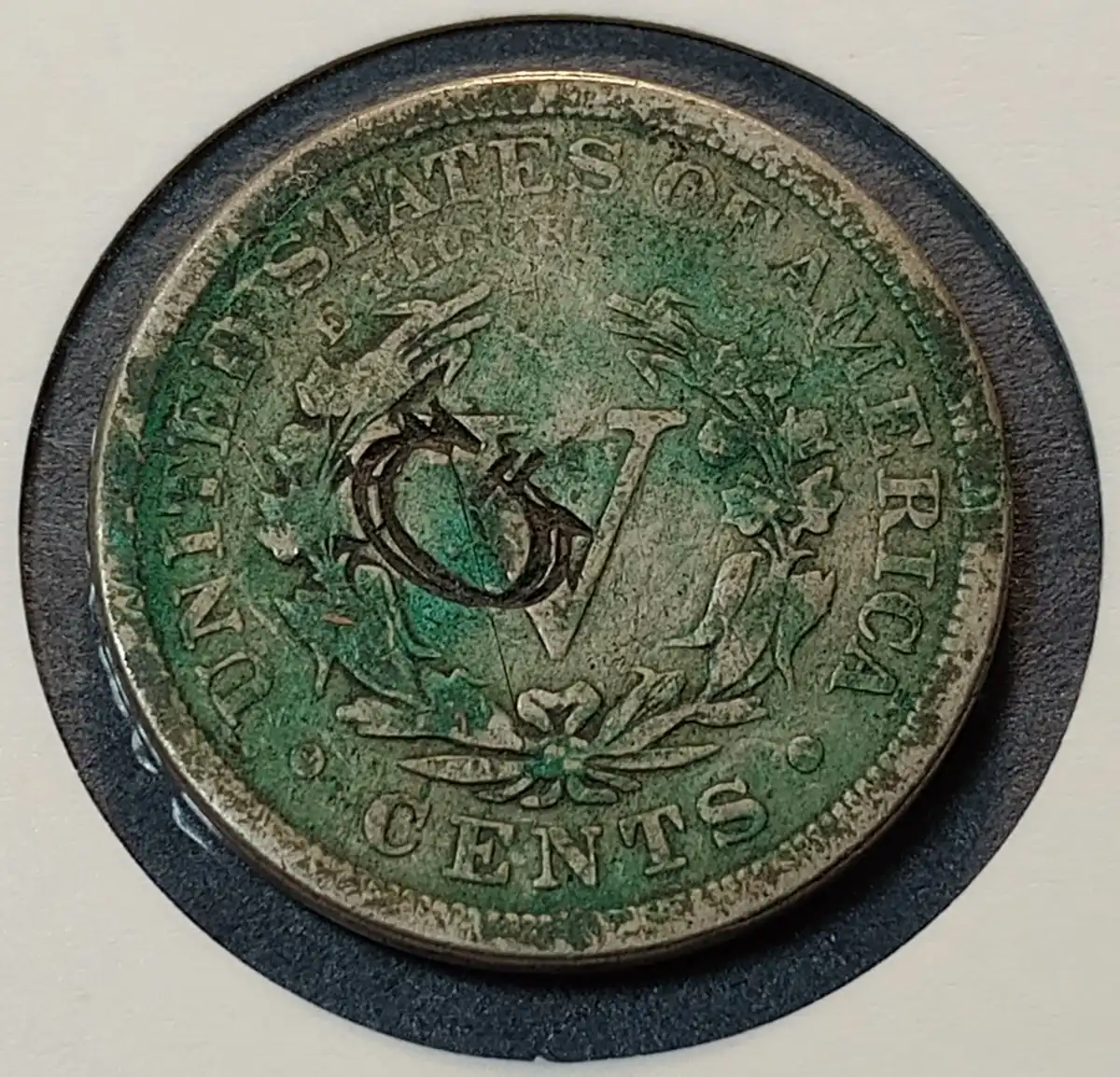 |
|
|
|
Moderator
 United States
197031 Posts |
Quote:
I just picked this out of a dollar bin of mostly slicks. I love the "G" Excellent!  Quote:
should I do anything about the green reverse? Follow the polarity ladder.  |
|
Pillar of the Community
 United States
1855 Posts |
jbuck, thank you very much, that is an excellent thread of information!
|
|
Pillar of the Community
United States
3616 Posts |
|
|
Moderator
United States
197031 Posts |
Quote:
jbuck, thank you very much, that is an excellent thread of information! My pleasure.  |
|
Pillar of the Community
United States
4433 Posts |
Being a longtime collector of coins and counterstamps, I highly recommend mildly cleaning/conserving coins like this nickel. I use a product called Coin Care.
Counterstamped coins are already damaged, so cleaning or conservation is not a sin. A repeated, gentle swabbing to lift the verdigris from the stamped crevaces is recommended. Then, let the coin dry before storage.
Here's a POSSIBLE explanation for this capital "G" c/s ... In Freemasonry, the letter "G" (always capitalized) is a deeply symbolic centerpiece commonly placed between the square and compasses. While meanings vary, it universally represents two pillars of the fraternity: God (the Grand Architect of the Universe) and Geometry.
Of the now more than 3,000 c/s's in my collection, I'd estimate that at least half of them have some Masonic connection to their history. I've been able to make direct connections to Masons in at least 25% of the stampings that I've researched. This Masonic influence is the singlemost common factor behind the counterstamping of 19th century American coins; this, having been my focus of study.
Finally, there is admittedly no proof of intent apparent behing the stamping of the subject, 1888 nickel. It could have been produced as a pocket piece, a test stamp or any number of other motivations. Still, IMHO, the odds favor some Masonic connection of sorts.
|
|
Moderator
United States
197031 Posts |
Thank you for sharing your analysis! |
|
Pillar of the Community
United States
1855 Posts |
Indeed, thank you very much, ExoGuy! The thought of a Masonry connection crossed my mind, but purely out of speculation over letter choice, not from an informed stance. Appreciate the context regarding cleaning/conservation of a damaged coin as well.
Srs77, thanks!
|
| |
Replies: 7 / Views: 385 |
|







 Posted 06/24/2026 12:20 pm


