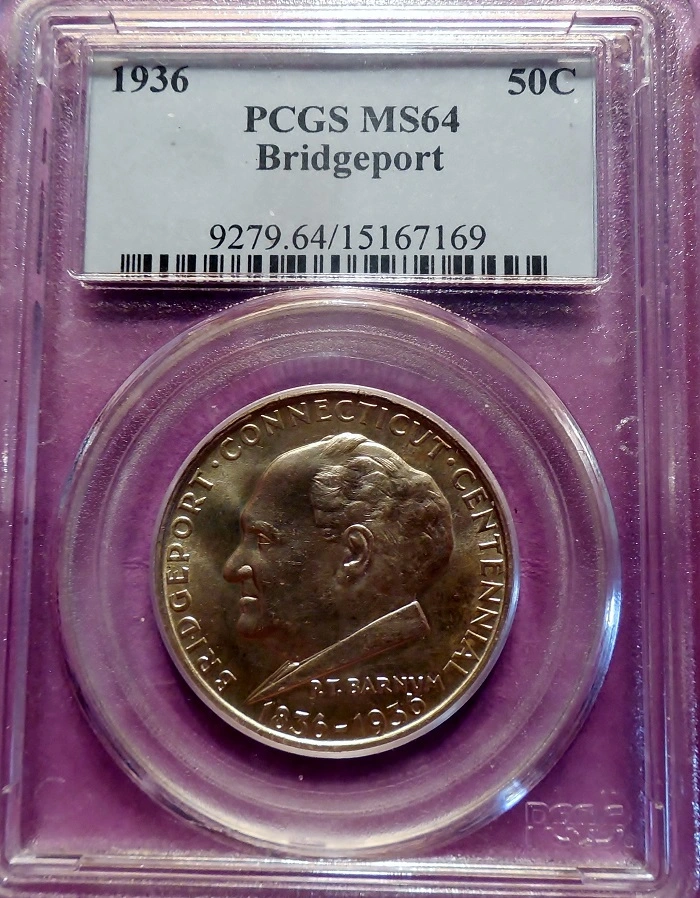
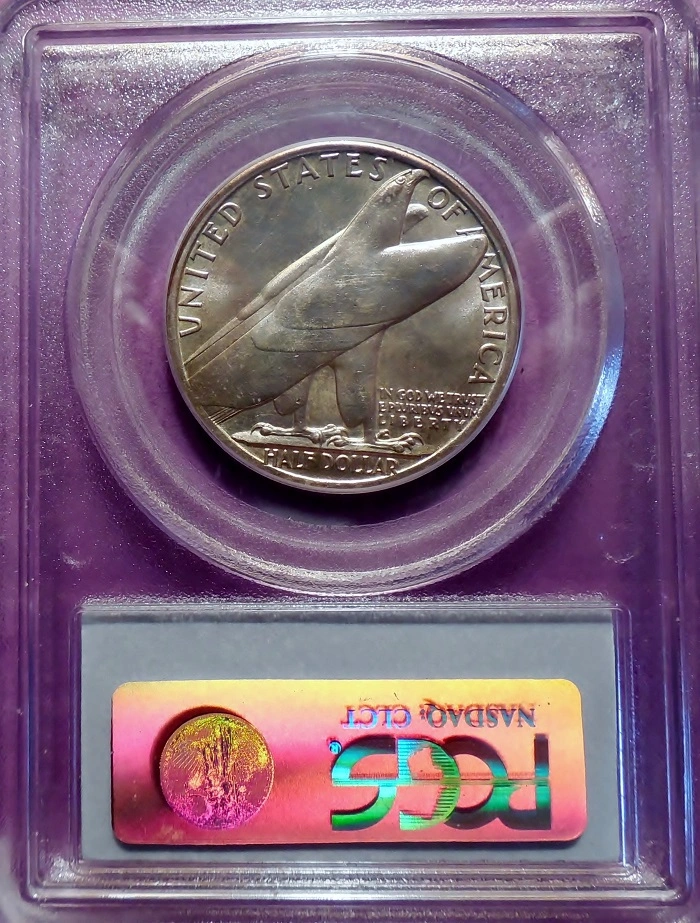
PCGS - The city of Bridgeport, Connecticut, was officially incorporated as a city in 1836. One hundred years later, Representative Augustine John Lonergan of Connecticut brought a bill before the U.S. Senate to mint commemorative coins for the city's centennial. The bill underwent multiple amendments before being approved, but it was eventually passed under the condition that no fewer than 25,000 coins be minted, and the proceeds from the sales would be allocated exclusively to centennial observances. They would also be allowed to mint these coins as long as they wanted, provided they maintained the date 1936.
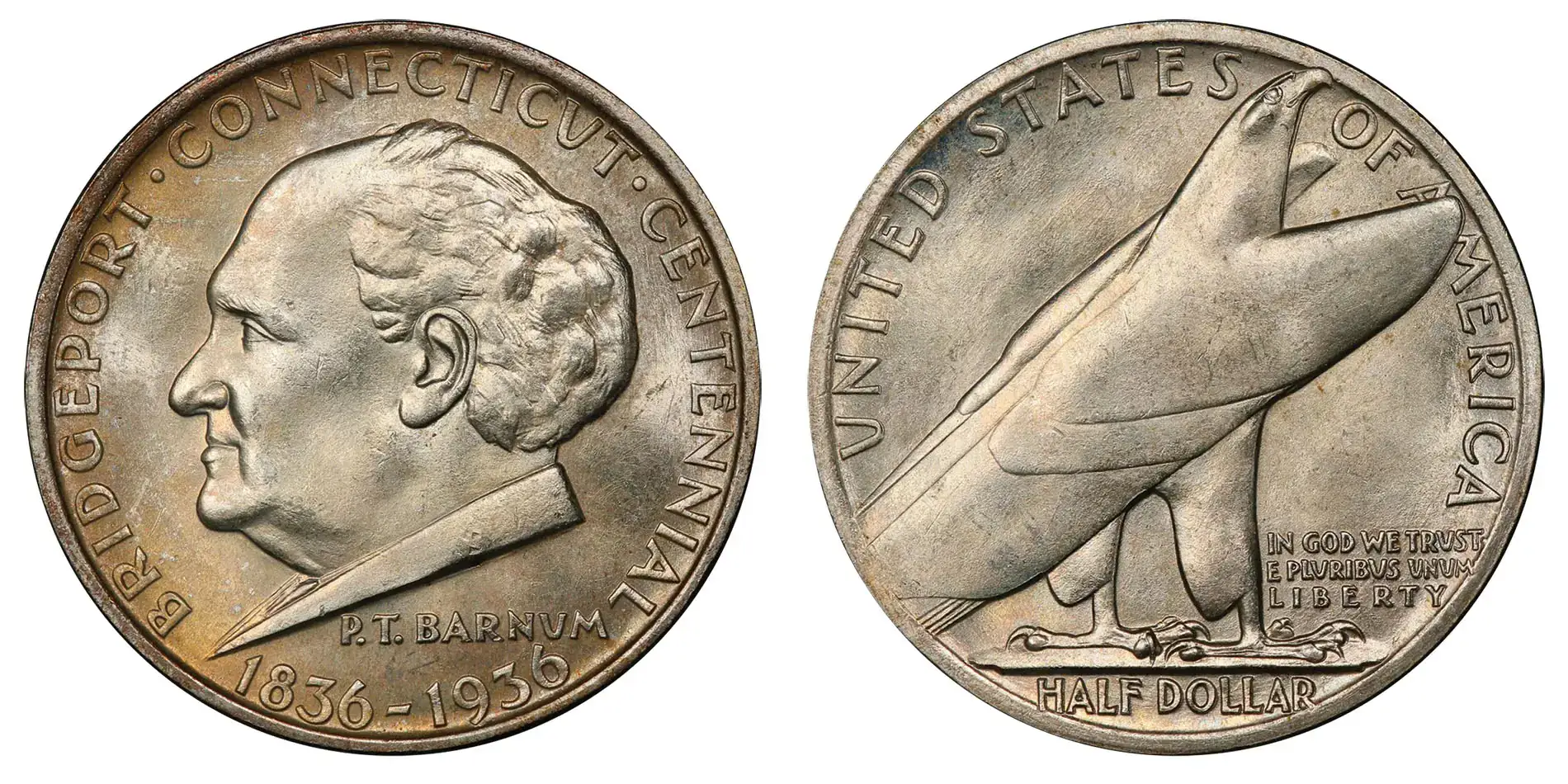 1936 Bridgeport Half Dollar
In September of 1936, some 20,015 Bridgeport Commemorative Half Dollars were struck at the Philadelphia Mint. Henry Kreis was chosen as the designer for this coin because of his work designing the Connecticut Tercentenary Half Dollar the year prior. These coins were sold by the banks of Bridgeport instead of the U.S. Mint because, at the time, commemorative coins were usually distributed by special interest groups or committees. The banks sold these coins for $2 a piece, which was a high cost at the time. Despite the price, they still sold well, grabbing the interest of both the public and collectors.
 Check out Bridgeport Commemoratives on ebay
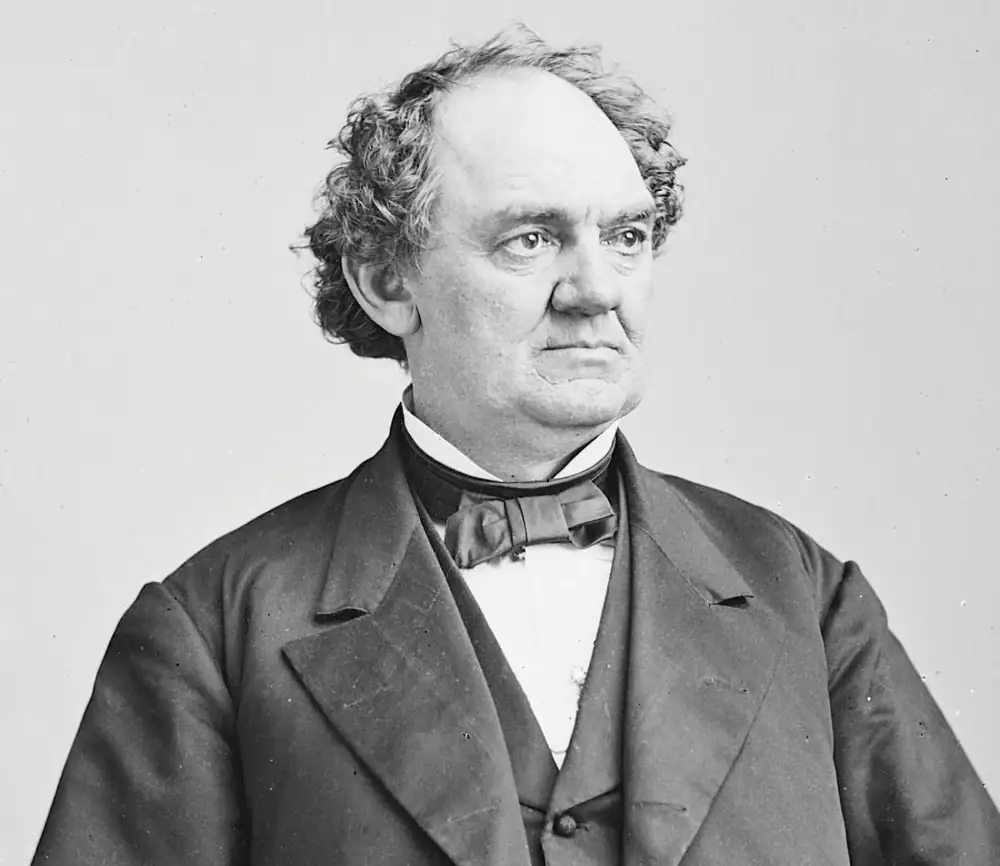 P.T. Barnum
The obverse of this coin features a remarkably accurate portrait of the "Great American Showman," P.T. Barnum. He was chosen for this honor because he helped develop Bridgeport into the bustling metropolis it is today, served as mayor, and is one of its most famous residents. It is also where he is buried. Many don't realize that Barnum was a politician and a "profitable philanthropist," in addition to being a businessman and circus owner. This is in large part due to his contributions to the city of Bridgeport and the state of Connecticut being essentially left out of the historically inaccurate musical about Barnum's life, The Greatest Showman.
In 1852, Barnum began investing in land to develop and expand Bridgeport, to transform it into one of the most important cities in Connecticut. He bought and developed the land on the east side of the Pequonnock River, which would eventually become the East Side of Bridgeport. Barnum utilized his business skills and connections to persuade successful manufacturers and large businesses to relocate to the agriculturally rich area, convincing them that it would become the new hub of the eastern seaboard. His work helped bring homes, commerce, and factories to the area, turning Bridgeport into the largest city in Connecticut.
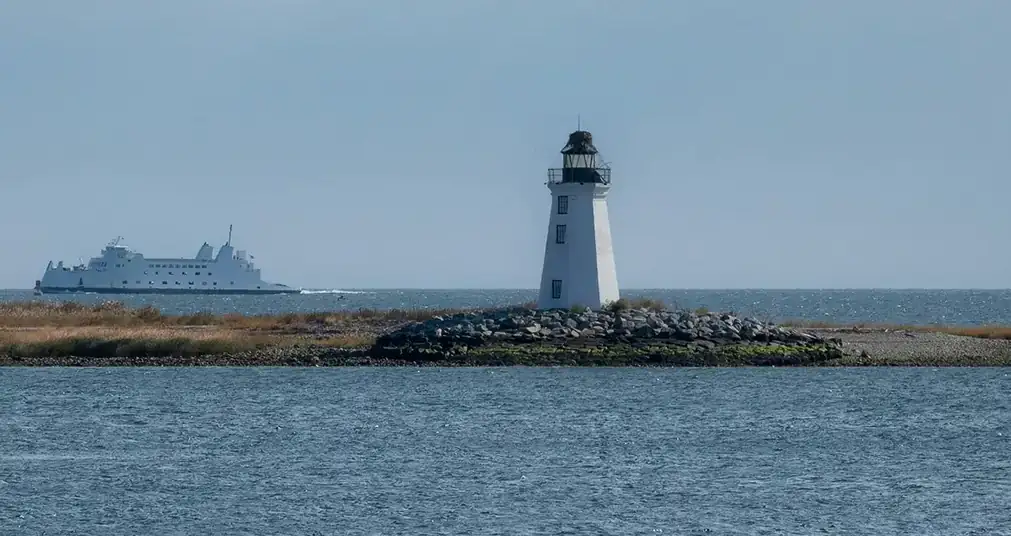 Bridgeport-Port Jefferson Ferry
Barnum didn't stop there. As the city grew, so did his contributions. He partnered with some of the city's other affluent residents to purchase a large plot of land and donate it to the city, which became Seaside Park, the largest park in Bridgeport, where a statue of Barnum now sits. He also played a significant role in establishing the first hospital in the county and the Bridgeport-Port Jefferson Ferry, which allowed people to travel between Bridgeport and Long Island.
Having already served on the Connecticut General Assembly, Barnum was elected mayor of Bridgeport in 1875. During his term, he brought gas lighting to the streets and improved the water supply. After pausing his circus following some major setbacks, such as fires and train crashes, Barnum repartnered with an old friend in 1888 and relaunched Barnum & Bailey Circus. While it was a traveling circus, they decided to make Bridgeport their winter headquarters, drawing in crowds from all over. Barnum died in 1891 and was buried in Bridgeport. He had played a major role in growing the city's notoriety, and it was his home.
The reverse of this coin features a highly controversial design. The subject, a majestic eagle, is not controversial on its own, but the way it was depicted is. Kreis chose a highly stylized and modernized eagle design that is disliked by many collectors. Some believe that this design is ridiculous and an insult to our national bird. In fact, many people think the eagle more closely resembles a shark or an airplane. If you rotate the coin the right way, the proud eagle becomes an ocean predator with two dorsal fins, more fitting for advertising a movie than symbolizing our country. On the other hand, some people feel that the stylized bird was a bold and inspirational choice, showcasing an exciting and new form of a well-known symbol of national pride.
Related Articles Commems Collection Classic: 1936 Bridgeport CentennialCommems Collection Classic: 1936 Bridgeport Centennial - A Brief Look At The CentennialCommems Collection Classic: 1936 Bridgeport Centennial - Official Emblem And BadgeCommems Collection Classic: 1936 Bridgeport Centennial - RevisitedCommems Collection Classic: 1936 Bridgeport, CT Centennial - CousinCommems Collection Classic: 1936 Bridgeport, CT Centennial - Historical TidbitsCommems Collection Classic: 1936 Bridgeport, CT Centennial - House Vs. SenateCommems Collection Classic: 1936 Bridgeport, CT Centennial - It Wasn't Because Of The CircusCommems Collection Classic: 1936 Bridgeport, CT Centennial, Design Discussion Check out Bridgeport Commemoratives on ebay
 Check out Books on Commemorative Coins on Amazon














 Posted 07/21/2026 11:56 am