|
This page may contain links that result in small commissions to keep this free site up and running.

Welcome Guest! Registering and/or logging in will remove the anchor (bottom) ads. It's Free!
To participate in the forum you must log in or register. | Author |
 Replies: 9 / Views: 730 Replies: 9 / Views: 730 |
|
|
Pillar of the Community
United States
7314 Posts |
So, I read online where this product will retone copper coins. Like title states, I'm wondering if anyone can give me tips or a heads up. Here's 2 coins that I have lined up to experiment on 1) 1909 VDB and 2) 1951D I believe you all can see the spots/damage I want to deal with. 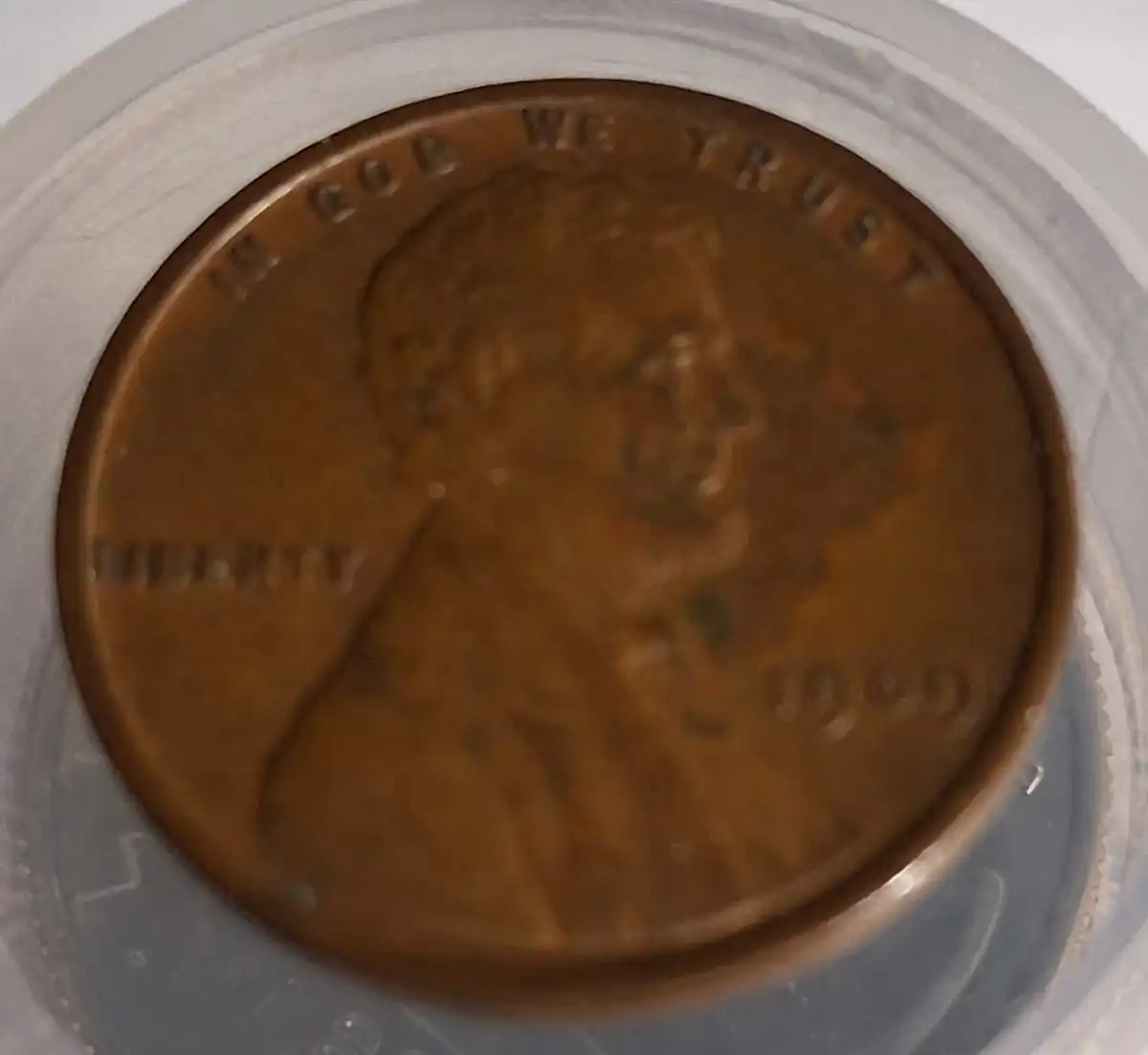 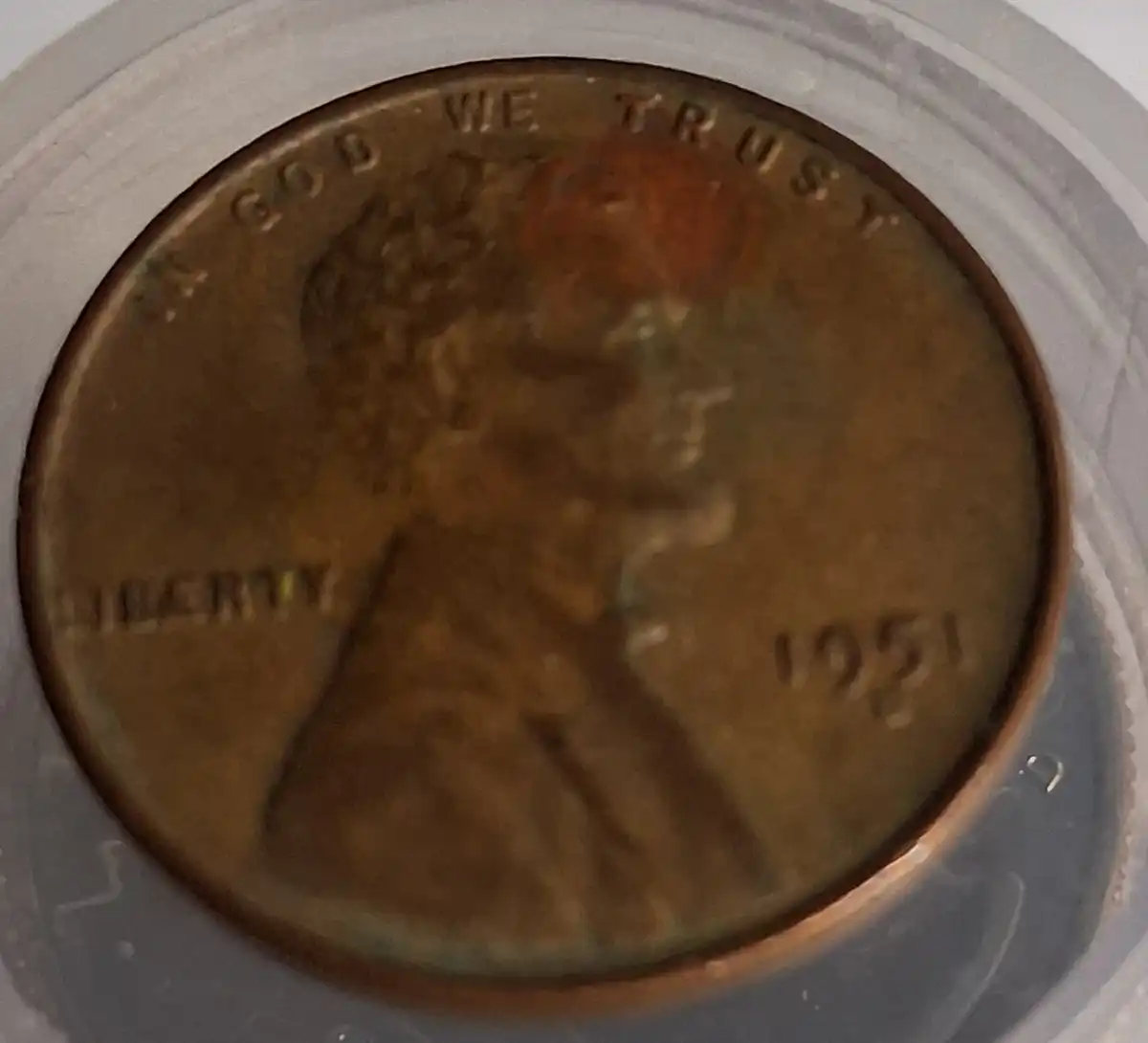 Just looking to improve eye appeal and then maybe move them into my #4 or #5 cent album/folder. If only I could channel Moxking  Thanks for all comments |
|
|
|
Bedrock of the Community
 United States
27439 Posts |
Caveat: I've never used it.
I know that it's mainly used in the jewelry industry to darken silver and copper. The LOS you buy will probably need to be greatly diluted. If it were me, I'd start with a super-dilute (almost water) solution and soak a coin for an hour. Based on results I would proceed accordingly and cautiously.
Also, practice with some 1970's LMCs, not your '09 or '51-S. Make sure that the surfaces are absolutely clean by washing and acetoning or the treatment will make your coins spotty or splotchy.
Please keep us posted, as this is something that I've considered for cleaned coppers that I've gotten in lots.
Inordinately fascinated by bits of metal with strange markings and figures
|
|
Moderator
United States
195203 Posts |
An interesting experiment.  |
|
Valued Member
United States
223 Posts |
PLEASE post your results here so we can see!
Me & a friend are experimenting with cabinet toning using various woods, but it's a veeeeeery long process.
Say the average SO2 content in air is 1 ppm. What would occur to a copper coin in an enclosed environment with 10, 100, or 1000 ppm?
(I'm not advanced enough to know how the components in LOS compare to SO2 on Cu or AE, but the same question applies. I'm still picking up books on the subject.)
I experimented with a sealed bottle of Nic-A-Tone inside a closed plastic Crystal Light bottle with a generic 1600s billon coin (around 80% AR), and man, did it come out ugly.
I'm betting there's as much art as science to toning... and that attractive (or even non-ugly) toning is something that can only be achieved with a decent amount of time.
|
|
Pillar of the Community
 United States
8047 Posts |
Quote:
Me & a friend are experimenting with cabinet toning using various woods, but it's a veeeeeery long process. Rule of thumb for many chemical reactions is that a 10 degree (celsius) increase in temperature raises the reaction rate by a factor of 2 (all other things being equal). If the the process you're looking at involves vapors of subtances in the wood, their concentration would also increase with temperature, so you should get a knock-on effect that would increase the rate of reaction even more. So, if you have a way of raising the temperature a bit, that could help speed things up. |
|
Bedrock of the Community
United States
27439 Posts |
Hey Greasy Fingers, any update?
Inordinately fascinated by bits of metal with strange markings and figures
|
|
Moderator
Australia
16983 Posts |
I have used sodium sulfide to retone a cleaned silver coin for a personal art project. Slightly different chemical, much the same usage and result. "Liver of sulfur" is an impure form of potassium sulfide; it is dissolved in water before use, then painted onto the surface being treated.
You are going to need to strip off the "old" patina off of your coins before you do any treating; the coin is already coated with a sulfide layer so won't react with liver of sulfur in its present state. Some kind of acidic dip would be necessary for copper coins, I believe. For silver, you could get away with an acid-thiourea dip.
The dark coloration forms very quickly. The darkened surface can be quite fragile and easily disturbed by touch while in the solution. A "reverse fingerprint" - a coin that is mostly-dark but has a bright, un-tarnished fingerprint clearly visible on it, is a sure sign of a cleaned-and-retoned coin.
Be aware that both the acidic stripping of patina, and the chemical retoning, are considered "bad cleaning". Together, this treatment would constitute "coin doctoring". I would suspect that liver of sulfur, or rather some of the common contaminants in liver of sulfur, are one of the things that the TPGS are looking for with their "coin sniffer" gas chromatograph.
Don't say "infinitely" when you mean "very"; otherwise, you'll have no word left when you want to talk about something really infinite. - C. S. Lewis
|
|
Valued Member
United States
223 Posts |
Quote:
Rule of thumb for many chemical reactions is that a 10 degree (celsius) increase in temperature raises the reaction rate by a factor of 2 (all other things being equal).
If the the process you're looking at involves vapors of subtances in the wood, their concentration would also increase with temperature, so you should get a knock-on effect that would increase the rate of reaction even more.
So, if you have a way of raising the temperature a bit, that could help speed things up. We're using either hand-made mahogany wood trays (him), or various pre-made Abafil cabinets (me). Some of his trays could be introduced to heat (I'd have to think of how, but it shouldn't be difficult), but I don't think I could do much with Abafil trays or the cabinets. Note that I'm thinking something analytic & controlled for prolonged periods; I'm sure a garage or shed during the summer would probably work if humidity isn't an issue. I'll mention this post to him. Quote:
I would suspect that liver of sulfur, or rather some of the common contaminants in liver of sulfur, are one of the things that the TPGS are looking for with their "coin sniffer" gas chromatograph. I was wondering how this could be sampled -- it looks like this is a specific GC-MS technique, and not straight GC. (We don't have an MS in our lab  ) I wonder how long the smell would persist such that a human could detect it? |
|
Bedrock of the Community
United States
27439 Posts |
Quote:
I wonder how long the smell would persist such that a human could detect it? When Mate and I go "junking", we give potential silver the "sniff test". If it stinks, it's plated. Inordinately fascinated by bits of metal with strange markings and figures
|
|
Moderator
United States
106396 Posts |
interesting experiment - any updates yet Greasy?  |
| |
Replies: 9 / Views: 730 |
|
To participate in the forum you must log in or register.
 
- 1999 Lincoln Cent - Die Clash
- 1809 Half Cent For Grading
- 1987 - D Lincoln Cent Grade Check
- 1987- D Lhc Possible RPM Or DDO In Date
- You Know What I Want That Final Number To Be
- Bronze Coin To Id. Greek Or Roman?
- A Ridiculously Badly Written Computer Aided Book, Coin Collecting Bible, 2024
- Liberty Head 10/11 Stars Obverse With A Sick Looking Eagle On The Reverse Holed 0.59g 13.06mm
- The Tyrant Collector - PCGS Youtube Interview
- Counterfeit Detection: ANA Video - Introduction, With Brian Silliman And Jim Robinson Ep. 1
- Counterfeit Detection: ANA Video - Mistakes, Risk Factors, And Counterfeits & Alterations, Ep. 2
- Counterfeit Detection: ANA Video - Pimples And Pits, Looking At Cast Counterfeits, Ep. 4
- Counterfeit Detection: ANA Video - What Year Is That Cent? Key Date Coins, Ep. 5
- Counterfeit Detection: ANA Video - Diagnostics Of The 3, 5, And 10 Cent Coins, Ep. 6
- Counterfeit Detection: ANA Video, Counterfeit Quarter Dollar Diagnostics, Ep. 7
- Counterfeit Detection: ANA Video, Counterfeit Classic Commemorative Coins Diagnostics, Ep. 8
- Counterfeit Detection: ANA Video, Counterfeit Silver Dollar Diagnostics, Ep. 9
- Counterfeit Detectection: ANA Video, Classic US Gold Coin Diagnostics, Ep. 10
- Counterfeit Detection: ANA Video, Diagnostics Of Chinese Made Counterfeits Of US Coins, Ep. 11
- Counterfeit Detection: ANA Video - Wrap Up Recap With Brian Silliman And Jim Robinson Ep. 12
Disclaimer: While a tremendous amount of effort goes into ensuring the accuracy of the information contained in this site, Coin Community assumes no liability for errors. Copyright 2005 - 2026 Coin Community Family- all rights reserved worldwide. Use of any images or content on this website without prior written permission of Coin Community or the original lender is strictly prohibited.
Contact Us | Advertise Here | Privacy Policy / Terms of Use
|
| Coin Community Forum |
© 2005 - 2026 Coin Community Forums |
| It took 0.57 seconds to rattle this change. |
 |
|
| |
| |







 Posted 05/04/2026 2:14 pm


