| Author |
 Replies: 25 / Views: 3,567 Replies: 25 / Views: 3,567 |
Page 2 of 2
|
|
|
|
Pillar of the Community
Canada
1733 Posts |
Plating problems happen ALL the time Roger, it's not possible to make billions of coins and not have issues between process steps. The question is how they manifest once in hand. Some are really obvious to me because I've been electroplating metals for a long time, others are not so obvious - like this nickel. I'd pretty much need to have it in hand to diagnose it correctly, photos are good but there's so much more to figuring it out.
|
|
Pillar of the Community
Canada
1166 Posts |
Quote:
@ikandiggit Since you have some what do you call them? Even if you can find just one picture to show us that would be great!
Unfortunately, I'm at work right now and most of my pics are on my other computer at home and not uploaded to photobucket. So pics will have to wait. I'll have to look at the flip to see how it was identified. I'm not sure if mine are different on the obverse. Edited by ikandiggit
01/23/2012 10:41 am
|
|
Valued Member
Canada
241 Posts |
Hi there. These 2001P nickels show up quite often. The one pictured below is in amazing condition considering it came out of a circulated roll. The photos aren't the greatest, but neither are my eyes. For the most part, this shows up more significantly on the reverse. The strike appears to be weaker than a normal coin. From time to time the obverse will have that same 'satin' or 'matte' finish. Someone explained that after the PL production was complete, some of the dies went into circulation strike production. The dies weren't always matched, and were replaced when they had completely served their usefulness. I don't know enough about how that all works, but I do know that 2001P is the only modern nickel with this oddity I've seen in circulation. 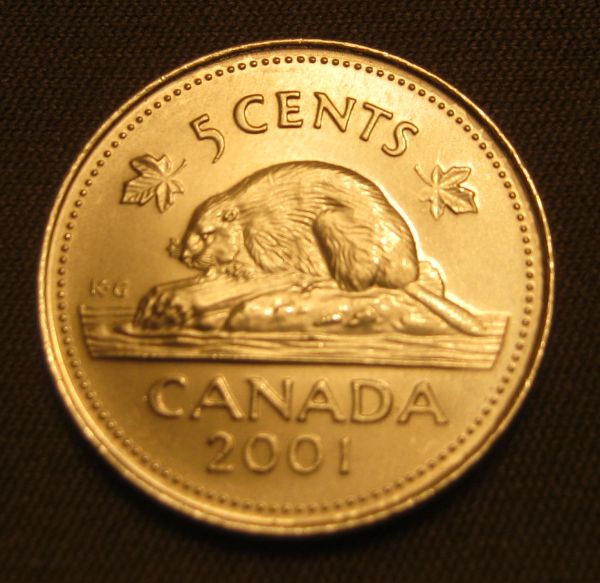 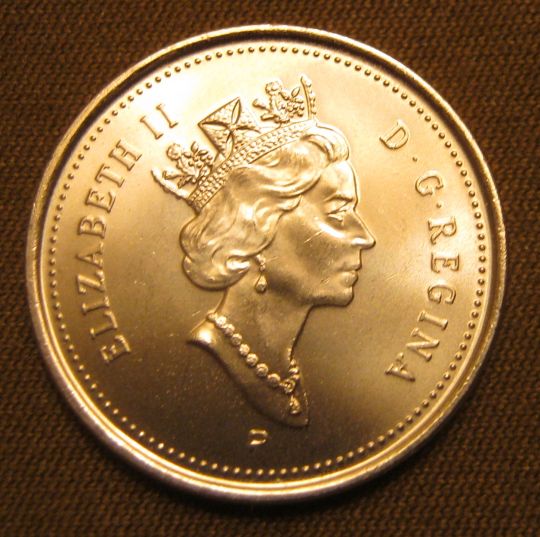 |
|
Valued Member
 Canada
491 Posts |
A circulated roll is where this one came from too, are these pics of your best coins with this oddity? They seem to have few blemishes considering their age and would have expected to see more scratches. I'll keep my eye out for some more of these since they show up every now and then.
|
|
Valued Member
Canada
241 Posts |
HI there. Yes, that's the best one I have. If not for that scatch on the obverse it would be in premium condition. I guess they are worth hanging onto, at least I'll be doing that next time around!
|
|
Pillar of the Community
Canada
1733 Posts |
I'd like to see one in hand if anyone is up for that, I'll make sure you get it back. I'd just like to define once and for all if this is a plating or die issue.
|
|
Valued Member
Canada
241 Posts |
Hi there again. Ugly, I have a few of those floating around here somewhere (not literally) and would be glad to send one for your use. Feel free to contact me.
|
|
Valued Member
Canada
491 Posts |
@Ugly That's great that you're willing to offer your time and skill to determine what this is, and staircase for offering up one of your coins for review.
|
|
Pillar of the Community
Canada
1733 Posts |
Member Staircase and I have been in contact, stay tuned.
|
|
Pillar of the Community
Canada
1733 Posts |
Staircase sent me a nickel and I have looked it over in detail. It is just a tad light, it has the "odd strike" noted in the thread throughout and it has a strange finish, heavily cartwheeled and a lack of mirror finishing on the planchet almost as if the die were not polished. Much more obvious on the reverse, but true on the obverse as well.
Where the coin is giving up it's secrets is on the third face, it's starting to peel and underneath the nickel layer is... another layer of nickel. It SHOULD be a layer of copper. This coin and I believe that coins like it are missing their copper plating step and have been directly nickel plated over their nickel flash coat and have potentially missed their cleaning bath as well (I suspect this to be true or it wouldn't be peeling, nickel sticks to nickel VERY well).
The copper plating is what's mostly responsible for the final shiny finishing of the five cent piece and other coins. It's also responsible for adding a layer of softness for the strike to take hold. You can polish a die all day but if the planchet is rough it's going to give up a sort of frosted finish and have huge cartwheel luster because there's only a very thin layer of nickel to move around.
Thank you to Staircase for handing over this sample... it's one of those instances where everything is so obvious once seen in hand.
|
|
Valued Member
Canada
491 Posts |
A few days ago another coin similar to these popped up only its a 1998. After seeing it with both sides frosted your conclusions became my suspicions. Still am kind of thrilled to have another one from an earlier date, what can I say I like frosting on my cake too. Nice to know its not just some chemical coating (ie. old yogurt).
Thank you very much for your analysis Ugly.
|
|
Pillar of the Community
Canada
1733 Posts |
Wait a minute there Roger. The 1998 nickel is cupro nickel alloy, not plated, this one I diagnosed is 2001p.
Would be an entirely different reason.
Edited by Ugly
01/30/2012 8:41 pm
|
|
Valued Member
Canada
491 Posts |
Awww, okay I'll find it and post the image in a little while.
|
|
Valued Member
Canada
491 Posts |
Nope that was a mistake on my part the new one is a 2001 P not a 1998.
|
|
Valued Member
Canada
241 Posts |
Thanks Ugly for your analysis, glad the coin was useful. Your summary helps explain why those nickels have stood up so well after ten or so years of circulation.
|
|
Page 2 of 2
|
Replies: 25 / Views: 3,567 |
Page 2 of 2
|








 First Page


 Posted 01/23/2012 10:40 am


