| Author |
 Replies: 33 / Views: 13,433 Replies: 33 / Views: 13,433 |
Page 3 of 3
|
|
|
|
Pillar of the Community
United States
819 Posts |
I have been meaning to try Spray and Wash on some grimey non-valuable coins just to remove the oil from human hands on pocket change, then rinse throughly and air dry. first will check the spray and wash with some litmus paper I have to determine the PH. Anyone try this before?
|
|
Pillar of the Community
United States
7123 Posts |
cleaning coins should be limited to coins where there is damage being done by some substance or corrsive on the coin.
dirt ,tarnish ,toning and other similar types of circumstances do not come to the level where cleaning should be considered.
Metalman
|
|
Pillar of the Community
United States
819 Posts |
Everyone has an opinon on the delimma of "to clean or not to clean" IMHO it is OK to "clean" a coin in terms of conserving it and protecting it from further damage, etc. I am primarily referring to coins removed from circulation which undoubtedly have much on their surfaces, I have some AU and very nice coins that over the years have developed an unsightly fingerprint directly in the center of the coin. To my mind, removing surface dirt and oils that accumulate from circulation in order to keep the coin from degrading is acceptable; as long as none of the material the coin is made out of is altered or removed.
Have heard many people recommend Acetone. I bought a can last evening to try. when I got home I ran a "unscientific" PH test using some strips from the health food store that I bought. compared against the laundry stain remover "Shout", the Shout was more akaline by about .5 than the Acetone. If acid is bad and Acetone is OK, then Shout should be better (?). I used Shout and Spray and Wash to clean my hands of grease after working on the car and it does a wonderful job in the absence of prof. hand cleaner like Go-JO.
Next I will try two similar coins with Acetone and Shout and make comparisons on results and set aside to watch over the months and years.
I just want coins from circulation that remain as pristine as possible without degradation over time, what is wrong with that if no metal is altered or removed and toning is left intact?
|
|
Bedrock of the Community
United States
20753 Posts |
Not meaning to drag this out but just a reminder. Items such as Spray and Wash, Shout, misc soaps, cleaners, etc. may contain different chemical forulae from time to time. In other words something you try on a coin today may have different results tomorrow due to the manufacturer changing the composition of the product. Note even Acetone is purchased in a metalic container where it may have sat in a store for years. With Acetone I suggest you first put some in a clean glass dish and allow to evaporate. If there is a whitesh residue, the Acetone may have disolved some of the inner lining of the metal can. This is also possible with any solvent such as Spray and Wash, Shout, etc. Regardless, any valuable coin should never be cleaned or it will no longer be valuable.
This is sort of like taking a 500 year old table and sanding it down, painting it blue to match something in your house.
|
|
Pillar of the Community
United States
819 Posts |
I agree with Just Carl, anything valuable should never be cleaned. I clean pocket change (but not copper) to make it more appealing to me, I don't like to open a folder of coins with some that have unsightly fingerprints, dirt, grime, grease, etc on them. I think the coin would degredate over time if these were allowed to remain, and since there is not great value at the present; don't think anything will be lost in the process. If pocket change can survive in circulation I don't think a mild cleaning will hurt.
I tried Acetone and Spray and wash and don't like either.
|
|
Bedrock of the Community
United States
14454 Posts |
I have not read all the posts but I do have a definite answer to one of your questions (may have already been answered but oh well) I know for a fact (because I have done it myself) that the top 3 TPG's will grade a coin after it has been soaked in acetone and not consider it to be cleaned. The reason I know this is I have sent coins to both NGC and PCGS that I have done this to the coins before sending them and one coin was even a copper coin so even if you have heard acetone will mess up copper coins it sure didn't mine and as I said all coins came back slabbed and graded by both NGC and PCGS. I have also tried the same experiment with a product called MS70 but that time I did not test with a copper coin they were all silver dollars and were sent to both PCGS and NGC again and all came back graded and slabbed. I have not tested any other way so I can't comment on them but I do know that they think of these two methods as acceptable cleaning even though some collectors may not |
|
Pillar of the Community
United States
819 Posts |
Bryan, how long did you leave the coins in the acetone? Any recommended max time?
|
|
Moderator
 United States
23522 Posts |
quote:
Bryan, how long did you leave the coins in the acetone? Any recommended max time?
With regard to silver, there is essentially no time limit. Acetone should be completely benign to silver, even if you leave it there for months. Of course, the acetone will evaporate long before that, and you'd want to change the bath daily to remove anything suspended in the acetone, but there is no "limit" simply because acetone and silver don't care at all about each other. I've never had reason to play with acetone and copper. I'm aware of research indicating that a reaction is possible in the presence of light, but that's all I can relate on the subject. |
|
Pillar of the Community
United States
3363 Posts |
In all this thread there is plenty of discussion of soaps, mild acids and acetone. But has anyone had much experience with ammonia? I've tried it on some heavily tarnished, common date, AU+ Peace dollars, and have found that it lightens the tarnish without having any noticeable effect on luster. It doesn't take a coin back to blast white - more like going from dark chocolate to light coffee. "Two minutes ago I would have sold my chances for a tired dime." Fred Astaire
|
|
Bedrock of the Community
United States
17884 Posts |
Never use an acidic solution on a copper coin. You will get a stripped unnatural looking surface. That includes orange juice, lemon juice or vinegar.
|
|
New Member
United States
26 Posts |
In my opinion, u should never clean a coin at all. But thats just me.  |
|
Pillar of the Community
Belgium
2078 Posts |
The only acceptable cleaning is the one no numismatist can detect under whatever magnification or light of his choosing .  |
|
Bedrock of the Community
United States
20753 Posts |
bryan115: It all depends on the coins you used. Many coins in great conditions will not suffer from Acetone dips. If however, the coin has been attacked chemically and part of the metal of the coin has now been removed by such a dipping, then the coin would not have come back as you described. Regardless of anything, any chemical, if you don't want to take chances on distruction of a coin, leave it alone. Of course on the other hand the more people distroy coins by cleaning, the more valuable mine become. Just one more story. I took a 72D Lincoln Cent, 88D Jefferson nickel, 05 Liverty dime, 77 Roosevelt dime and 80 Washington quarter. All were well worn and kind of dirty. On april 10, 2007 @5PM I emersed all in a glass beaker with Acetone just purchased from Walmart's paint department in a metal can. I covered the beaker, put on a window sill inside my garage. April 11 @ 5PM I moved the beaker outside and left in direct sunlight. April 12 @ 3PM I removed all coins & allowed to dry on a redwood picnic table on my patio. No rinsing with anything. April 12 @ 3:30PM I broguht al coins into the house. Results were that the cent showed no change and still had a greenish stuff from when I first put it in. The Nickel and Quarter appeared cleaner but not by much and really not to noticable. The Roosevelt dime has acquired a darkened shadowy area on the reverse but nothing on the obverse at all. Same with the 05 Dime. I further rinsed those dimes with Vinegar and also no change. Still the darkened area on the reverses. The summation of this experiment is that Acetone as a rule does little to a coin regardless of the coins composition. However, only my results, yours may vary. |
|
Pillar of the Community
Canada
1267 Posts |
Acceptable coin cleaning? Does not exist in my books. To me, any type of cleaning is an attempt to alter a coins appearance (usually for profit) which is, quite frankly, what the coin docs do. I would way rather have a crusty, original looking coin like this Stone Mountain than a shiny white characterless widget. 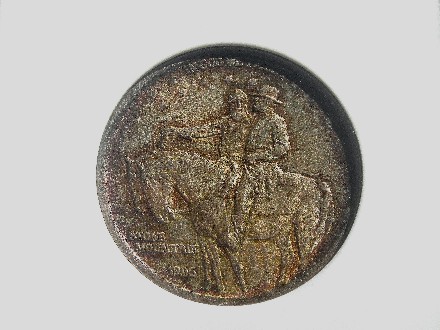 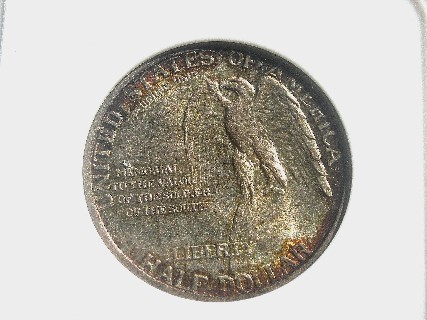 Edited by hadleydog
05/27/2007 12:13 am
|
|
Pillar of the Community
United States
819 Posts |
My results with Acetone are the same as Carl's. I can't tell any difference. There is much said about cleaning changing a coin, removing metal, destroying value, etc; doesn't circulation do the same thing? More metal is removed by circulation than anything I know. I don't think coins are as fragile as many think, yet I agree that cleaning that leaves ANY marks is anathema.
I don't like dirt, grime, or grease on my coins; therefore I clean as needed. Mostly with just plain warm water and occassional mild soap.
|
|
Page 3 of 3
|
Replies: 33 / Views: 13,433 |
Page 3 of 3
|








 First Page
 Previous Page


 Posted 05/14/2007 01:03 am


