| Author |
 Replies: 62 / Views: 12,453 Replies: 62 / Views: 12,453 |
|
|
|
|
Pillar of the Community
 Belgium
506 Posts |
About Thaler footage. From the late 15th century and far into the 18th century, the unit of weight used to measure the silver against, has been the Cologne Mark, weighing 233.856 gram. ( http://en.wikipedia.org/wiki/Cologne_mark).The official coin for the Holy Roman Empire was the Reichsthaler. Using a Cologne mark of silver, 9 Reichsthaler were minted. This was the 'Thaler footage'. During the 18th century, Austria minted the Konventionsthaler, with a Thaler footage of 10. Yet for use outside their homeland, the Kronenthaler, equivalent of the Reichsthaler, continued to be minted: from 1755 onward in the Austrian Netherlands and until 1801 in Lombardia (Milano mint). Emperor Joseph II met opposition against the introduction of the Kronenthaler minted for general use in Austria, since it was worth over 10% more than the Konventionsthaler and an odd number of Kreuzer (rather than the 120 Kreuzer/thaler Austrians were used to). People were complaining about the strength of the currency. With the rise of Napoleon, the Holy Roman Empire lost the Austrian Netherlands (1796) and Lombardia (1801) to France. Eventually the imperial crown was claimed by Prussia and in 1807, Franz II ceded the imperial crown. He then became the first emperor (Franz I) of the Austro-Hungarian empire. This also meant the final curtain for the Kronenthaler. Instead, Prussia started minting smaller Thaler, using a 14 Thaler footage. The Prussian Thaler contained 16.704 grams of fine silver. Germany was not united, but Princes and Dukes ruled their own region and minted their own Thaler until far into the 19th century. Some differences in weight and fineness arose. The success of the Thaler hence also was the reason for its replacement by the Mark. One Prussian Thaler was equivalent to 3.60 Mark. In the Austro-Hungarian empire, the (10 footage) Thaler was replaced by the Gulden, which was decimalized to 100 Kreuzer. |
|
Pillar of the Community
Hong Kong
1270 Posts |
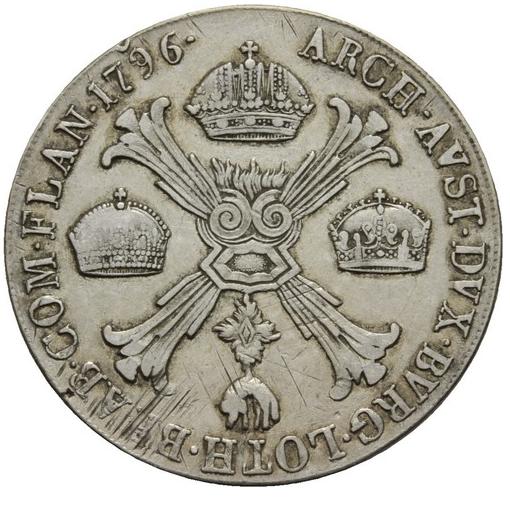 From the picture: Can anyone confirm the central crown is Austrian, the left one Hungarian and the right is Bohemian crown? Henry |
|
Pillar of the Community
Belgium
506 Posts |
The central crown is that of the Holy Roman Empire.
Franz II and the emperors before him also were King of Bohemia (today's Czech republic) and Hungary (which was a lot larger than what is left today, including Slovenia, most of Croatia, Slovakia ...) - second (right ?) crown.
Austria was not a Kingdom: Franz II was Archduke of Austria - third (left ?) crown
Sovereignty over the Austrian Netherlands was represented by the 'Golden Fleece' in the bottom sector of the Burgundy cross.
|
|
Pillar of the Community
Hong Kong
1270 Posts |
Gwyde, the central crown does not look like the imperial crown of HRE. Look this coin: 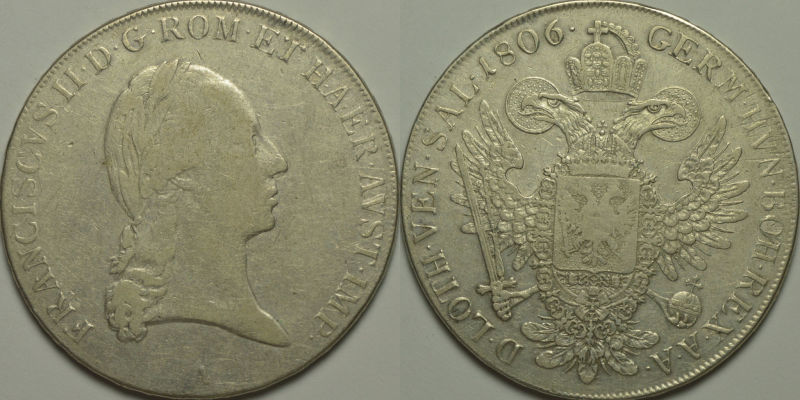 another picture from Wikipedia, 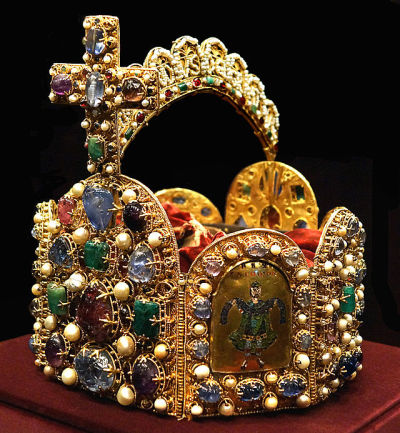 Above two pictures show the imperial crown of HRE. So, I still think the central crown is Austrian Crown IMHO. Henry |
|
Pillar of the Community
Belgium
506 Posts |
Some more info on the top crown on the Kronenthaler. The crown shown on top in the post of Wonghinghi is the historic crown of the Holy Roman Empire, dating back to the era of Otto I in the early middle ages. It had been kept in Nuremburg until Napoleon started his conquest of the German states. In order safeguard the crown, Franciscus II, emperor of the HRE moved the crown from Nuremburg to Vienna in 1797. As such it only has been depicted on some of the early 19th century coins during the reign of Franciscus II. The crown of the Hapsburg emperors since Rudolph II (1576-1612) had been the 'Emilanton'. This is the second crown of the Holy Roman Empire, used by all (Austrian) emperors and depicted as the top crown of the Kronenthaler. 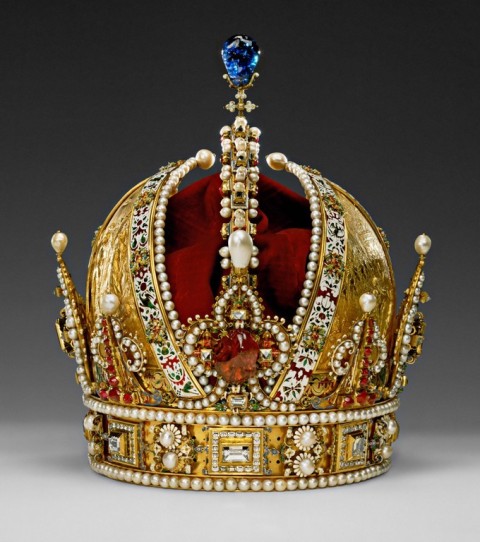 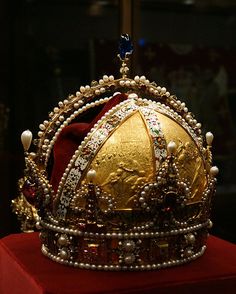 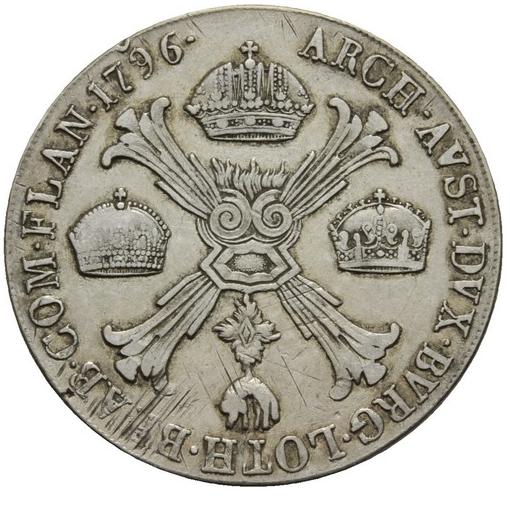 Edited by Gwyde
12/17/2015 5:51 pm
|
|
Pillar of the Community
Hong Kong
1270 Posts |
Quote:
Franciscus II, emperor of the HRE moved the crown from Nuremburg to Vienna in 1797. As such it only has been depicted on some of the early 19th century coins during the reign of Franciscus II. Gwyde, really? The imperial crown of Holy Roman Empire on the 1806 Austrian Taler was due to the movement of the Crown from Nuremburg to Vienna. So this coin is more important hitorically.  Thank you your information. |
|
Pillar of the Community
Belgium
506 Posts |
|
|
Pillar of the Community
United States
1429 Posts |
Here is mine  |
|
Pillar of the Community
Belgium
506 Posts |
An excellent grade of your 1794 Crocione, Zohar. Congrats.
|
|
Pillar of the Community
United States
1429 Posts |
Here is a new purchase to replace my 1794-M. I have not seen a nice one as of yet. Note the crispness of the reverse crowns. 1793-M. Italian States. Holy Roman Emperor Francis II (1792-1806) Croccione (Kronentaler). Milan Mint. DAV-1390. KM-C59.1. Flawless strike, lustrous without the commonly found adjustment marks. Reverse crowns are impeccable in detail. NGC MS-64.  |
|
Valued Member
Uruguay
217 Posts |
Hi guys, are there many silver counterfeits of these coins? This is my Kronenthaler 1797 B., is suspicious but it rings like silver. Weight: 29.02 grams Diameter: 40.5 mm Thikness: 2.2mm in average  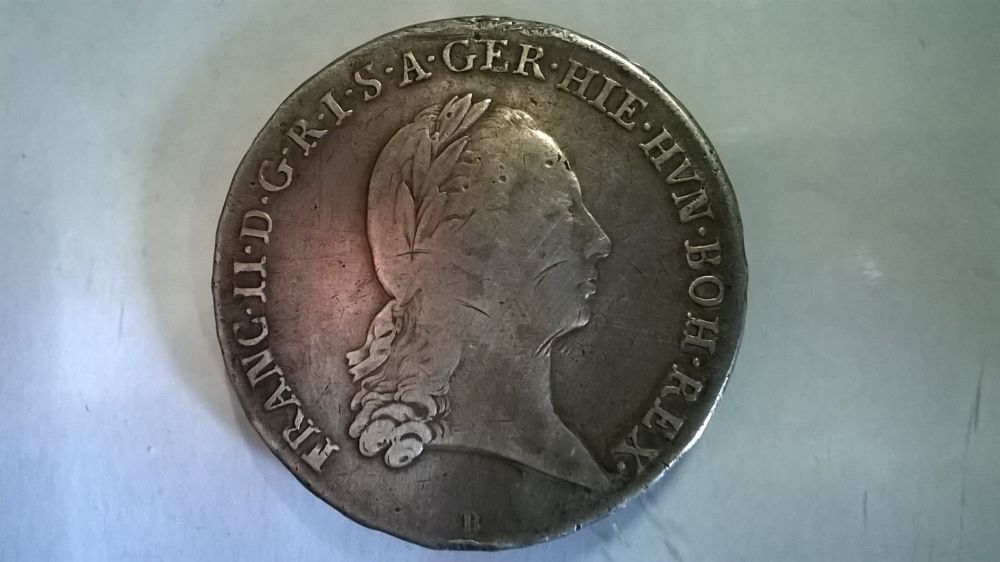 Edited by cara
08/29/2016 10:39 pm
|
|
Pillar of the Community
Belgium
506 Posts |
Cara, your Kronenthaler seems of a common type, with the 'B' mintmark of Kremnitz.
(Austrian Netherlands Kronenthaler KM# 62.2 1793-1797)
The edge looks damaged at the top, which may indicate it has been mounted and worn as a jewel. Mounting/dismounting may imply some loss of weight.
A perfect coin should weigh 29.45g and you may come across many Kronenthalers that show adjustment marks as they were minted on a blank of which the excess silver weight has been removed.
Your coin does not show any adjustment marks. As such the blank was within tolerance limits.
Even if the coin has been mounted, some of the edge lettering 'Fide et Lege' should remain legible.
Forgeries usually have a weak strike but lack much circulation wear. Your coin seems having a clear strike but has circulation wear on the spots where you most expect it: the hair & ear of the emperor. It also has some rim damage and scratches, consistent with circulation.
Dimensions and weight are consistent with the density of the 0.873 silver alloy. It seems genuine to me.
|
|
Valued Member
Uruguay
217 Posts |
Gwyde, thank you for your reply! You are right, it was probably mounted as jewel, the edge lettering 'Fide et Lege' remains legible. I don't remember where I had read about kronenthalers Forgeries made for jewelry, but I don't know if they are so accurate or not. Here I put some more photos. 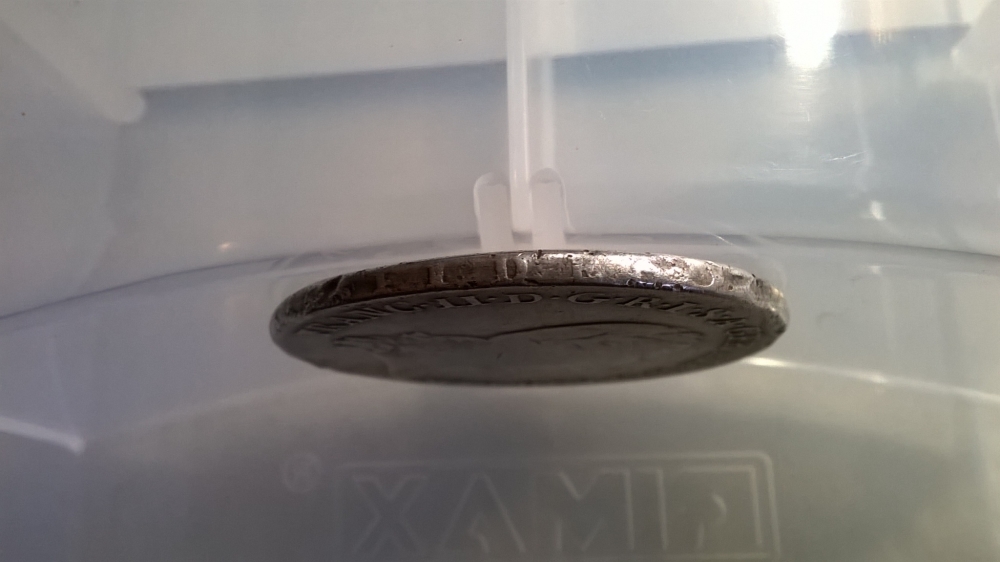 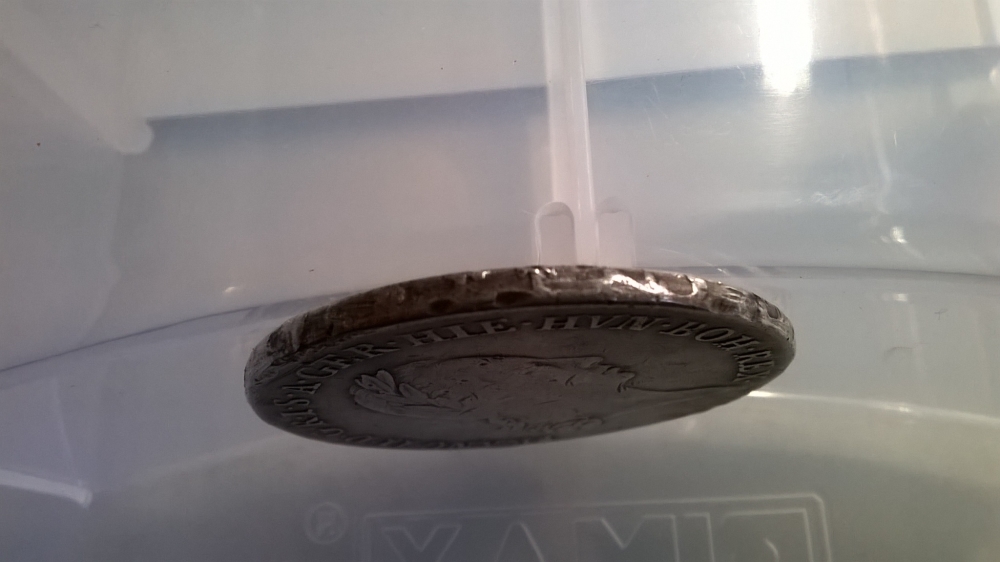 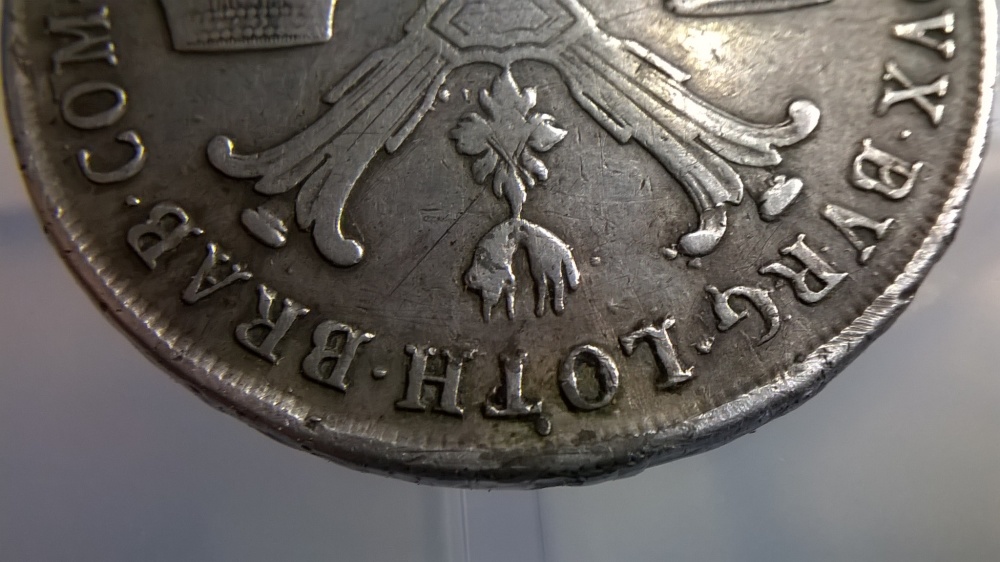 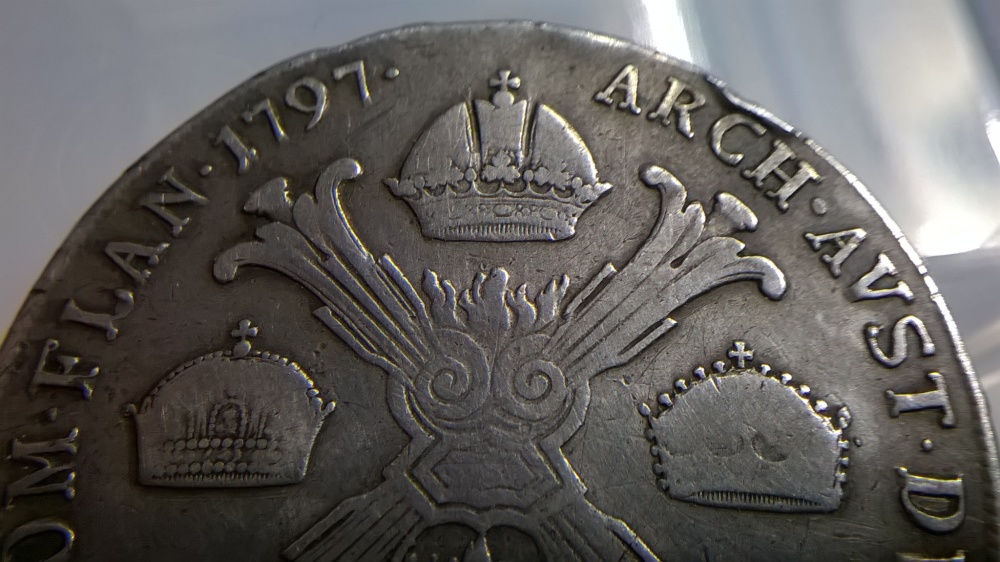 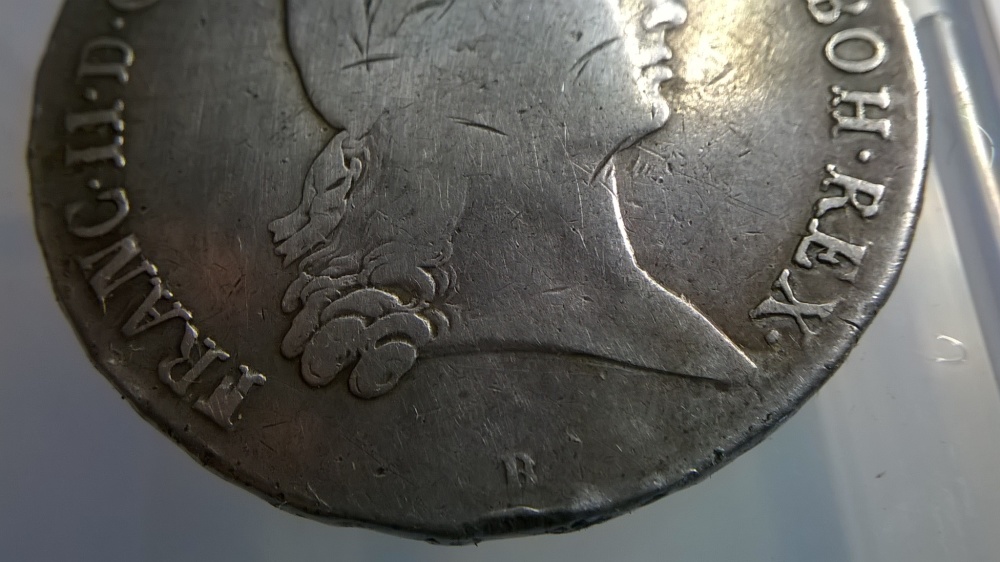 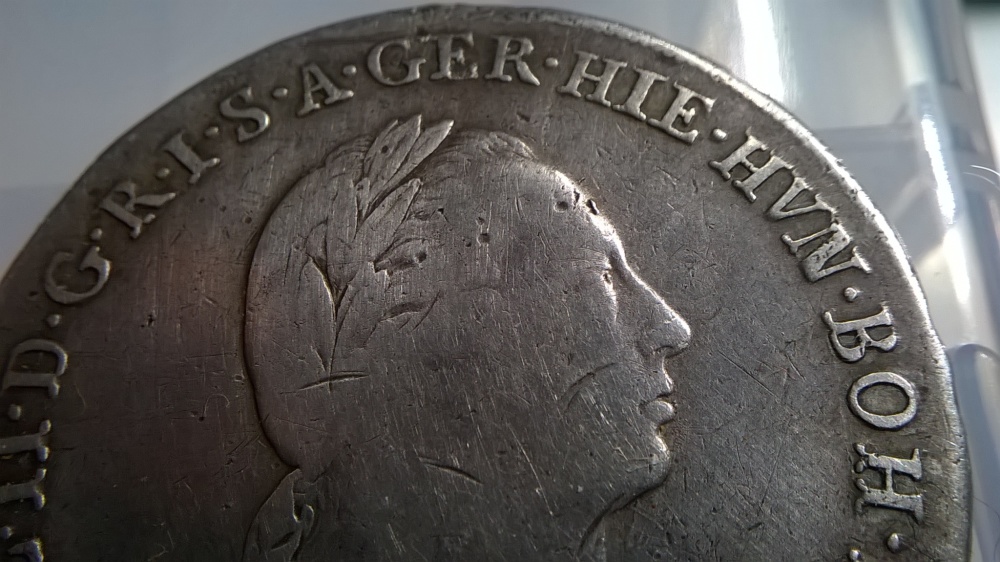 |
|
Valued Member
Uruguay
217 Posts |
Data Update: The SG for my Kronenthaler is 10.32
|
|
Pillar of the Community
Belgium
506 Posts |
For your information.
One type often copied is the 1794-M Crocione of which the original was minted in Milano (back then under Austrian rule). It is silver plated. On the below link, the base metal used is not mentioned, but copper and copper/nickel are often used.
The density of such copy should not exceed 9 g/cm³
For a few US$, you may purchase one at this link:
(20140630) Not Allowed - Auto-Removed/store/product/1794-M-Italian-states-Milan-1-Crocione-Kronenthaler-Franz-II-silver-plated-COPY-coin/713550_32700587863.html
It is but a poor strike and to the inexperienced eye may look like a worn coin. A neat copy for mounting in a jewel should look like a mint state original, with incuse lettering 'copy' on a smooth edge.
|
|
|
Replies: 62 / Views: 12,453 |
|







 First Page
 Previous Page


 Posted 08/25/2014 09:51 am





