| Author |
 Replies: 22 / Views: 3,779 Replies: 22 / Views: 3,779 |
Page 2 of 2
|
|
|
|
Pillar of the Community
 United States
1372 Posts |
Here are a few shots of the reverses of the 3 most reflective specimens. 2 of these exhibit the bow polishing lines of the VAM-47, but do not have the other markers. The obverses are less proof-like, and no doubt these are business strikes. The image of the obverses is pretty useless, but I took that one last night, with weak batteries, and without a "rest". Chance 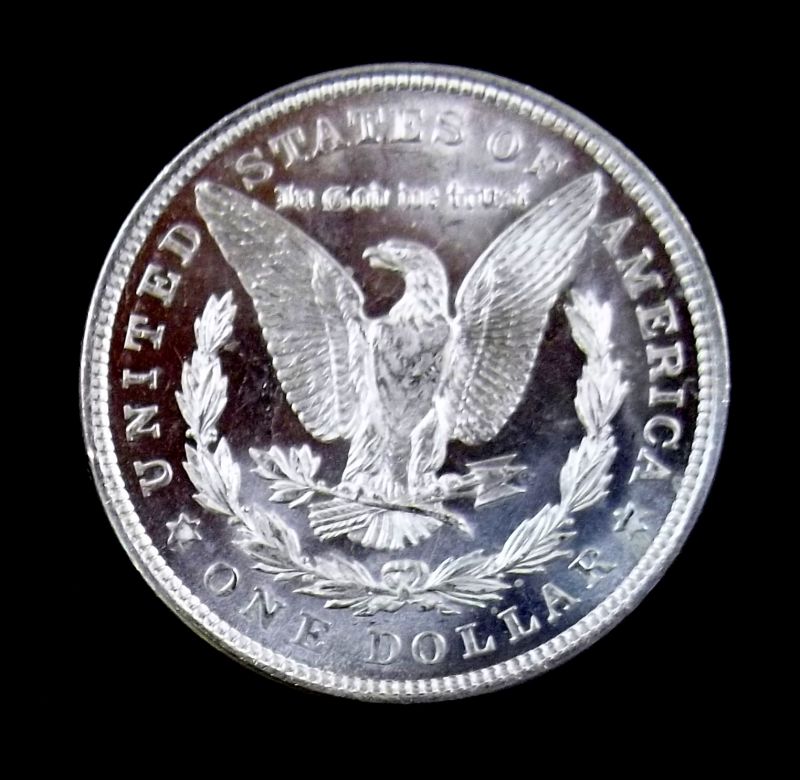 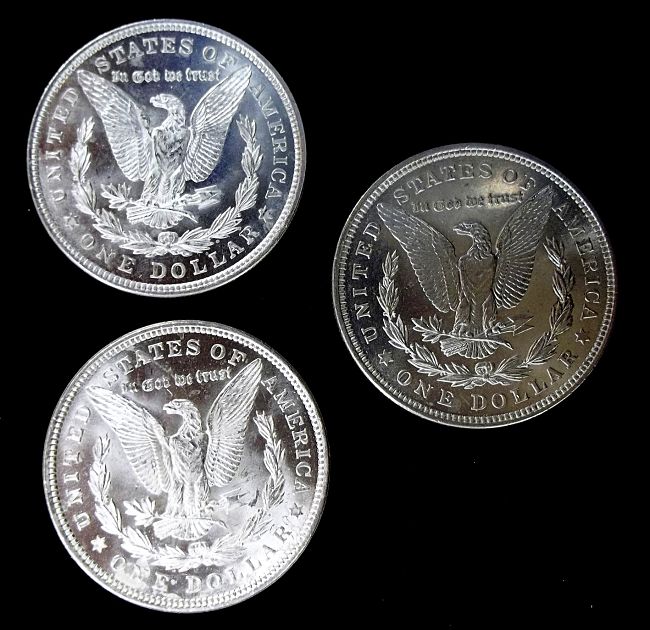 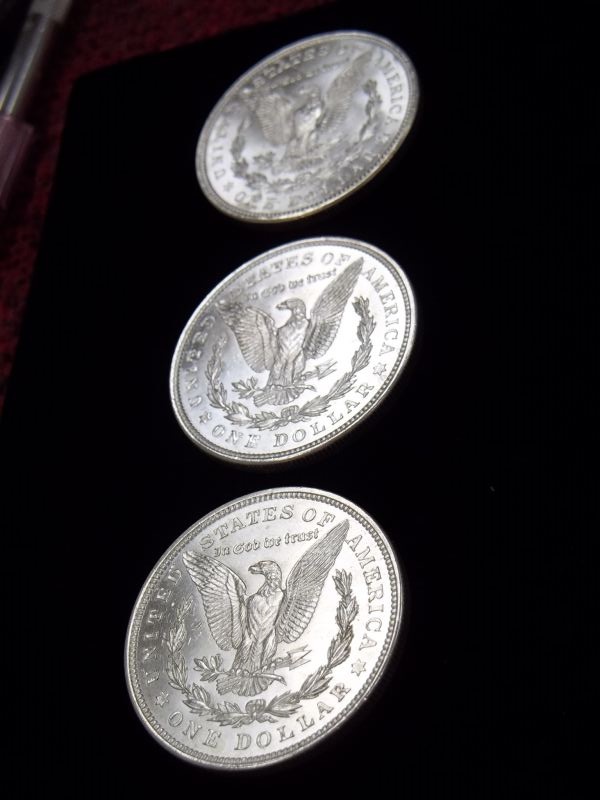 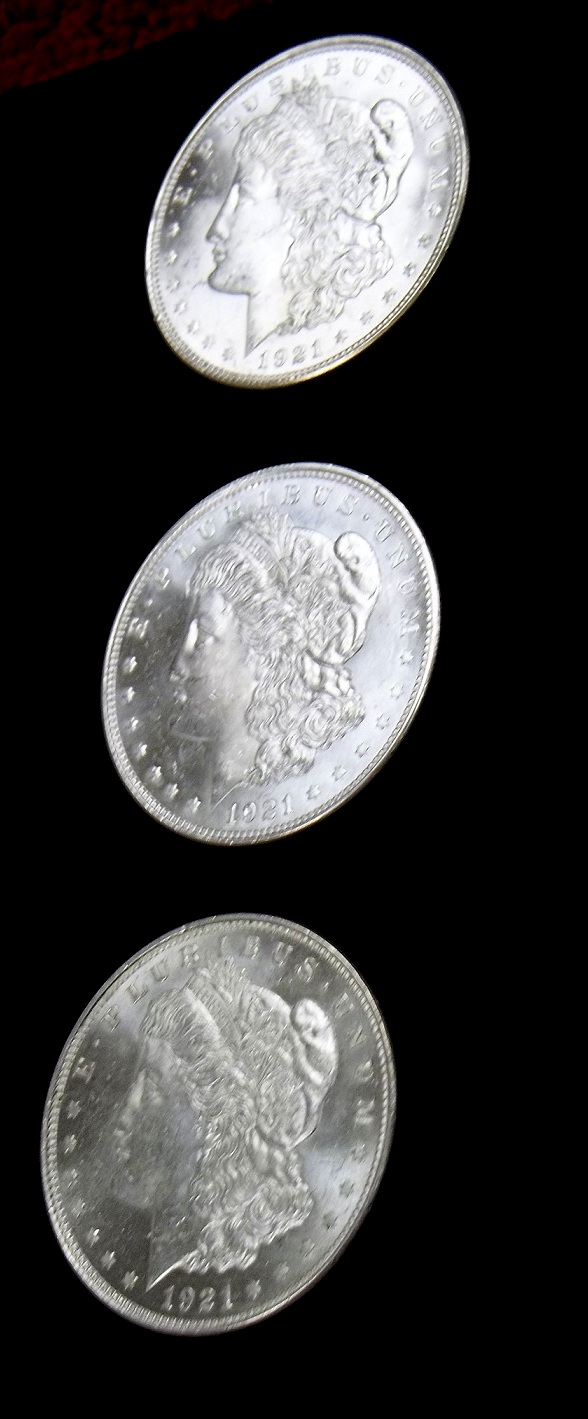 |
|
Pillar of the Community
United States
1372 Posts |
I believe that there's a VAM-3D, and a VAM-3GH in the overpolished eagle reverse specimens.
Chance
|
|
Moderator
 United States
23522 Posts |
Check the D2's for VAM-3BV, which appears related to the Chapman Proofs.
|
|
Pillar of the Community
United States
1372 Posts |
I'll check that out.
While looking at some other 1921 morgans that I have, I encountered one that's interesting. It's apparently an adjustment strike from the Denver mint. The casual observer would simply think it was worn and scratched. The planchet was grainy, and the strike so incomplete that a lot of the highest points of the coin show these unidirectional scratches. It reminds you of some of the adjustment marks on our early coins. These "scratches" appear on both obverse and reverse, and run in the same direction.
The legends on this coin have partially filled characters, with high ridges toward the outer periphery of the legends, and the wreath is nearly devoid of details.
I've had it for years, and always just regarded it as a worn coin, which it clearly is not. I'll take a few pics of that one to show you what I mean. It's kind of cool now that I have surmised what it is.
Chance
Edited by Chancellor Sutler
04/27/2015 5:54 pm
|
|
Pillar of the Community
 United States
5828 Posts |
|
|
Moderator
United States
23522 Posts |
Quote:
I'll take a few pics of that one to show you what I mean. Yes, very much please.  |
|
Pillar of the Community
United States
1372 Posts |
This one's a pain in the butt to photograph for some reason. I'm having a devil of a time with it. The first picture of the reverse was taken using incandescent lighting ... and with much post processing to bring out the "scratches", which is the finish of the planchet. Those are present on the obverse as well. The remaining shots were taken using flourescent light. I found it easier to take cropped shots in order to be able to show details large enough. The flatness of the wings is dramatic, and one shot really shows the "F" in "OF" well. It looks like a surfing wave. Look how full and sharp the denticles and the rim are. That's further evidence that what we're looking at isn't wear. The devices couldn't become that worn without losing the rim and denticle detail. Chance 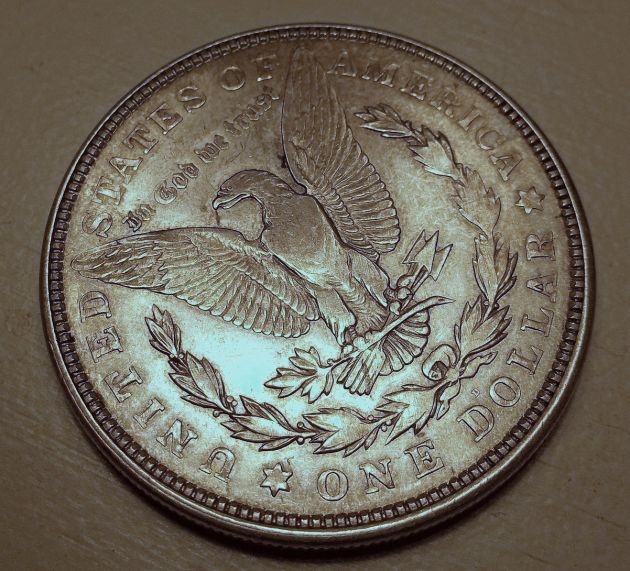 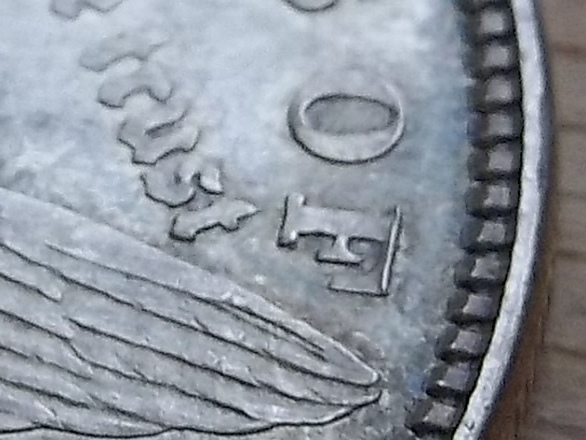 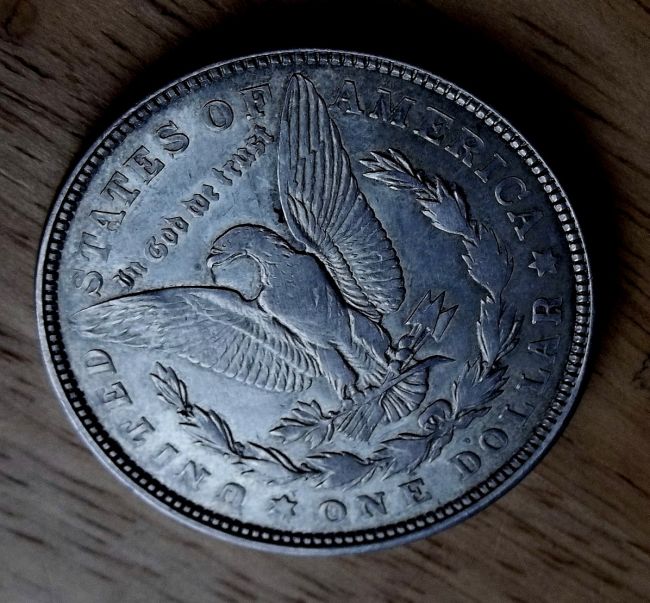 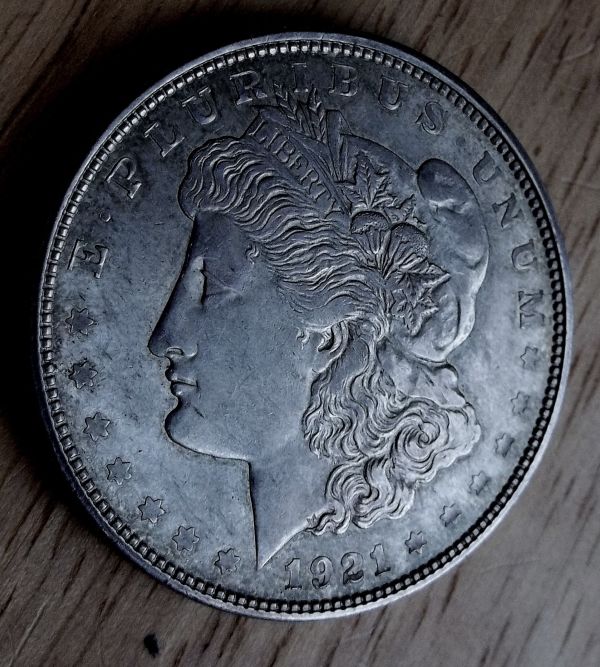 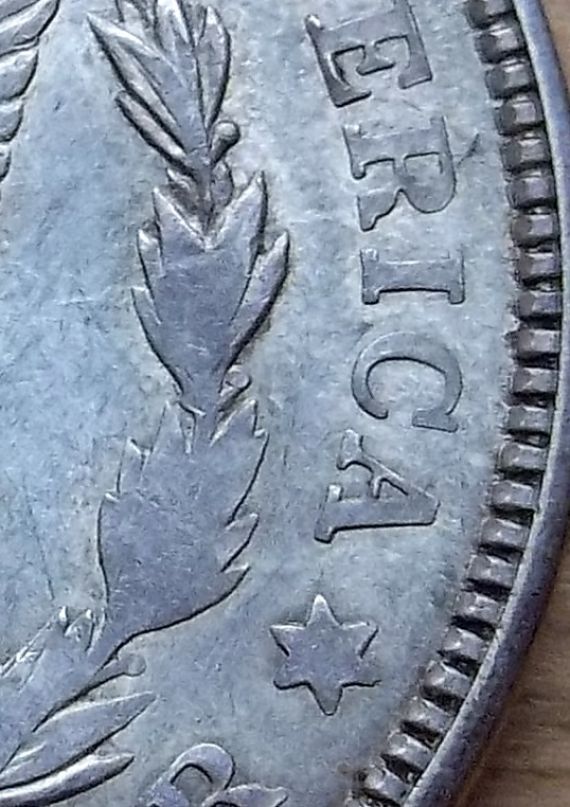 Edited by Chancellor Sutler
04/27/2015 7:32 pm
|
|
Pillar of the Community
United States
1372 Posts |
Here are a couple better pictures of the adjustment strike after a quick (and I stress "quick") bath in MS70. No matter what lighting I tried, I was unable to cut through the toning to show the remaining luster. The grainy finish of the planchet is visible in the fields as well, especially on the reverse, to the right of the eagle. I wonder how this would grade ... given that the strike is so weak. It's not been circulated all that much, and much mint luster remains. Chance 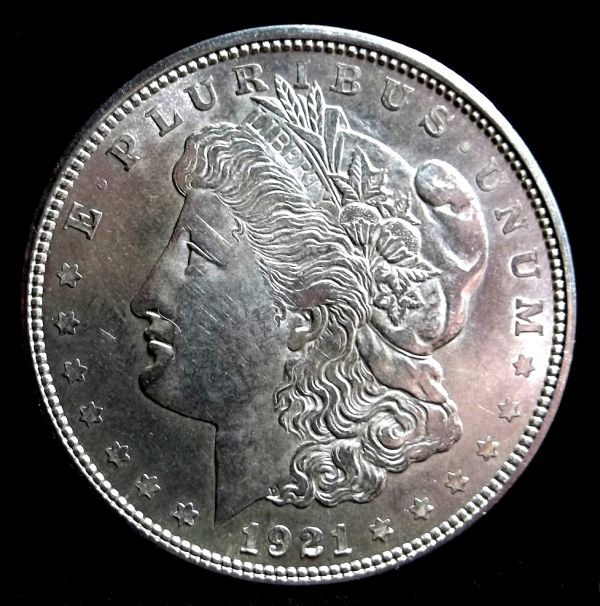 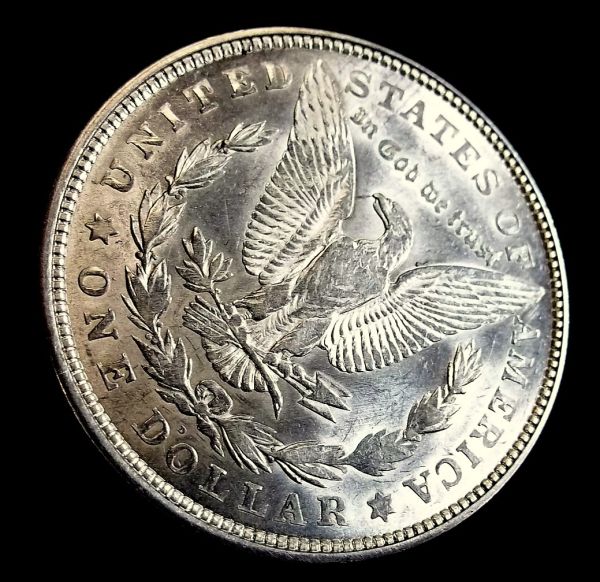 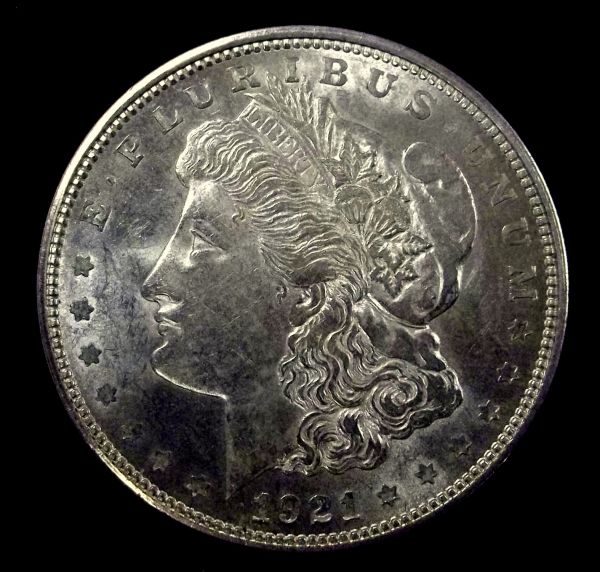 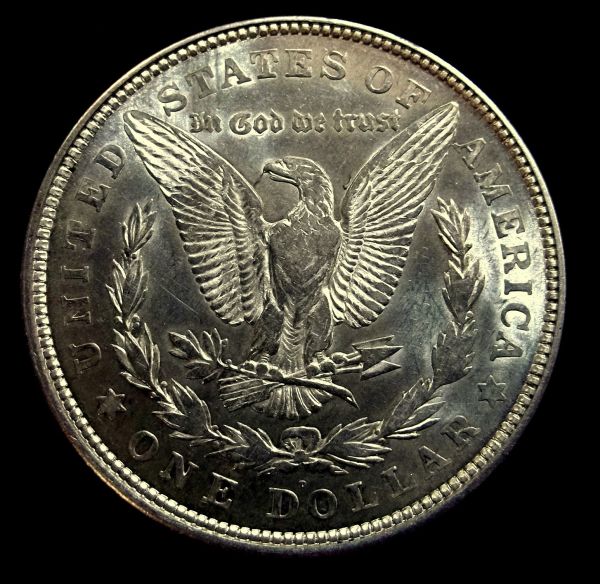 |
|
Valued Member
United States
194 Posts |
the 1921 morgans are hard to find as there are so many. Best of luck to you
|
|
Pillar of the Community
United States
1372 Posts |
Indeed, there is an exhaustive list of VAMs for 1921. I can only study these until my eyes cross, then I have to stop.
Chance
|
|
Moderator
United States
23522 Posts |
I have to think this through for a bit. Chancellor, go look at my thread here: https://goccf.com/t/226879Yours is the second coin I've seen, ever, showing that anomaly, and I'm on the road to figuring it out theoretically now. But I need more noodling time. You just broke open a problem that's been nagging me for years. |
|
Pillar of the Community
United States
1372 Posts |
There's a certified 21-S on ebay right now that's been suggested is an adjustment strike. It's a bit more pronounced than this Denver issue, but the lightness of strike is over the entire coin, obverse and reverse. Here's a link to that listing: http://www.ebay.com/itm/1921-S-MORG...em4ae90cab51Chance Edited by Chancellor Sutler
04/28/2015 6:42 pm
|
|
Moderator
United States
23522 Posts |
I don't necessarily think these are adjustment strikes. At least, maybe not deliberate ones. Either way, not relevant to where I'm going. The San Fran coin is mere percentage points below the crud one sees from them in 1921.
Barely enough pressure to strike it....when you have to strike as many Majors as you're used to striking Dimes, you make sure the equipment lasts....
|
|
Moderator
United States
23522 Posts |
Sorry for the overnight wait - I wanted to forget about it for a bit and revisit my thinking fresh. What follows is the numismatic equivalent of wide-eyed speculation, and probably shouldn't be taken as Gospel.
Whether or not yours is an adjustment strike isn't relevant here. Methinks is probably is, but the Mint turned out some truly execrable product in 1921 and one must always factor the pressure to produce at such a high rate into these things.
The important thing I glean from your coin is a pretty good hint about the order in which die devices fill during a strike. As you know, the planchet metal adopts liquid properties during a strike. Metal actually flows, on order to fill the areas of varying volume disproportional to the amount of planchet metal available at that exact spot. This is how flow lines come to be, and we know it to be in a generally center-outward direction. That's why dies were basined, ground into a slightly concave configuration to help metal completely fill the periphery of the die.
Now for the wild-eyed part. During the strike, planchet metal flows into peripheral lettering at a pretty high rate of speed (at 150 strikes per minute, the coin has 0.4sec to be inserted, struck and ejected) and splashes against the first thing that impedes its' progress - the spots inside the letter which meet its' progress at a 90-degree angle. That's why the ridges we see are on "horizontals" on the sides of the letter away from the center. Then it begins splashing back into the deepest part of the letter and fills the letter upwards In an adjustment strike - or by definition any strike with "sufficiently insufficient" pressure - that initial splash and a partial letter fill is all that happens. It can't finish.
That same thing happened to both of our coins. Yours was caused by pressure insufficient to even fill the letters, possibly along with poor basining. Mine was caused by what I'm theorizing to be a slightly-compressible strikethrough/fill which slowed the process sufficiently or stopped it completely.
|
|
Pillar of the Community
United States
1372 Posts |
Sounds feasible enough to me. I looked around a bit, and the 3rd party graders don't assign numerical grades to "adjustment strikes". It would be difficult to do it, presumably because the flow lines that create mint luster, would not be fully manifested. As crappy as mine looks, it may indeed be very close to UNC. there are a good many contact marks though, so I think it spent some time in some pockets. You mentioned feed finger troubles earlier in this thread. I noticed a phenomena while looking at my (mostly later date ... post 1934) BU Mercury dimes. It's most prevalent on San Francisco minted coins, but can appear on any of them. There are 2 places on the obverse of the coins that are very slightly faceted and polished at the edges ... around 4:30 and 7:30 ... or below the motto, and slightly to the right of the date. These "spots" are highly polished and look as bright as a proof, but looking at these areas with a loupe, there are polishing lines present. Its as if the dies were damaged in those areas repeatedly and they had to be ground and polished in those areas. Some of them are noticeably faceted in those areas. I'll bet I have a half a dozen or more examples of this phenomena in my set. Another area for this polishing to be present is right at her hairline, adjacent to her forehead, which is where clash marks from the reverse first manifest themselves, so I'm pretty sure that something was damaging the dies in those 2 areas near the bottom edge of the coin, requiring that the dies be ground and polished....maybe feed fingers? Chance |
|
Page 2 of 2
|
Replies: 22 / Views: 3,779 |
Page 2 of 2
|







 First Page

 Posted 04/27/2015 3:30 pm





