| Author |
 Replies: 23 / Views: 3,044 Replies: 23 / Views: 3,044 |
Page 2 of 2
|
|
|
|
Valued Member
 United States
55 Posts |
|
|
Valued Member
United States
55 Posts |
|
|
Pillar of the Community
United States
1781 Posts |
Not a doubled die in my opinion. A plating issue. I have or had some for the same date/mm.
|
|
Valued Member
United States
55 Posts |
this is a double die created from hub doubling!
|
|
Pillar of the Community
United States
1781 Posts |
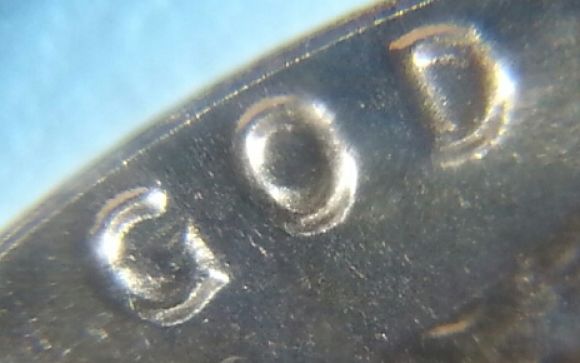
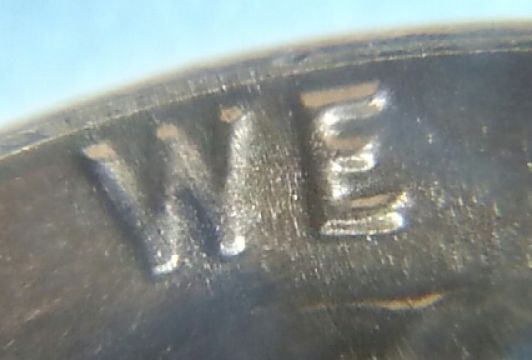
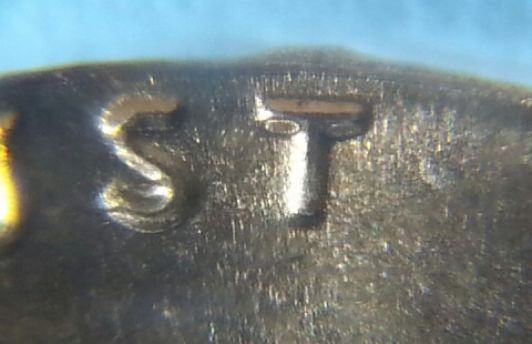
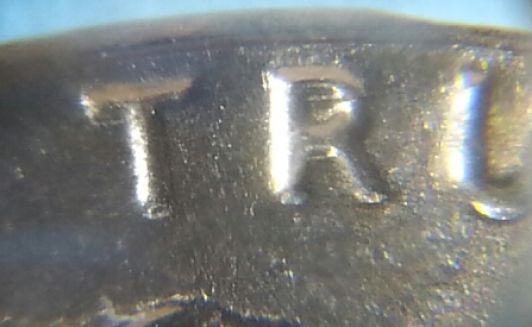
Not from what I can see. I see doubling that looks deceptively like hub doubling. It actually fooled a few specialists in the 1980s until they reversed themselves on what it was. I examined 1985-D cents with this effect in 1986 and determined them to not be hub doubling.
Look at the S of TRUST. The bottom loop at first looks something like hub doubling but the primary image on top is of greatly reduced diameter and appears to "cap" the lower underlying portion of the S. This "capping" is a diagnostic to keep in mind.
If it was a doubled die, the primary would be fully formed.
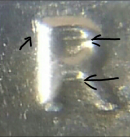
I'm seeing this effect in all your images to a greater or lesser degree but nothing that is typical of split serifs per se.
This effect is due to the plating flowing toward the rim at a different rate than the metal of the zinc core. I was only able to find it on early die state coins but that could have been due to it only being on EDS coins that I had on hand. It should not be confused with plating split doubling, a term I coined in the 1980s to describe plating that was stretched so far during the strike that it often pulled away from design elements leaving the zinc core exposed. However, it could go hand in hand on some specimens.
You can probably find this on other dates but I found them on 1985-D cents most probably because I went through thousands of them.
Now with that said, my analysis is based on your images which quite frankly could be better. I could change my mind if later images suggested that was something else there other that what I think I'm seeing.
Edited by koinpro
05/12/2015 03:44 am
|
|
Valued Member
United States
55 Posts |
Well... I guess I'm sitting back in my place. LOL
|
|
Moderator
 United States
56855 Posts |
Could it be "ejection doubling?" John1  |
|
Pillar of the Community
United States
1781 Posts |
It sort of has an ejection doubling look but I don't think that is what this is. Unfortunately, I only have the images to work with so I can't be 100% on anything.
|
|
Valued Member
United States
55 Posts |
shouldn't these coins be documented? someone should come up with a mint damaged book or something.
|
|
Moderator
United States
56855 Posts |
|
|
Rest in Peace
United States
4078 Posts |
That is funny John. You post a link to Ken Potters web site. What a respectable thing to do.
In all respect you two are on the top of my list as error-variety specialists.
DoubleManFlats, you have your reference. Keep up the hunt!
|
|
Pillar of the Community
United States
1781 Posts |
John1, Thanks for the link. I really need to give that page a face lift. It was the very first page I did sometime in the 18th century!  |
|
Valued Member
United States
55 Posts |
 LOL. You guys are to funny |
|
Moderator
United States
56855 Posts |
"sometime in the 18th century" Your a lot older then I thought Mr. Potter  John1 Edited by John1
05/12/2015 8:08 pm
|
|
Pillar of the Community
United States
5964 Posts |
Quote:
a lot older then I thought Heck he was one of the pioneers for the US Modern Variety and Error Coin Scrolls of the Shield nickels and Two Cent Pieces. Lol. I know because I was there. |
|
Page 2 of 2
|
Replies: 23 / Views: 3,044 |
Page 2 of 2
|







 First Page

 Posted 05/12/2015 01:57 am