| Author |
 Replies: 19 / Views: 3,969 Replies: 19 / Views: 3,969 |
Page 2 of 2
|
|
|
|
Pillar of the Community
 United States
7390 Posts |
Doh!, on the mm stone. Can't believe I did't realize that
|
|
Pillar of the Community
United States
7390 Posts |
|
|
Pillar of the Community
Canada
4916 Posts |
Feel free to call me Will.
|
|
Pillar of the Community
United States
2376 Posts |
Not thinking Dryer Coin would leave the flakes around the perimiter. Acid maybe, not sure how extreme heat would affect a nickel. Not talking about flames. Edited by stoneman227
06/26/2015 5:43 pm
|
|
Pillar of the Community
Canada
4916 Posts |
I think as it rolled, the metal pushed over the face of the coin and was then pushed over the remaining devices through circulation.
Feel free to call me Will.
|
|
Pillar of the Community
United States
2376 Posts |
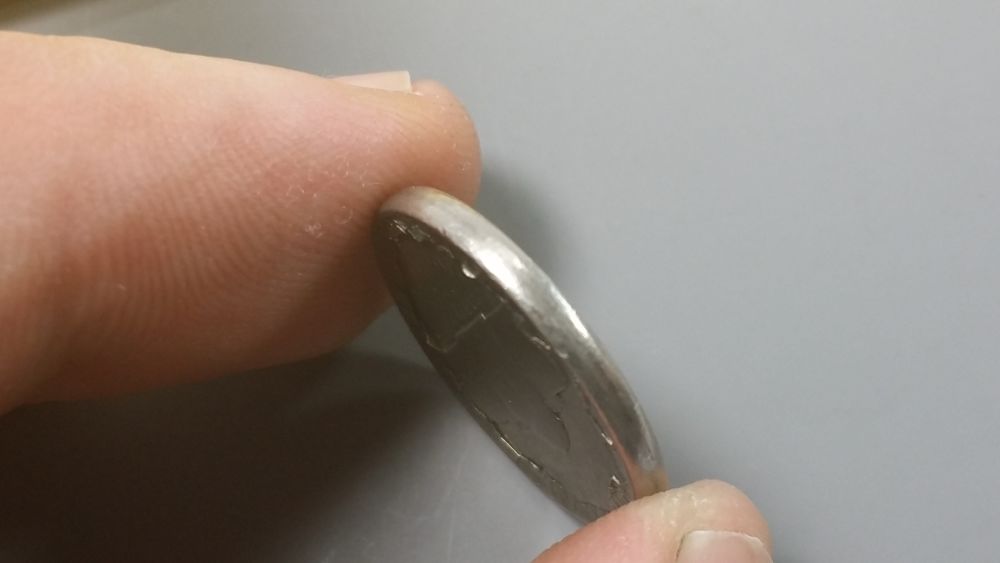
Bear with my conjecture, to me it's acid. The surface of a nickel can laminate. If acid can affect the lam layers it could take away the surface basically in layers. The upsetting mill when it forms the rim disturbs the layers at the edge and basically bonds them as it compresses them making them stronger thus making them the last to go.
Just conjecture.
|
|
Bedrock of the Community
United States
62064 Posts |
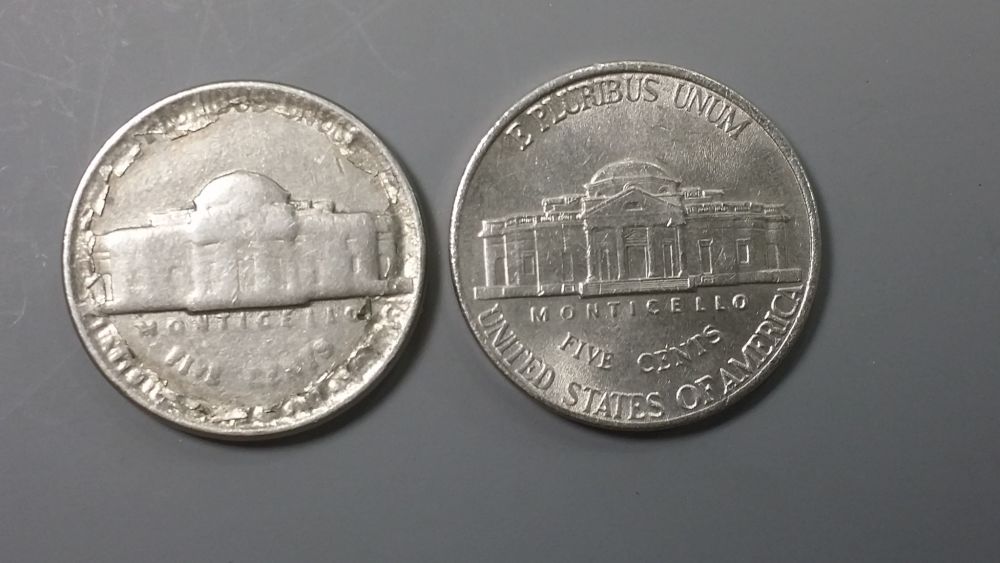
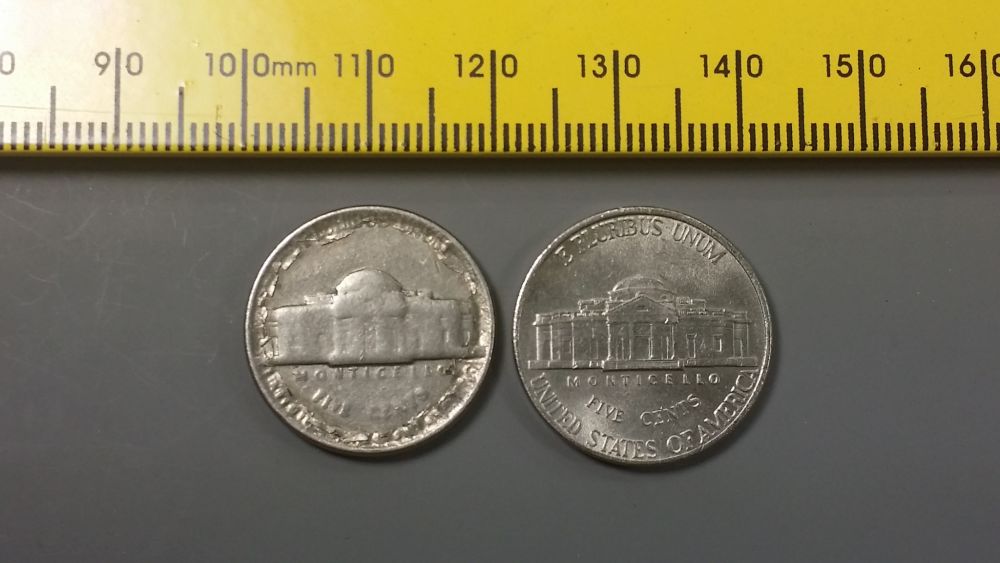
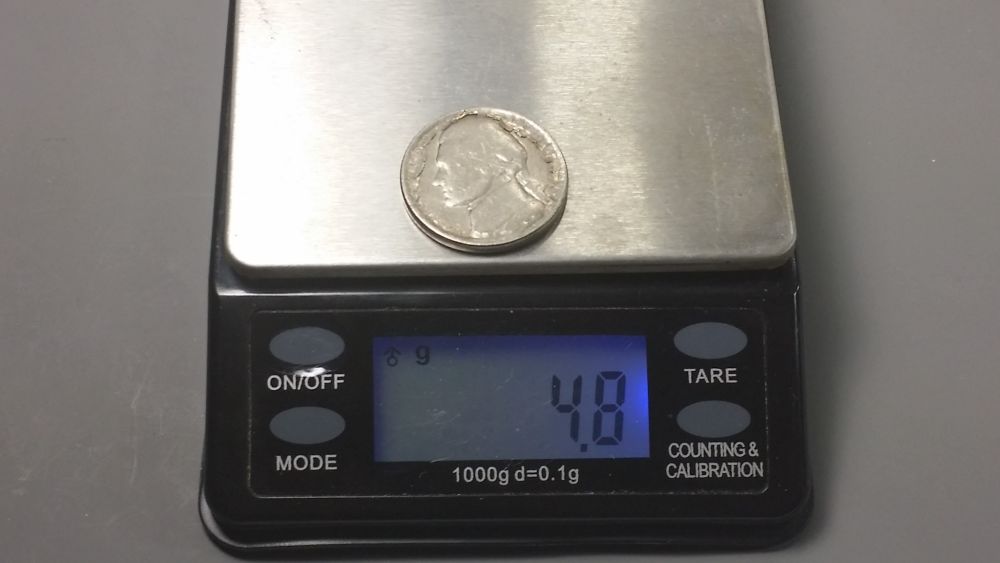
It is a Dryer Coin. 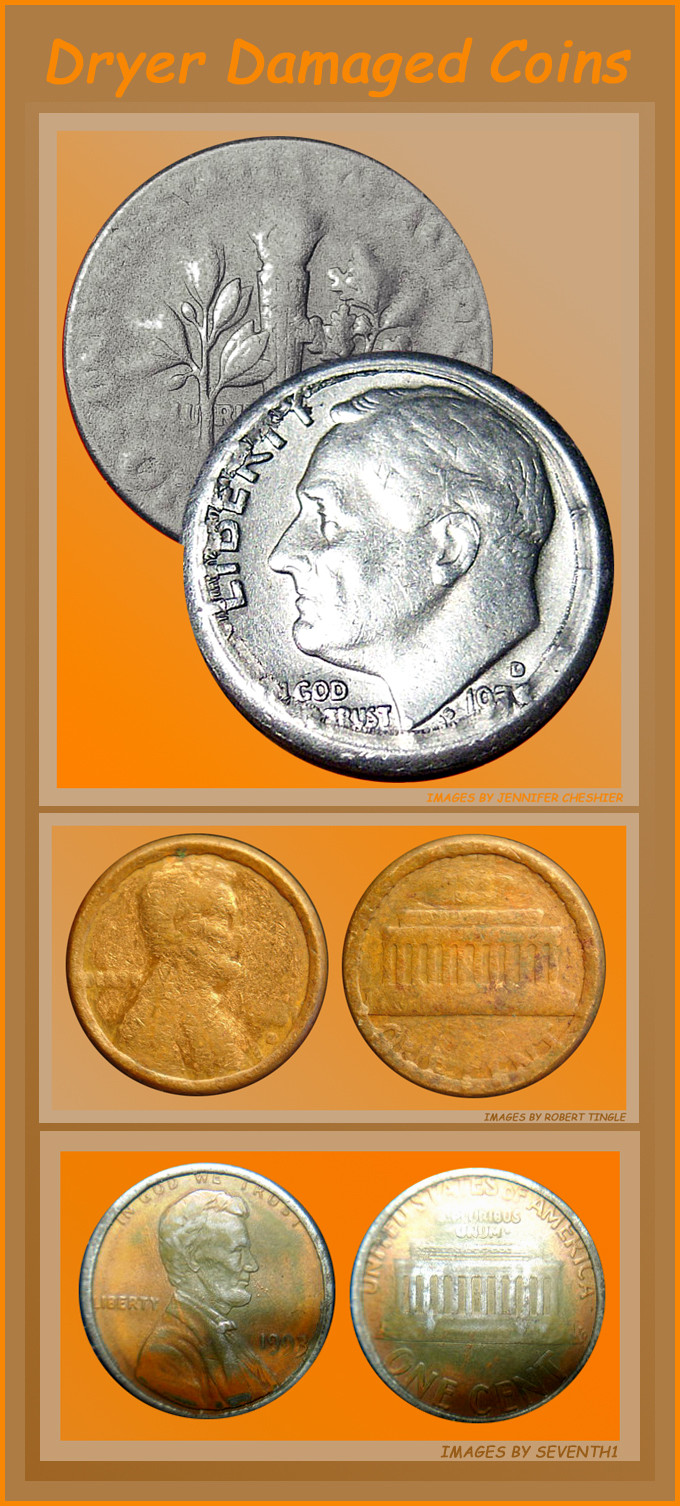 Exactly how a Dryer Coin looks like. Increased edge thickness and reduced diameter. Acid dipped coins reduce the thickness and the diameter. PSD. No lamination issue. Just a damaged coin. |
|
Bedrock of the Community
United States
12437 Posts |
It is nothing more than a Dryer Coin, the rim has been rolled over onto the peripheral devices which is what creates the flaking appearance. |
|
Pillar of the Community
United States
2376 Posts |
I'm batting a thousand on Dryer Coins... no hits that is ! |
|
Pillar of the Community
United States
7390 Posts |
Ya I can see it now. After dollar said dryer and folded over in circ it made sense upon further examination. Drats! Fooled me at first that's for sure
|
|
Pillar of the Community
United States
2077 Posts |
Shows how malleable the alloy is. The foil actually shaped to the letters instead of cracking off.
|
|
Pillar of the Community
United States
7390 Posts |
Ya that's what freakin threw me!... Coop, feel free to use these pics if ypu like  |
|
Pillar of the Community
United States
4932 Posts |
My first impression was correct. It is a Dryer Coin, and in fact I don't think it's a 1949 D at all. It has the reverse relief of jefferson's from 1978-1984. Edited by CoinHuntingDrew
06/26/2015 7:21 pm
|
|
Pillar of the Community
United States
4932 Posts |
It would make sense that it would be a 1979 D, and not anything else. I can tell these reverse strikes simply because of a trained naked eye, lol. There are different reliefs and Monticello has changed drastically since 1938.
|
|
Pillar of the Community
United States
1781 Posts |
Here is one that at first glance looks like your typical " Dryer Coin" but most assuredly is not. Notice that it has the folded-over edge only on the obverse while the reverse displays far greater wear on the devices than the obverse. Since similar coins to the subject coin in this thread have also been found in washing machine water pumps and as the result of being used as media for burnishing in rock tumblers, it's my guess there are even more causes of similar effects. The 197X-D dime shown here could not have been the victim of a commercial dryer since the damage would have been equal to both sides from such a stop-and-go source. 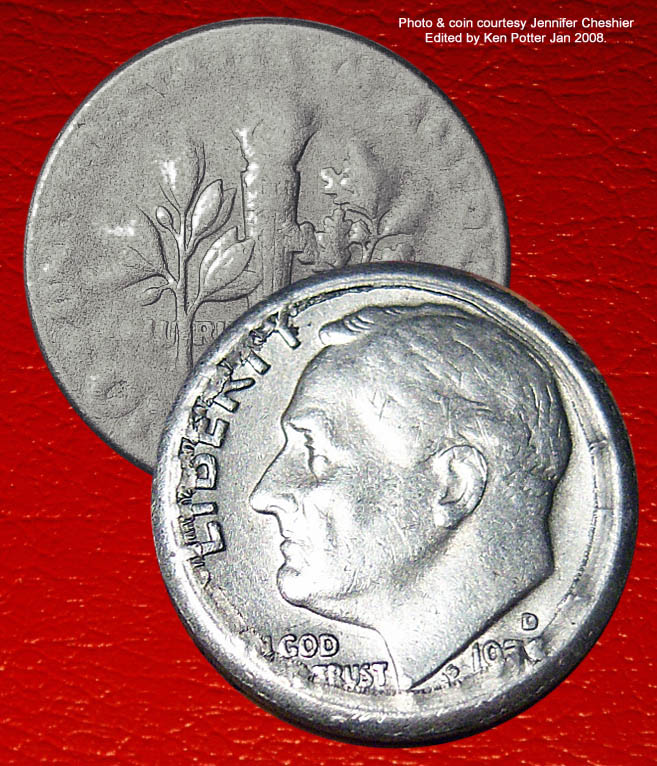 |
|
Page 2 of 2
|
Replies: 19 / Views: 3,969 |
Page 2 of 2
|




 First Page

 Posted 06/26/2015 5:14 pm