| Author |
 Replies: 186 / Views: 37,216 Replies: 186 / Views: 37,216 |
|
|
|
|
Valued Member
United States
411 Posts |
I am completely aware that Scandinavia is not America. It is a very common debate here as Scandinavia is brought up frequently in political discussions.
I have no doubt that Swedes are happy in many cases to adopt electronic payments, even for roadside stands. Perhaps more than established stores, street venders have more to gain from electronic payments because they have greater security worries and it is more difficult to make change.
But people are people everywhere. The urge to keep a little money in a floor safe in your home is a very strong one. The desire to have a nontraceable transaction is also a basic human desire.
There is a big discrepancy between Sweden and Norway in the amount of circulating cash considering Sweden has so many more people than Norway.
Valid Banknotes only (not coins)
44,258 million SEK
44,726 million NOK
64,321 million DKK
I just don't think you can attribute all of that to the "cash is for Fred Flintstone" idea.
I truly believe that with 45 million 1000SEK banknotes at the end of 2005, the Riksbank deliberately produced only 10 million 1000SEK banknotes with the security strip which were introduced in March 2006. I can't prove it since production statistics are not public. That was the first in a series of moves designed to reinforce behavior.
What about the other 6 currencies in countries part of the EU? It sort of makes sense for them to accelerate transitioning to digital currencies. If for no other reason than it will make the transition to the Euro much easier. If they never transition, it just makes more sense to not be shackled to physical currency that is only usable in such a limited area.
Croatian kuna 2,000 € Per Capita
Czech koruna 1,967 € Per Capita
Polish z#322;oty 1,389 € Per Capita
Hungarian forint 1,243 € Per Capita
Bulgarian lev 889 € Per Capita
Romanian leu 870 € Per Capita
Edited by PacoMartin
07/06/2017 9:14 pm
|
|
Pillar of the Community
Germany
995 Posts |
Quote:
I just bought a bunch of strawberries at a very temporary (only a few weeks a year during the season) pop up market stall (just a bunch of crates and a sunscreen) ran by immigrants who don't speak Norwegian and they didn't take cash, only card or payment via app. That's how it works here. Quite the contrast to Germany. These ''strawberries selling roadside stands'' -- by the way, strawberry season is coming to an end here in the part of Germany where I live -- are ''cash only.'' Considering the (recent) history of these six eastern European countries I think getting them to digital currency will be much more difficult than in the Scandinavian countries. Having read ultra's post I am a little bit shocked how ''cash hating'' these countries have become  Edited by redlock
07/07/2017 02:07 am
|
|
Valued Member
United States
411 Posts |
Quote:
Having read ultra's post I am a little bit shocked how ''cash hating'' these countries have become Valid Banknotes only (not coins) 44,258 million SEK @ 10 million population 44,726 million NOK @ 5.2 million population 64,321 million DKK @ 5.7 million population DKK is 29% more than SEK NOK is 1% more than SEK BIS Currency GDP% USD-2015 (per capita)
Japan 19.44% $6,738.65
Hong Kong SAR 15.51% $6,550.01
India 12.25% $195.48
Switzerland 11.76% $9,213.47
Euro area 10.63% $3,570.81
Russia 10.56% $799.51
Singapore 9.55% $4,910.88
Saudi Arabia 8.20% $1,708.47
United States 7.90% $4,433.23
Mexico 6.84% $598.78
Korea 5.56% $1,460.33
Turkey 5.37% $457.94
Australia 4.65% $2,319.93
Canada 4.08% $1,641.02
Brazil 3.82% $282.42
United Kingdom 3.72% $1,583.28
South Africa 2.39% $113.36
Sweden 1.73% $872.15
"Cash Hating" could mean you might very well do every single transaction electronically and keep 10,000kr in your home safe. Norway has much more cash "per capita" than Sweden since it has a little more than half the population. Denmark has as much cash circulating as UK or Canada. So Danes can easily keep some money at home. In my thinking the issue of keeping money at home and being able to make private transactions is a bigger one than how you pay for your strawberries. The proposed digital currency for Sweden may be perceived as a direct threat to commercial banks. I suspect that the national conversation may actually become vitriolic as commercial banks run campaigns. The relative technological backwardness of the 6 other EU countries may not stop them from adopting digital currencies. In reality, I could see them having a great deal to gain. In South America, Ecuador is a very poor country with only a 95% literacy rate, but they are pursuing digital currency more than any other nation in the Americas. Edited by PacoMartin
07/07/2017 11:52 pm
|
|
Valued Member
United States
411 Posts |
As of 30 June, 2017 Sweden's old banknotes are no longer valid. New banknotes are worth 44.3 billion SEK.
On 30 April 2017, the Riksbank owned 125.7 tons of gold. At the same date, the market value of the gold was 45.4 billion SEK.
For the first time in decades a country's gold is worth more than its banknotes.
|
|
Valued Member
United States
411 Posts |
There are many people who claim that physical cash can be used to be more frugal. They point to the super high debt-to-income ratio in Scandinavia as an example. The ranking is ambiguous, at best. Business Insider: Eurostat compared total debt per household, compared to the average income per household to produce a debt-to-income ratio. It's that data we've used to generate a ranking of the European countries where people have the most debt.10. Finland — 109.97%. Mortgages make up a particularly large proportion of the household debts held by Finns. According to the country's statistical agency, the average housing loan in Finland is 181% of annual household income. 9. Spain — 112.3%. Earlier in March, the European Commission warned that Spain's economy is being weakened by "large stock imbalances in the form of external and internal debt, both public and private." Household debt plays a huge role in that weakness. 8. Portugal — 116.39%. Towards the end of 2015, total combined debt in Portugal reached 360% of the country's GDP. 7. United Kingdom — 125.87%. According to data from the Money Charity, households in the UK hold an average of £54,080 of debt right now. 6. Sweden — 148.68%. Household debt in Sweden is on the rise which, according to the IMF, is helping fuel a growing housing bubble in the Nordic state. Sweden's economy is currently being defined by persistently low inflation, something the country's central bank is trying to combat with negative interest rates 5. Ireland — 179.55%. Ireland's household debt burden is actually falling at the minute, dropping to €33,530 per capita at last estimate, however, that's nearly twice the average disposable income in the country. 4. Norway — 187.47%. Norway may often by cited as the most prosperous nation on earth, but that doesn't stop its average citizens from being heavily indebted. 3. Cyprus — 202.45%. Cyprus is one of just three countries in Europe to have a debt-to-income ratio for households of more than 200%. 2. Netherlands — 214.45%. Estimates from the Netherlands' national statistical agency put the total debt held by Dutch households at more than €740 billion last year, around €100 billion less than the country's total GDP. Laurent Dubrule/Reuters 1. Denmark — 265.11%. Standing head and shoulders above the rest of Europe, Danes have by far the most debt of anyone on the continent, and in fact, the world. However, the governor of the Danish central bank, Lars Rohde isn't worried. In a 2014 interview he said that the threat to financial stability posed by high household debt is "not serious." http://www.businessinsider.com/euro...right-now-17 |
|
Valued Member
United States
411 Posts |
Quote:
According to an enviromental report from December 2015 Riksbank ordered
279 Million new 1kr
139 Million new 2kr
107 Million new 5kr
So a lot of the new coins are still in their vaults. The above comment seems to contradict the note on the http://www.riksbank.se/en/Notes--coins/Statistics/Quote:
There were coins minted in 2016 in denominations of 1, 2 and 5 krona. The number of coins minted in 2016 was significantly more than previously as the Riksbank introduced a new coin series. The exact amount of coins cannot be reported for security reasons.
I can't imagine what sort of "security reason" there would be to make it dangerous to print the number of coins produced. While it is possible that Sweden ordered all the coins that it is going to need for decades those numbers in the "environmental report" seem awfully high. As of end of June 2017 (circulation figures) 96 million 1kr 59 million 2kr 45 million 5kr Edited by PacoMartin
07/28/2017 1:55 pm
|
|
Pillar of the Community
Germany
995 Posts |
First of all, I find it odd, strange and also hilarious that a democratic country of the First World in this day and age feels the number of coins and banknotes it produces for its own currency need to be a ''state secret.'' That begs the question ''Why?'' I think Riksbank has either very few banknotes in its vaults or a hole lot -- in both cases they don't want the public to know. Don't rattle the cage... I can't recall where I found the environmental report on the internet as a PDF. Unfortunately, it is in swedish only. I don't speak swedish. A trading buddy who does informed me of the important stuff. The numbers speak for itself. I can email you the PDF if you want. I think it's likley that the swedish bureaucrats made a mistake and the report with the production numbers got out ''by accident.''  Secondly, my guess is that the consulting firm that did the research looked at the environmental impact for the next five to ten years, perhaps even longer. So the number of coins is probably ''up to xx million minted'' as a projection by Riksbank for their needs for the next five to ten years. Considering production cost I think it's also entirely possible however that all the coins have already been minted and are sitting in bank vaults. Issued by demand which is obviously not that high in Sweden. Depending on denomination 34--44% of the new coin production are already in circulation. I think that's not too bad for Sweden. I think it won't go higher than 70%. If it does, I would be surprised. The Bundesbank -- responsible for cash in Germany -- overestimated the need for 50 Eurocent and 1 Euro coins here in Germany. They ordered millions of them between 2003--2005 (after the initial release in 2002). The coins of these orders were minted between 2003--2008. A lot of these coins are still in the vaults of the Bundesbank waiting to be released. Hence, there haven't been new orders for German 50 Eurocent and 1 Euro coins for 12 years! By the way, the year on German Euro coins indicates the year the coins were ordered and NOT when they were actually minted -- except for the coins dated ''2002'' of course. They were minted between 1999--2002. But in contrast to France or the Netherland, all German coins of the initial release are ''2002'' only. |
|
Valued Member
United States
411 Posts |
Quote:
''Why?'' I think Riksbank has either very few banknotes in its vaults or a whole lot -- in both cases they don't want the public to know. Don't rattle the cage...
They can be criticized either way. If it is too few, then it is difficult to stick with their argument that the reduction in cash is purely due to market forces and not being dictated at the government level. If it is a whole lot, then small vocal groups will want to see more banknotes circulated. Especially if there is a lot more of the token 3.482 million 1000kr banknotes circulating in a population of ten million. As I said earlier, it hardly seems worth the trouble to have the denomination. If Britain eliminated the 50 pound banknote, then I wonder if Sweden will follow, and eliminate the 500 and 1000 SEK banknotes. 50 GBP = 534.6 SEK Edited by PacoMartin
10/05/2017 04:56 am
|
|
Valued Member
United States
411 Posts |
I think somewhat of a surprise is that the number of 500kr banknotes increased by 20% in the 6 months after the old notes were declared invalid on 30 June 2017. It's almost as if the banknote refused to be completely buried.
But circulation ended the year for Sweden at about 20 banknotes per capita with 25% being of the 20kr denomination. Circulation of the 1000kr is only token quantities, and value of circulating banknotes are 4600kr or roughly 460 Euros per capita.
Although the decision to issue an e-krona is technically still undecided, it seems unlikely that the Riksbank will go through this huge process and then decide not to issue an electronic currency. If for no other reason than the central bank will do it out of self preservation.
|
|
Valued Member
United States
411 Posts |
End of June 2018 (last column is millions of notes)
1,017 kr : 20 kr : 50.9
958 kr : 50 kr : 19.2
3,077 kr : 100 kr : 30.8
5,662 kr : 200 kr : 28.3
36,210 kr : 500 kr : 72.4
3,388 kr : 1,000 kr : 3.4
50,312 kr : total : 204.9
PRESS RELEASE
The Riksbank has today, 19 June 2018, given notice of termination of its contract with Crane AB, the company that prints Swedish banknotes. The reason for the termination is that Crane has announced that it will be closing its banknote printing operations in Tumba at the end of this year and moving them to its plant on Malta. As the agreement with Crane states that they will print Swedish banknotes at the printing works in Tumba, the Riksbank is now giving notice of termination of the contract. The Riksbank is now working on finding a new supplier to manufacture Swedish banknotes.
The Riksbank had its own production of both coins and banknotes until the early 2000s. In 2001, the Swedish Mint was sold to Mint of Finland and in 2002 Tumba Bruk was sold to the American company Crane. Since then, the Riksbank has procured the manufacture of both banknotes and coins on the international market. Banknotes have continued to be printed in Tumba, while coins have been manufactured abroad since 2008. The Riksbank is now working on finding a new supplier to manufacture Swedish banknotes. The Riksbank has very stringent requirements of both quality and security in its public procurements. As the Riksbank observes the Public Procurement Act, Swedish banknotes could also be manufactured abroad.
Maybe they shouldn't bother. When this batch runs out just don't distribute any more.
Edited by PacoMartin
07/08/2018 1:27 pm
|
|
New Member
10 Posts |
very good .. I like this notes
|
|
Valued Member
United States
411 Posts |
Do you think they should continue with their efforts to procure a new supplier of banknotes or just stop making them entirely.
The exchange rate is close to 10:1 which if they fixed the exchange rate, they could just use Euros.
1 SEK = 0.0964207 EUR
1 EUR = 10.3712 SEK
Swedish banknotes will not be printed in Malta
Published 18/05/2018
Crane AB, which prints Swedish banknotes, has announced that it will be winding up the banknote printing works in Tumba and will instead continue its operations in Malta. The Riksbank's agreement with Crane AB states that Swedish banknotes will be printed in Tumba. There is no question of moving the production of Swedish banknotes to Malta. The Riksbank is working on finding a solution for continued production of Swedish banknotes.
Edited by PacoMartin
07/19/2018 8:11 pm
|
|
Pillar of the Community
Germany
995 Posts |
Quote:
Do you think they should continue with their efforts to procure a new supplier of banknotes or just stop making them entirely. Riksbank decided to continue producing banknotes and finding a new supplier in De La Rue in the UK. See: https://www.riksbank.se/en-gb/press...te-supplier/I just wish Riksbank would stop the secrecy regarding production numbers of their banknotes. Edited by redlock
09/23/2018 02:20 am
|
|
Valued Member
United States
411 Posts |
The secrecy extends to the number of coins minted as well. Riksbank StatementThe Riksbank is responsible for providing Sweden with banknotes and coins. Our tasks include issuing banknotes and coins, destroying worn-out banknotes and coins and redeeming invalid banknotes. The Riksbank does not govern how much cash is in circulation in society; this is instead determined by demand from the general public. https://www.riksbank.se/en-gb/notes-and-coins/This 18 page paper by Ron Delnavio is an "advocacy document" since he works for an organization that promotes ATM use. However, the document analyzes the Riksbank's claim that the reduction in cash in Sweden since 2007 is entirely related to lack of demand by the general public. https://www.atmia.com/files/Europe%...h-report.pdfRiksbank has a ton of statistics that show how the use of cash is declining in Swedish society. For instance the average number of days between ATM withdrawals follows. 2010 17 2012 20 2014 22 2016 24 2018 27 The average amount of cash withdrawn is down to about 800kr which is roughly US$100. Supposedly Swedish society is roughly evenly divided in their feeling about the loss of cash between negative, neutral, fairly positive, and enthusiastic. Rural areas understandably are more negative with 20% of responders feeling "very negative". The urban youth (predictably) are the ones most likely to use cash less and less. ==================== A personal observation is that if the Riksbank decides to eliminate banknotes entirely, it should consider producing new coins in denominations of 20kr, 50kr and 100kr and encourage reasonable circulation even if that means suggesting that casinos use the coins. In the event of a massive solar flare, at least people will have cash to function for a few days. For those people who think I am paranoid, I should note that the solar super storm in 2012 missed the Earth by only 9 days. Estimates are that the damage to the global economy would have to be calculated in trillions of dollars and the economy would take years to recover. The 2012 storm was of the same magnitude as the 1859 storm that wiped out communications on the newly created telegraph system. The magnetic field was so intense that some telegraph operators reported they could still send a telegram even after the power supply was disconnected. Edited by PacoMartin
09/24/2018 4:16 pm
|
|
Valued Member
United States
411 Posts |
I wrote to Ron Delnevo and asked him about his article, and his response followed. One of the great problems everywhere is the secrecy surrounding all things ATMs and cash. The less the public is told the better, seems to be the the general view of the "authorities".The Swedish 1000SEK banknote designs (1) 1894-1950 :"Mother Svea"/Gustav I/Vasa worth .9 lbs gold (2) 1952-1973 :"Mother Svea"/Gustav V $192 (3) 1976-1988 : Karl XIV Johan $227 (4) 1989-1991 : Gustav Vasa $163 (4+) 2006 : Gustav Vasa (security strip added 2006) (5) 2015-present :Dag Hammarskjöld 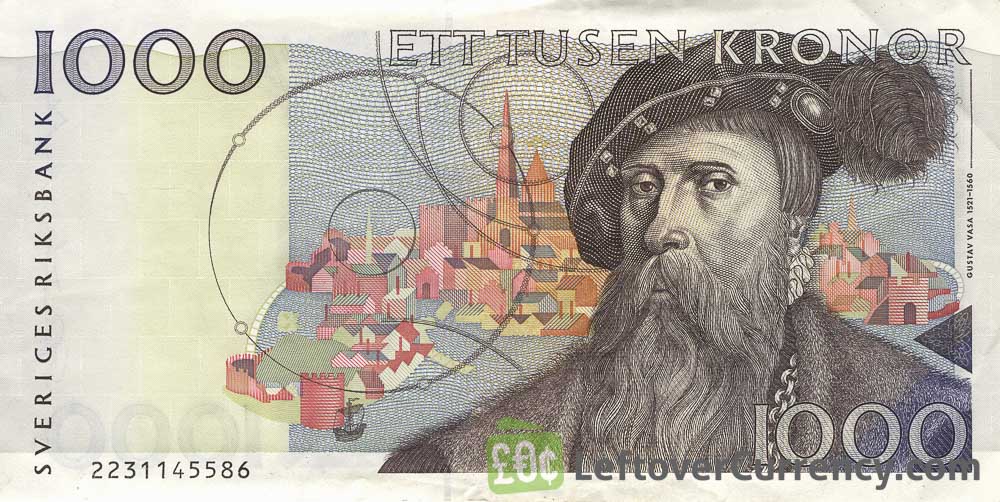 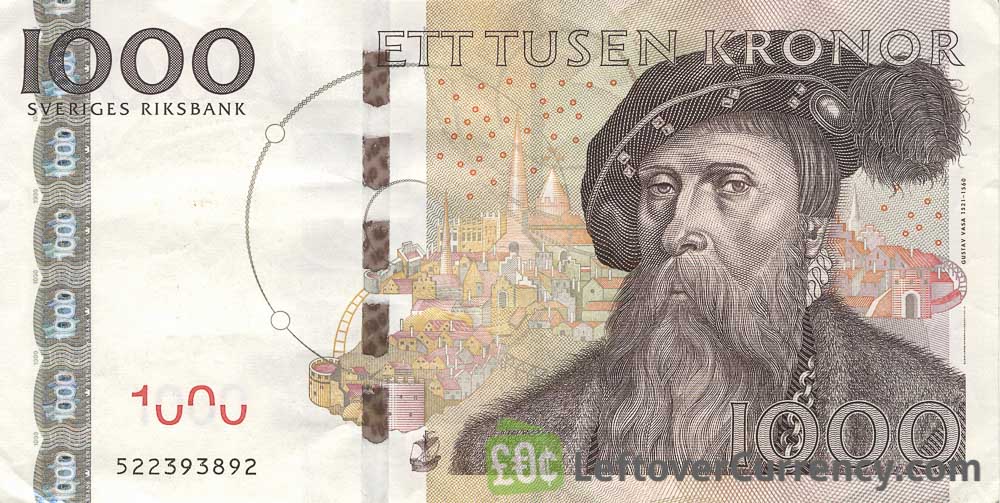 year millions of notes in circulation 1995 37.842 1996 38.637 1997 39.226 1998 40.999 31. Dec. 1998 Karl XIV Johan invalid $123 1999 46.791 2000 46.217 2001 48.358 peak circulation 2002 46.920 2003 45.652 2004 45.561 2005 45.292 2006 42.091 15. Mar. 2006 Vasa w/ strip intro $128 2007 38.648 2008 34.302 2009 31.367 2010 28.565 2011 25.090 2012 21.380 2013 9.709 31. Dec. 2013 Vasa w/o strip invalid 2014 6.160 2015 4.198 1. Oct. 2015 Dag Hammarskjöld valid $119 2016 3.299 30. Jun. 2016 Vasa with strip invalid 2017 3.494 2018 3.390 So the circulation of this note dropped from 40+ million to just under 10 million in 7 years. The Riksbank argues that the general public did not want the bills anymore. But did the government produce 40 million bills with motion sensor strip and destroy them , or did they only produce 10 million bills with the strip? If the former case is true it lends credence to the idea that the public rejected the higher denomination. However, if the latter is true, then the government was trying to phase out the 1000kr banknote. By keeping production quantities a state secret nobody knows the answer. Similarly the Hammarskjöld banknote is circulating in such small quantities as to be nearly invisible. Nobody know how many (if any) are in storage. Edited by PacoMartin
09/26/2018 10:07 am
|
|
|
Replies: 186 / Views: 37,216 |
|
To participate in the forum you must log in or register.
Disclaimer: While a tremendous amount of effort goes into ensuring the accuracy of the information contained in this site, Coin Community assumes no liability for errors. Copyright 2005 - 2026 Coin Community Family- all rights reserved worldwide. Use of any images or content on this website without prior written permission of Coin Community or the original lender is strictly prohibited.
Contact Us | Advertise Here | Privacy Policy / Terms of Use
|
| Coin Community Forum |
© 2005 - 2026 Coin Community Forums |
| It took 0.41 seconds to rattle this change. |
 |
|








 First Page
 Previous Page


 Posted 07/07/2017 01:57 am


