







 First Page


 Posted 05/19/2016 01:44 am


I will start my comment with a preface. I am NOT an expert with regards to this exact type of coin. I am however, very familiar with the differences between contemporary counterfeits and numismatic forgeries. So starting from that basis, I will look at this coin from my own perspective and to determine if the origins can be determined.
The problems with the auction itself are obvious.
The seller is a known dealer in Numismatic Forgeries and the coin does not match the correct design. Returns are not allowed and the price is set VERY low. There is no way to spot shill bidding because the identities are private. Finally, Latvia is an outlet known for forgeries as is Belarus.
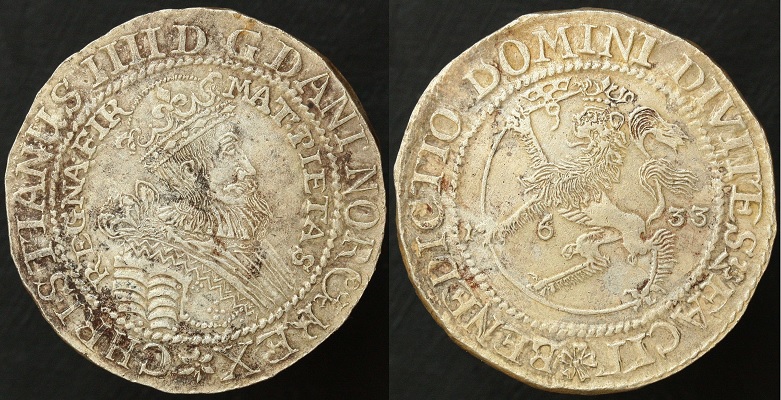
When I first looked at the coin that began this thread - I wondered if the coin was actually a contemporary counterfeit. A contemporary counterfeit could easily be worth the current bid. Here is the coin:
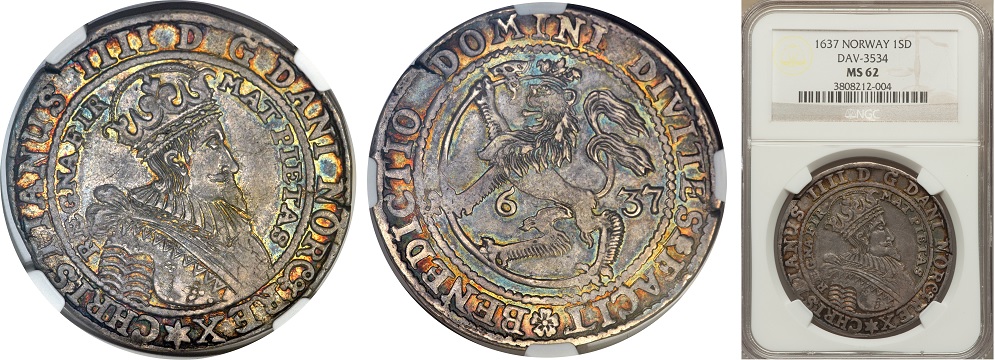
Below is a picture of a genuine example of a 1637 Speciedaler.
The rarity of a target coin is usually a red flag. Counterfeiters operating in the 17th century did not copy rare coins. That is a truth that applies to all counterfeiters. They target coins that are common in circulation so that they do not attract attention. So the first hurdle to over come with this particular coin is the apparent rarity of the variety.
The question is were these coins common in circulation in the 1630s? I do not know the answer to that question, but I presume that a well informed collector of the coins of Norway would know.
The next question to ask the expert is: How long did this coin remain as a common circulating coin? To rephrase the question: When would a 1633 Speciedaler attract unwanted attention in circulation?
Lets presume for a minute that the coin was common when made. I think that is reasonable since Krause provides a mintage of 33,000 coins for 1633 (and a total mintage for 1631-1648 of 777,040 coins.) The country of Norway at the time was governed by the King Denmark and all of Scandinavia was unified. Trade was of particular importance and the Speciedaler was a generally recognized denomination internationally. Lets also presume that the coin as a type remained common until 1648. I think that is also reasonable because at that point the speciedaler was reduced in silver content by the subsequent ruler Frederick III. From my perspective this raw data appears to prove that the coin would definitely have been targeted for counterfeiting in the interval from 1633 to 1648 and perhaps beyond that date because it would have been traded at a premium because it contained more silver than the later issues. Therefore I think you have to look beyond the current price as a sole determinant. I believe it is appropriate to evaluate the coin in an attempt to determine when it was made and if there are any clues that would point to a numismatic forgery.
In the comments made, there are references to two other coins being offered by the same seller and the inference that they were made in the same place. Here are the two coins:
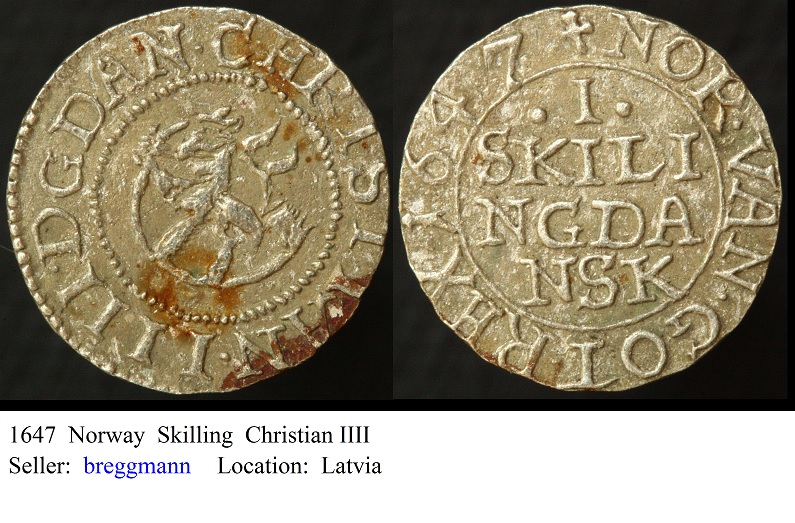
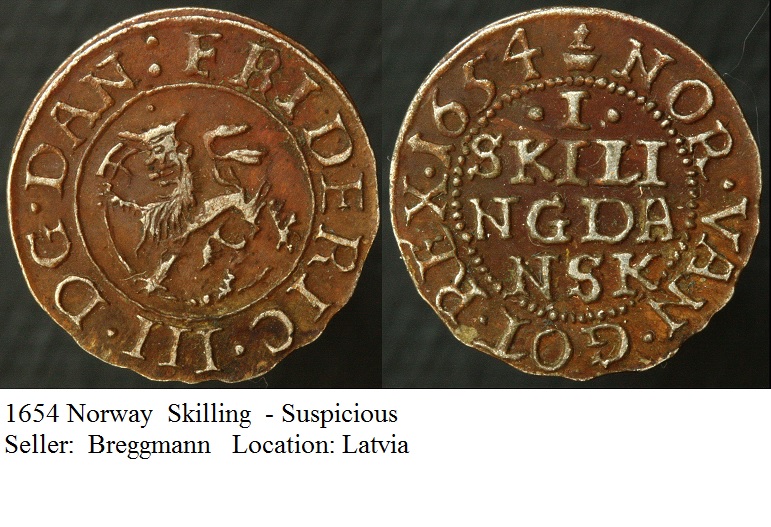
These coins are very small in comparison to the speciedaler. They are only about 1 gram in total weight. These two coins look modern to me on first view. I was able to match many of the fonts as well so that I am comfortable with the belief that they were produced by one manufacturer. The speciedaler shares virtually none of the traits that are common to the other two coins. Size may be an issue but a different die cutter could also be at work.
Next I examined the methods used to make the three coins. The two skilling appear to be casts made from a hand engraved mold. There is no strike evidence. The speciedaler displays multiple impressions seen on rocker strikes. It is similar to what is observed on roller presses where multiple passes are required. Both are correct methodologies for the 17th century. Since the pattern used is not genuine someone cut dies to make the exemplar - so even if this coin is a cast copy what was copied was struck more than once. That process makes the coin appear old. If a forger went to these lengths to create a forgery of a counterfeit, I would likely pay the current bid or more just to see it.
Because I do not know the accurate weight, because I do not have the density of the coin and because I can not examine the edge - I would classify the coin as fake for certain and possibly a contemporary counterfeit.
If I was still a member of the Coin Watch Committee, I would vote to REMOVE the coin from ebay NOT because it was a counterfeit but because the coin was improperly described. I would allow a re-post if the seller agreed to two conditions to 1) describe the coin as NOT genuine and to allow returns if the coin proves to be a modern fabrication.
The problems with the auction itself are obvious.
The seller is a known dealer in Numismatic Forgeries and the coin does not match the correct design. Returns are not allowed and the price is set VERY low. There is no way to spot shill bidding because the identities are private. Finally, Latvia is an outlet known for forgeries as is Belarus.
When I first looked at the coin that began this thread - I wondered if the coin was actually a contemporary counterfeit. A contemporary counterfeit could easily be worth the current bid. Here is the coin:
Below is a picture of a genuine example of a 1637 Speciedaler.
The rarity of a target coin is usually a red flag. Counterfeiters operating in the 17th century did not copy rare coins. That is a truth that applies to all counterfeiters. They target coins that are common in circulation so that they do not attract attention. So the first hurdle to over come with this particular coin is the apparent rarity of the variety.
The question is were these coins common in circulation in the 1630s? I do not know the answer to that question, but I presume that a well informed collector of the coins of Norway would know.
The next question to ask the expert is: How long did this coin remain as a common circulating coin? To rephrase the question: When would a 1633 Speciedaler attract unwanted attention in circulation?
Lets presume for a minute that the coin was common when made. I think that is reasonable since Krause provides a mintage of 33,000 coins for 1633 (and a total mintage for 1631-1648 of 777,040 coins.) The country of Norway at the time was governed by the King Denmark and all of Scandinavia was unified. Trade was of particular importance and the Speciedaler was a generally recognized denomination internationally. Lets also presume that the coin as a type remained common until 1648. I think that is also reasonable because at that point the speciedaler was reduced in silver content by the subsequent ruler Frederick III. From my perspective this raw data appears to prove that the coin would definitely have been targeted for counterfeiting in the interval from 1633 to 1648 and perhaps beyond that date because it would have been traded at a premium because it contained more silver than the later issues. Therefore I think you have to look beyond the current price as a sole determinant. I believe it is appropriate to evaluate the coin in an attempt to determine when it was made and if there are any clues that would point to a numismatic forgery.
In the comments made, there are references to two other coins being offered by the same seller and the inference that they were made in the same place. Here are the two coins:
These coins are very small in comparison to the speciedaler. They are only about 1 gram in total weight. These two coins look modern to me on first view. I was able to match many of the fonts as well so that I am comfortable with the belief that they were produced by one manufacturer. The speciedaler shares virtually none of the traits that are common to the other two coins. Size may be an issue but a different die cutter could also be at work.
Next I examined the methods used to make the three coins. The two skilling appear to be casts made from a hand engraved mold. There is no strike evidence. The speciedaler displays multiple impressions seen on rocker strikes. It is similar to what is observed on roller presses where multiple passes are required. Both are correct methodologies for the 17th century. Since the pattern used is not genuine someone cut dies to make the exemplar - so even if this coin is a cast copy what was copied was struck more than once. That process makes the coin appear old. If a forger went to these lengths to create a forgery of a counterfeit, I would likely pay the current bid or more just to see it.
Because I do not know the accurate weight, because I do not have the density of the coin and because I can not examine the edge - I would classify the coin as fake for certain and possibly a contemporary counterfeit.
If I was still a member of the Coin Watch Committee, I would vote to REMOVE the coin from ebay NOT because it was a counterfeit but because the coin was improperly described. I would allow a re-post if the seller agreed to two conditions to 1) describe the coin as NOT genuine and to allow returns if the coin proves to be a modern fabrication.


