| Author |
 Replies: 18 / Views: 14,709 Replies: 18 / Views: 14,709 |
Page 2 of 2
|
|
|
|
Valued Member
 United States
123 Posts |
I'm still working on the image part of my posting. The coin pictures I took were blurred and not of much use.
|
|
Bedrock of the Community
Canada
24885 Posts |
Quote:
Many of the cleaning/ dipping solutions can and will be beneficial in the right situations if you know what you're doing. I agree with your opinion. |
|
Moderator
 United States
196100 Posts |
|
|
Rest in Peace
United States
18456 Posts |
One of the most asked questions on this forum is about How to clean coins . There is a right way and a wrong way to do so . If you want to clean your coins, you need to be experienced at it. If you don't know what your doing you can ruin a valuable coin . Read up on our coin cleaning forum and ask questions before attempting a major restoration job .  |
|
Valued Member
United States
123 Posts |
I would have never thought using acetone would be acceptable for cleaning coins. I use acetone for thinning the primer I spray on my projects, I have a 1957 Chevy truck I am building. Seems like a harsh solvent for coins. Learned something new.
|
|
Bedrock of the Community
United States
20753 Posts |
Over the years there have been so many suggested types of cleaning of coins. Olive oils, all kinds of soaps, mild acids, Tomato and Lemon Juices, toothpicks, place in freezers, WD-40, battery acid and on and on and on. I just don't know why people just can't leave coins alone. Yes a little dip in Acetone is OK but why keep on messing around.
|
|
Pillar of the Community
United States
1314 Posts |
This is just one of the reasons why I do it. It isn't for everyone. 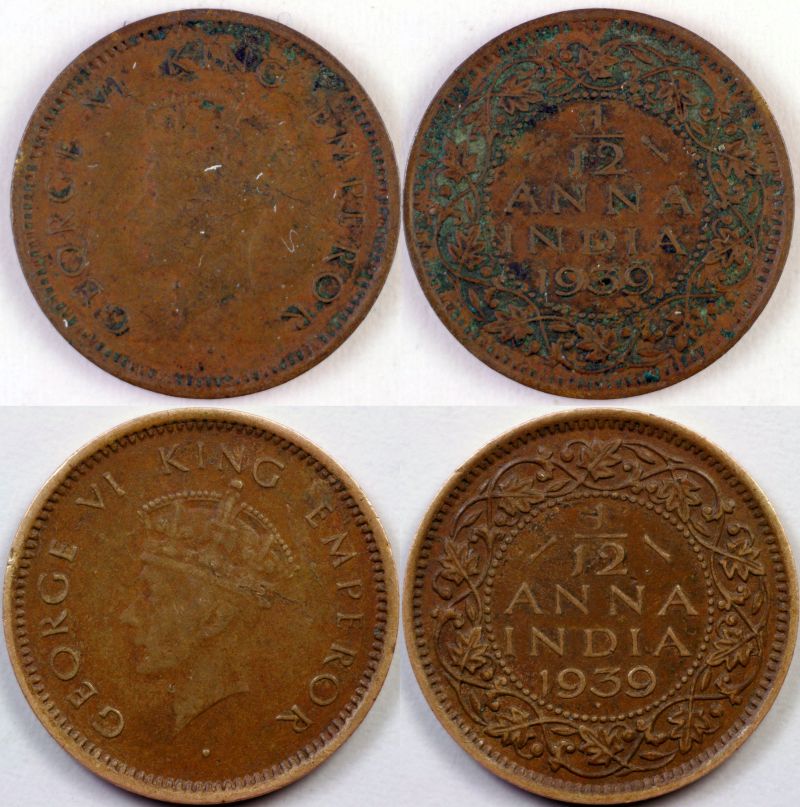 |
|
Valued Member
Canada
217 Posts |
Was that just acetone or acetone + verdi care?
|
|
Pillar of the Community
United States
1314 Posts |
Acetone, Verdi Care and likely one or two other commercial products.
The hard to come by ingredients are patience and practice.
|
|
Moderator
Australia
17005 Posts |
The "harshness" of a chemical is entirely dependent on what chemical reactions you are expecting to occur. Acetone is a "harsh" solvent, in the sense that it will dissolve or depolymerize many kinds of plastic; it's also rather flammable. But it does not react with metals or metal oxides/salts at all. So it's great for removing plastic-like "grime" from coins without damaging the metal or the patina/oxidation layer. The general advice "don't clean coins" is the default position for coin collectors, for two reasons. 1. Because things that everyone else out there calls "dirt" or "grime" are not necessarily things that a coin collector wants removed from the coin. Paint, glue, varnish, sticky-tape? Sure, remove them with extreme prejudice. Toning, tarnish, oxidation? Leave it there, don't you dare remove it. Yet to a non-coin-collector, it's all "dirt". 2. Because the correct cleaning of coins is actually rather hard to do properly, and very easy to do badly. Further, most kinds of cleaning don't have an "undo button" - you can't change your mind, decide you liked the way the coin looked before you tried to clean it and dis-clean the coin again. Coin cleaning is irreversible, and a botched cleaning job is irreversible too. I've had "failures" in my coin cleaning experiments - treatments which either did nothing at all, or which made the coin look worse. Over a decade ago I tried various chemicals and compounds, up to and including ammonia, on an old corroded Australian copper token with a nasty case of active verdigris; you can see the results in this old thread, and judge for yourself whether the coin looks "better", "worse" or merely "different". I've also had some successes too. Check out the results I obtained cleaning up a debased-silver Australian coin with severe corrosion, using a soak in 5% disodium EDTA solution for several days: Before:  After: 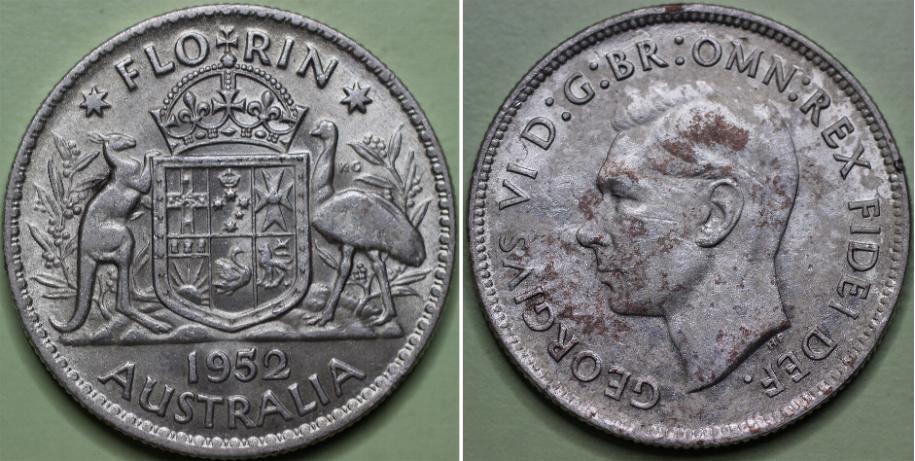 Don't say "infinitely" when you mean "very"; otherwise, you'll have no word left when you want to talk about something really infinite. - C. S. Lewis
|
|
Pillar of the Community
United States
869 Posts |
 Great post . .  The coin in the before photo, I wouldn't want to touch it with my bare hands! What a difference.  |
|
Valued Member
Canada
217 Posts |
Nice job Sap and Chute72. You saved coins that would have probably corroded away completely and aren't high value rarities.
thumbs up.
|
|
Bedrock of the Community
Canada
24885 Posts |
@ Sap & Chute72. Excellent contributions Edited by Dorado
03/26/2017 12:48 pm
|
|
Valued Member
United States
123 Posts |
I have never cleaned a coin to where I felt the coin was ruined and most of the time the cleaning is because I can't read the date. I have a rag I keep handy to rub coins with that are tarnished and it is hard to read the date. So mostly the cleaning/polishing is an effort to read the date and especially the mint mark.
|
|
Valued Member
United States
123 Posts |
Thank you to all for your excellent advice on coin cleaning. For now I will stick to very light cleaning when I am having trouble with dates and mint marks. I will be trying my luck with a metal detector soon, so I am guessing I will be back with a coin, that has been in the ground for years, seeking advice.
|
|
Page 2 of 2
|
Replies: 18 / Views: 14,709 |
Page 2 of 2
|








 First Page


 Posted 03/24/2017 10:14 pm


