| Author |
 Replies: 18 / Views: 2,248 Replies: 18 / Views: 2,248 |
Page 2 of 2
|
|
|
|
Bedrock of the Community
United States
12477 Posts |
 That is quite interesting! My best guess currently is a pre-strike lamination peel or other planchet defect. The reverse metal was missing before the strike and that caused the corresponding weakness on the obverse. It's an error, but I agree that sharper pics would help to define/condirm it.  In Memory of Crazyb0 12-26-1951 to 7-27-2020
In Memory of Tootallious 3-31-1964 to 4-15-2020
In Memory of T-BOP 10-12-1949 to 1-19-2024
|
|
Pillar of the Community
United States
8715 Posts |
to the CCF! Sharper pics will help. You might have an interesting error there. |
|
Moderator
 United States
196778 Posts |
to the Community! |
|
New Member
 United States
15 Posts |
I took 2 more pics with my iPhone. I hope these are a little better. 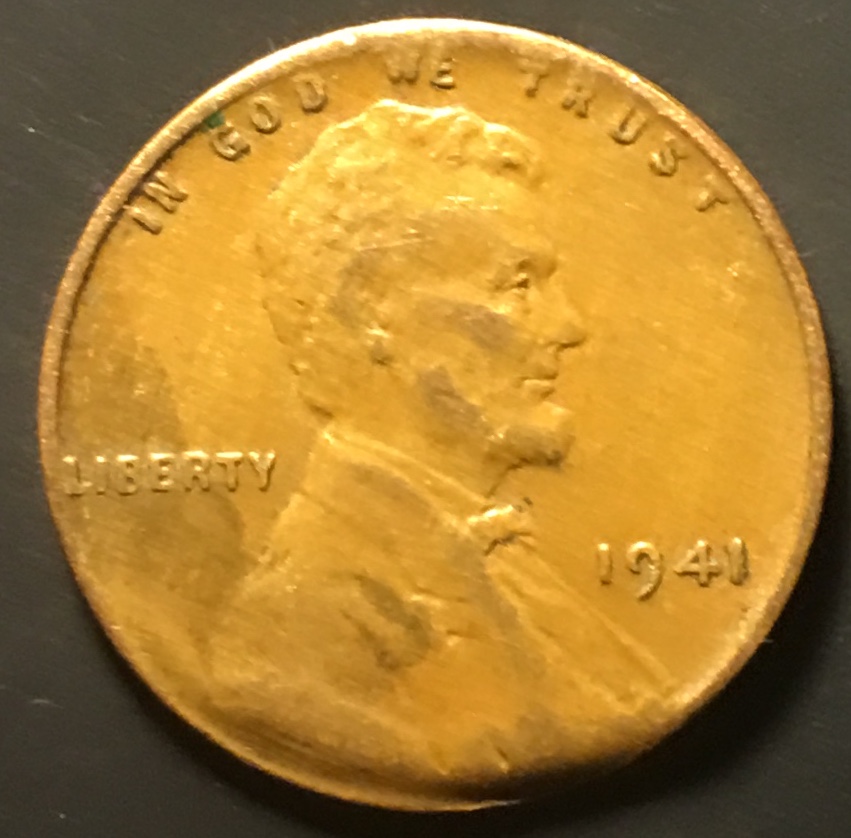 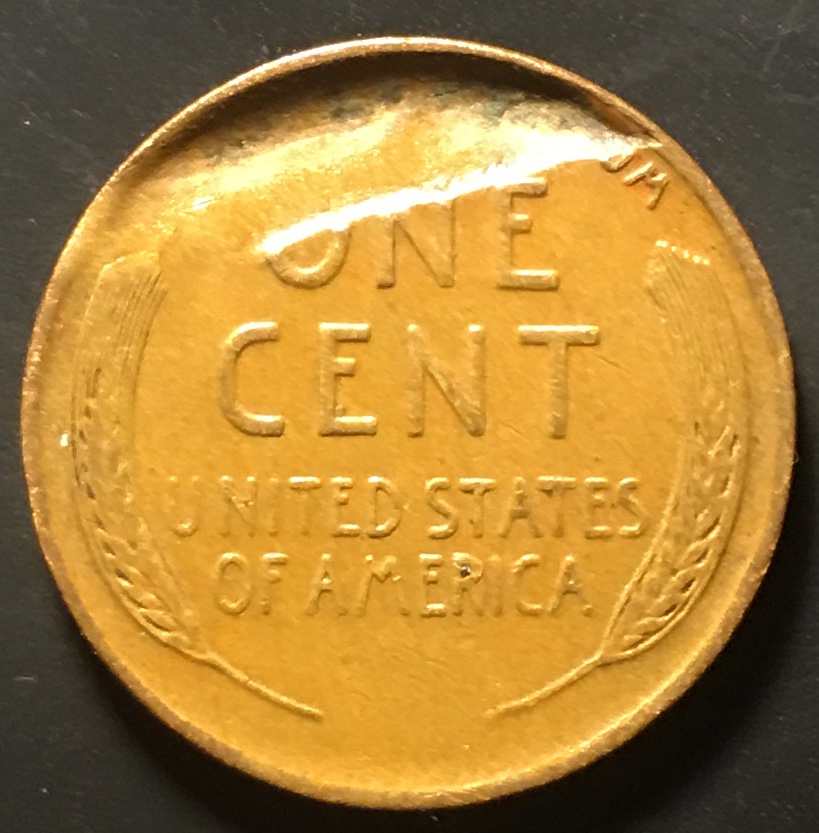 |
|
Bedrock of the Community
Canada
21932 Posts |
Looks to me like a planchet flaw. A low area in the planchet.
Looking at the edge photos, you can see how when it went through
the upsetting mill, there wasn't enough material to fully form the rim.
It also affected the forming on the Obverse.
Nice find and welcome to the CCF
|
|
New Member
United States
15 Posts |
|
|
Pillar of the Community
United States
2775 Posts |
New images do show its condition a lot better. That said I'd like to  scratch my head a bit more and ponder what I think I see. Thanks, Doug. Edited by Halo1st
10/15/2018 10:40 pm
|
|
New Member
United States
15 Posts |
|
|
Pillar of the Community
United States
520 Posts |
|
|
Pillar of the Community
United States
2775 Posts |
Prior to blanking, I'm thinking something foreign may have been present during the coin stock being rolled to thickness. That or it rolled out super thin at that position. The cavity is not showing signs of a lamination issue pre or post strike to me. Seems to be some Blakesley effect showing opposite the area on the obverse at 12 o'clock. Indicating the lack of material was present during the upset process, which creates the proto rim. Generally Blakesley effect is associated with blanking clips or material shortage. Thought I'd throw that in there.  One other thought I've read about concerns rolling or bonding stock plates together to create the big contiguous roll. The end of one plate gets pressed into the next, which can sometimes separate before, during or after blanking. Thanks, Doug. Edited by Halo1st
10/16/2018 10:12 am
|
|
New Member
United States
15 Posts |
Thanks Doug! I just started reading "Official Price Guide to Mint Errors" by Alan Herbert. I am a proud rookie and I wouldn't want to annoy avid collectors of coin errors/varieties so if by asking what I should call it is a kind of dumb question, I apologize in advance.
|
|
Bedrock of the Community
United States
94367 Posts |
Most unusual, good eye! |
|
New Member
United States
15 Posts |
|
|
Pillar of the Community
United States
2775 Posts |
Bwinlanc1, being a rookie myself, when it comes to errors and varieties, I know enough to know I do not know everything. I think spruett001's description "planchet defect" or planchet error sums it up unless someone else has more to add. One of the things I was trying to describe may fall under "Rolling Mill Errors: Rolling Indentation", described better in following link. http://www.error-ref.com/rolling-mi...indentation/Quote:
Definition: A foreign object is rolled into the coin metal strip and falls out after the strip is rolled to final thickness.
The object can remain embedded in the subsequent blank or planchet but falls out before the planchet arrives at the coinage press. The result is an underweight blank that has a recess on one face. When struck, the coin displays that same recess and also shows weakness in the same area on the opposite face. Some other planchet errors can be found here. http://www.error-ref.com/part-v-planchet-errors/Thanks, Doug. Edited by Halo1st
10/17/2018 1:30 pm
|
|
Bedrock of the Community
Canada
21932 Posts |
Quote:
so if by asking what I should call it is a kind of dumb question, I apologize in advance. Not a dumb question at all. I think what you have is a legitimate error and well worth saving. Nice find. |
|
Page 2 of 2
|
Replies: 18 / Views: 2,248 |
Page 2 of 2
|




 First Page


 Posted 10/15/2018 11:03 am





