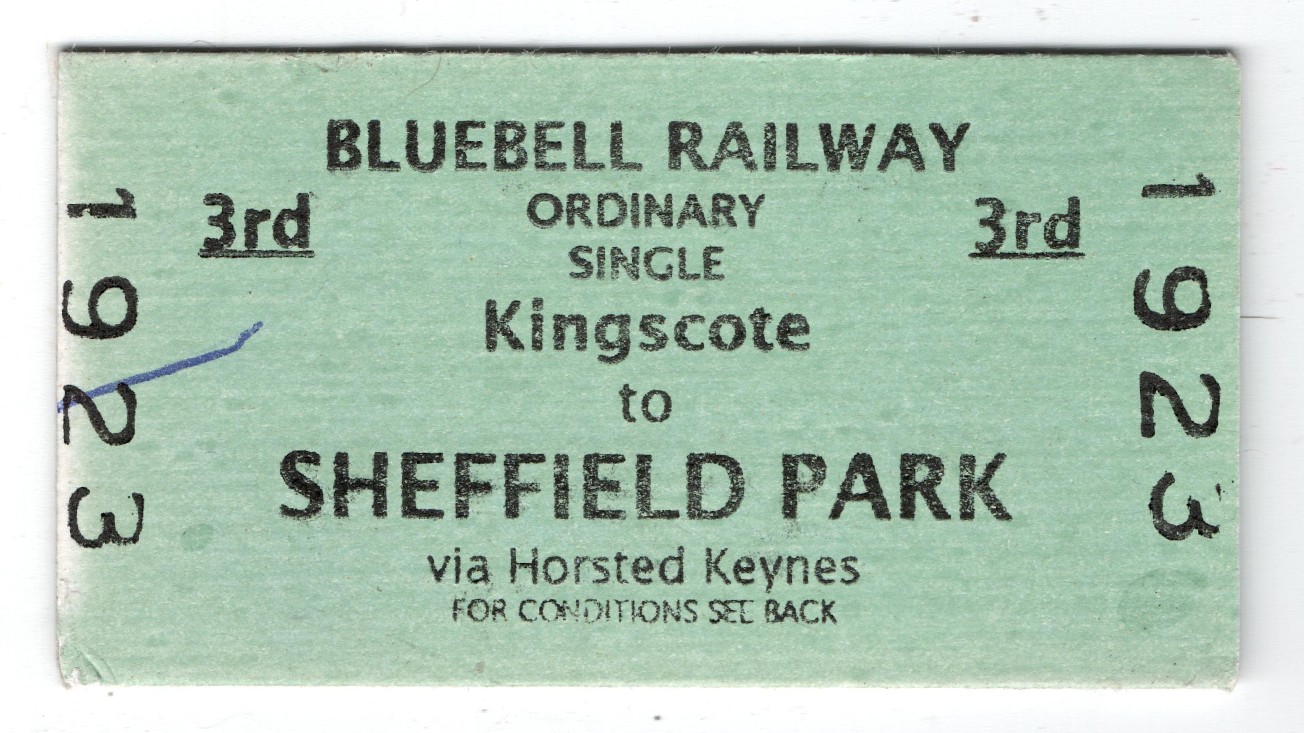
Another new ticket from me but a slice of history!
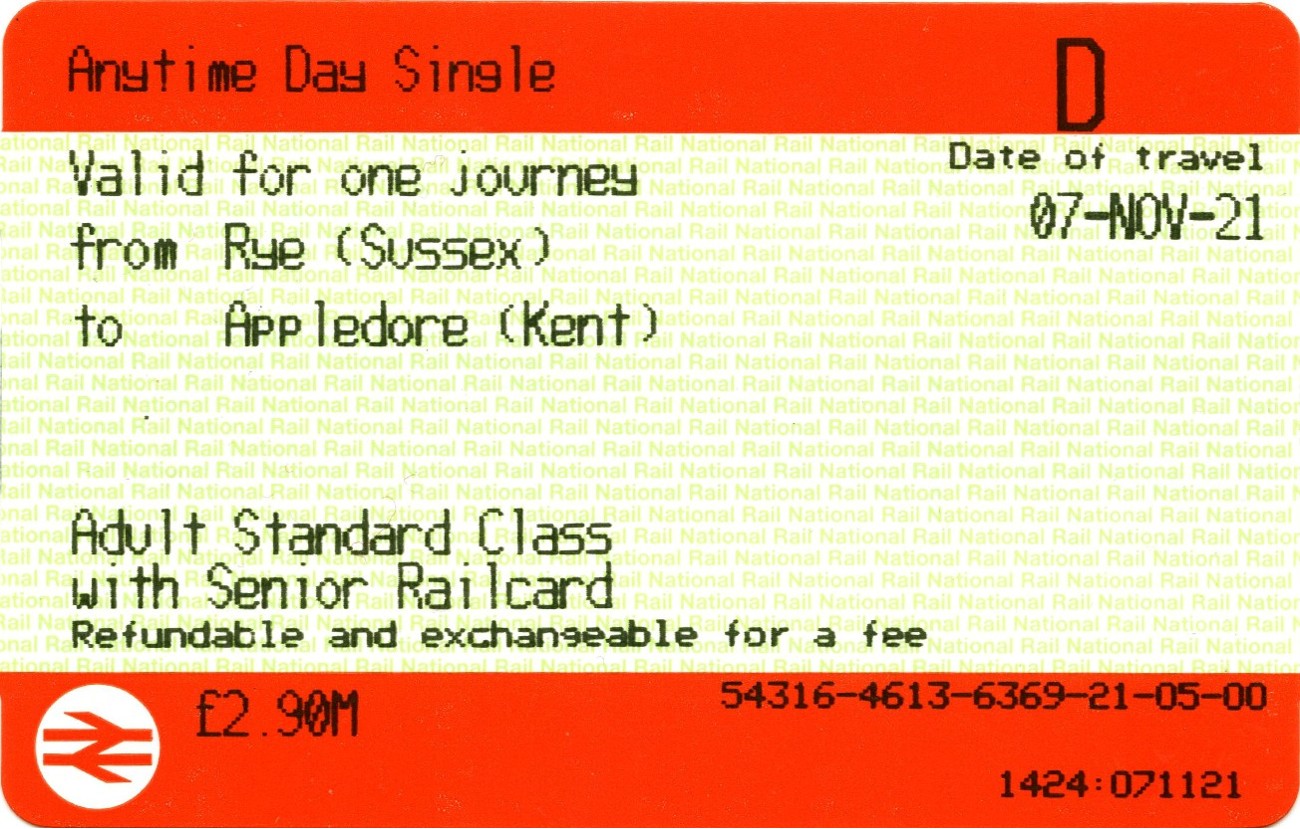
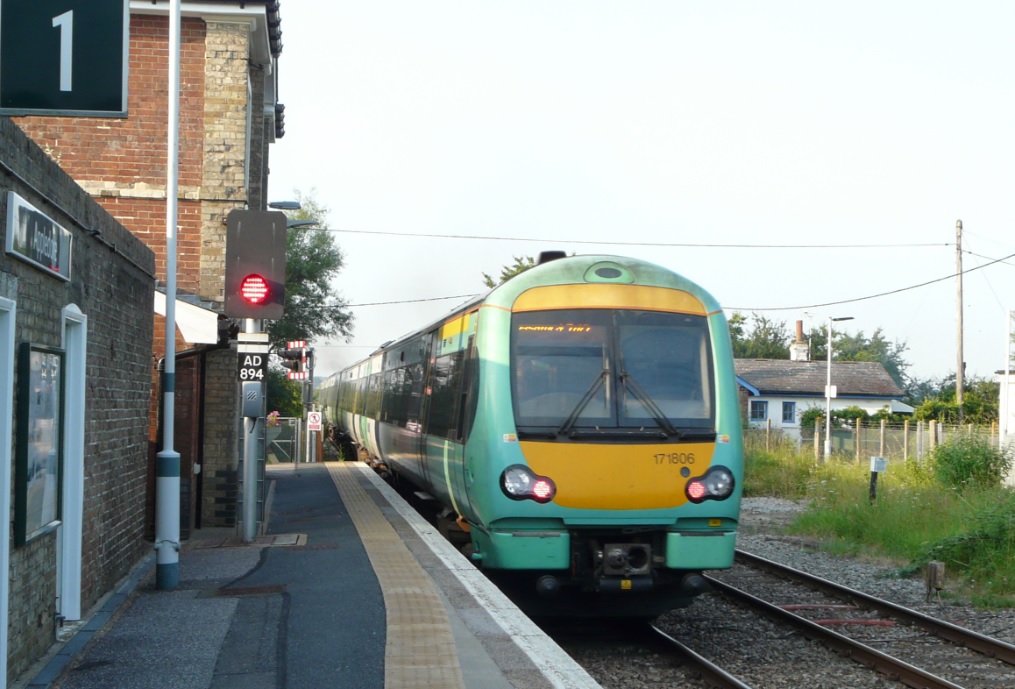
On Sunday I parked my car at Appledore Station in Kent, walked 6 miles (one of my favorite country walks) to Rye in Sussex, and got the train back - one of my favorite journeys. But really there shouldn't be a railroad line here at all, and the fact that there still is today is something of a miracle. Even today, Appledore is just a small village, and its train station is not especially useful as it's located in the middle of nowhere a mile and a half from the main street. Appledore probably had its moment of glory in the 18th century when a group of local cereal farmers formed a Union and erected their own windmill, which appears on a halfpenny token:


In the early 1840s the two main railroad companies in South-East England opened their main trunk lines. The London, Brighton & South Coast Railway opened a line from London to Brighton and the South-Eastern Railway opened a line via the Kent market town of Ashford to the port of Dover.
Both companies then started building branch lines to serve other towns and cities. But they were deadly rivals!
The fishing port and seaside resort of Hastings (famous for the Battle of 1066) was halfway between Ashford and Brighton. The LB&SCR opened a line from Brighton to Hastings in 1846. The SER wanted a piece of the action and announced plans two years later to build a line to Hastings from Ashford. They planned to take a direct route between the two towns, serving en-route the sizeable market town of Tenterden and several prosperous villages, which would all bring custom to the railway...
Except - this guy had just seized power in France...

Louis-Napoleon Bonaparte, nephew of Napoleon, was deeply distrusted at first by the British. There was a general feeling that he might try to do what his uncle had failed to achieve - invade England! And the South-East coast was poorly defended. Hurriedly the Government started building new forts along the coast and repairing old ones.
The plans for a railroad line linking Ashford and Hastings came to the attention of this gentleman:
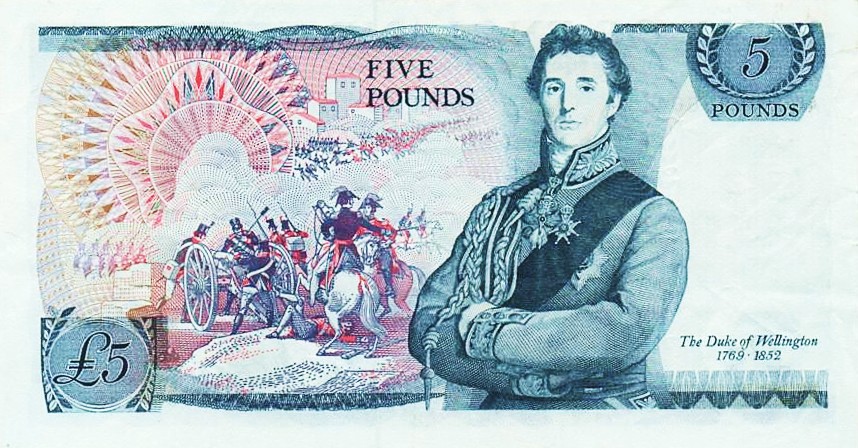
The 79-year-old Duke of Wellington knew more about fighting Napoleon than anyone, but very little about railroads. He did however persuade the SER to alter the route of their line, making it run closer to the coast so that large numbers of troops could defend the low-lying Romney Marsh in the event of the expected French invasion. Unfortunately the new route ran through desolate, unpopulated countryside, only serving one small town, the old port of Rye, which had become a haven for smugglers after its harbour had silted up.
Of course, Napoleon III (as he became) actually proved to be something of an Anglophile, and more interested in picking a fight with Prussia. England was left with a chain of unused forts along the coast (nicknamed 'Palmerston's Follies' after the then Foreign Minister) and the SER was left with a line that could not possibly make a profit.
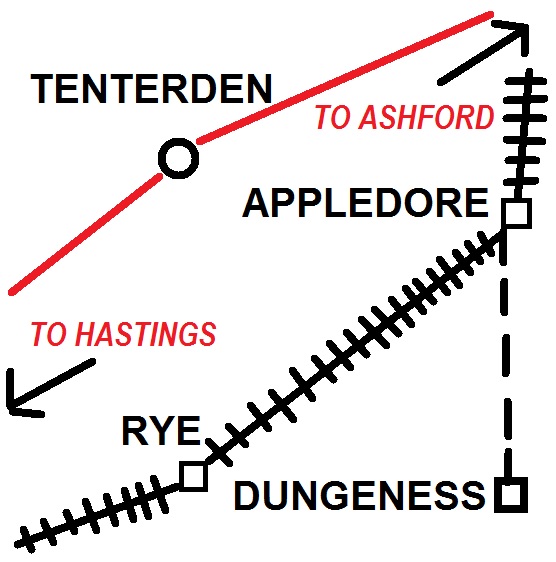
They tried to make the best of the situation by running special trains to watch bare-fisted prize fighters batter each other to a pulp in a field outside Appledore station. They also laid a branch to Dungeness, a huge expanse of shingle that is now a Site of Special Scientific Interest. Their idea was to use the shingle as ready-made ballast to put under the railroad ties. However, in practice the ties tended to move on the smooth pebbles when a heavy train passed over them, making the rails spread and causing a number of fatal crashes...
What saved the line was the growth of the tourist industry. The picturesque little town of Rye, where fortunately the station was conveniently located, became a magnet for artists and writers in the late 19th century. American writer Henry James lived there in the 1890s. The 20th century saw holiday camps springing up along the coast: holidaymakers normally took the train to Rye and then transferred to a charabanc for the rest of their journey.
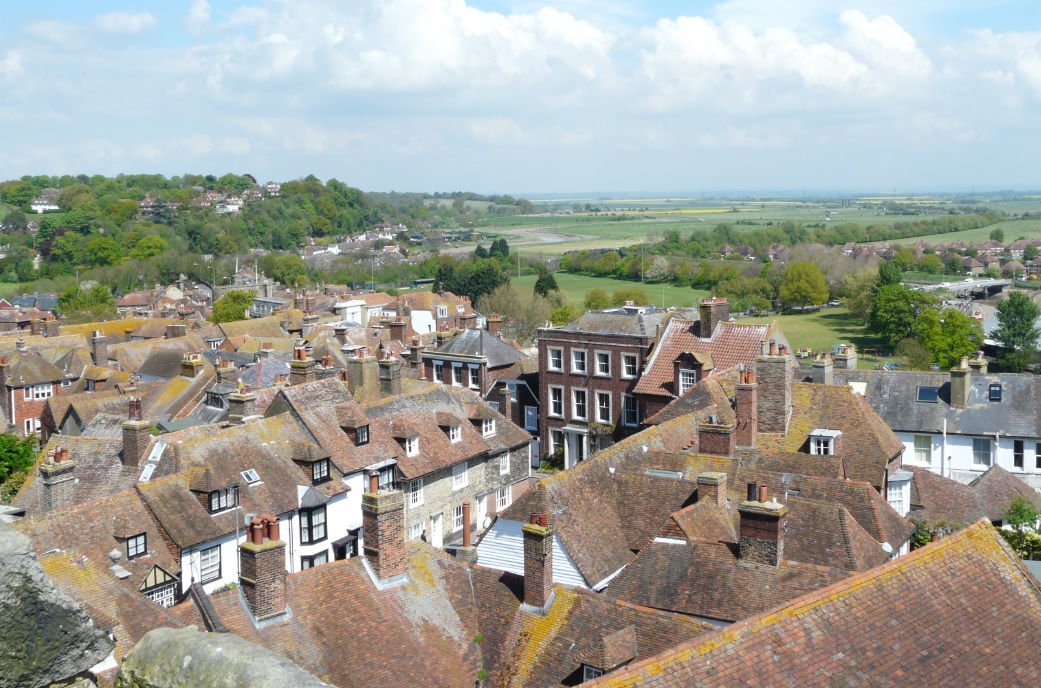
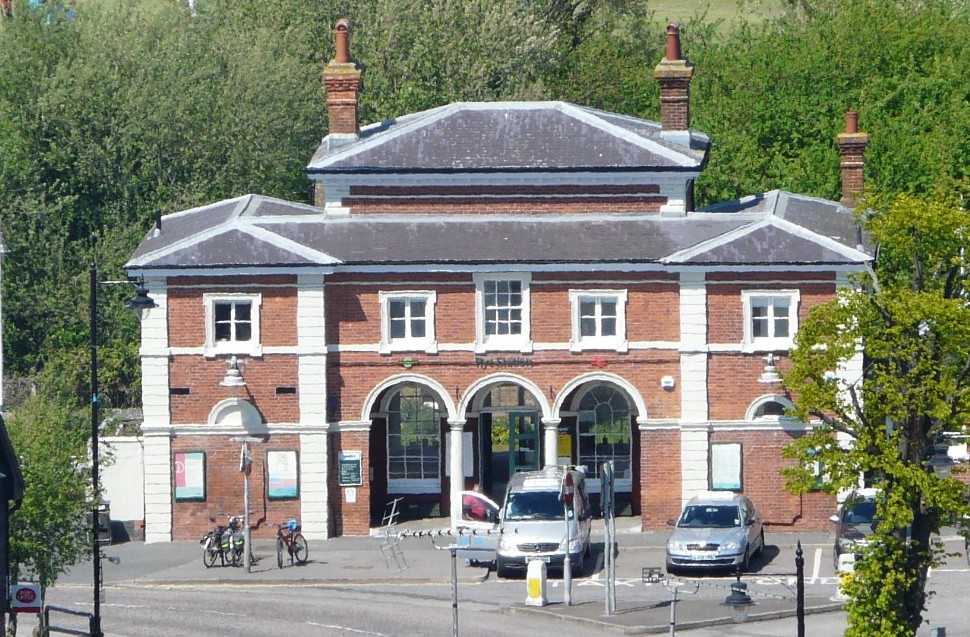
Rye (above) and its attractive 1851 train station
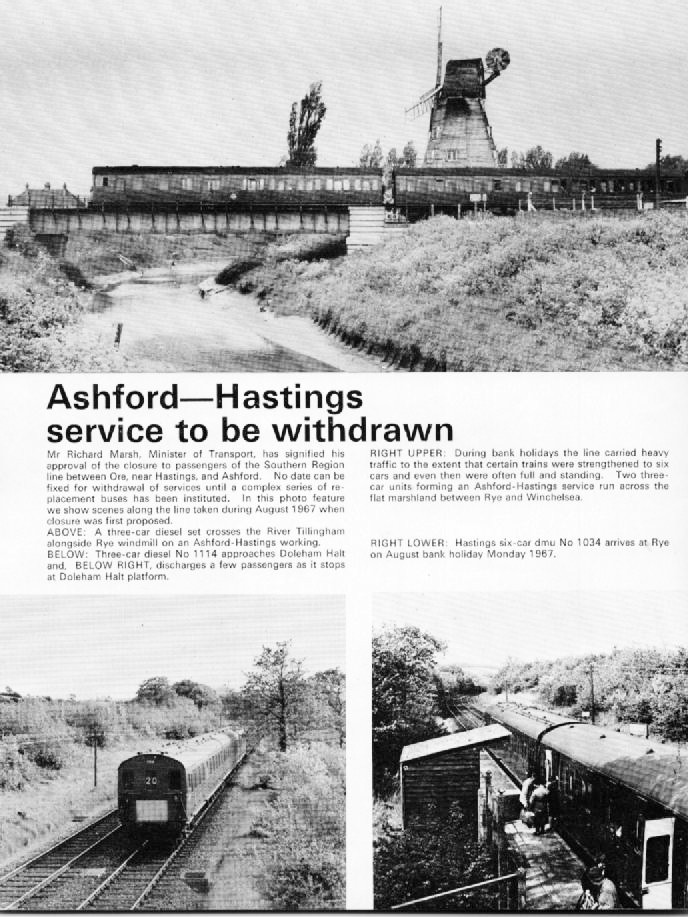
In the 1960s a nuclear power station was built at Dungeness, and this probably saved the line, although there were attempts to close it to passengers in 1963 and 1971, just retaining a spur from Ashford to Dungeness for the nuclear waste trains.
So if you wonder why a train station was built in the middle of nowhere, you have to thank Napoleon III and the Duke of Wellington!






 First Page
 Previous Page


 Posted 05/24/2021 10:05 am